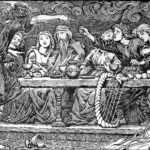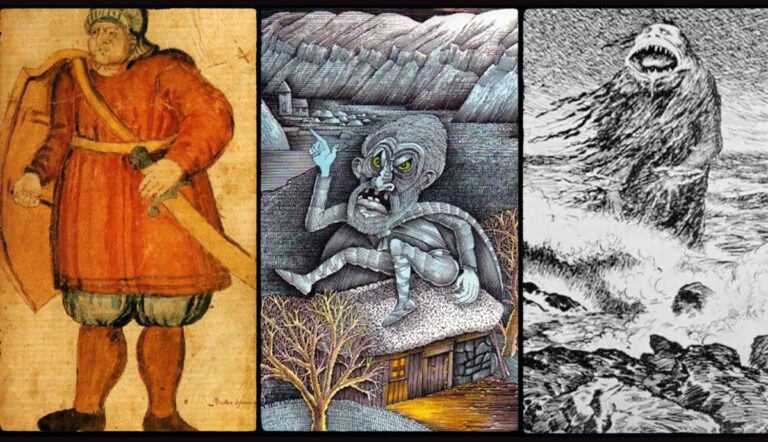
As the Vikings sat around their hearths at night, they had terrifying stories to recount of encounters with the undead that drove men to madness or destroyed entire villages. Old Norse literature records stories of hauntings, but they are not psychological thrillers; rather, they are brutal physical conflicts that demanded extreme interventions to permanently put the dead back into the earth. Here are three of the most terrifying Norse ghost stories.
Why the Norse Draugr Was a Corporeal Monster Rather Than a Spirit
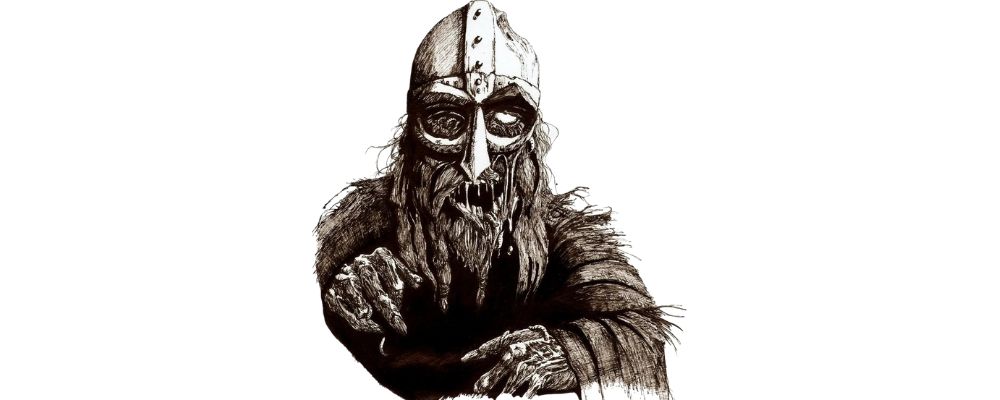
The Vikings did not imagine spirits of the dead as ghostly spirits that could float through walls and fade in and out of existence to give a good jump scare. They imagined those who had not passed on as corporeal beings that continued to occupy their undead corpses. These were often called draugr, but also sometimes haugbaur, meaning barrow dwellers, referring to the burial mounds in which the dead were placed.
These undead people were imagined as fleshy corpses that were “hel-blar,” meaning “death black” or “corpse blue” in color. The goddess of the underworld, Hel, was described as half white (living) and half black (dead). They were often large and bloated. This probably reflected natural corpse bloating, but also the fear that the dead had increased in strength. While their bodies did not decay as quickly as other corpses, the smell of decay clung to them. To look into the eyes of the dead was terrifying.
While the “powers” of the undead differed in different stories, they were often believed to have superhuman strength, able to tear cattle to pieces with their hands and break the timber roofs of longhouses. They could change their size, shrinking to enter a home, and then growing to make an attack. They could sometimes shapeshift, usually into animals. They also had the power to do something called “earth swimming,” which was to sink into solid ground as if it was water, which they often did to return to their burial mounds. They also had some supernatural powers, able to curse people.
The Haunting of Froda Farmstead in the Eyrbyggja Saga
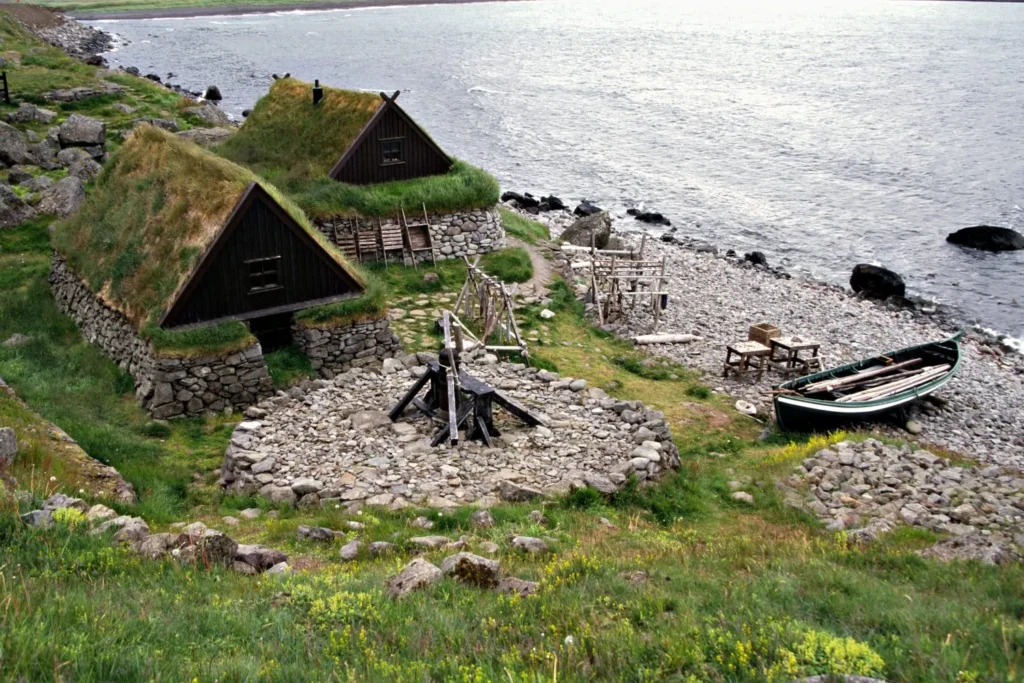
There are many stories of hauntings by these undead in the Icelandic sagas written in the centuries following Iceland’s conversion to Christianity. Stories emerged at this time due to changes in burial practices. The pagan Norse believed that it was important to burn the corpses of the dead so that they could pass into the afterlife. But as Christians, they were required to bury their dead unburned, to ensure that they were whole for the holy resurrection. Changing traditions that had served the community for centuries led to increased fears that the dead could rise.
One such story was the haunting of Fródá, a village on the Snæfellsnes península, set around AD 1000, exactly when the Icelanders decided to officially convert to Christianity.
The haunting began when a Christian woman named Thorgunna arrived in Fródá with some exceptionally fine possessions, most notably some bed linens. Her mistress, Thurid, wanted the bed linens for herself, but Thorgunna refused to sell. When Thorgunna fell fatally ill, she instructed Thurid’s husband Thorodd that upon her death her gold should go to the church, her clothes to the poor, and her bed linens should go with her. But when Thorgunna died, Thurid wept and pleaded until Thorodd agreed that she could take the bed clothes.
This transgression was followed by several portents. While hay was drying on the farm, a dark cloud unleashed a rainstorm of blood. It dried normally elsewhere, but it caused the hay to rot. Then, while transporting Thorgunna’s body to the cathedral, when the pallbearers stopped at a farm, in the middle of the night Thorgunna’s naked corpse prepared a meal for them and then returned to her coffin. Finally, back in Fródá, when the household gathered around the hearth at night, a sinister crescent light appeared indoors, gliding counter-clockwise across the walls against the course of the sun. The local Volva seeress announced that it was an omen of death.
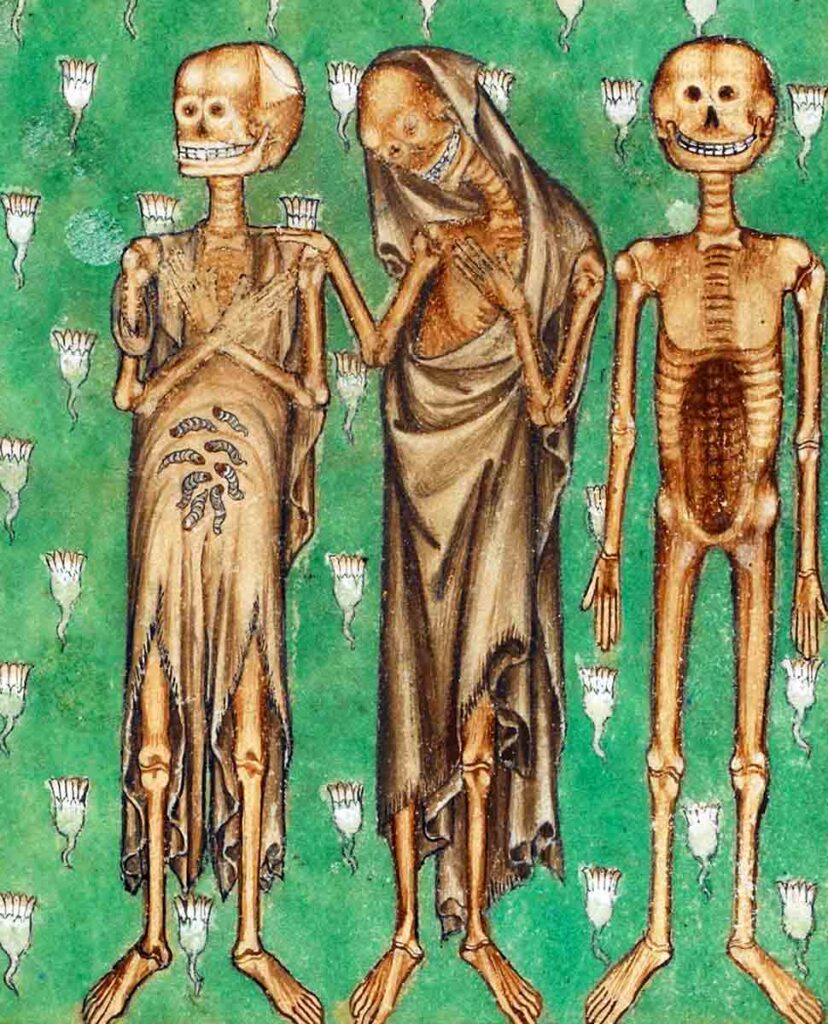
Then, when illness spread throughout Fródá, more of the dead started coming back to life. First a shepherd died, followed the householder Thorir Wooden-leg. Both returned as undead corpses, haunting the farm and beating the farmhands to death or driving them mad with terror. Soon, six more servants died of disease and also came back to life.
In an uncanny event, the head of an enormous seal, commonly hunted in Iceland, breached the clay floor of the longhouse and stared intently at Thorgunna’s stolen bed linens.
Shortly before Yule, Thorodd and five farmhands drowned in a fishing boat. At their funeral feast, Thorodd and the crew returned, dripping wet.
Every night, all the undead come to the hall, haunting the living and driving them away.
With so many dead or fled, a man named Kjartan rode to seek the counsel of a nearby chieftain. He told Kjartan to return to Fródá with a priest and strip the bed linens and burn them. He then told him to convene a formal Icelandic court at the threshold of the house and formally indict each draugr individually, charging them with trespassing, unlawful entry, and depriving the living of their home. When a jury found each guilty, their conviction was read aloud, banishing the undead. Finally, a Christian priest was to spread holy water around the hall, celebrate Mass, and consecrate the building. In this way, they successfully reclaimed Fródá.
Grettir the Strong and the Terrifying Curse of Glamr
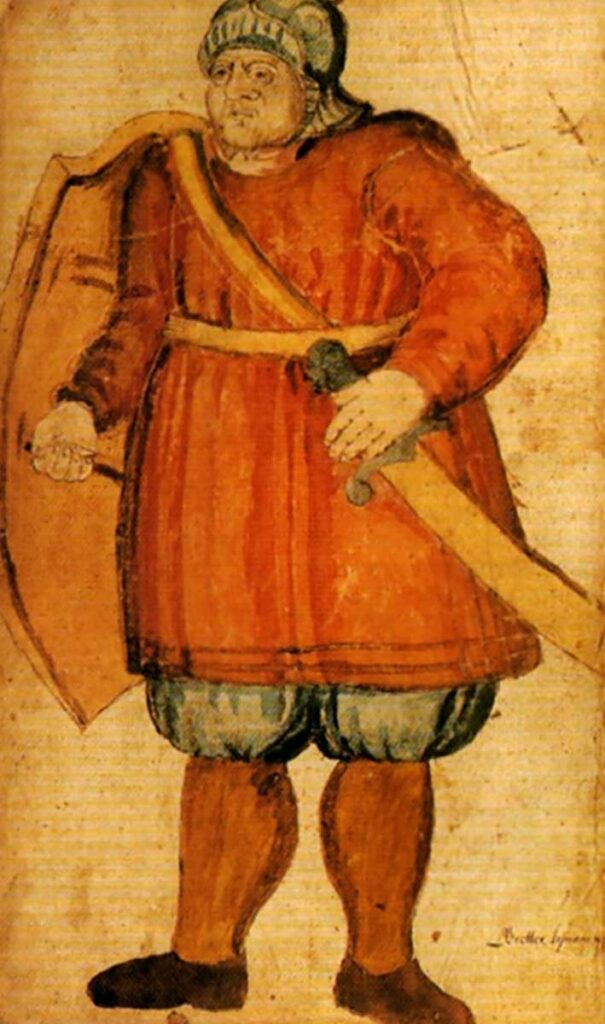
In another story, an Icelandic warrior named Grettir was determined to make himself a hero like the Vikings of old, and therefore went around slaying monsters. This brought him into conflict with the draugr Glamr.
The trouble began on a farmstead in the valley of Forsæludal belonging to a man named Thorall. His farmstead was plagued by malicious haunting and he could not get shepherds to stay. Therefore, he hired an enormous and sullen pagan named Glamr because, while disliked by all, he feared nothing. But in his ignorance, at Yule he defied certain traditions, such as fasting, mocking them. He then went out in a winter blizzard and never returned. The following morning search parties when after him and found his dead body, bloated and blue. They tried to haul the body back to the church, but it was too heavy, so they buried him where they found him.
Glamr then returned from the dead and haunted the farmstead. He would sit on the roof of the longhouse, hammering with his hands and feet. He broke the backs of livestock, tore horses apart, and killed several herdsmen, snapping their necks and pulling them limb from limb. Soon, people abandoned the valley until only Thorhall and his wife remained.
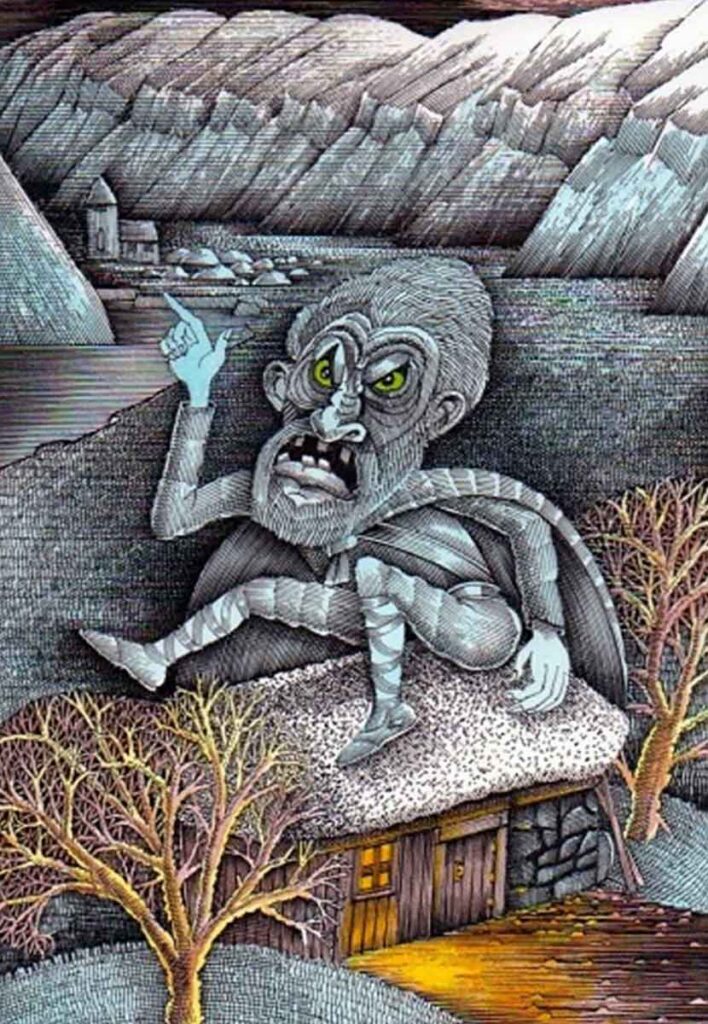
Hearing this story and wanting a chance to prove himself, Grettir arrived to face Glam. Grettir waited in the hall for two nights. On the first Glamr broke into the stables and crushed Grettir’s horse. On the third night, Grettir prepared to face Glamr. Instead of using weapons, he wrapped himself in a thick, shaggy cloak, wedged his feet firmly against the wooden footboards of the bed closet, and lay in wait.
At midnight, Glamr battered his way into the entrance hall, tearing the door from its frame. He saw the bundle on the floor and tried to grab it; it was Grettir. The two engaged in a violent tug-of-war until Grettir wrapped his arms around Dlamr’s waist. The two wrestled, destroying much of the longhouse. While Glarm managed to pull Grettir outside, where the draugr was more powerful, Grettir eventually overpowered him.
As Grettir drew his sword to cut off Glamr’s head, Glamr stared at the hero with his monstrous eyes. This was the most monstrous sight Grettir had ever beheld, and he was paralyzed. Taking advantage of this, Glamr cursed him. He said that while Grettir had defeated him, it would bring him no joy. Henceforth, misfortune and outlawry would follow Grettir, and all his deeds would bring him bad luck. Also, he would never forget the look of his eyes, which would bring him terrible solitude and fear of the dark.
Grettir then struck Glamr, down, but the curse took hold. Accused of accidental arson, he was declared an outlaw and hunted across Iceland for the rest of his life, all the while haunted by Glamr’s eyes.
Thorolf Twist-Foot and the Threat of the Restless Chieftain
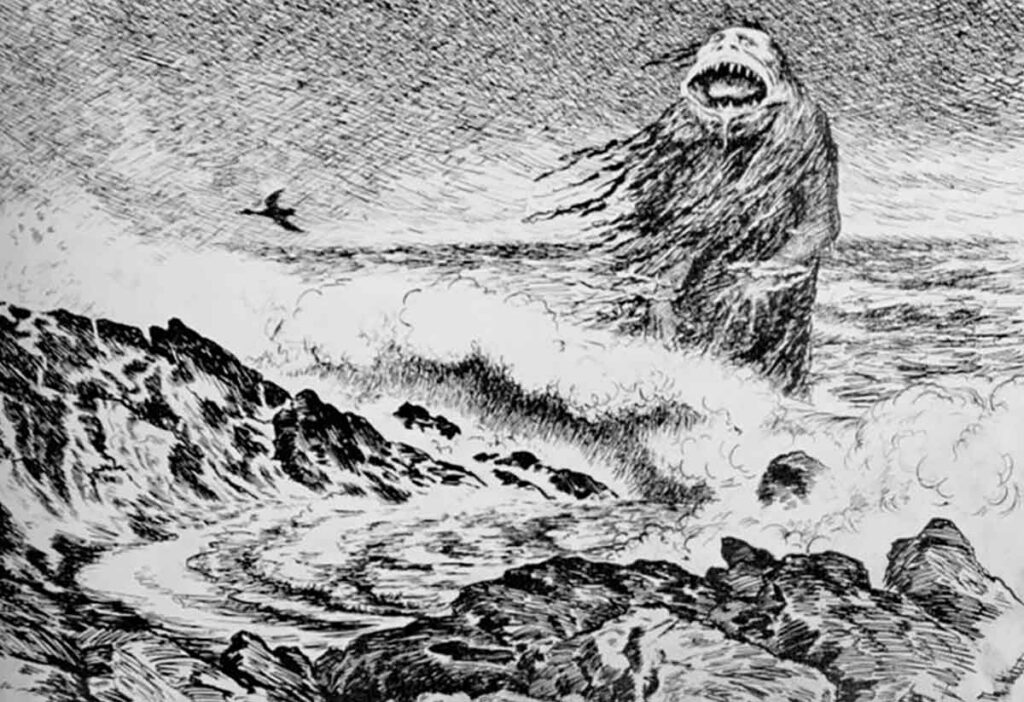
Thorolf was an aging, bitter Viking living at the farmstead of Hvamm on Iceland’s Snæfellsnes peninsula. As he aged, he grew intensely quarrelsome, greedy, and litigious, picking fights with his neighbors and harboring a deep resentment toward his own son, Arnkel.
One evening, he refused to eat, sat upright in his high seat in the center of the hall, and spoke to no one. The following morning, his servants found him dead in his chair, still sitting upright. His eyes were wide and staring, and his face was twisted into an expression so hideous and menacing that none of the household dared approach him from the front.
Recognizing the danger, the household summoned his son, Arnkel. Understanding that a man who died in such a manner was bound to rise, Arnkel approached the dead man strictly from behind to avoid meeting the corpse’s evil gaze. Reaching over the chair, he covered Thorolf’s face with a cloth before properly closing the eyes and nostrils.
To prevent the dead man’s spirit from learning the way back into the hall, Arnkel followed the customary ritual. Rather than carrying the corpse through the main threshold, they knocked a hole in the wooden wall behind the high seat. Thorolf’s body was hauled out through this opening and loaded onto a sled. He was dragged to a nearby valley and buried beneath a massive stone cairn at Haugsnes.
The precautions were not enough. As soon as the sun set, Thorolf began walking. Birds that attempted to land on his burial mound dropped dead out of the sky. Livestock grazing nearby ran wild or were found with their backs snapped and their flesh torn. Thorolf spent nights straddling the roof of his old hall, hammering the timbers. His widow was driven entirely insane with terror and died soon after, and several servants were strangled or beaten to death. The surviving thralls fled, and neighboring farmers abandoned their lands. The entire valley of Hvammsdal became unlivable.
Realizing his father was destroying the district, Arnkel gathered a crew of strong men to exhume the body. When they tore down the cairn, they found Thorolf’s corpse completely undecayed, bloated to monstrous size, and as black as pitch. He had grown unnaturally heavy; it took a team of strong oxen just to drag the sled carrying his body. The oxen were strained to exhaustion, and at one point, one went mad, threw itself into the sea, and drowned.
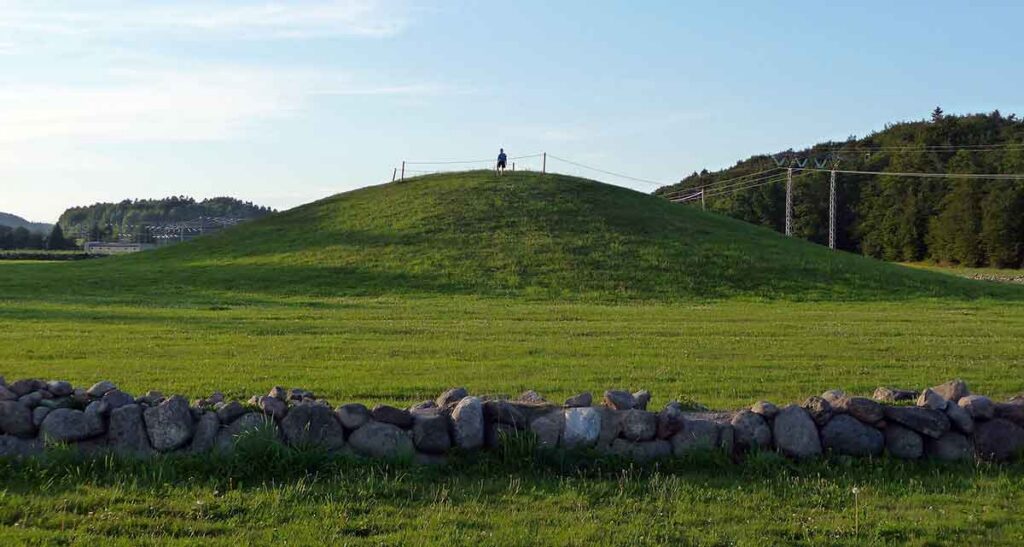
Arnkel dragged the corpse out to a high, barren coastal promontory known afterward as Bægifótshöfði (Halt-Foot’s Headland). There, they reburied him deep under a fresh cairn and erected a massive stone wall across the neck of the headland to trap his revenant on the cliffside.
For as long as Arnkel lived, the wall held. But years later, when Arnkel died, the barrier holding Thorolf fell. Thorolf rose a second time. He breached the stone wall on the headland and began attacking cattle and travelers once more.
Finally, a local chieftain named Thorodd went out with a company of men to end the curse permanently. They unearthed the cairn, found the body still intact and rotting without decomposing, dragged it down to the beach, and built a massive timber pyre. Thorolf’s body took hours to burn, producing a dense, foul-smelling smoke. When only white ash remained, they scattered the residue into the open ocean.
Yet Thorolf managed one final act of malice from beyond death. A prevailing wind blew some of his ash onto a coastal meadow, where an ordinary cow grazed and licked the scorched earth. Months later, the cow gave birth to a strange, grey-dappled bull calf named Glæsir (“The Shiny One”). Thorodd’s blind foster-mother, who possessed the second sight, heard the calf bellow and repeatedly pleaded with Thorodd to slaughter the unnatural beast, warning that it carried the essence of Thorolf. Thorodd dismissed her superstitious warnings because the bull grew into the largest, most magnificent animal in the district.
When Glæsir reached four years of age, the beast suddenly turned violently feral, charged Thorodd, and gored him through the chest, delivering Thorolf Twist-Foot’s final vengeance decades after his human heart had stopped beating.
Find Your Protective Mjolnir Amulet
In pagan times, the Vikings wore Mjolnir amulets, representing Thor’s hammer, as symbols of protection. They may have been believed to help protect the living against the undead. But just as funerary customs changed, Mjolnir amulets were replaced with Christian crosses, and the Vikings lost their protection against ancient fears.
If you believe in the protective power of Mjolnir, find your perfect Mjolnir pendant in the VKNG collection.

This design is based on a 10th-century Mjölnir pendant found at Östergötland, Sweden. It features swirling loops, which were extremely common for jewelry decoration in the Viking Age.
This design is based on a Mjölnir pendant found in Scania, Sweden. The handle of the hammer looks like a raven or a warrior’s head, a common feature of many Mjolnir designs. It is probably a reference to Odin, the god of war and ravens.


This pendant is based on a Mjölnir amulet found on Bornholm Island, Denmark. The pattern of round circles was a common design on Norse jewelry, especially Mjölnir pendants.
This pendant is based on a 10th-century artifact from Iceland. It has a distinctive design with its wolf-head clasp and what seems to be a Christian cross integrated into the design. It dates to a time when Iceland was in the process of converting to Christianity, and religious lines and symbolism were being blurred.