The hall of the sea giant Aegir was meant to be a sanctuary of divine peace. Instead, it became the stage for the most brutal character assassination in Norse mythology. In the poetic masterpiece, the Lokasenna, the trickster Loki shatters the sacred laws of hospitality and weaponizes the darkest secrets of the Aesir and Vanir gods. Through a vicious verbal duel, Loki exposes the hypocrisy of the divine elite, transforming their hidden cowardice, incest, and dark magic into a public spectacle that inevitably sparks the countdown to Ragnarok.
The Sacred Feast at the Bottom of the Sea
The Lokasenna, also often called “Loki’s quarrel,” is a mythological poem belonging to the Poetic Edda. It is preserved in the Codex Regius, a manuscript from AD 1270. It records the full text of the Lokasenna, placing it between the story of Thor and Tyr retrieving a great cauldron from the giant Hymir to make enough mead for all the gods, during which Thor’s famous fishing trip occurs, and the story of the giant Thrym stealing Thor’s hammer and the god dressing up as Freyja to get it back. Writing in the 13th century, the Icelandic chronicler of Norse mythology Snorri Sturluson also references the poems several times.
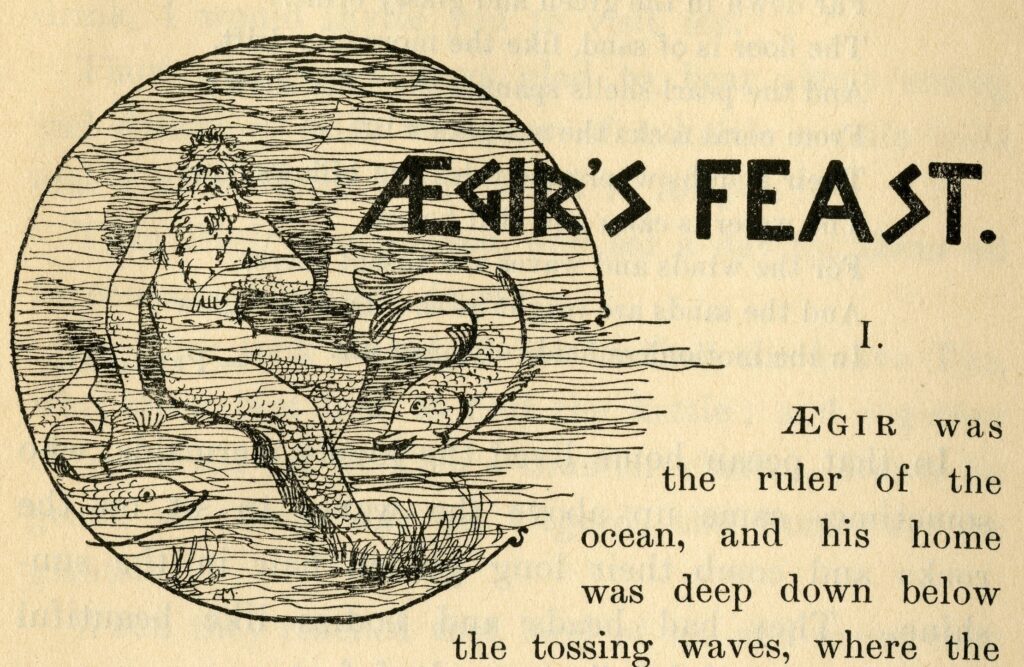
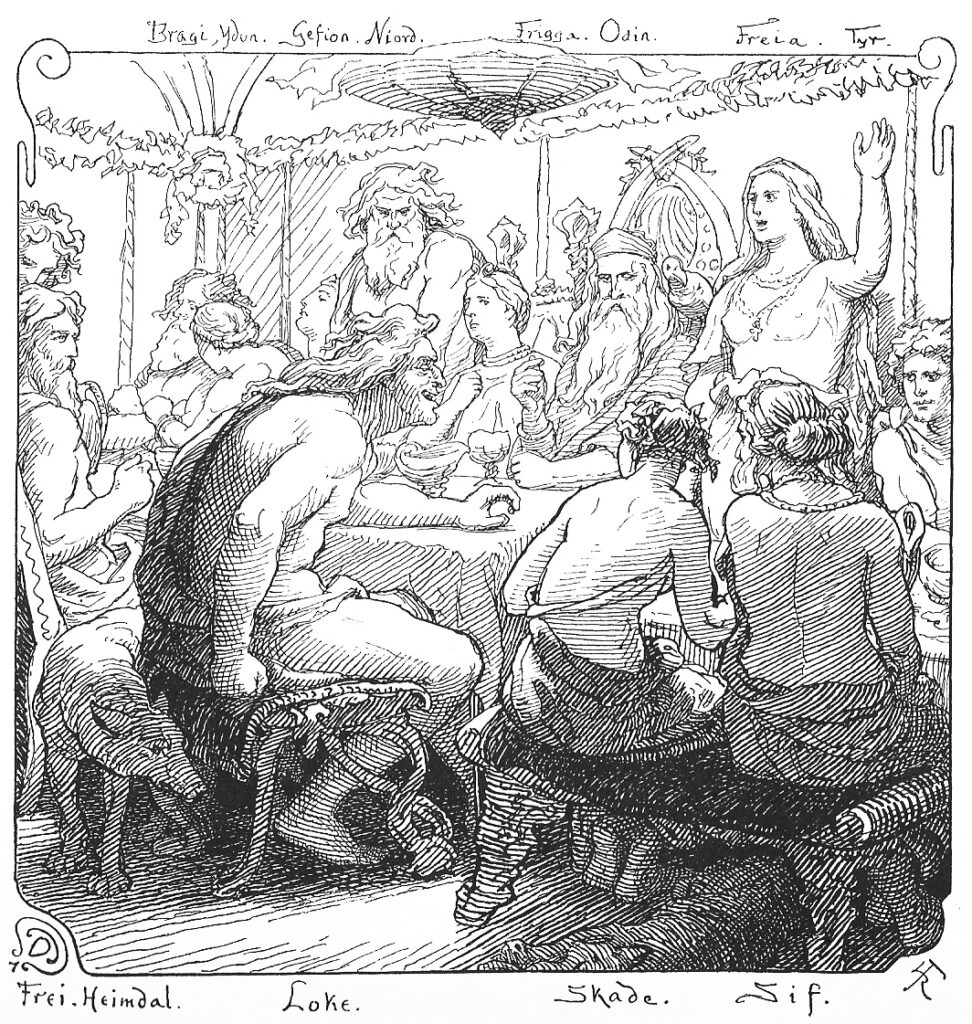
The setting of the Lokasenna is the gods meeting for a great feast in the underwater hall of the sea-giant Aegir, who is known for his excellent hospitality. This is why they needed the extra-large cauldron. We are told that the watery hall is illuminated by heaps of radiant, glowing gold, possibly retrieved from sunken ships. The ale and mead magically flow without anyone needing to pour.
The gods are meeting there under a strict peace pact. No weapons are welcome, and there is to be no fighting or bloodshed. The gods are all present, except Thor, who is on the way, as he is off facing giants.
Loki is notable for his absence. While he is a jotun, traditionally an enemy of the gods, Loki is allowed to live in Asgard among the gods due to a blood-brother pact with Odin. Therefore, he seems to be a deliberate omission, perhaps because the gods have already learned of his role in the death of Balder, the beloved son of Odin and Frigg.
Not willing to be excluded, Loki turns up anyway. The first thing he does is break the code of peace, murdering one of Aegir’s servants, Fimafeng, reportedly out of spite for the amount of praise he has received. For this, the gods chase Loki out into the dark forest, but he quickly returns. He is then turned away by the surviving servant Eldir, but Loki pushes past him. Speaking on behalf of the gods, Bragi tries to turn him away again, but Loki reminds Odin of their pact, and Odin states that he can stay because he cannot break the blood oath.
Understanding the Viking Art of Flyting
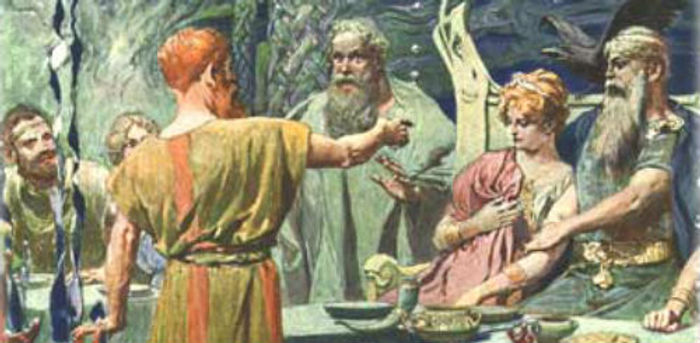
What follows is flyting, with Loki and the gods exchanging insults. This was a common ritual in the Norse world, where people engaged in verbal combat by trading poetic insults, provocative boasts, and accusations of cowardice or taboo behavior. These displays often took place at feasts, and the surrounding community served as judges for who had won the debate.
While this was an acceptable and common social ritual, it could easily go wrong. The verbal duel relied on walking the knife-edge between controlled social theater and public humiliation. Failing to respond quickly was often conceived of as an admission of guilt of the insult just thrown. Losing one’s temper and resorting to violence was an intellectual defeat and could result in serious punishment, such as outlawry.
But going too far and exposing unforgivable truths, such as unavenged slayings, incest, or treachery, shattered the possibility of social reconciliation. The offended party had the right to kill the speaker on the spot for mockery, and this could result in blood feuds that annihilated entire families.
This was the context of the Lokasenna. Weaponless, Loki and the gods engaged in verbal battle. He targeted each god in turn, while each responded to try and restore order to the feast. But from the outset, Loki seems to have decided to cross all acceptable boundaries.
Trading Insults and Crossing Lines
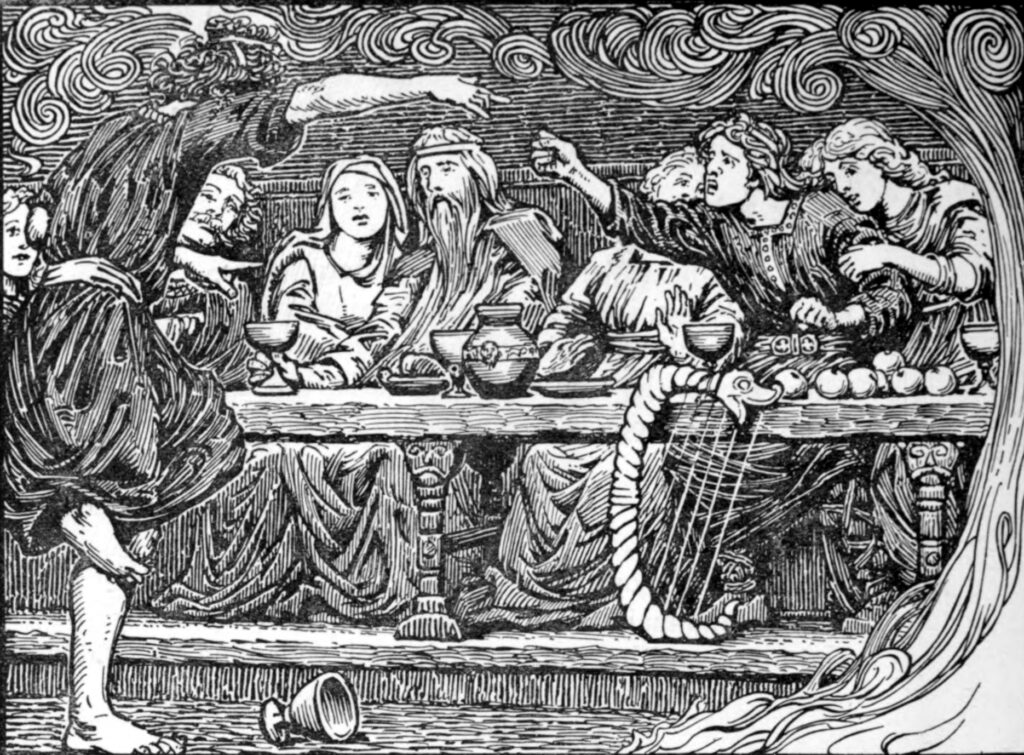
The insults traded by the gods are not only fascinating in terms of the practice of flyting, but because they often reference other stories known from Norse mythology, as well as stories that have been lost to time.
Bragi – God of Poetry
The first god that Loki insults is Bragi, when he initially tries to expel Loki from the hall. Bragi initially offers Loki gifts to restore peace, but then says that were it not for the truce of peace, he would personally carry Loki’s severed head in his hands.
Loki responds by calling him a cowardly “bench ornament” who talks big but hides behind the other gods when arrows start flying. This may be a reference to the fact that Bragi may have been a human skald who was later deified.
Idun – Goddess of Youth
Bragi’s wife, Idun, then steps in to try and diffuse the situation, and Loki says that she is the most lustful of women and embraced the man who killed her brother. The reference for this particular insult is not preserved.
Gefjon – Goddess of the Plough
It is then the goddess Gefjon who tries to diffuse, admonishing everyone to stop bickering and stating that Loki is merely acting out of spite. He then accuses her of lewdness, saying that she was seduced by nothing more than a shiny jewel.
Odin the Allfather
At this point, Odin steps in to rebuke Loki, reminding him that Gefjon knows the fates of all beings. Loki then accuses Odin, the god of war who decided the outcome of battles, of being an unjust arbiter who rewards cowardice.
He also accuses him of practicing the unmanly art of Seidr magic, which was traditionally considered a feminine art. Odin responds by reminding Loki that he is the unmanly one who spent eight winters beneath the earth as a milch cow and bore children. In another story, when Loki was transformed into a mare, he became pregnant and gave birth to the eight-legged steed Sleipnir.
Frigg – Goddess of Women
Odin’s wife, Frigg, then intervenes, urging them both to forget past deeds and ancient shames that should never be spoken of aloud. Loki then accuses her of sleeping with Odin’s brothers, Vili and Ve. This is also referenced in a euphemized story of the gods in which Odin is cast as a king. When he traveled for several years, his wife apparently married his brothers.
Then Loki boasts that he is the reason that Frigg’s son Balder will never return. It is unclear whether Loki is referring to his role in killing Balder or his decision to disguise himself as a witch and refuse to mourn the god, thus blocking his return from Helheim. Distressed, Frigg responds that if she had another son like Balder, Loki would never escape this hall alive.
Freyja – Goddess of Love and Beauty
Freyja then enters and rebukes Loki for airing the details of his crimes. She reminds him that Frigg knows all destinies and that the gods will punish him. Loki dismisses her as a corrupt witch, as she is also a practitioner of Seidr magic and taught the art to Odin. He also accuses her of sleeping with every god and elf. She famously slept with three dwarves, or dark elves, to obtain her golden necklace, Brisingamen.
He also accuses her of lying with her brother Freyr. The twin gods are Vanir gods, and brother-sister marriage was common among the group. They were married before coming to Asgard, when their marriage was resolved. Freyja then warns Loki that his tongue will be his own destruction.
Njord – God of Sea Trade
Freyja’s father, Njord, now intervenes, stating that taking lovers is nothing compared to Loki’s perverse crimes. Loki responds that Njord is nothing more than a hostage, as Njord and his children were hostages sent to live among the Aesir after the Aesir-Vanir war. He also says that Hymir’s daughter used his mouth as a chamber pot.
Njord responds by boasting that he gave birth to the great god Freyr, who was one of the most popular gods among the Vikings. Loki responds that he was born from incest, as presumably Njord was also married to his sister before coming to Asgard.
Tyr – God of War and Justice
Tyr then speaks up in Freyr’s defense, only to be mocked by Loki for his inability to broker peace and for how he lost his arm to Loki’s own son, the wolf Fenrir. Tyr responds that while he has lost a hand, Loki has lost a son, as Fenrir is now bound and powerless, and he will remain that way until Ragnarok, the twilight of the gods.
Freyr – God of Fertility
Freyr then speaks for himself, stating that Loki will soon be shackled beside his son if he does not hold his tongue. Loki mocks Freyr for losing his magical sword to win the love of the giantess Gerdr, which will leave him weaponless when Ragnarok comes. This prompts Freyr’s servant Byggvir to speak up, stating that if he were of noble birth like his lord, he would crush Loki’s bones. Loki dismisses him as a sniveling parasite.
Heimdall – Watchman of the Gods
Heimdall now steps in, telling Loki that he is hopelessly drunk and that this has robbed him of his senses. Loki mocks the miserable existence of the watchman of the gods, forever doomed to toil while others sleep.
Skadi – Goddess of Winter
Skadi now enters the conversation, warning Loki that the gods will soon bind him to sharp rocks with the cold guts of his son, foreshadowing the future imprisonment of Loki, suggesting that this prophecy was well-known. Loki then boasts of his integral role in killing her father, Thjazi. He also reminds Skadi that she once invited him into her bed.
Sif – Goddess of the Harvest
Finally, Thor’s wife, Sif, steps in, trying to appease Loki, offering him mead and asking him to admit that she alone among the goddesses is pure. He shatters this by claiming she slept with him behind Thor’s back, causing her to fall silent.
The Final Confrontation Between Loki and Thor
Finally, Beyla announces the approach of Thor, declaring that the mountains are shaking and that the god of thunder will silence Loki. The trickster still slings an insult at her, saying that she is caked in manure and drenched in sin, perhaps suggesting she was a god of fertilizer. It is at this moment that Thor bursts into the hall.
Thor demands that Loki fall silent and threatens to use his hammer Mjolnir to send Loki to Helheim. But Loki now targets Thor for insult, reminding him how he had previously cowered in the glove of the giant Skrymir when the pair traveled to Jotunheim.
Rather than respond, Thor threatens Loki with violence again. Loki flees, throwing a final parting curse: “Ale you brewed, Ægir, but never again will you hold a feast in your hall.All your possessions that are gathered here—flames will play over them, fire will burn your back!”
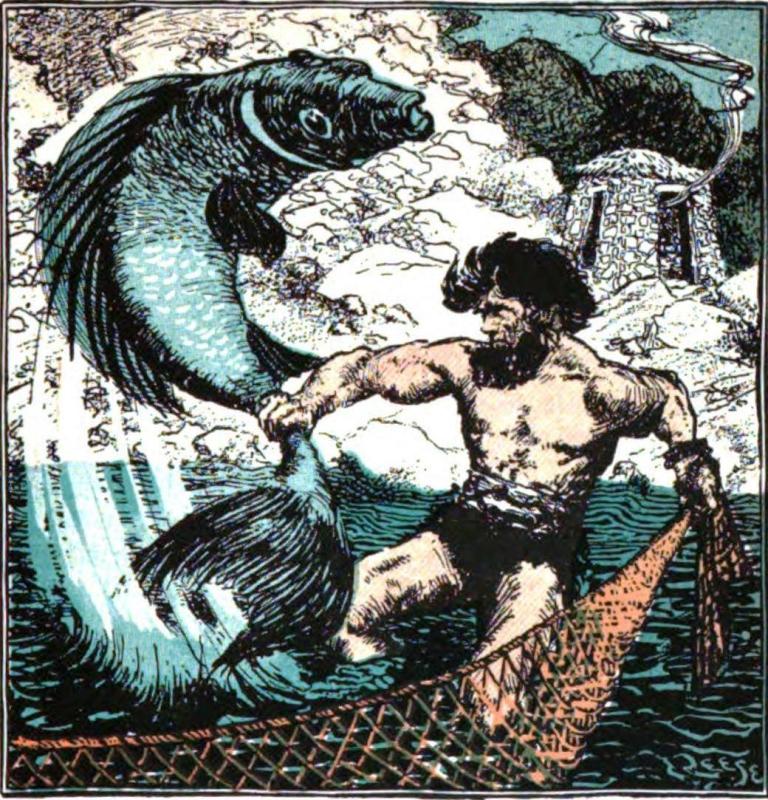
The story continues in the Gylfaginning, recorded by Snorri Sturluson. It explains how Loki, knowing the gods will no longer tolerate his existence, retreats to a remote mountain peak. He builds a house with four doors facing every direction so he can watch for pursuers, and whenever danger approaches, he transforms himself into a salmon and hides in the roaring currents of Fránangrsfors (Fránangr Waterfall).
The Æsir track him down. Using a fishing net modeled after one Loki himself had previously designed, the gods drag the river. When Loki leaps over the net to escape back upstream, Thor snatches him out of mid-air by his tail fin—which, according to Norse lore, is why all salmon taper toward the tail.
Why the Bitter Truths of Lokasenna Triggered Ragnarok

Having captured Loki, the gods summon Loki’s two sons by his wife Sigyn: Vali and Narfi. They then transform Vali into a ravenous wolf, which immediately tears his brother Narfi to pieces. The gods take Narfi’s ripped-out intestines and use them to bind Loki across three jagged stones: one beneath his shoulders, one beneath his loins, and one behind his knees. The guts instantly harden into cold, unbreakable iron bands. To fulfill the threat she made during the feast, the giantess Skaði catches an adder dripping with deadly venom and suspends it directly over Loki’s face.
This is the final severing of the relationship between Loki and the gods, which is a key trigger for Ragnarok and the end of days. At the apocalypse, Loki, and his son Fenrir, will break their chains and lead the charge against the gods, raining utter destruction on the cosmos.
Discover Fenrir in the VKNG Store

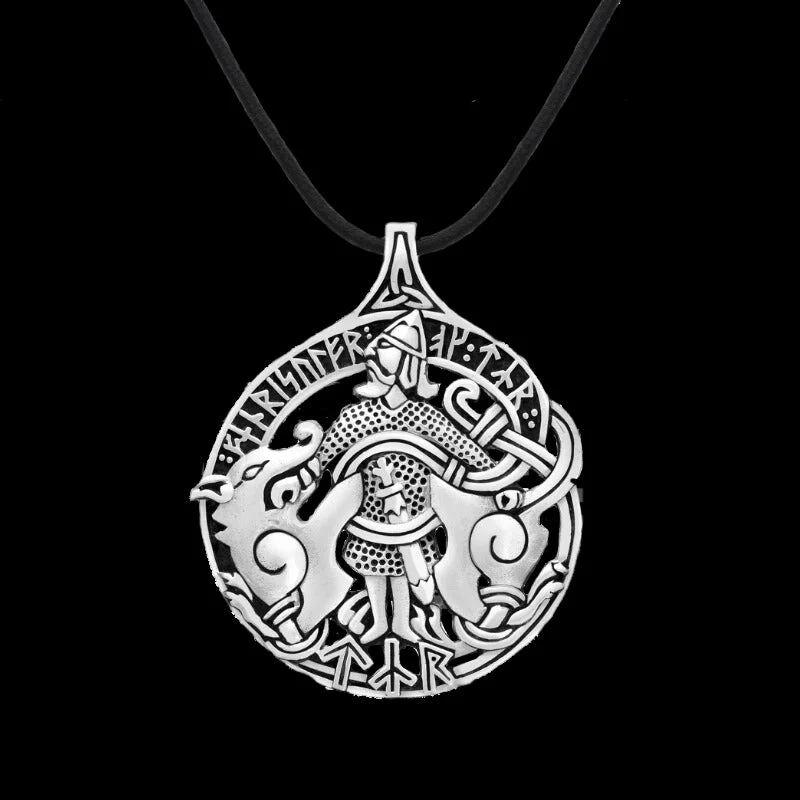
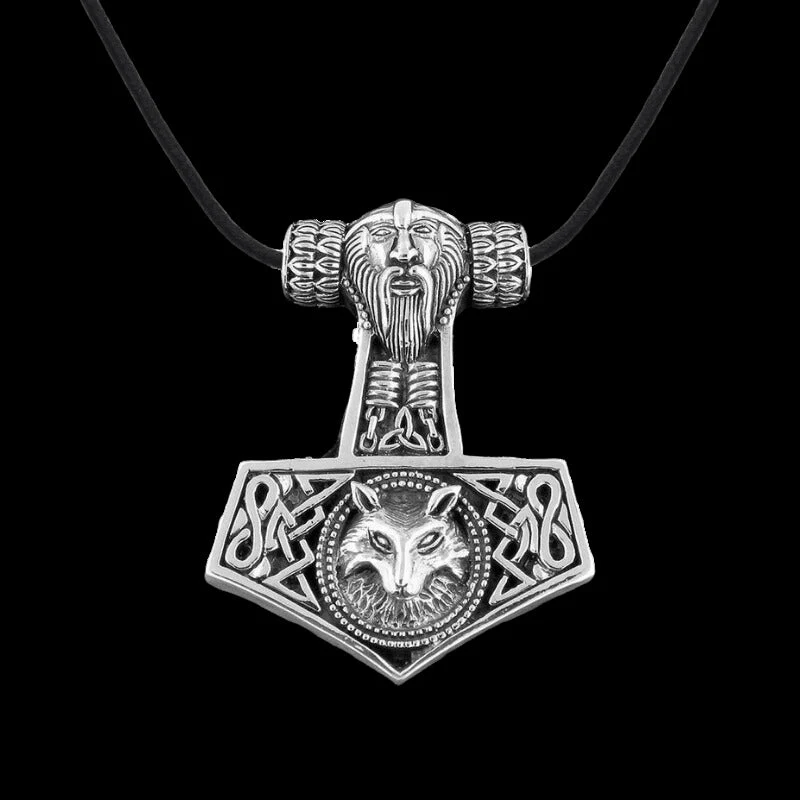
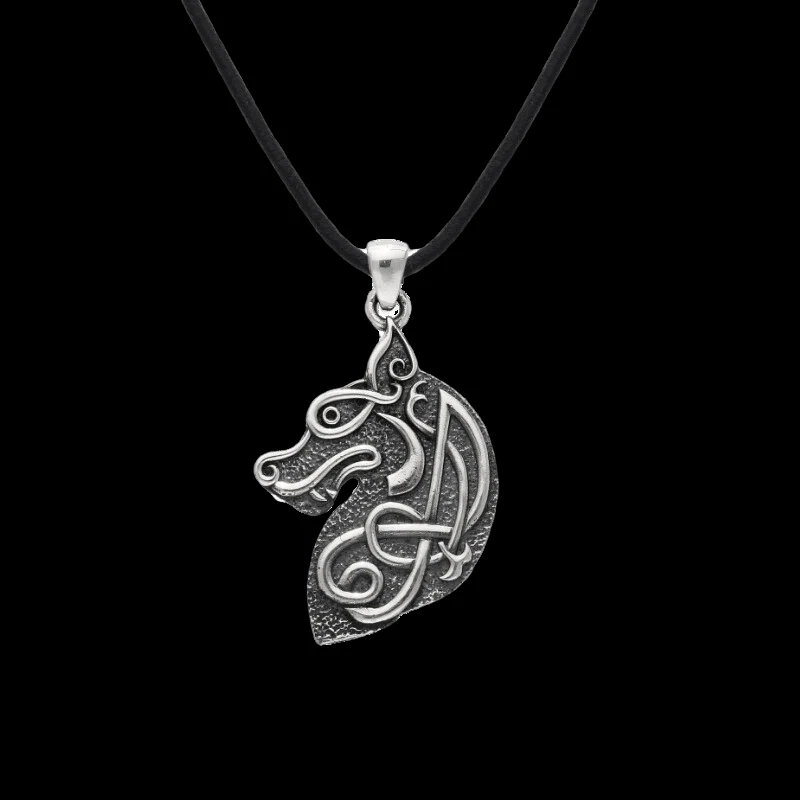
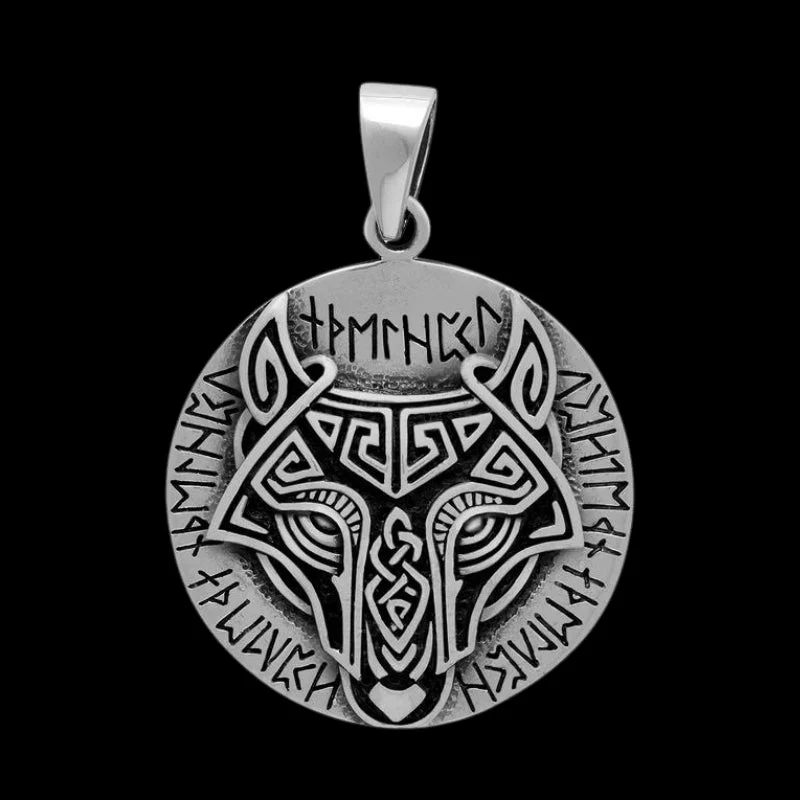
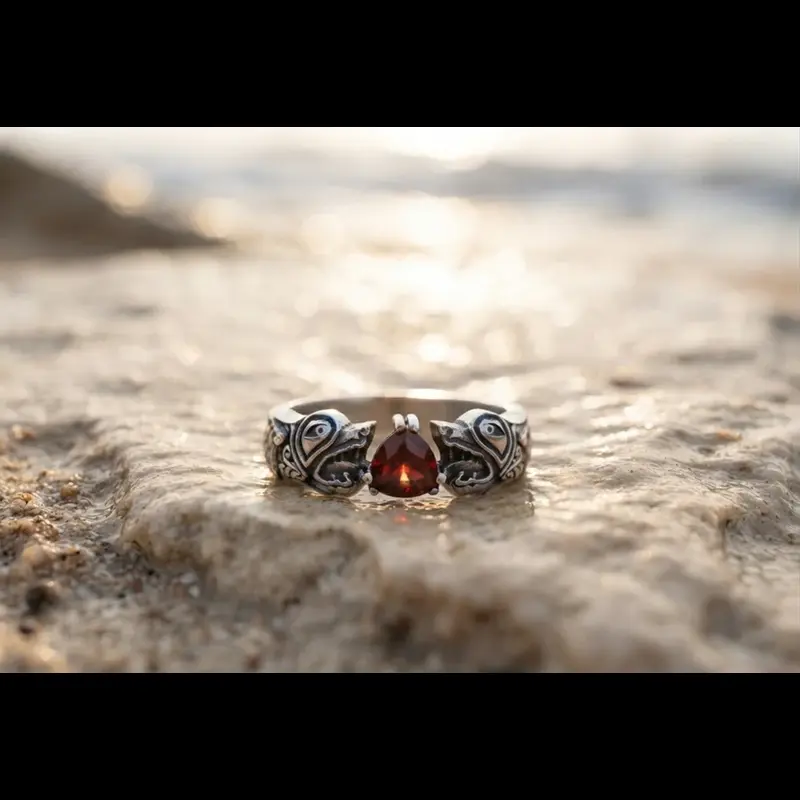
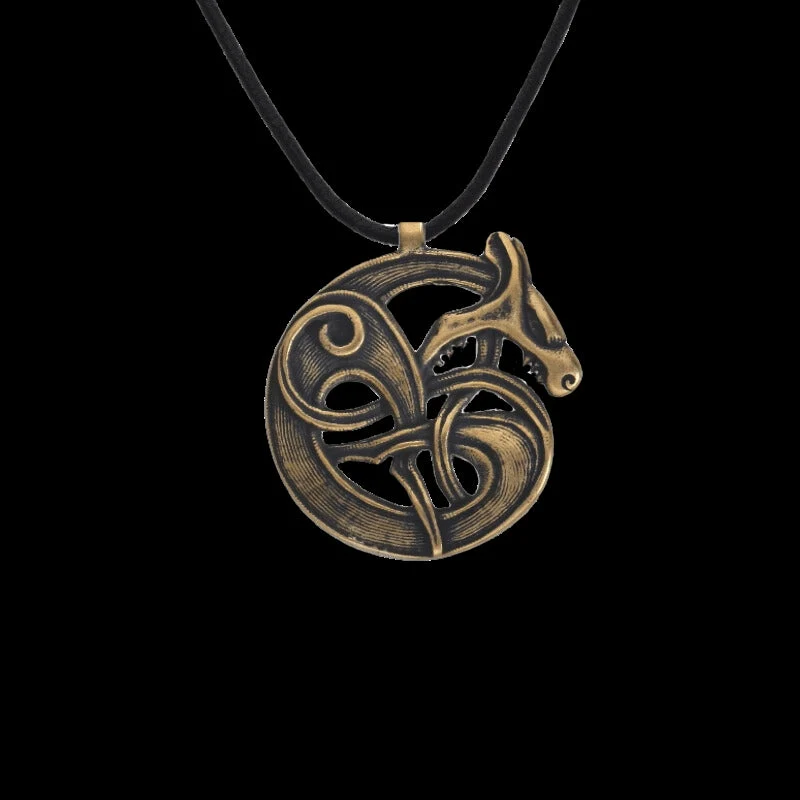
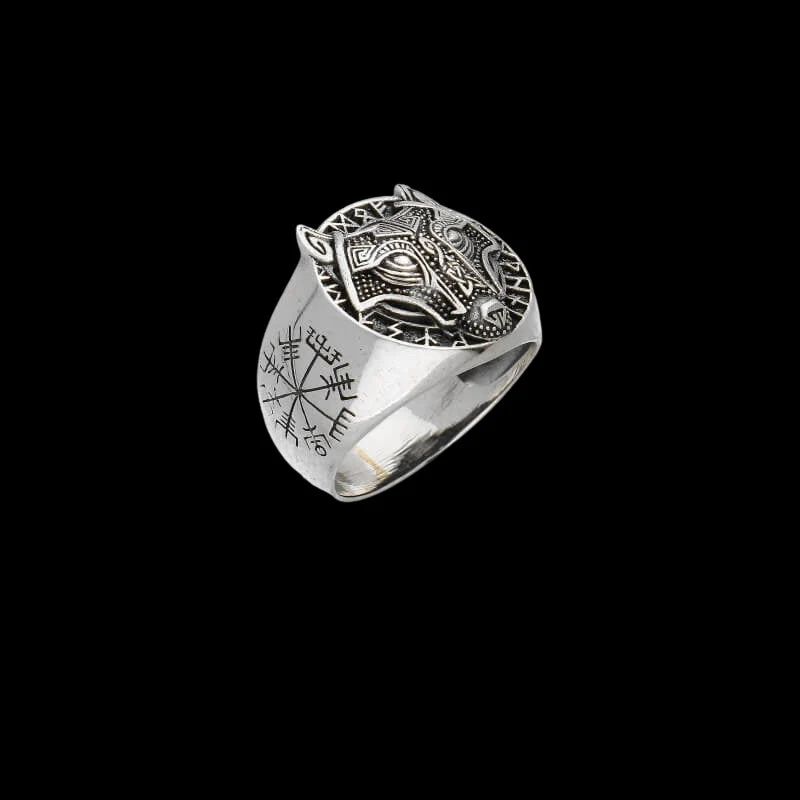
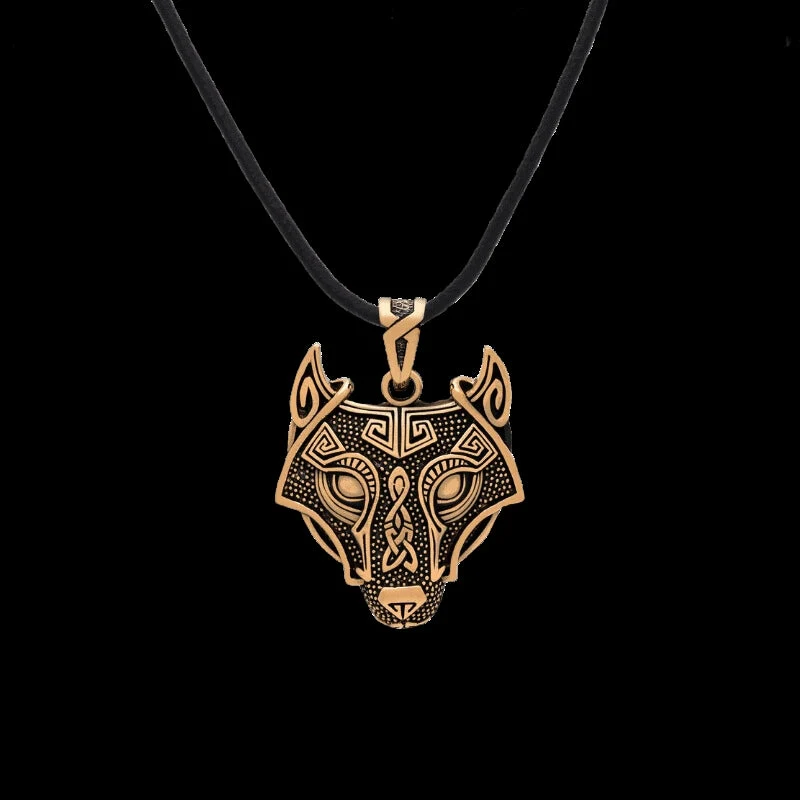
Fenrir wolf is one of the most important symbols associated with Ragnarok. His imprisonment is one of the important prerequisites for the apocalypse. It fuels the anger of the beast towards the gods, as indicated by the fact that he drools a river called “Expectation.” It was also probably the treatment of Fenrir that motivated Loki to kill Balder, which was the first strike in breaking the bond of friendship between the trickster and the gods. Plus, it is Fenrir who will devour Odin himself in the final battle.
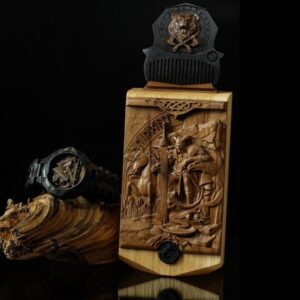
There are many Fenrir Norse-wolf-inspired pieces in the VKNG collection. Discover some of our favorites below.