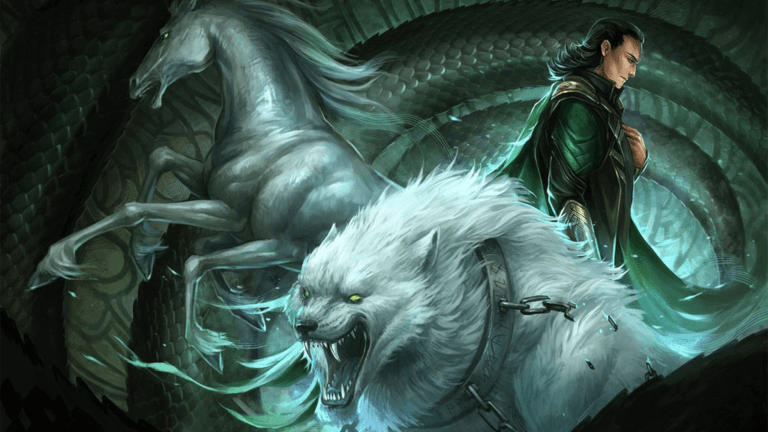
While Loki is often cast as the major villain in retellings of Norse mythology, it is actually Loki’s children who are some of the most terrifying creatures in Norse tales.
The children of Loki with the giantess Angrboda were Fenrir, Jormungandr, and Hel. These children were feared and persecuted by the Aesir gods, acts that establish the prerequisites for Ragnarok, the destruction of the Norse cosmos.
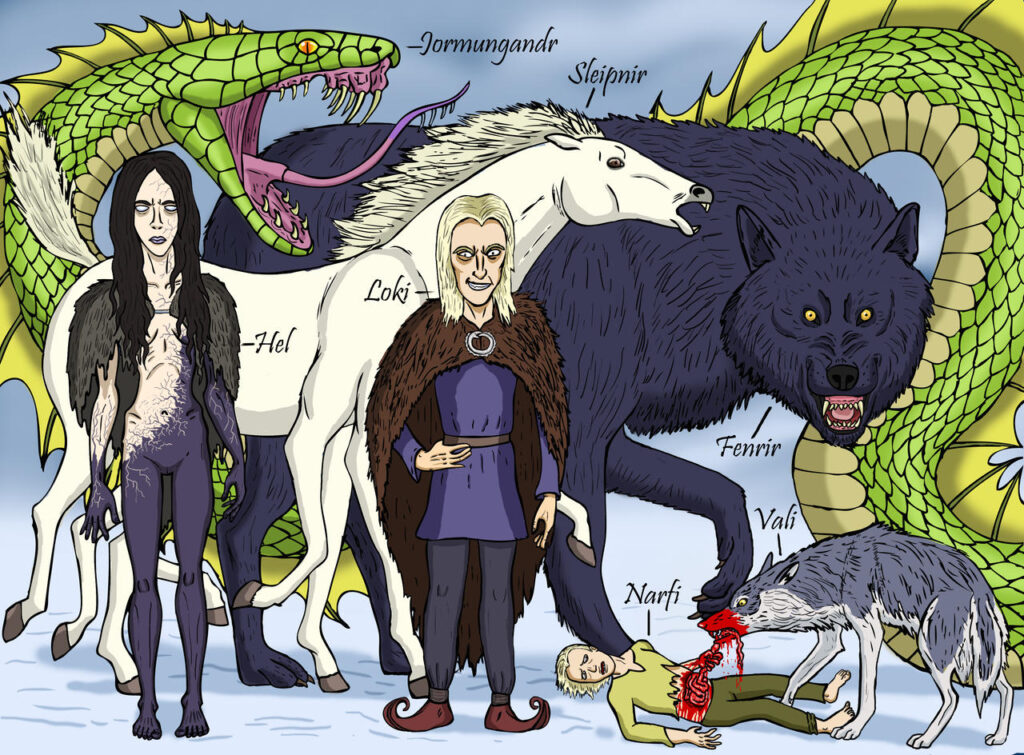
With his Aesir wife Sigyn, Loki had two sons, Narfi and Vali. Their destiny is to pay for the sins of the father. There is also the eight-legged horse Sleipnir, of whom Loki was the mother, the father being mighty stallion Svadlifari.
Get Your FREE e-Book
Norse Gods, Monsters & Myths
Who Are the Children of Loki and Angrboda?
With the fearsome giantess Angrboda, Loki had three children: the mighty wolf Fenrir, the great serpent Jormungandr, and the giantess Hel. They were immediately feared by the Aesir gods for their monstrous parentage. Consequently, the Aesir decided to place each of these children of Loki where they could do the least harm (Prose Edda, Gylfaginning 34).
How Do the Gods Imprison Fenrir?

The first of Loki’s children with the giantess was the mighty wolf Fenrir, who was so large and strong that no chains could hold him. Fearing the havoc that Fenrir might wreak on the nine worlds, the Aesir gods decided to imprison the wolf.
Fenrir was too strong for any of the gods to overwhelm, so they decided to trick him. They played on his pride and convinced him to put the chains on himself to break free as a show of his strength.
Twice the gods forged chains for Fenrir, and twice the wolf broke free with ease. Realizing that something more was needed, they approached the dwarves, the master craftsmen of the Norse cosmos, and asked them to create an unbreakable chain.
They made Gleipnir, which resembled a ribbon more than a chain, but was made from impossible things, making it impossible to break.
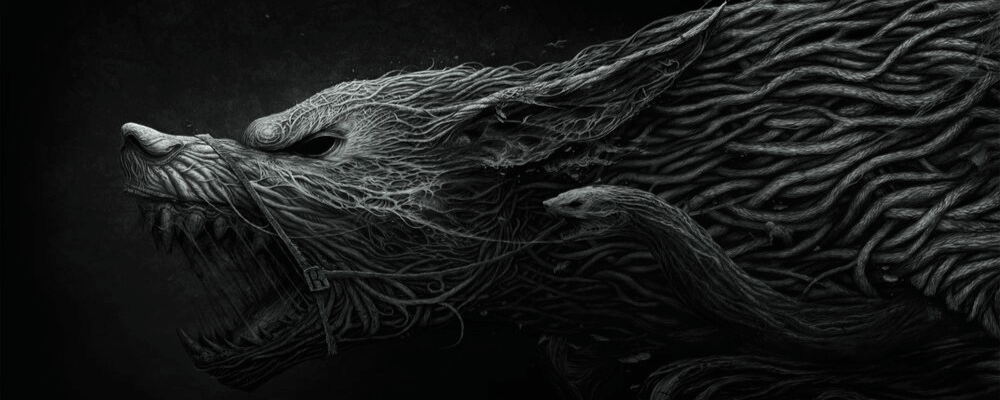
“It was made of six things: the noise a cat makes in foot-fall, the beard of a woman, the roots of a rock, the sinews of a bear, the breath of a fish, and the spittle of a bird.” (Prose Edda, Gylfaginning 34).
Fenrir was intelligent and therefore suspicious when the gods asked him to allow himself to be tethered by the ribbon.
Fenrir only agreed to do so on the condition that one of the Aesir place their hand in his mouth as a guarantee that they would release him. The gods were understandably reluctant, knowing that it was a trick. Only the god Tyr, associated with war and justice, was brave enough to consent. When Fenrir realized that the gods would not free him, he bit of Tyr’s hand.
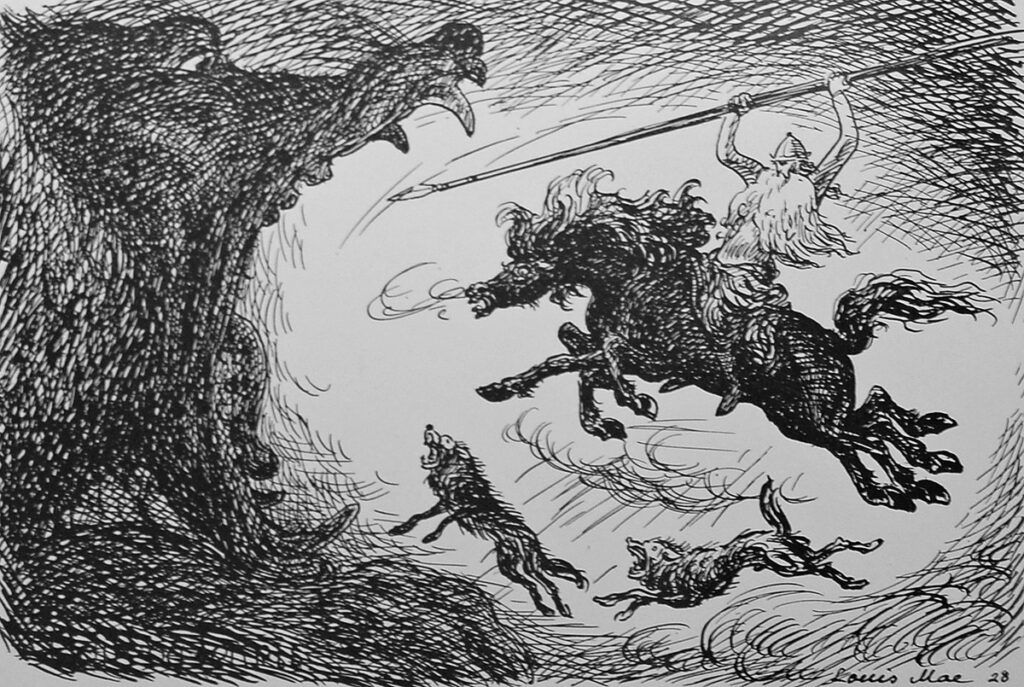
With Fenrir now secure, the gods chained him to a rock with deep roots in the earth. As he snapped and thrashed, they wedged his mouth open with a sword. Saliva flowed freely, creating a great river that the gods called “expectation.”
Expectation is a reference to the Ragnarok prophecy. At the end of day, Fenrir will finally break his bonds. He will then rampage across the nine Norse worlds, devouring everything before him, including Odin, the king of the Aesir gods (Prose Edda, Voluspa 40f.).
Fenrir will eventually be slain by Odin’s son Vidar, the silent god, in vengeance, but not before the damage is done.
Discover pieces inspired by the Norse wolf Fenrir in the VKNG store. Find some of our top picks below.


How Does Jormungandr Become the Midgard Serpent?
gan
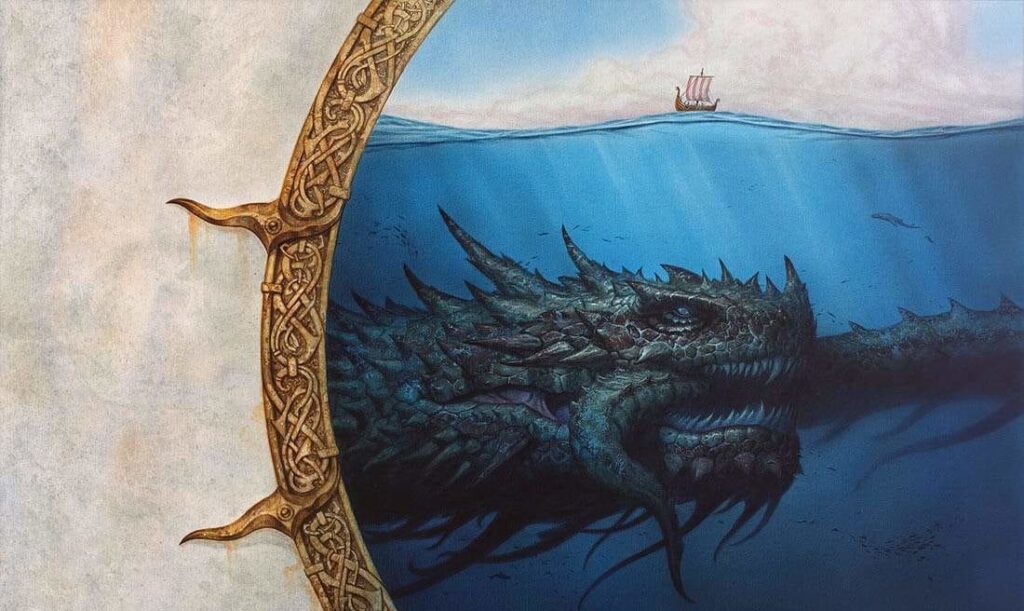
The second of Loki’s children with Angrboda was Jormungandr, a serpent whose ability to grow seemed to know no limit. Fearing this beast, Odin cast him into the sea surrounding Midgard, the world of men.
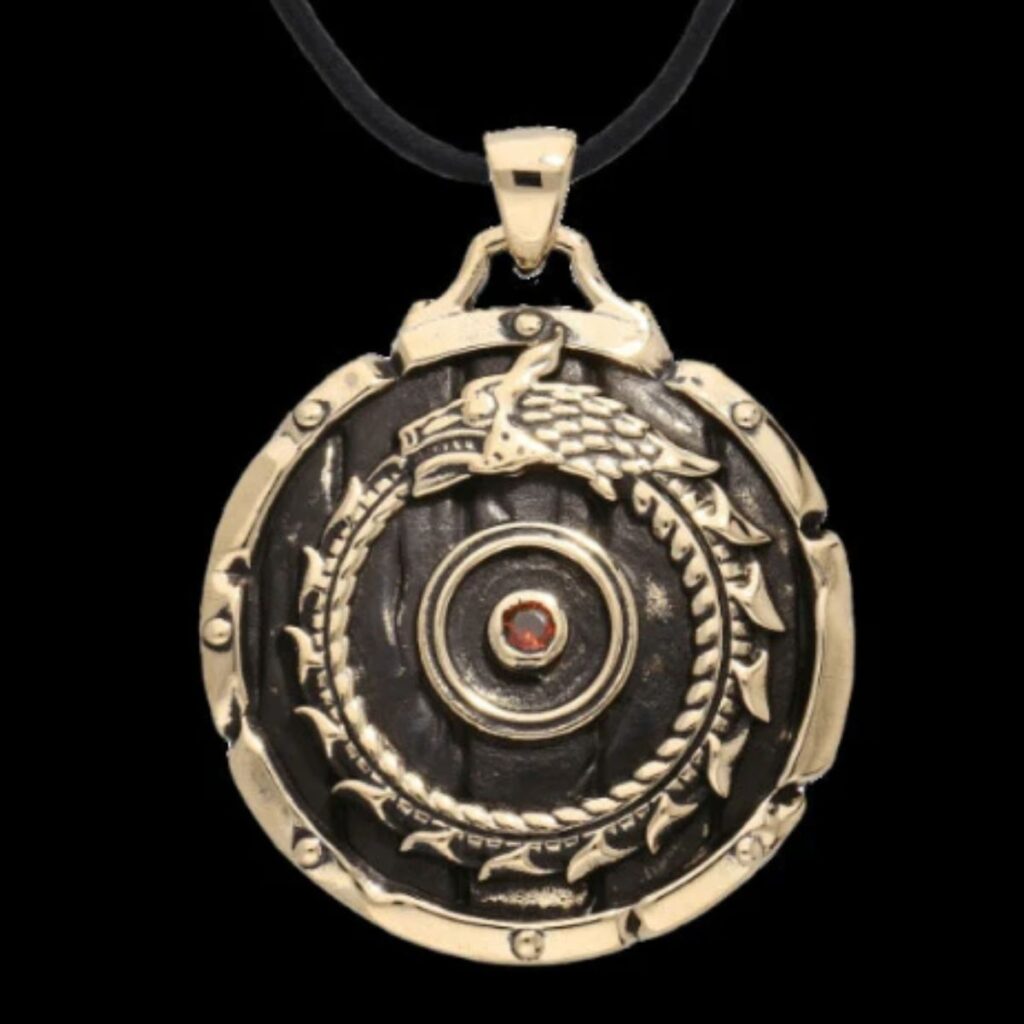
There he grew to such a great size that he could encircle the entire world and hold his own tail in his mouth. This earned him the name the Midgard Serpent (Prose Edda, Gylfaginning 34).
According to the Ragnarok prophecy, Jormungandr dropping his tail is one of the signs of the end of the world. Jormungandr and Thor and destined to slay one another in the final battle.
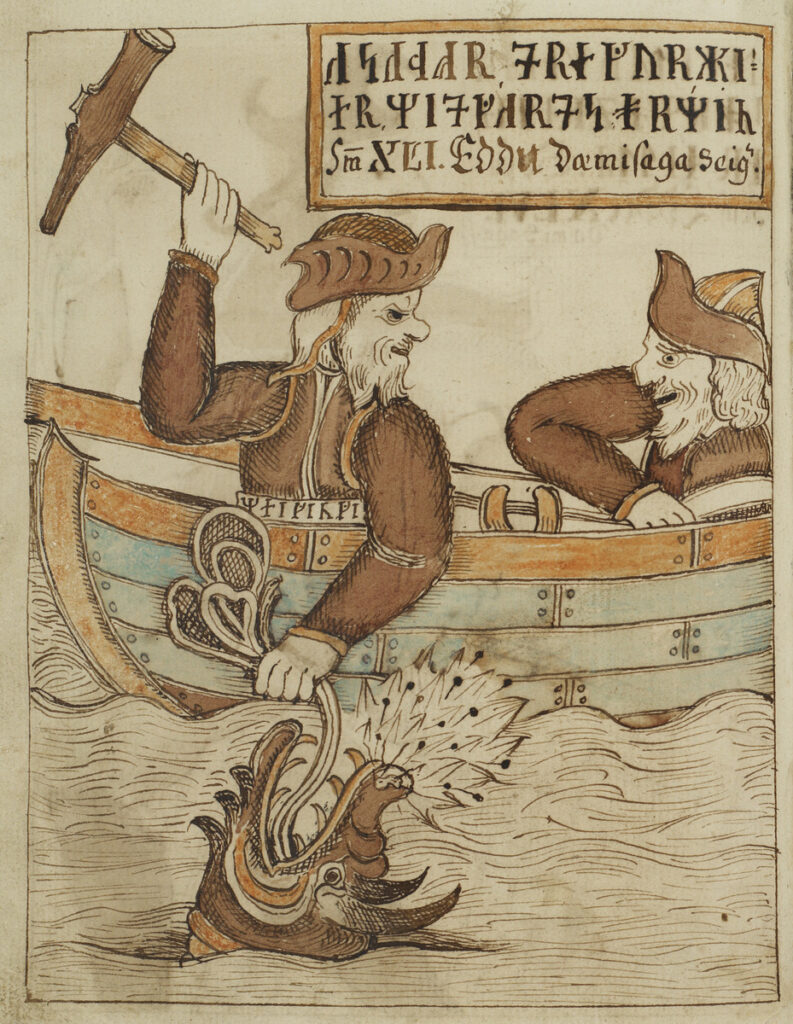
But Thor is not afraid to encounter his nemesis. On a fishing trip with the giant Hymir, he actively tried to catch Jormungandr, using giant bull heads as bait. But Hymir, fearing that the encounter might trigger destruction, cut the line before the two could meet (Poetic Edda, Hymiskviða).
At Ragnarok, Thor will kill the serpent, but not before Jormungandr spews so much of his poison onto the god of thunder that he too dies within seconds of his victory. Jormungandr will also spew his poison into the air, poisoning the nine worlds.
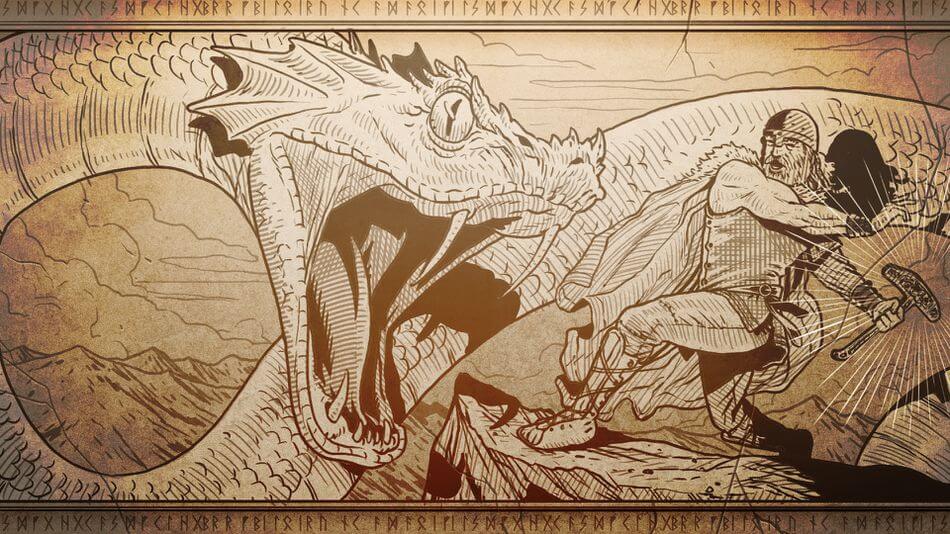
The Húsdrápa is a 10th-century skaldic poem by Úlfr Uggason that describes carvings on the walls of a kitchen in Iceland that depict Thor pulling a slick serpent out of the sea. It suggests that the story of Thor and a sea serpent long predates Snorri Sturluson‘s anthology of Norse mythology in the Prose Edda in the 13th century, 300 years after Iceland had converted to Christianity.
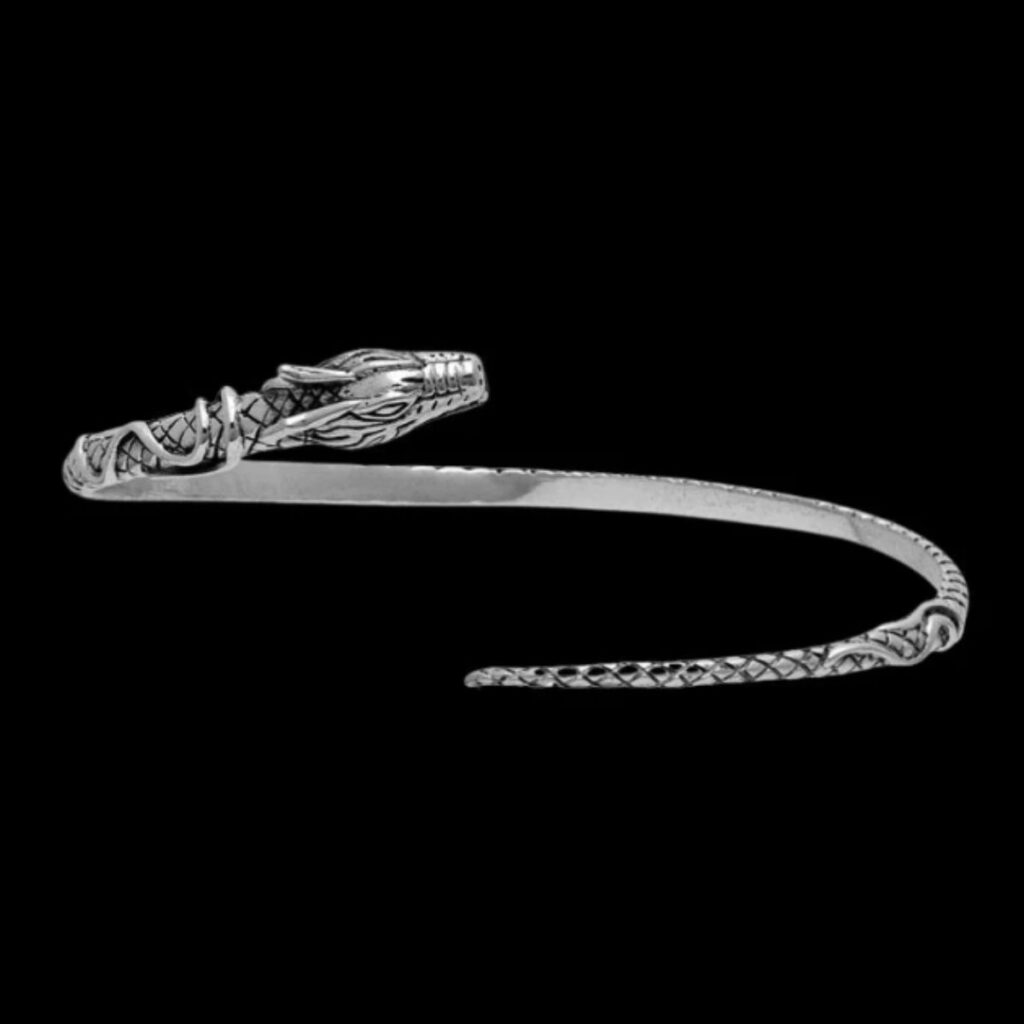
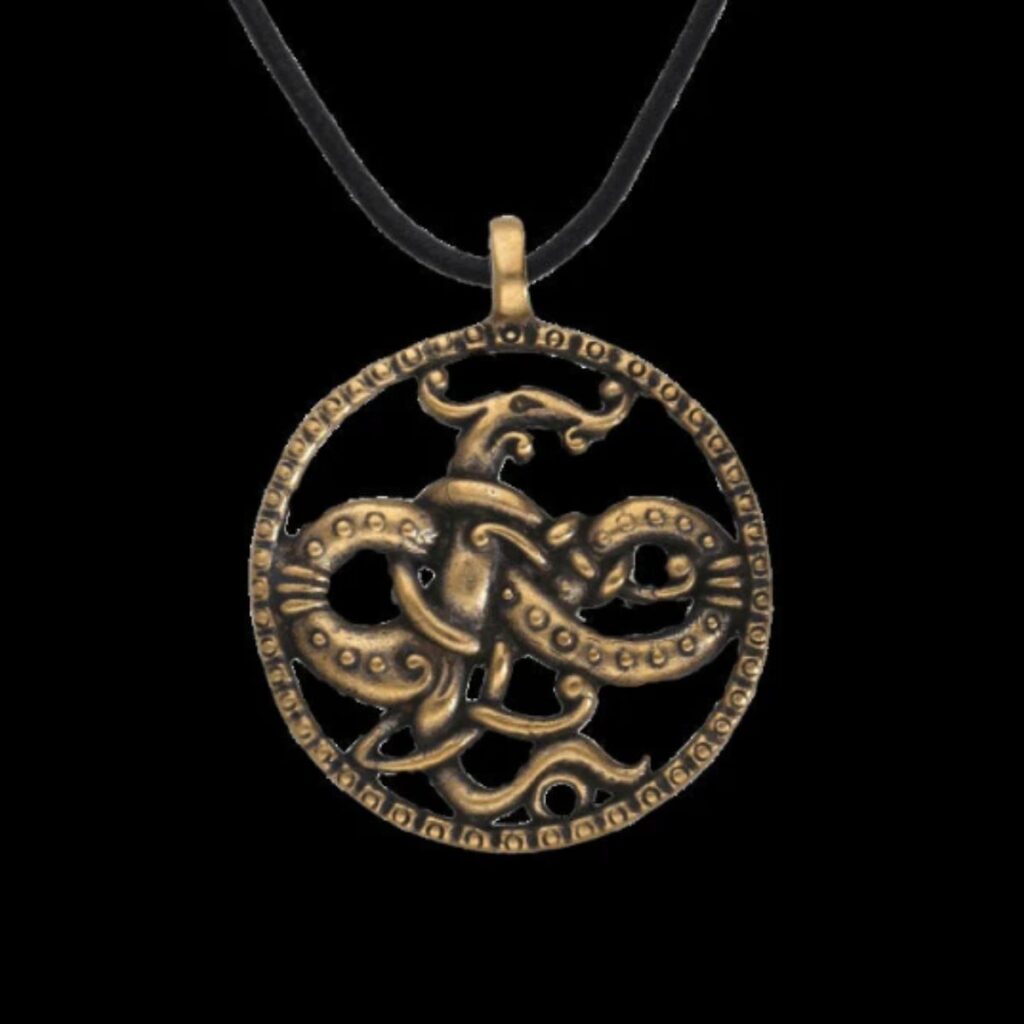
Discover pieces inspired by the mighty serpent Jormungandr in the VKNG store. Find some of our top picks below.
How Did Hel Become the Goddess of the Underworld?

The third of the children of Loki and Angboda was Hel, who may seem less monstrous but is certainly more sinister.
It is said that she was born half black and half white, which is interpreted as meaning that she was half living and half dead. Terrible to look upon, Odin sent her to Niflheim to oversee the underworld there, giving hervast powers over the dead.
“Hel he cast into Niflheim, and gave to her power over nine worlds, to apportion all abodes among those that were sent to her: that is, men dead of sickness or of old age. She has great possessions there; her walls are exceeding high and her gates great. Her hall is called Sleet-Cold; her dish, Hunger; Famine is her knife; Idler, her thrall; Sloven, her maidservant; Pit of Stumbling, her threshold, by which one enters; Disease, her bed; Gleaming Bale, her bed-hangings. She is half blue-black and half flesh-color (by which she is easily recognized), and very lowering and fierce.” (Prose Edda, Gylfaginning 34)

The underworld of Niflheim became known as Helheim as her abode. Her power is so great that only she can decide who enters and leaves. When the god Baldr died and found himself in Helheim, even Odin could not persuade Hel to release him.
When the Ragnarok comes, the prophecy says that she will sail to Asgard alongside Loki and at the head of an army of the dishonorable dead, and join the other children of Loki in the battle against the Aesir gods. Her guard dog Garm will die in a fight to the death with Tyr, but Hel’s ultimate fate is not recorded (Prose Edda, Voluspa 51f.).
What Happens to the Children of Loki and Sigyn?

The story of Loki’s children with his Aesir wife Sigyn is more tragic, as they are punished for the crimes of their father.
Loki was responsible for the death of the god Balder, the beloved son of Odin and Frigg. This was the final straw that saw Loki, who was allowed to live in Asgard among the gods due to a blood brotherhood pact with Odin, expelled. The gods then hunted him down to punish him.
The gods chained Loki to a rock and placed a poisonous serpent above his head to drip its stinging venom onto his face, causing him to writhe in pain for eternity, causing earthquakes when his body shudders. He is only relieved by the ministration of his wife, Sigyn, who chooses to stay at his side, catching the venom in a bowl. But every so often, she must leave to empty the bowl, and Loki suffers.

But the Aesir gods did not stop there, they also decided to extend the punishment to Loki’s children with Sigyn, named Narfi and Vali. Little else is known about Loki’s children Narfi and Vali beyond their tragic deaths.
Vali was turned into a wolf, losing his senses, and tearing his own brother Narfi apart. Narfi’s entrails were then used to secure Loki to his rock. This seems like eye for an eye justice, with the children of Loki killed as payment for the son of Odin (Prose Edda, Gylfaginning 50).
How Did Loki Become the Mother of Sleipnir?

Odin’s eight-legged steed Sleipnir was also one of the children of Loki, but Loki was the mother of the horse by the steed Svadilfari.
According to the story, when the world was young, and Asgard was still without fortifications, a builder arrived and offered to build the wall of the gods in exchange for the hand of the beautiful goddess Freya in marriage, plus the sun and the moon. Initially reluctant because of the high price, Loki convinced the gods that they could get the man to build most of their wall without payment if they made the task impossible, giving him just one season, and the help of no man.
The builder agreed, on the condition that he could have the help of his horse Svadilfari.
Svathilfari was such a strong horse that the work proceeded quickly, and it looked like the builder would succeed. Unwilling to pay, the Aesir demanded that Loki do something.
In order to distract the steed and sabotage the work, the shapeshifter Loki took the form of a stunning mare, and lured the steed away. The Aesir gods then not only refused to pay, but killed the builder.
Months later, Loki returned with an eight-legged horse named Sleipnir. He gave the horse to Odin, who adopted him as his steed (Prose Edda, Gylfaginning 42).
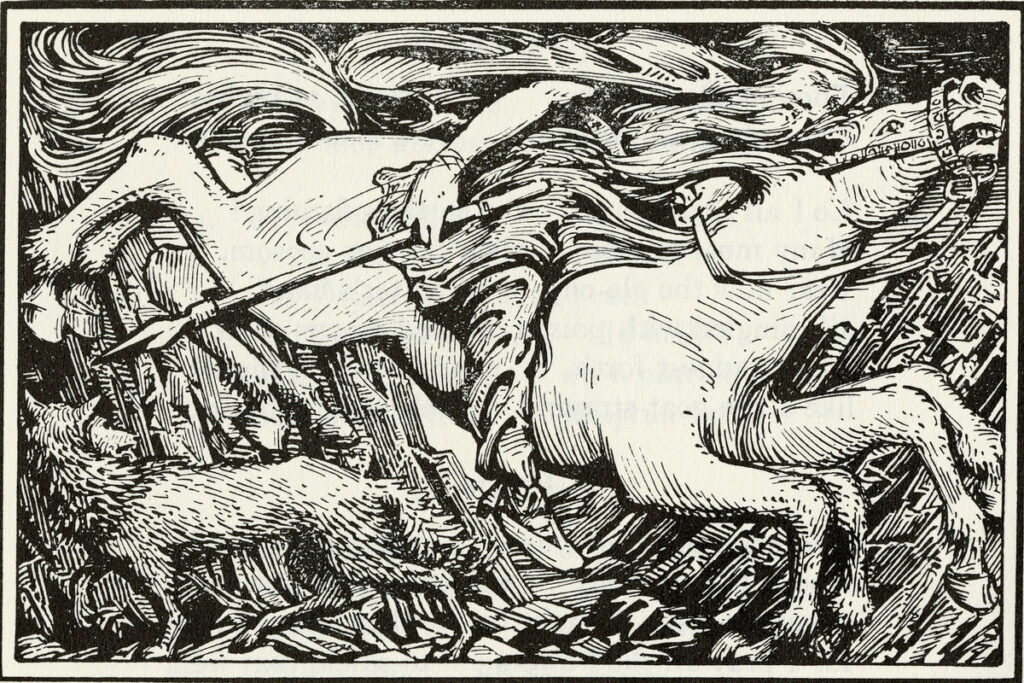
Sleipnir is said to be the fastest and best of all horses, and able to travel between the nine worlds of the Norse cosmos. Sleipnir was treated very differently from the other children of Loki.
While we often talk about the monstrous children of Loki, really, the stories of Loki’s children of Loki reveal the monstrous side of the Norse gods. It was the way the gods treated Loki’s children that set actions in motion that would result in Ragnarok.
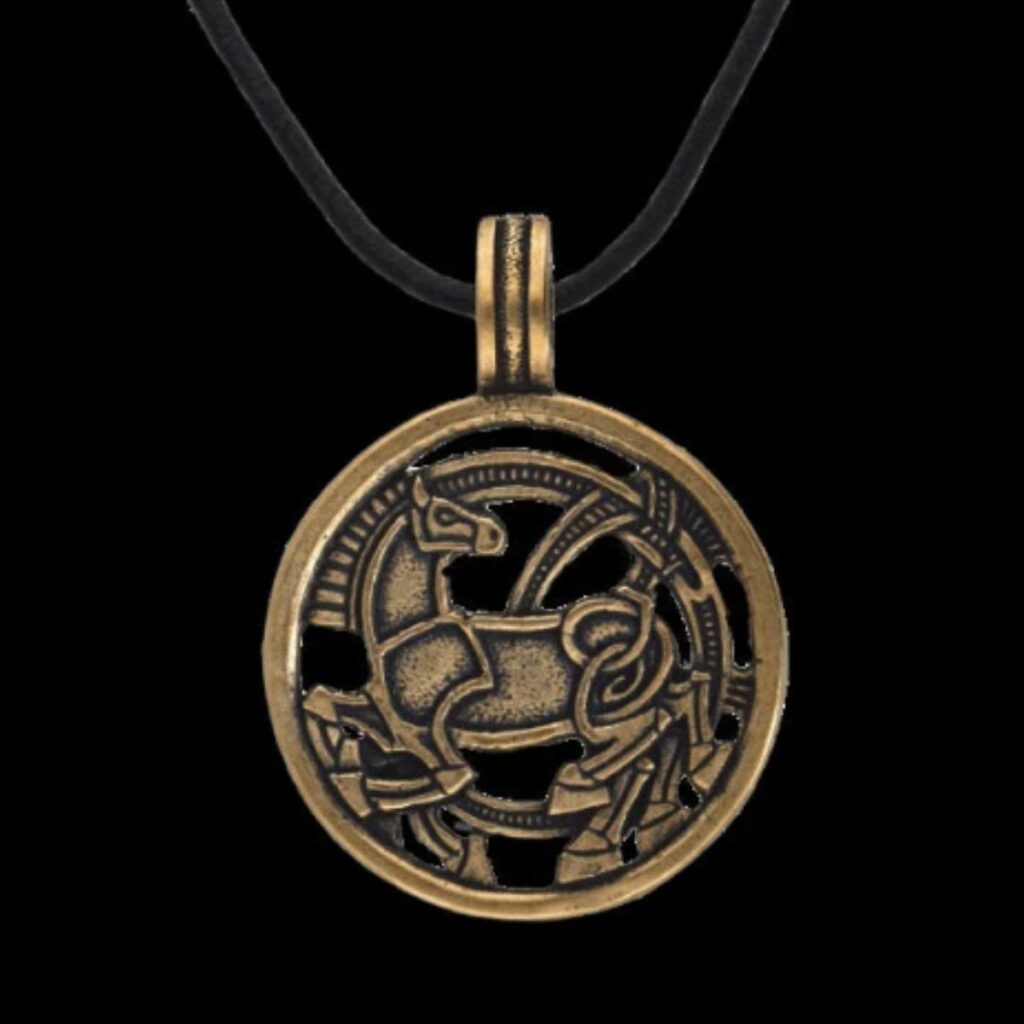
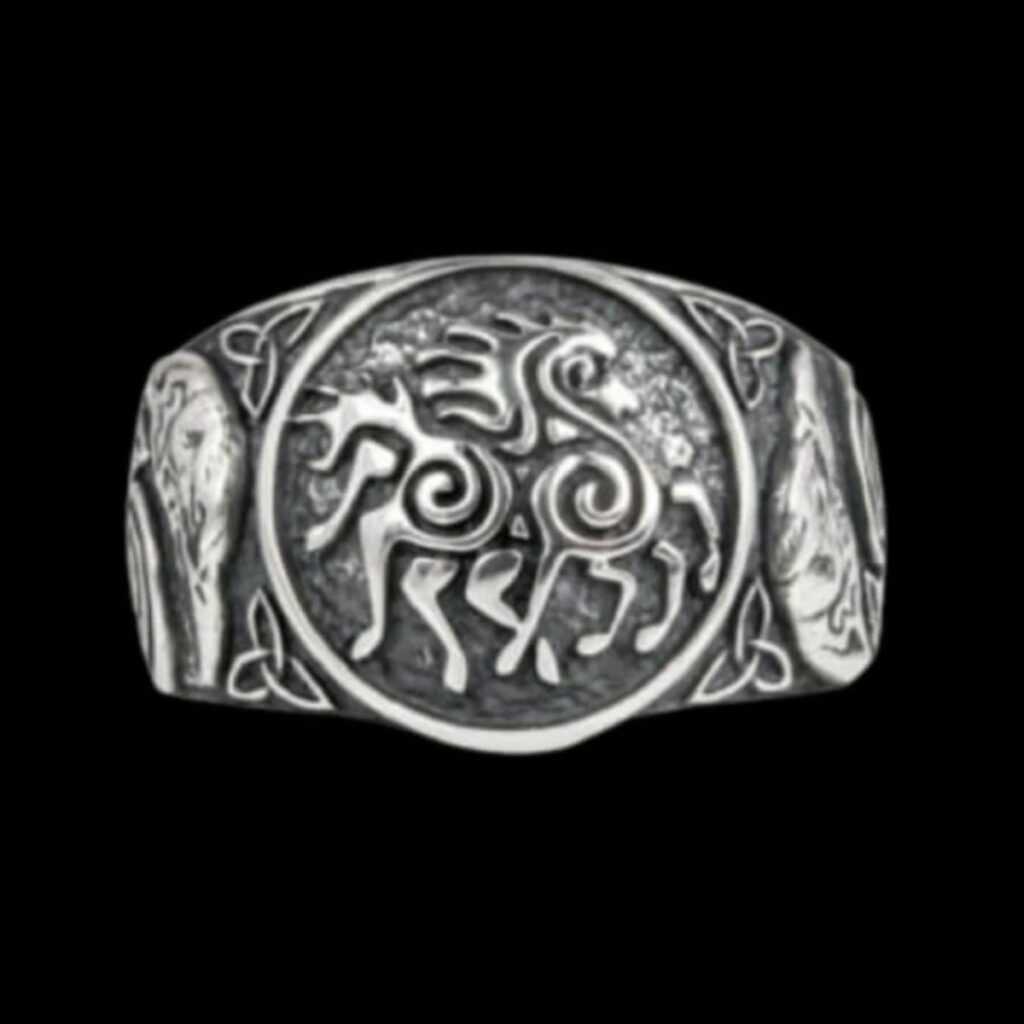
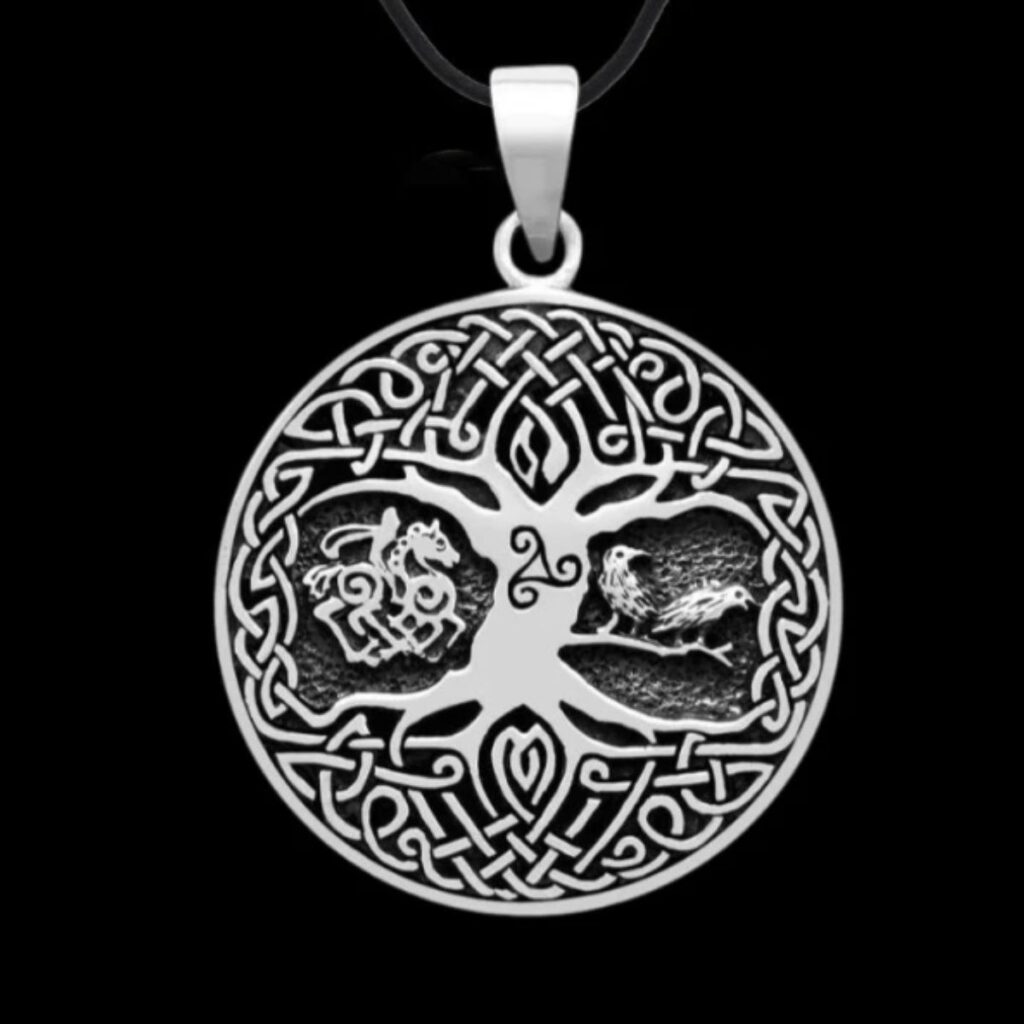
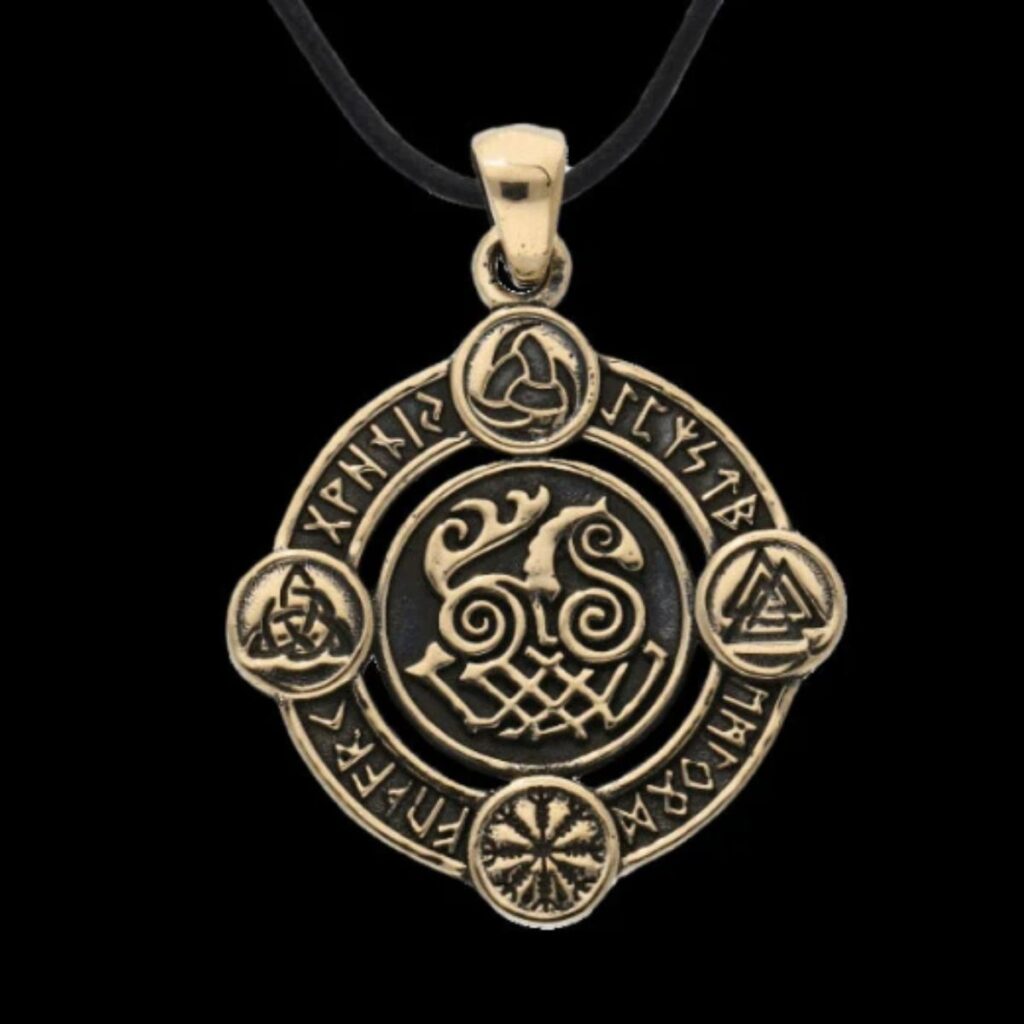
Sleipnir represents the ability to adapt and move through the world. Discover pieces inspired by Sleipnir in the VKNG store. Find some of our top picks below.