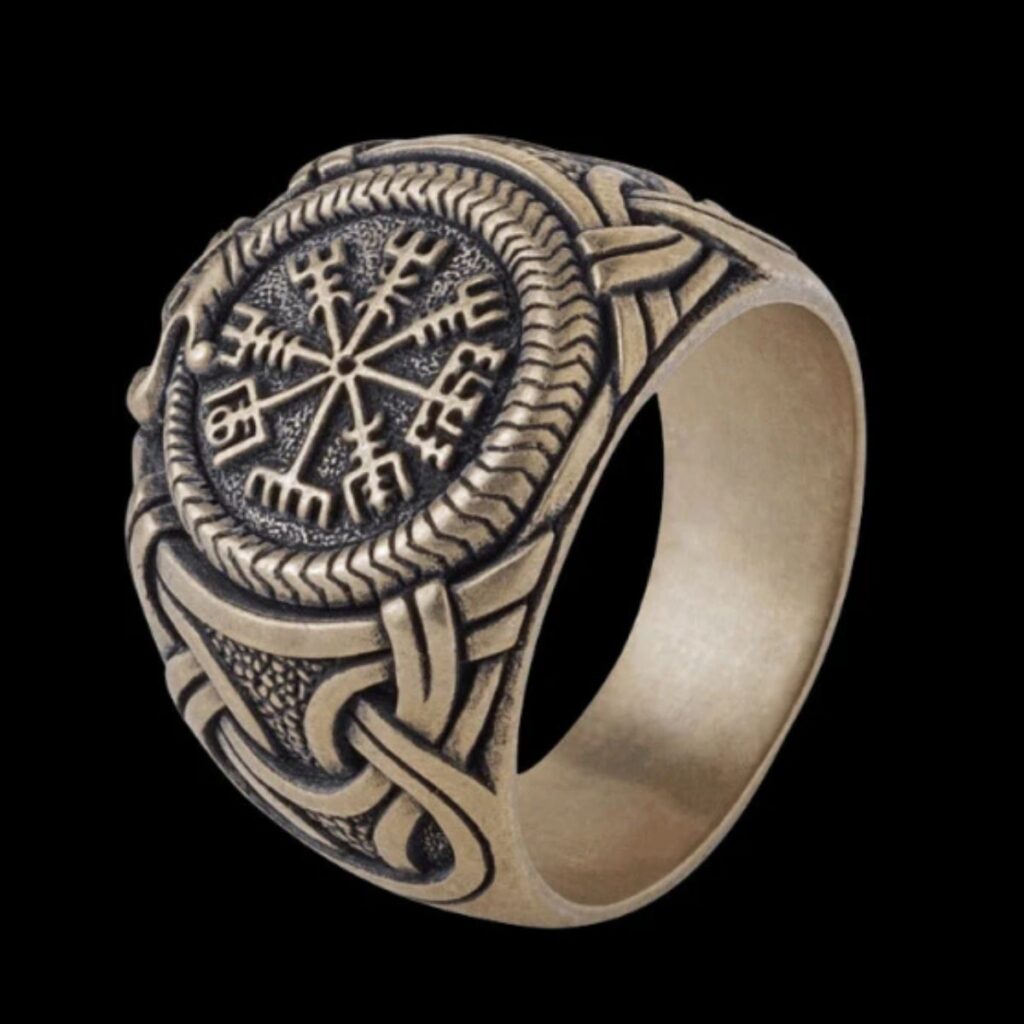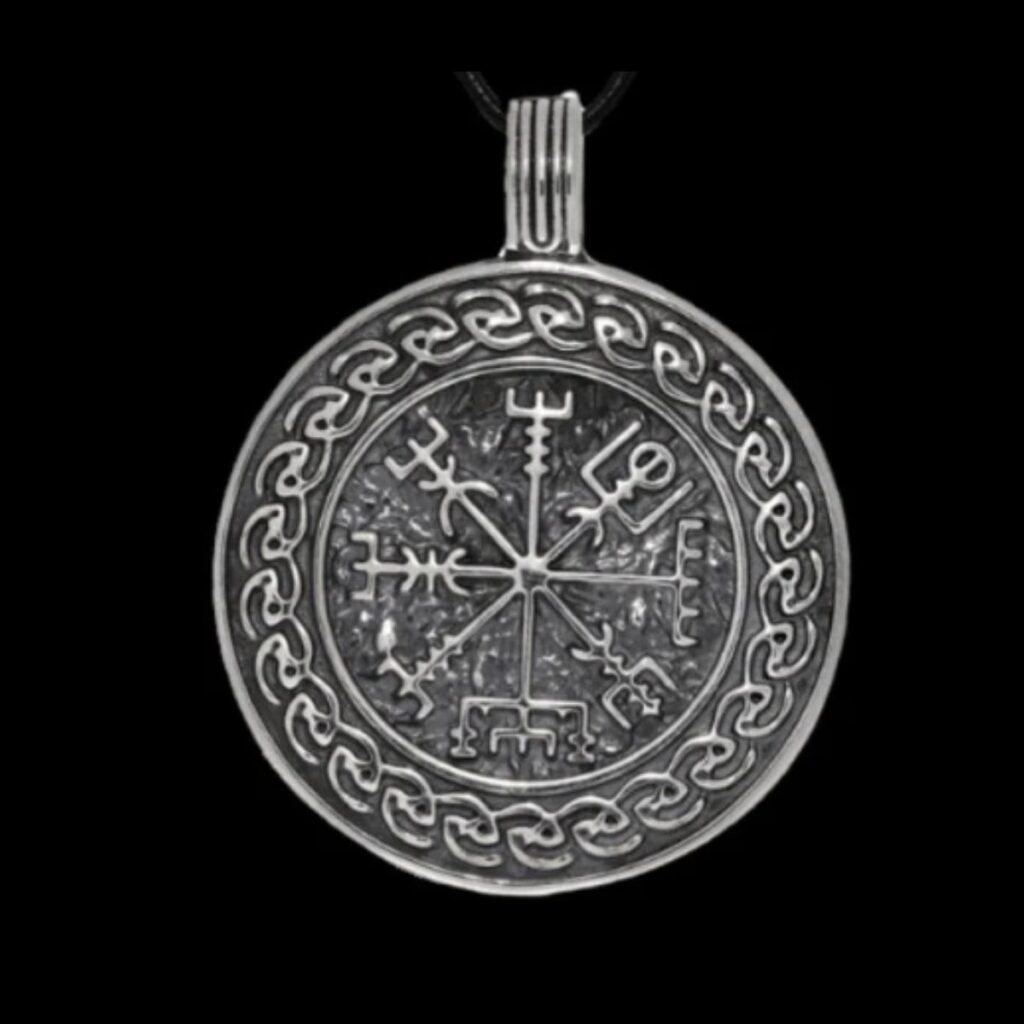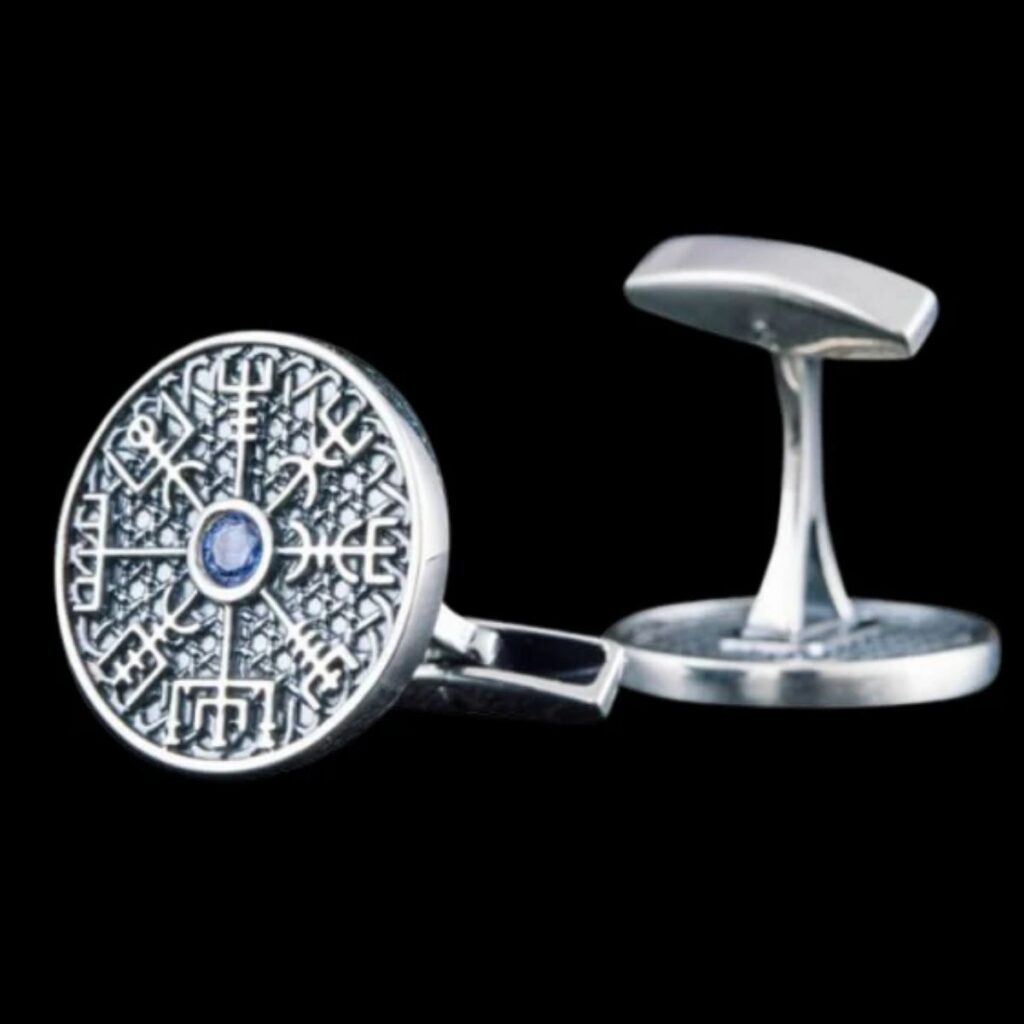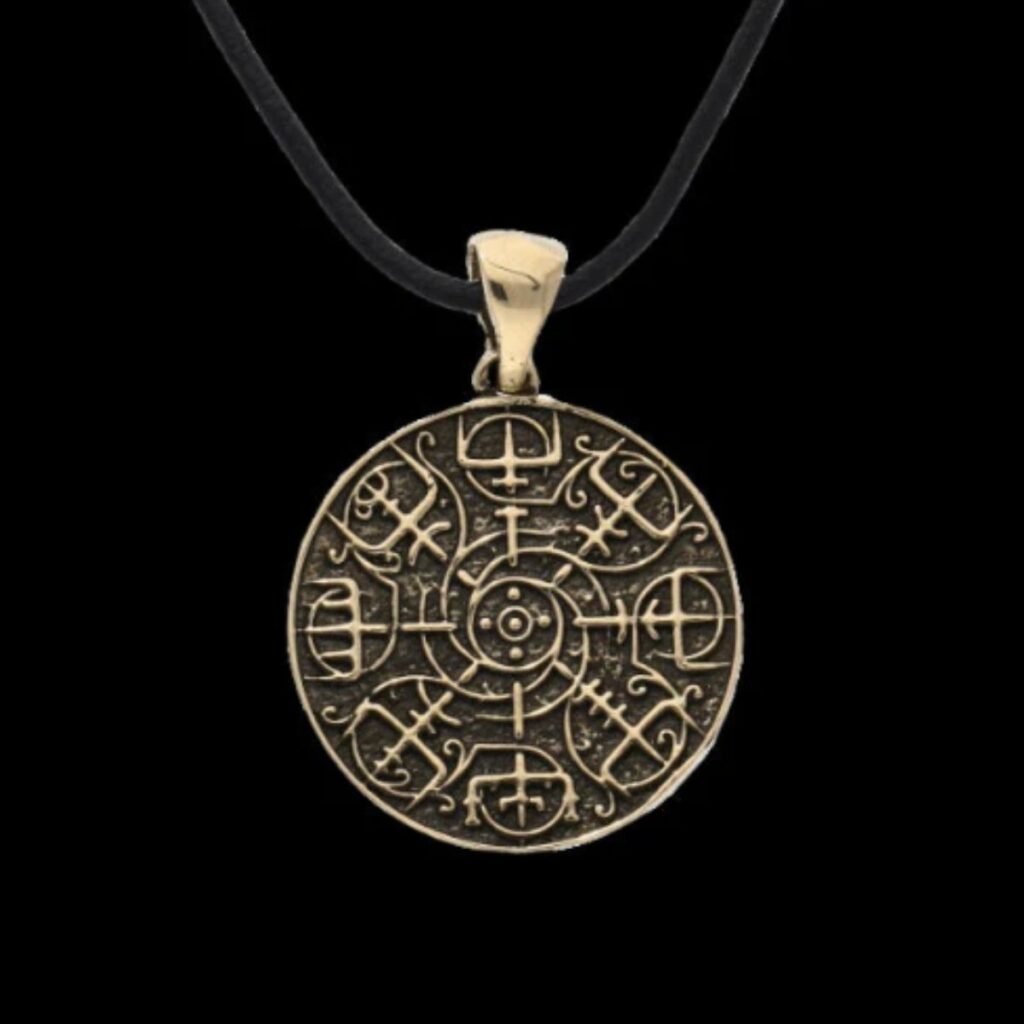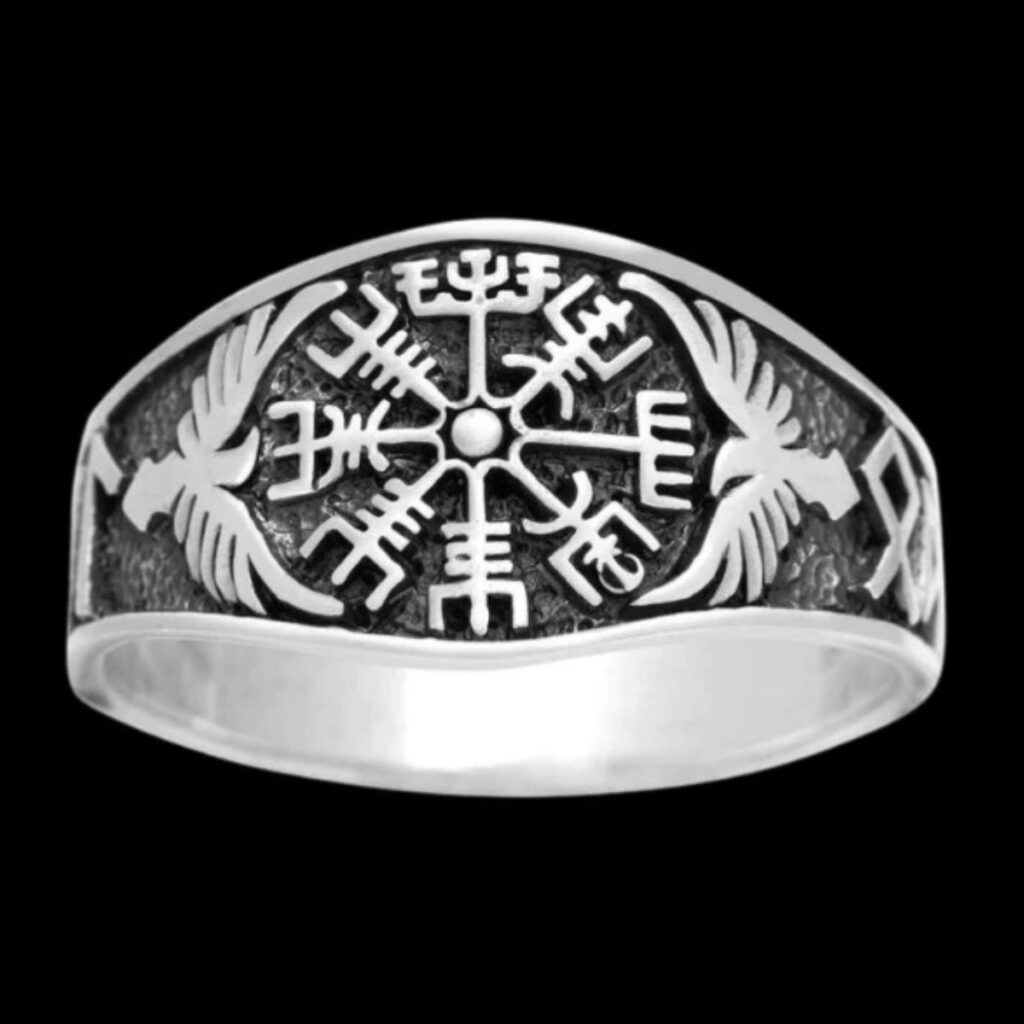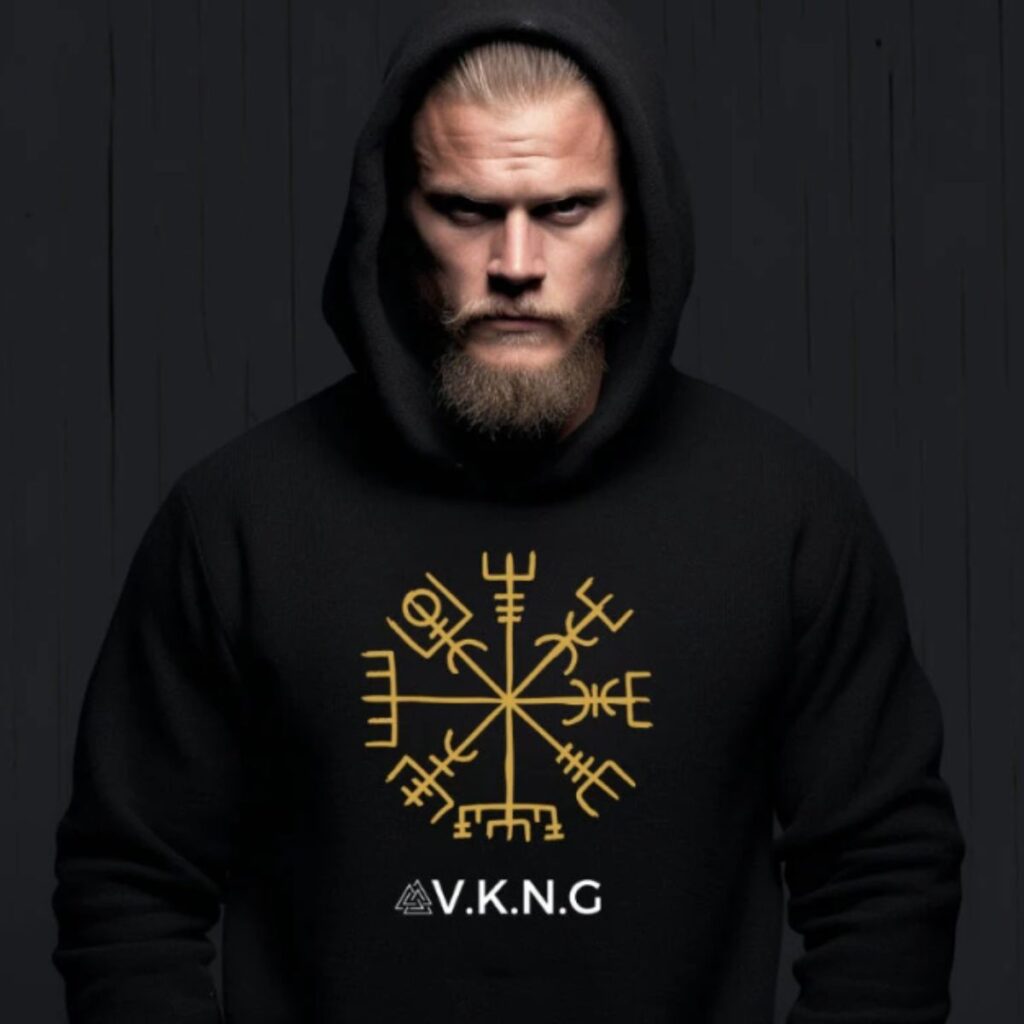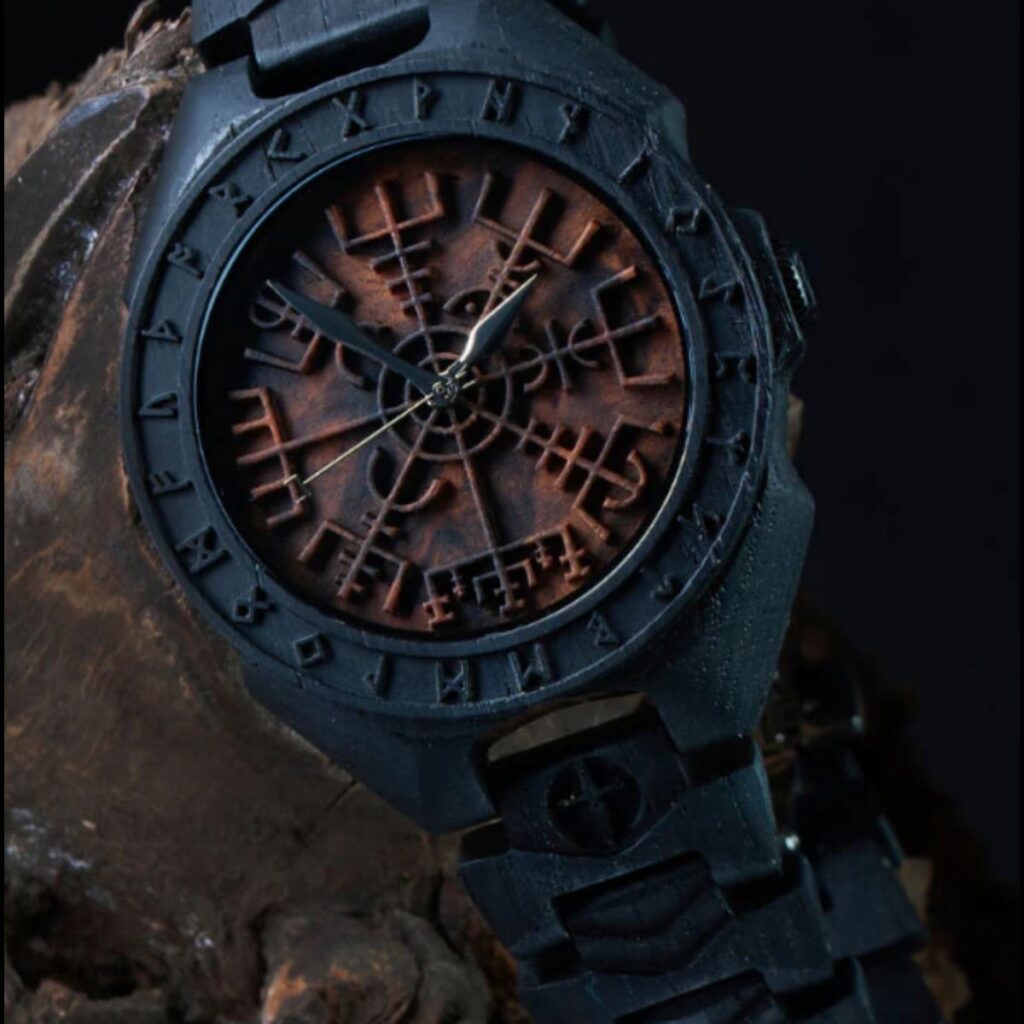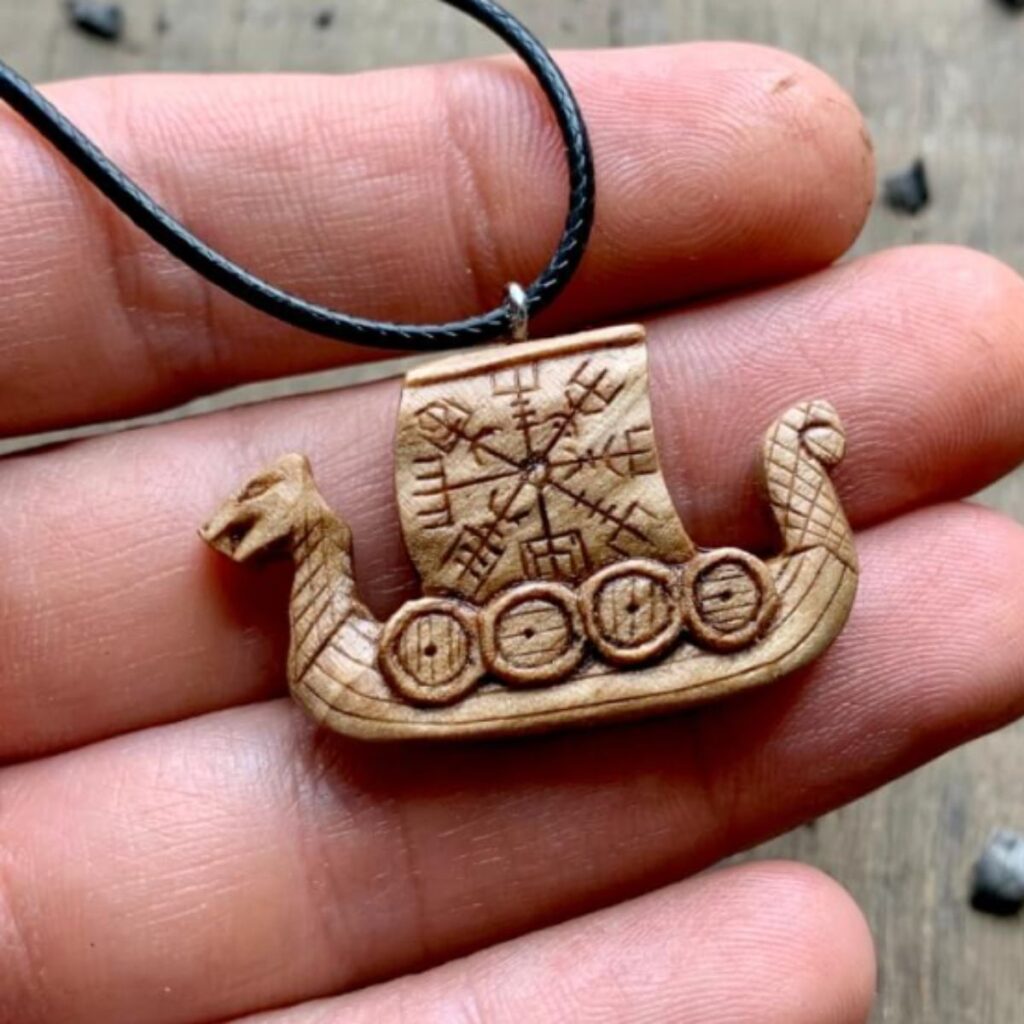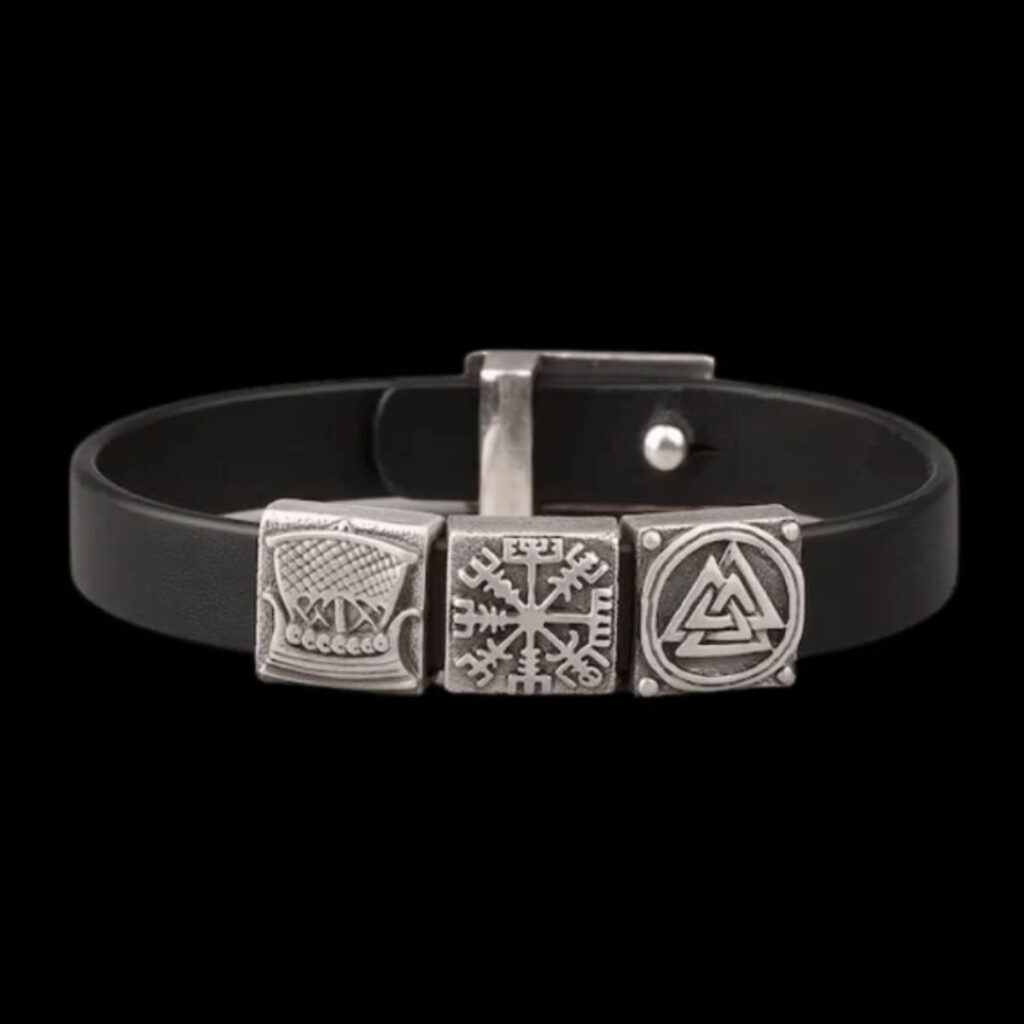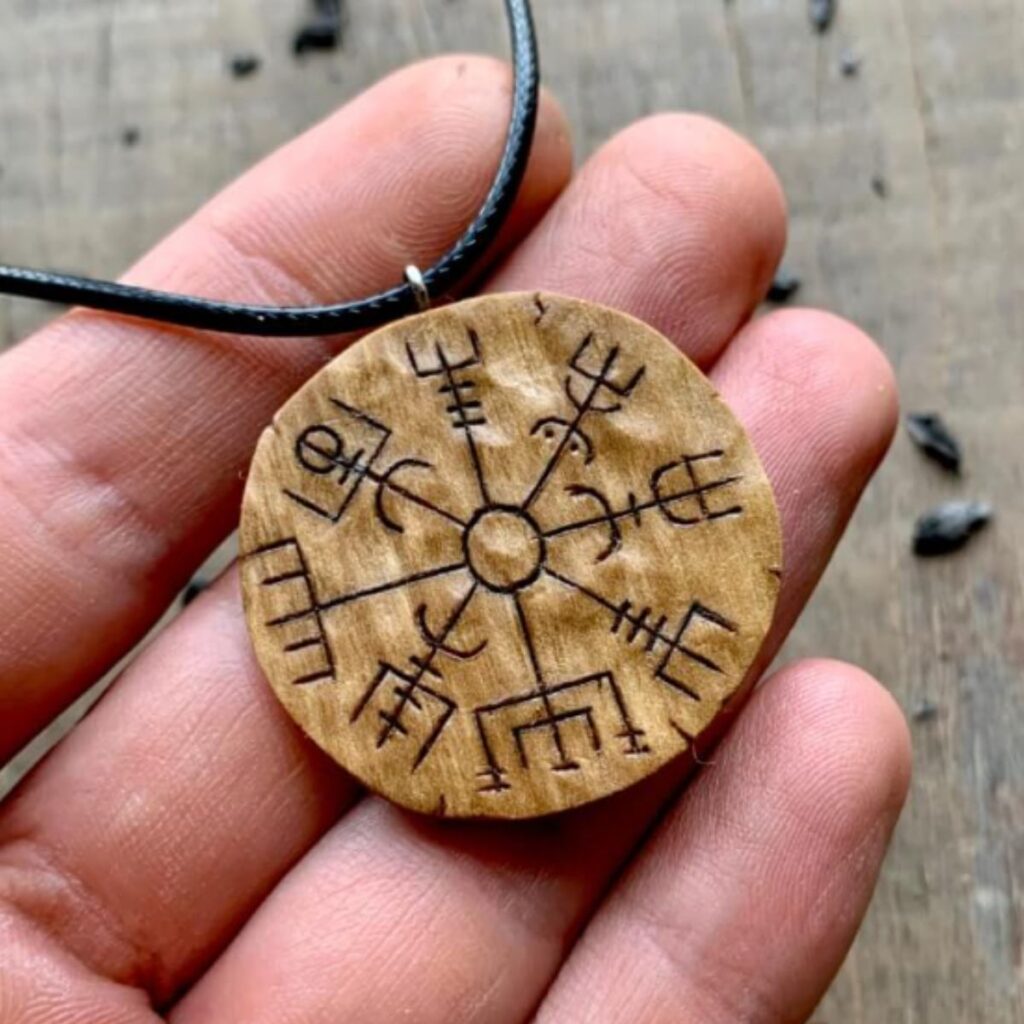
Vegvisir, also known as the Norse Compass, is a Norse magical wayfinding symbol. It will help you find your way, even if you do not know your destination.
Vegvisir is a magical runic stave, known as Galdrastafir, that appears in medieval Icelandic grimoires (magical manuscripts). The grimoires date to between 1500 and 1800, so the Christian period, and show a mixture of rune magic practices from the Viking age and Christian magical practices.
This article takes a closer look at what exactly the grimoires say about Vegvisir, how this medieval Icelandic symbol relates to earlier Viking rune magic, and how to use Vegvisir today.
Origins of the Runes
To the Vikings, the Nordic runes were more than just an alphabet that could record the world and ideas. They were a magical toolkit that could be used to shape the world and influence destiny.
The Vikings did not believe that the runes were invented, but rather were something that formed part of the fabric of the universe. They were discovered by Odin, the king of the Norse gods and the god of wisdom and war. He had seen the Norns, the Norse fates, carving destiny into Yggdrasil, the world tree, to create destiny. Always hungry for knowledge, Odin hung himself from Yggdrasil for nine days and nine nights, pierced by his own spear and staring into the abyss. At the end of this ordeal, he had learned the secrets of the runes.
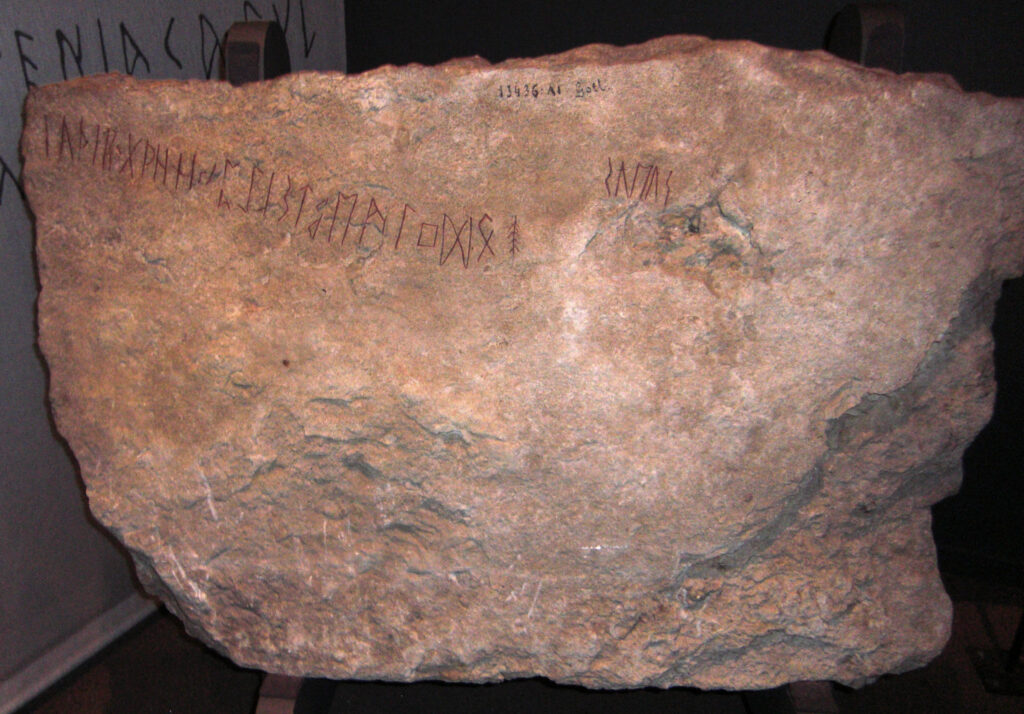
Linguists believe that the Norse runes were adopted by Northern Europeans from early Italic alphabets. The first Germanic rune alphabet, known as Elder Futhark, emerged around the 1st century CE. We know that this alphabet was used in Scandinavia, as a full set of the 24 runic symbols has been found on the Kylver stone in Sweden.
As the Nordic languages evolved, Elder Futhark was replaced by Younger Futhark from around 800 CE. The runes were eventually replaced by the Latin script following the widespread conversion to Christianity in the 11th century CE.
Rune Magic

The ancestors of the Vikings already practiced runic magic. The Romans observed the Germanic ancestors of the Vikings using rune magic a thousand years earlier. In one text from around 100 CE, the Roman author Tacitus described Germanic tribesmen carving runes onto sticks and throwing them on the ground as a form of divination.
“They practice divination by lot, as readily as any people do: using a single method. A twig is cut from a nut-bearing tree, and split into slips: these are each uniquely marked, and then scattered randomly on a white sheet: next an official priest, on behalf of the people, or a patriarch in person, on behalf of his family, gazing at the sky and praying to the gods, selects three slips, one at a time, and interprets his choice according to the distinguishing marks they reveal: if the reading is negative, no further inquiry is made that day; if the reading is auspicious further confirmation by divination is sought.” (Tacitus, Germania 10)
The same practice is described in the Viking poem known as the Lay of Hymir, when the chips are thrown into blood to read the future.
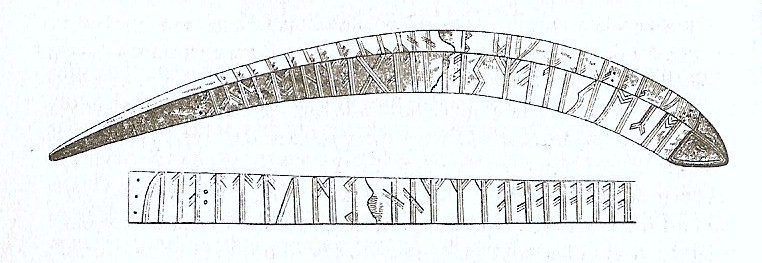
The Germanic ancestors or the Vikings also commonly carved certain rune combinations onto jewelry, probably for protection. The most popular was the runic word ALU, the meaning of which is unknown, of several Tiwaz runes stacked on top of one another. Similar items with runic inscriptions survive from Viking times, including tools, jewelry, and amulets.
The Lindholm amulet above, from Sweden, has an inscription about the owner, and then a second line with a magical string of runes. It includes both the Tiwaz rune repeated three times and the string ALU.
Viking runic magic is also described in the sagas. In the Saga of Egil, the eponymous warrior encounters a farmer whose daughter is very ill. Investigating the situation, he discovers a whalebone with a crudely carved rune in her bed. This was probably placed there by a local boy trying to help the girl, but whose knowledge of the runes was limited. As a master of the runes, Egil was able to identify this as the source of her illness, destroy the rune, and replace it with a different runic symbol that would help the girl.
From Viking Runes to Icelandic Galdrastafir
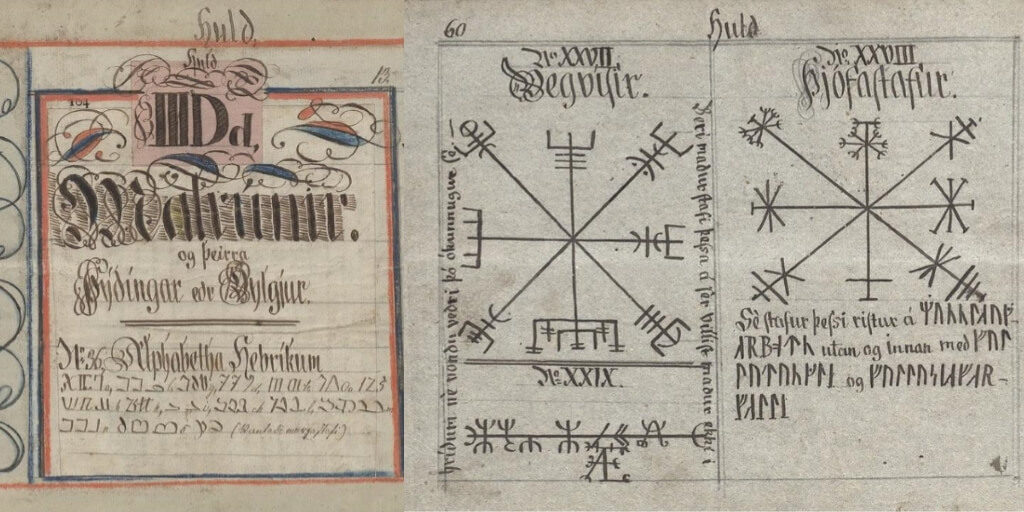
Runic magic based on the Viking tradition continued to be practiced in Iceland in the centuries that followed the end of the Viking period. But as Christianity gained a foothold and Christian ideas were brought to the region, it merged with Christian ideas of magic. This is clear from the medieval grimoires, which share many commonalities with Christian grimoires from elsewhere in Europe. The text also names both Old Norse gods and Christian saints in the various spells listed.
One of the most common forms of magic recorded in the grimoires are magical runic staves, called Galdrastafir. These were created by staking runes together into symbols. They use Norse runes, but draw on the Christian practice of creating sigils that create a condensed spiritual representation of something to communicate with the divine or influence reality. The grimoires provide Galdrastafir for a variety of purposes, from detecting thieves, to attracting a lover, to having good dreams.
Vegvisir: Meaning of the Norse Compass
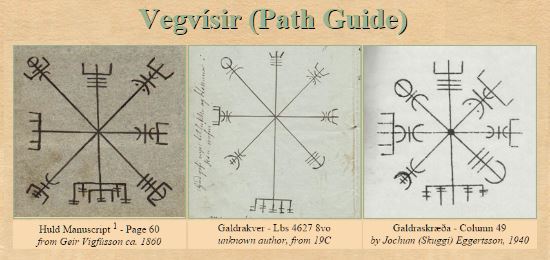
Vegvisir is first recorded in the Huld Manuscript, compiled by Geir Vigfusson in the 19th century from earlier texts. It depicts the Vegvisir symbol, which means “that which shows the way”, combining “vegur” which means way, with “visir”, which means pointer. This is why it is commonly called the Norse Compass.
The symbol in the Huld Manuscript is square, rather than the round version that is common today, and is composed of eight staves, each ending with different symbols. It has been speculated that each symbol represented one of the cardinal directions, much like a compass.
However, there is no evidence that the Vikings used devices that resembled a compass. They also do not seem to have used maps of other familiar navigational charts and tools, making it all the more incredible that they were such a successful seafaring people. They do seem to have used a sun stone to detect the location of the sun, probably to determine latitude.
The lack of compasses in the Viking world suggests that Vegvisir could represent something else, such as each arm representing one of the nine worlds in the Norse Cosmos, with the center point being Midgard, the location of the human subject of the spell.
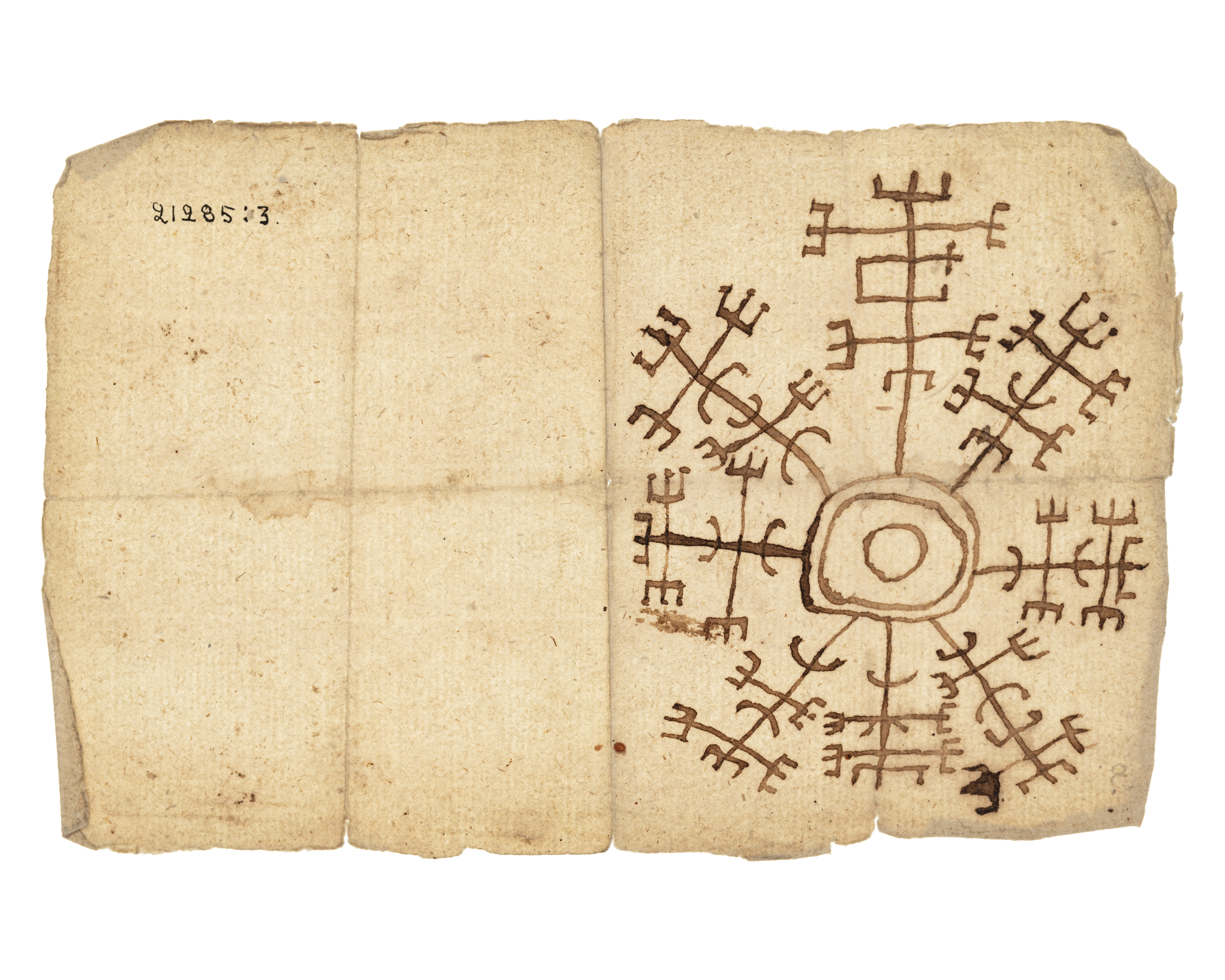
The round version of the symbol first appears in the Galdrabok, a grimoire which it is claimed dates from the 16th century, but was first published in 1921. The current location of the original manuscript, if it ever existed, is unknown.
Both manuscripts say that: If this sign is carried, one will never lose one’s way in storms of bad weather, even when the way is not known.
Vegisir in the Viking Age
There is no evidence that Vegvisir was used during the Viking age. It does not appear on any surviving archaeological items and is not described in any of the surviving stories. A Viking poem, the Sigrdrifa, says that runes were sometimes carved onto the side of ships and oars, and this may have been Vegvisir, or something completely different.
The story at least seems to confirm that the Vikings believed that magical runes could be used to help those at sea catch a fine wind, stay safe at sea, and find their way to their destination.
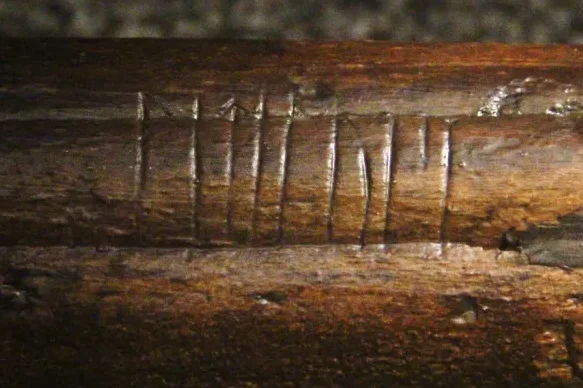
Runic inscriptions have been found carved into the Oseberg ship, a ship used for a burial in Norway around the year 800 CE. The inscription was found on a piece of wood over two meters long that may have been part of an oar or mast. It can be interpreted as “litet-vis maðr” or “man knows little.”
Vegvisir Today
Today, Vegvisir is a popular symbol among modern Scandinavians, lovers of Norse myth, and members of the Heathen community. It is still used as a wayfinding symbol, but it has become associated with spiritual guidance. It can help you plot your path through life, even if your final destination is unclear.
We think that Vegvisir is one of the most inspiring symbols from the Norse world, and so we have several pieces that feature the runic stave in our collection. It makes an excellent amulet necklace or signet ring symbol.