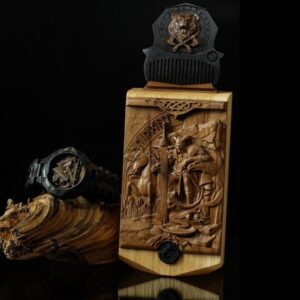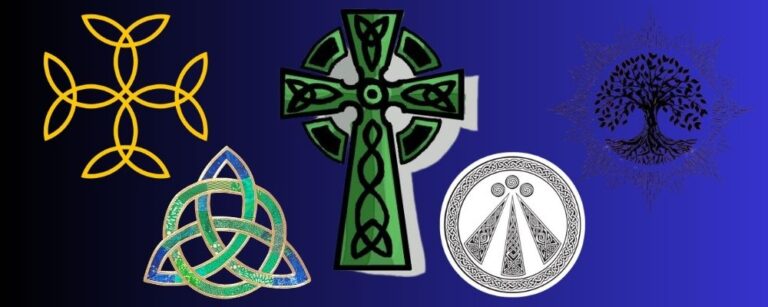
We often talk about the importance of symbols in the Viking world and have articles dedicated to explaining the meanings of symbols such as the Valknut (symbol of Valhalla), Vegvisir (the Norse compass), and Mjolnir (Thor’s Hammer). These symbols inspire many of the designs in the VKNG Collection.
The VKNG Collection also features Celtic jewelry, so let’s take a look at some of the important symbols from the Celtic world.
1 – Celtic Cross
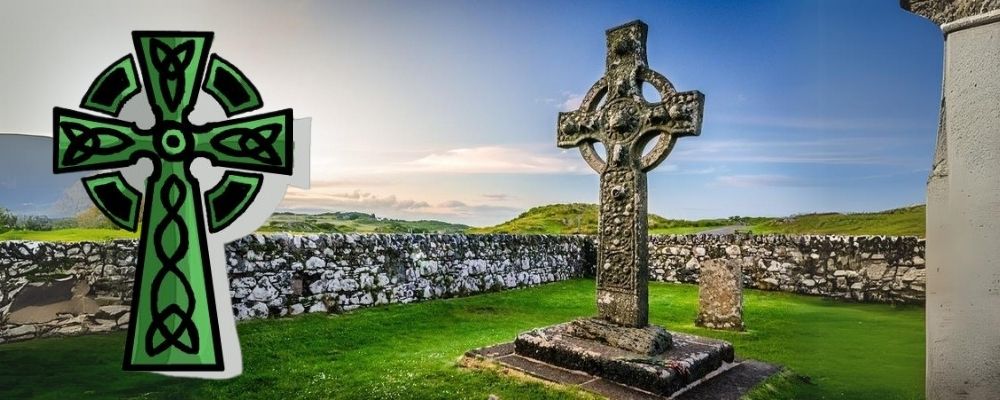
The Celtic Cross emerged when paganism and Christianity met in the Celtic world.
It fuses the Christian cross and the pagan sun wheel, combining the symbol of crucifixion and forgiveness and the life-giving power of the sun.
It first appeared in the Early Middle Ages in Ireland. Saint Patrick reportedly used the symbol to teach his pagan followers the meaning of the cross. Evidence suggests that the Celtic Cross may have predated Patrick, and that the four sections created by the circle enclosing a portion of the cross represent the four elements, earth-air-fire-water, the four cardinal directions, north-south-east-west, the times of day, morning-evening-dusk-dawn, and/or the four energies, nature-self-wisdom-divine.

In the earliest examples of stone Celtic crosses, the panel of the cross was inscribed with nature or geometric symbols, similar to Nordic design techniques, or with Celtic texts. Over time, these were replaced by Biblical scenes that were used as visual teaching aids.
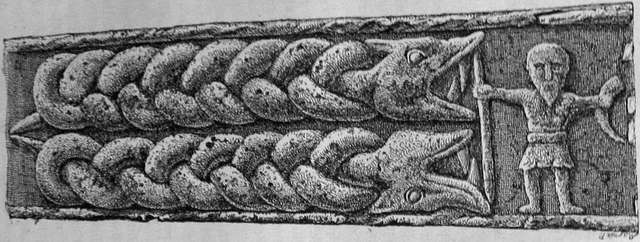
While most surviving High Crosses come from Ireland, they were also erected by the Anglo-Saxons, mostly in the 9th and 10th centuries. Some, like the famous Gosford Cross, also feature scenes from Norse mythology, reflecting the cultural influence of the invading Norsemen.
Find Celtic Crosses in the VKNG Collection.


2 – Triquetra
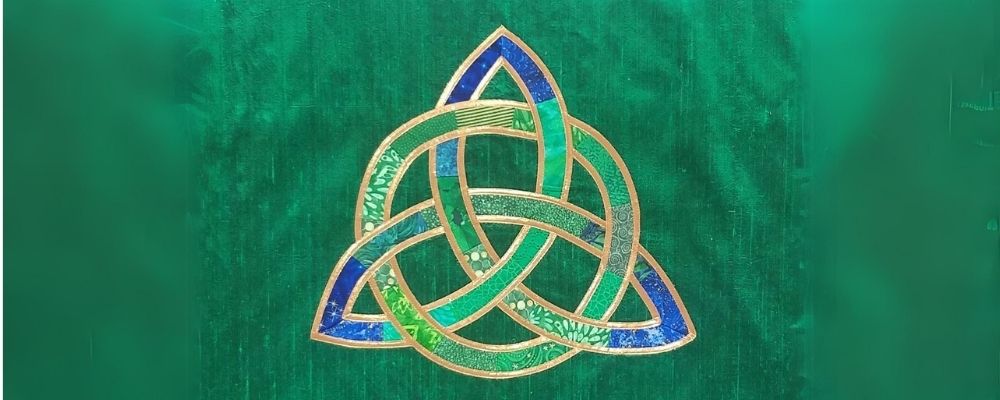
The Triquetra appears in many cultures and consists of three-pointed loops drawn in a triangular shape, with each point corresponding to a corner of the triangle.
It closely resembles the Norse Valknut, suggesting that they may share an origin. The Valknut is connected with death and the transition into the afterlife. However, the Triquetra also appears in the Norse world, suggesting it may have been a distinct symbol.
It symbolizes eternity and interconnectedness. It also represents several of the triads in Celtic theology including the division between land, sea, and sky, the cycle of life, death, and rebirth, and also the triple goddess The Morrigan, the goddess of battle and strife.

It started to appear around the 4th century BC on carved stone monuments, woodwork, and jewelry.
The Triquetra also appears in the Book of Kells, a 9th-century illuminated manuscript.
It has become a universal symbol of modern paganism.
Discover the Triquetra in the VKNG Collection.


3 – Tree of Life
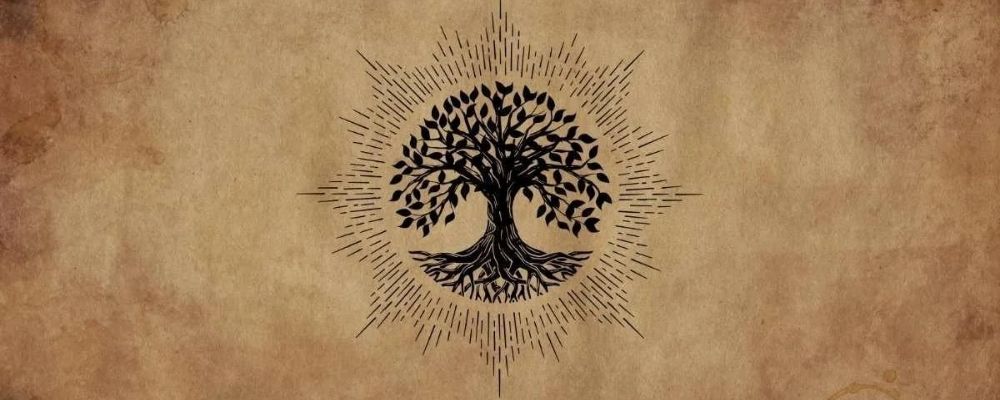
Called Crann Bethadh, the Tree of Life signifies how the forces of nature come together to maintain balance in the universe. It is closely related to Yggdrasil, the great World Tree that acts as the backbone of the Norse cosmos and the highway of destiny.
The Celtic tree embodies strength, wisdom, and endurance, just like a tree that grows tall and strong, adapting to the changing seasons.
It represents the three stages of life: birth, death, and rebirth. This cycle mirrors the changing seasons as the tree sheds its leaves in autumn, becomes dormant in winter, and sprouts new leaves in the spring. The tree also reaches up into the heavens, with its roots digging down into the underworld, representing the universe.

The tree is usually imagined as an oak, which was sacred to the ancient Celts and believed to house their gods and ancestors. Descriptions of the Druids often describe them as nurturing sacred oak forests.
The 1st-century AD Roman writer Pliny the Elder described a festival on the sixth day of the moon where the druids climbed an oak tree, cut a bough of mistletoe, and sacrificed two white bulls as part of a fertility rite. Britons under Roman occupation worshiped a goddess of the oak tree, Daron. The sacred oak of early Ireland was called Mugna.
It was traditional to plant an oak tree in the center of new settlements.
Discover the World Tree in the VKNG Collection.


4 – Carolingian Cross
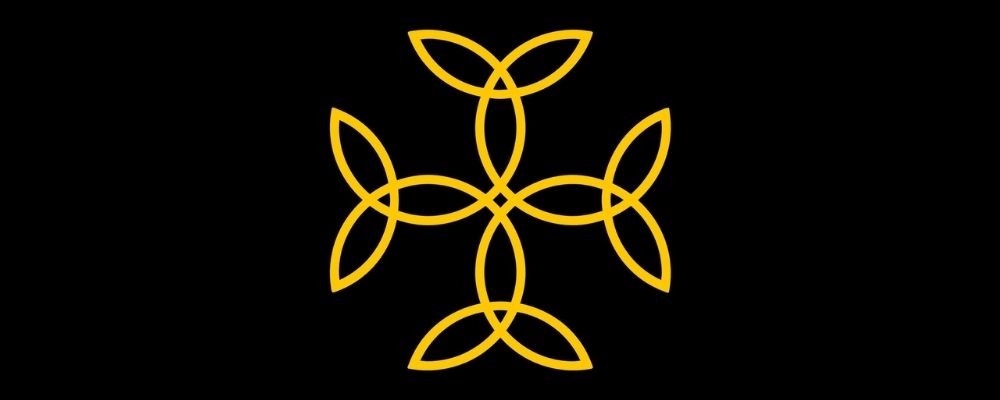
Also known as the Cross of Triquetras, the Carolingian Cross is made from four interconnecting triquetras.
This is a Christian symbol influenced by Celtic culture that connects the idea of the Christian cross with the idea of the tree of life, representing the past, present, and future.
Sacred number theory was important in Christian art during the Middle Ages.

This geometry reflects the belief that the universe operates according to an ordered design and that numerical geometric representations are a manifestation of divine providence.
The number four and quadratic shapes are examples of the creator’s mind.
Four represents the four elements, the changes of the seasons, and the cycle of the motions of the stars and the heavens.
Discover the Carolingian Cross in the VKNG Collection.


5 – Triskelion
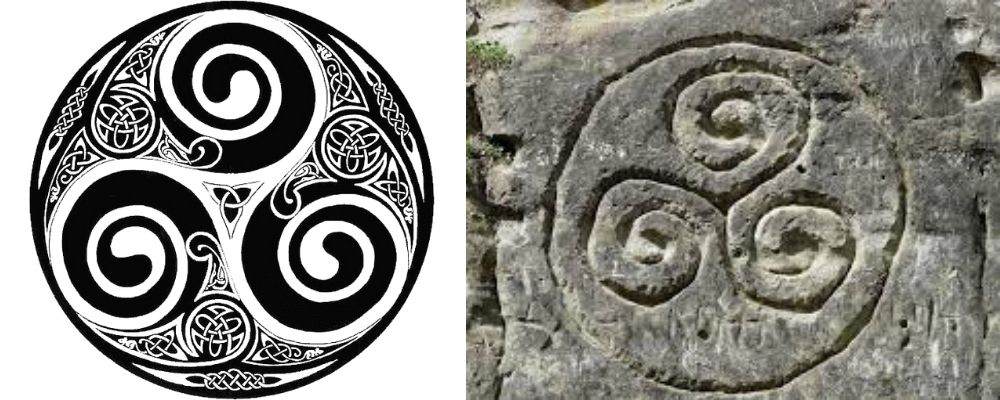
Also known as the Celtic spiral, the Triskelion is three interconnected spirals.
The symbol predates the Celts by about 2,500 years but became significant in Celtic culture. A similar symbol existed in the Norse world, often called the Horned Triskelion. The Norse symbols is often linked to the story of the Mead of Poetry and mastery of the spoken word.
The Triskelion appears on megalithic monuments like the Newgrange tomb in the Boyne Valley, Ireland.
The Celts believed that everything happens in three and that it was a sacred symbol representing the essential cycles in life including birth-life-death, the celestial-physical-spiritual, and heaven-earth-purgatory.
Discover the Triskelion in the VKNG Collection.


6 – Wheel of Taranis
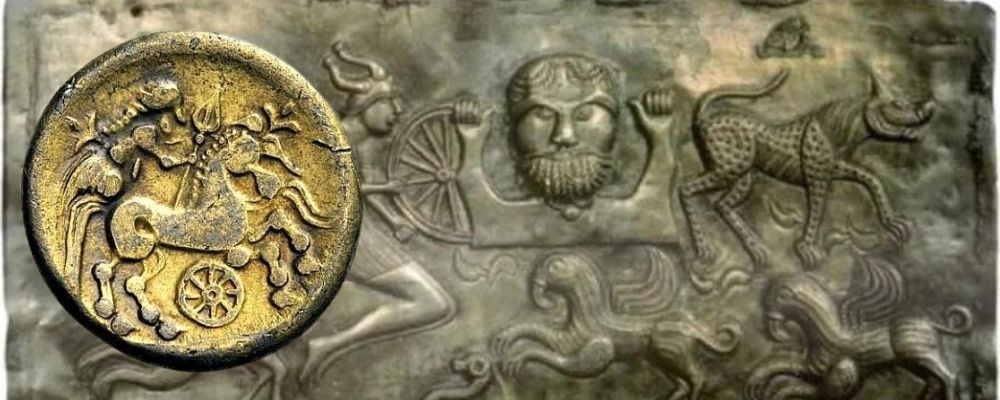
The Wheel of Taranis is a chariot wheel with six or eight spokes associated with the Celtic goddess Taranis, a god of the sky, sun, and thunder.
He is often associated with the Greek god Zeus, the Roman god Jupiter, and the Norse god Thor. The symbol appears in many cultures.
This is an important symbol in Druidry.
The hub of the wheel signifies the center of the universe and the concept of eternal return and natural cycles.
It was often worn as a protective amulet. Images of the wheel are found throughout the Celtic world, including in combination with inscriptions referencing Taranis.
Discover Sun Wheels in the VKNG Collection


7 – Awen
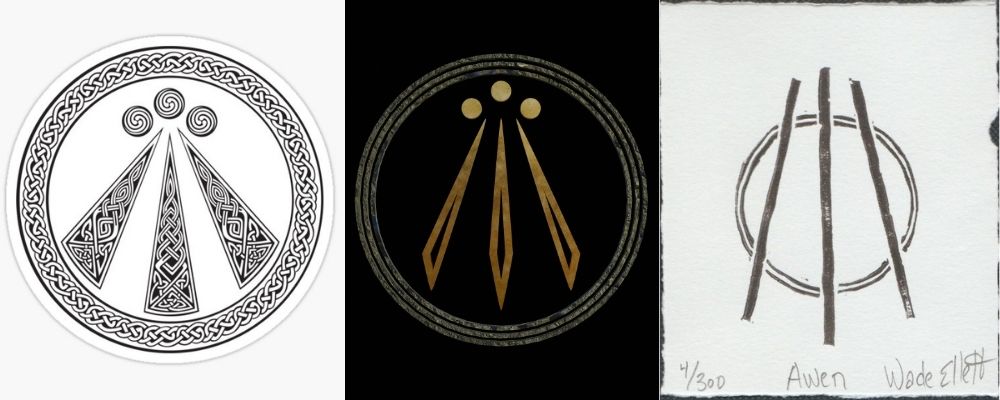
The word Awen translates as “inspiration” in Welsh, Cornish, and Breton, and it is often associated with dreams and artistic prowess.
Celts attributed the skills of artists and creatives to Awen, seen as a muse-like energy that grants divine inspiration.
The symbol features three rays of light representing different aspects of the divine and natural world such as earth-sea-air, body-mind-spirit, and love-wisdom-truth.
8 – Brigid’s Cross
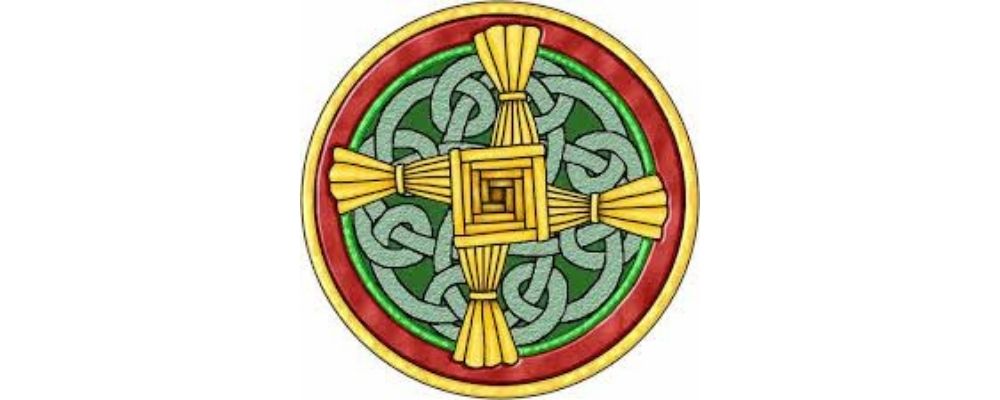
Brigid’s Cross is another blend of pagan and Christian beliefs.
It is associated with the goddess-turned-saint Brigid.
The goddess Brigid of the Tuatha de Danann was a life-giving goddess associated with the onset of spring, creativity, wisdom, healing, and poetry.
She was closely linked with fire, thought of as both a productive and destructive force. Brigid’s Crosses are intricately woven from rushes or straws placed on doors and in the rafters to ward off fire and evil.
9 – Five-Fold Symbol
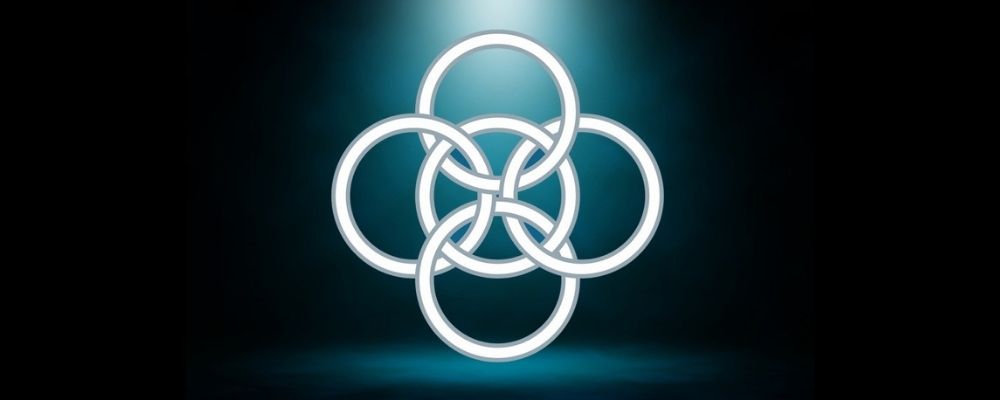
The Five Fold Symbol is made from five rings with a central ring surrounded by four others.
The symbol is linked with the Tuatha de Danann, the children of the Irish goddess Danu.
The central circle represents Danu while the surrounding rings represent her offspring, Nuada, Lugh, Dagda, and Fal.
These deities gave gifts to the Celts such as the sword, spear, cauldron, stone, and cord.
The druids often used it as a focal symbol for meditation.
10 – Claddagh Ring

A Claddagh ring is a traditional Irish ring with three primary features: a heart to represent love, a crown to represent loyalty, and two clasped hands to symbolise friendship.
The ring has been produced since at least 1700, probably originating in a the small fishing village of Claddagh in Galway.
Legend has it that a silversmith named Richard Joyce was captured and enslaved by Algerian Corsairs around 1675 while on a passage to the West Indies. He was sold into slavery to a Moorish goldsmith who taught him the craft.
King William III sent an ambassador to Algeria to demand the release of any and all British subjects who were enslaved in that country, which at the time would have included Joyce. After fourteen years, Joyce was released and returned to Galway. He brought with him a ring he had fashioned while in captivity: what has come to be known as the Claddagh. He gave the ring to his sweetheart, married, and became a goldsmith. His initials are in one of the earliest surviving Claddagh rings.
Find Claddagh Rings in the VKNG Collection.


FAQs
1. What does the Celtic Cross represent?
The Celtic Cross symbolizes the intersection of pagan traditions and early Christianity by fusing the Christian cross with the pagan sun wheel. It represents both crucifixion and forgiveness alongside the life-giving power of the sun and the four natural elements.
2. What is the meaning behind the Triquetra?
The Triquetra consists of three interconnected loops that symbolize eternity, interconnectedness, and the cycle of life, death, and rebirth. It also represents several holy triads in Celtic theology, including the division of land, sea, and sky, as well as the triple goddess The Morrigan.
3. Why was the Tree of Life important to the Celts?
Known as Crann Bethadh, the Tree of Life signifies how the forces of nature come together to maintain balance in the universe. It embodies strength, wisdom, and endurance while connecting the heavens with the underworld through its branches and roots.
4. What is a Carolingian Cross?
The Carolingian Cross is a Christian symbol influenced by Celtic culture that is constructed from four interconnecting triquetras. It connects the idea of the Christian cross with the tree of life to represent the past, present, and future.
5. How did the Celts view the Triskelion?
The Celts believed that everything happens in groups of three and used the triple-spiral Triskelion to represent life’s essential cycles. It specifically highlights the transitions between birth-life-death, the celestial-physical-spiritual realms, and heaven-earth-purgatory.
6. Who is associated with the Wheel of Taranis?
This six or eight-spoked chariot wheel is associated with Taranis, the Celtic god of the sky, sun, and thunder. It was frequently worn as a protective amulet and represents the center of the universe along with natural cycles.
7. What does the Awen symbol grant?
The Awen symbol represents divine inspiration, dreams, and artistic prowess for creatives and performers. Its three distinct rays of light symbolize various aspects of existence, such as the harmony of body, mind, and spirit.
8. What is the purpose of Brigid’s Cross?
Woven from rushes or straws, Brigid’s Cross is placed on doors and rafters to protect households from fire and evil forces. It honors the goddess-turned-saint Brigid, a life-giving figure associated with spring, healing, and creativity.
9. What does the Five-Fold Symbol represent?
The Five-Fold Symbol features a central ring representing the goddess Danu surrounded by four rings for her divine offspring. It was commonly used by Druids as a focal point for meditation and honors the deities who gave sacred gifts to the Celts.
10. What do the features of a Claddagh Ring mean?
The traditional Irish Claddagh ring features a heart for love, a crown for loyalty, and clasped hands for friendship. It was originally fashioned by a Galway silversmith named Richard Joyce following his release from captivity in the late 17th century.