We know the Vikings had an expansive outlook and looked beyond their territory for trading, raiding, and settlement opportunities.
With this and the geographic proximity of Poland to the Viking world in mind, it is surprising that Poland rarely features in English-language scholarship about the Vikings and their activities.
Most accounts jump over the large territories between Scandinavia and Novgorod, focusing on the Kievan Rus in the east and trade with the Byzantine world. But the Vikings were active in between. We have already talked about the Vikings in Estonia. Today, let’s look at what we know about Viking activity in Poland.
Ancient Poland: A Timeline
While Rome never extended its territory into what is now known as Poland, the fall of the Roman Empire in the West had a profound impact on the region.
Before the fall, Poland was occupied by Slavic peoples and some Baltic people along the northern fringes.
They seem to have displaced an earlier Celtic culture, which was evident from around 400 BC.
From the 5th century AD, Germanic people began to move into the area, and by the 8th century, Poland was occupied by a new multi-ethnic population that was predominantly Slavic but with significant Baltic and Germanic influence.
They were organized into small “tribal” communities, with people defining their identity and defending their territory via geographically distinct communities.
The Vikings started raiding the Baltic by the early 8th century, as evidenced by recent archaeological finds in Estonia, including the Salme ships.
From here, we know they traveled east into Russia, creating settlements, and as far as the Byzantine Empire for trade.
It is only logical that they would have utilized routes that traversed much of Poland to take advantage of the continents’ river systems.
This is verified by isolated “Viking” artifacts discovered across the country. But was Poland just a highway for the Vikings?
Viking Raids in Poland
There is little question that the Vikings took the opportunity to raid their Polish neighbors, taking anything of worth, which principally meant slaves.
It has now been confirmed that slaves were the main commodity acquired and sold by the Vikings, much more so than gold and silver.
It is even speculated that the word “slave” comes from the word “slav,” because of the sheer number of Slavic slaves in Europe due to Viking activities.
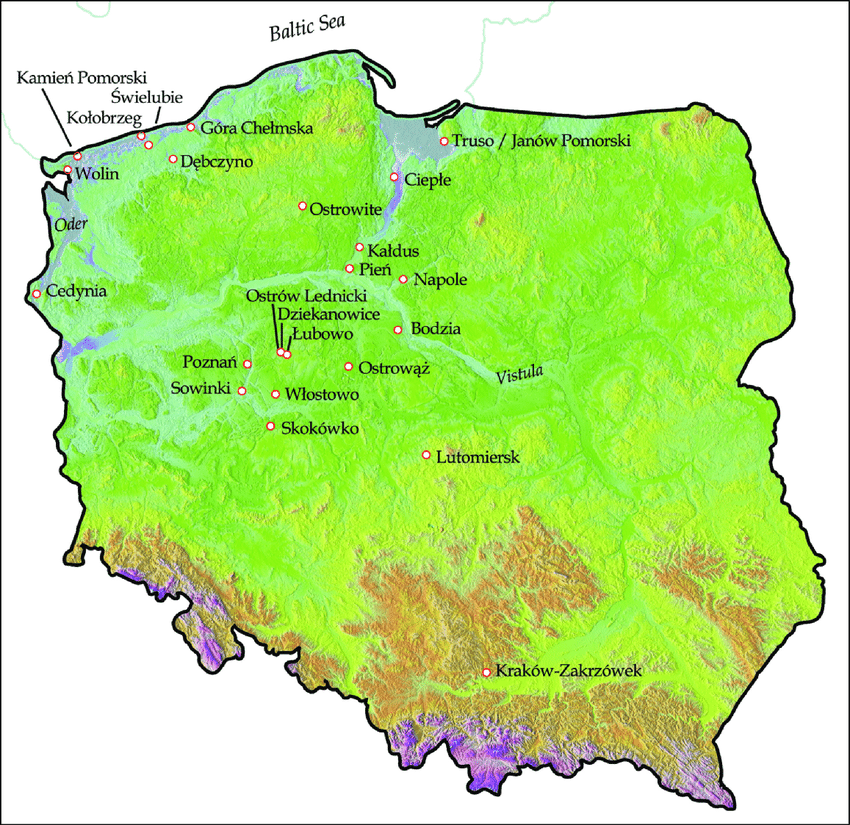
We also know that at least one group of Vikings, the Jomsvikings, set up a stronghold for themselves in Poland, on the island of Wolin.
This is mentioned in the sources and is supported by limited archaeological evidence.
The Jomsvikings weren’t just any group of Vikings.
Unlike the Vikings who settled in places like England, and traveled with family, the Jomsvikings were an elite order of warriors.
They had to be between the ages of 18 and 50 and commit to the life of a warrior without a wife and children.
They sold their services as mercenaries, but they also must have made a good “day-to-day” living as raiders to maintain their lifestyle.
The fact that they chose to build their stronghold on the Polish coast suggests it was a lucrative area for raiding.
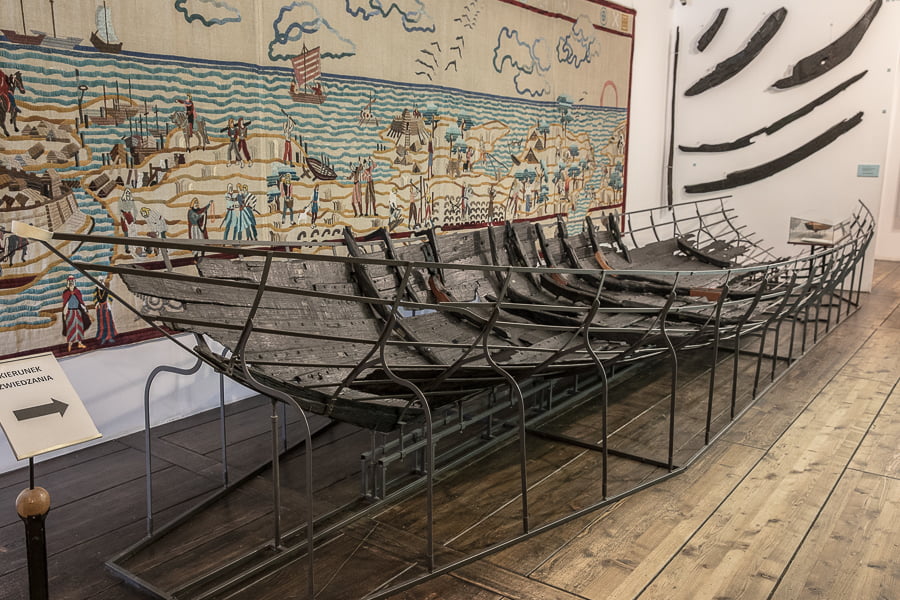
Raiding activity is further confirmed by the discovery of a Viking longship in the water just outside Gdansk.
It was a Viking-style longship built in the 10th century, but in contrast to Viking ships which used iron rivets, it was assembled using treenails and moss as caulking.
It is unclear whether this represents Vikings adapting to local traditions, or locals copying Viking ship designs.
In either case, there is clear evidence of Viking sails in the area.
Viking longship technology was one of the factors that gave them the edge over their neighbors for centuries. But while their ships were more nimble, they were also more dangerous at open sea. Find pieces inspired by Viking ships in the VKNG collection.


Trading and Settling
We also know that the Vikings probably traded extensively with the locals, as this was customary for Swedish Vikings in the east.
This supposition is supported by excavations at an 11th-century burial site near Lodz.
It was identified in the 1940s as a multi-generational necropolis with many Scandinavian-style grave goods, but it was unclear how exactly this should be interpreted.
Recent DNA analysis of the bodies shows that the people were a mix of Slavic and Scandinavian people and that the Scandinavians were present in all periods, suggesting prolonged contact.
A 10th/11th-century cemetery excavated near Bodzia also seems to have contained the bodies of Vikings, with graves containing Viking-type swords, as well as items associated with trade. Several of the bodies show that they died violent deaths, which suggests that their activities included a mix of raiding and trading.
However, while some spectacular Norse artifacts have been found in Poland, we are talking about fewer than 100 objects, compared to the thousands that have been found in places like Britain.
This suggests that Viking penetration into the area was certainly less extensive in Poland than in places like Britain.
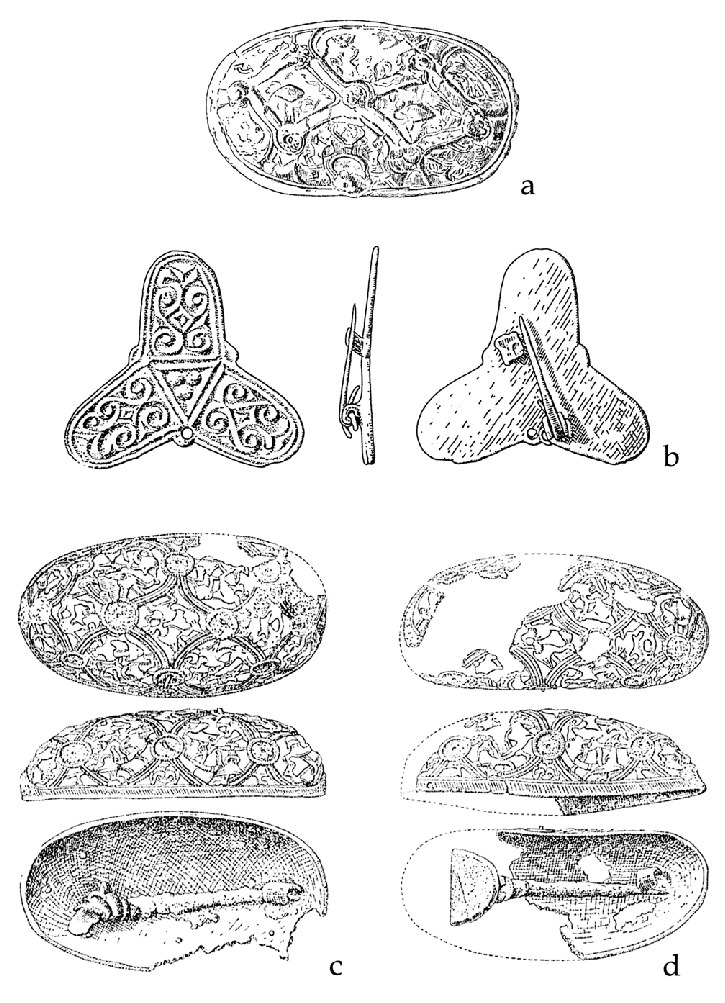
Brooches are a common artifact found in Viking graves as they were used to secure clothing. You can find replicas of authentic Viking brooches in the VKNG Collection.


Forming Alliances
We also know of significant political alliances between the Vikings and the Poles.
In the late 10th century, Duke Mieszko I established the Piast Dynasty, which would rule much of Poland until the 14th century.
His daughter, and the sister of the next important Piast ruler Boleslaw I the Brave, was known as Sweitoslawa.
She has been identified as Sigrid Storrada, who entered into marriages with both Eric the Victorious and Sweyn Forkbeard.
She was the mother of Cnut the Great, who went on to establish the North Sea Empire.
A necropolis near Cieple dating to the 11th century and containing around 60 bodies included the chamber tombs of four warriors, which DNA has confirmed hailed from Denmark.
They were buried with a variety of weapons, including swords, spears, and daggers, as well as full sets of equestrian equipment such as spurs, stirrups, bits, and buckles.
This suggests the presence of a Scandinavian elite in the area, perhaps as a result of their alliance with the Piasts.
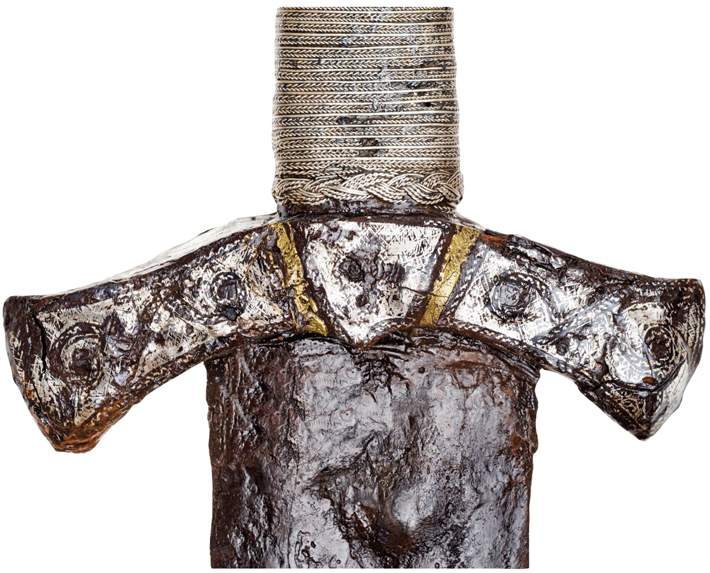
Swords were expensive in the Viking world, and only the wealthiest warriors owned them. Nevertheless, they were often buried with their owners, and the blade bent to prevent grave robbing. Find sword symbol pieces in the VKNG collection.


End of the Viking Age
Viking influence in Poland seems to have ended for the same reasons as their influence declined elsewhere in Europe.
First, with the Piasts consolidating their power, they were better able to defend themselves against Viking threats.
Second, both the Vikings and the Poles started to convert to Christianity in the 10th century.
This resulted in a more uniform culture across Europe, making it much more challenging to identify specific Viking influences.
Ravens were symbols of Odin, the god of war and wisdom. He had two familiar ravens, Huginn (thought) and Muninn (memory), who acted as his eyes and ears in the world. Seeing ravens circling the battlefield also meant that Odin was present to choose the bravest fallen warriors for Valhalla.


FAQs
What was the primary goal of Viking raids in Poland?
While Vikings sought valuable goods, their principal objective during Polish raids was capturing Slavic people to trade in the European slave market.
Who were the Jomsvikings and where was their Polish stronghold located?
The Jomsvikings were an elite, all-male order of mercenary warriors who established a coastal base on the island of Wolin.
What does the 10th-century longship discovered near Gdansk reveal?
The ship combined Viking-style design with local construction techniques like treenails and moss caulking, showing direct interaction between Scandinavian and Polish maritime traditions.
What evidence confirms long-term Viking settlement and trade in Poland?
Excavations and DNA testing at burial sites near Lodz and Bodzia revealed multi-generational, mixed Slavic-Scandinavian populations buried alongside Norse trade goods and weapons.
How significant was Viking presence in Poland compared to Britain?
Fewer than 100 high-status Norse artifacts have been found in Poland, indicating that Scandinavian penetration was far less extensive than the massive settlements seen in Britain.
How were Viking leaders connected to Poland’s Piast Dynasty?
Duke Mieszko I married his daughter Świętosława to Scandinavian kings, making her the mother of Cnut the Great, who formed the North Sea Empire.
What do the warrior chamber tombs at Ciepłe suggest about Viking-Polish alliances?
Four Danish warriors were buried with high-status equestrian gear and weapons, pointing to an elite Scandinavian military presence that likely served the Piast rulers.