At the center of Norse mythology is Yggdrasil. This mighty ash tree is the backbone of the Norse cosmos, with the nine realms situated among its roots and branches. As such, it has become one of the most popular Norse symbols in the modern world. But what do we actually know about how the Vikings conceived of Yggdrasil?
Yggdrasil as the Backbone of the Cosmos

In Norse mythology, Yggdrasil is described as an enormous, ever-green ash tree that cradles the nine realms of Viking myth in its roots and branches, connecting and nourishing all things.
Exactly which nine of the Norse realms (more than nine are mentioned in the surviving sources), is not definitively listed in any source. The generally accepted list of nine worlds is inferred from a variety of sometimes conflicting Norse mythology stories.
The sources also do not agree on how the realms were linked to Yggdrasil. For example, some stories say that Asgard, the realm of the Aesir gods, was located in the tree’s highest branches, while others suggest that one of the roots of the tree extended into the land of the gods.
The Nine Realms in Norse Mythology

With those caveats in mind, the nine realms of the Norse cosmos are probably:
- Asgard – the realm of the Aesir gods ruled over by Odin. This is also where Valhalla, the afterlife of warriors, is located. Half the Viking warriors that fall in battle are taken to Valhalla, and the other half to Fólkvanger.
- Jotunheim – the realm of the giants, which are known as Jotuns and are mortal enemies of the Aesir. Despite this, many Aesir gods and giants had love affairs, for example, Thor is the son of Odin with the giantess Jord.
- Midgard – meaning middle earth, it is probably located in the center of Yggdrasil and is the realm of men. It is surrounded by a huge ocean that makes it inaccessible from the other realms, except Asgard, which is linked with Midgard by the rainbow Bifrost bridge.
- Niflheim – meaning mist home, a realm of ice and mist inhabited by ice giants. Along with Muspelheim, it is the oldest of the Norse realms.
- Muspelheim – the primordial world of fire and home to the fire giants ruled by Sutr, a mortal enemy of Odin. Sutr will lead the charge against Asgard during Ragnarok.
- Helheim – a realm of the dead ruled over by the giantess Hel. Despite the name, it is not similar to the Christian Hell. It is not just the dishonorable, but any Viking that did not die in battle, and therefore was not taken to Valhalla or Fólkvanger. It is sometimes thought to be part of Niflheim, and therefore not a unique realm.
- Vanaheim – home of the Vanir gods. They are very similar to the Aesir, but while the Aesir are gods of concepts such as war an law, the Vanir are associated with nature and are masters of sorcery and magic. Several Vanir gods live among the Aesir, including Njord, Freyr, and Freyja.
- Alfheim – home of the light elves, beautiful creatures that shine more brightly than the sun and may have been similar to angels or divine ancestors.
- Svartalfheim – meaning dark fields, the home of the dwarves who prefer to live underground. Great artisans and blacksmiths, they made most of the famous magical weapons carried by the Aesir gods.
The Wells and Inhabitants of Yggdrasil
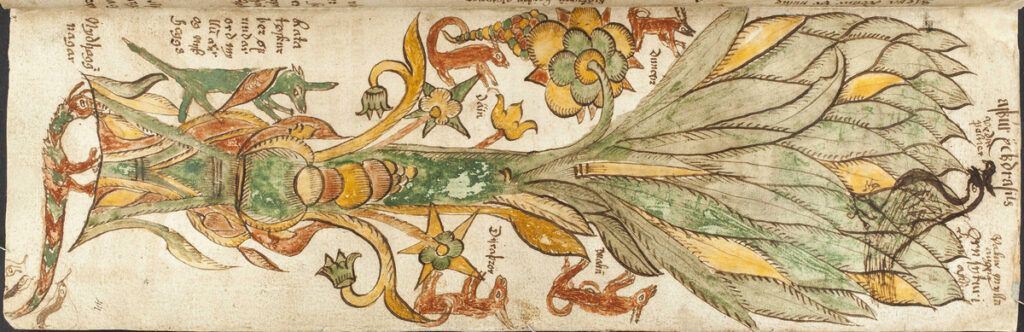
Yggdrasil is fed by three wells located in three of the Norse realms. The first, Urdarbrunnr, the Well of Destiny, is located in Asgard and is also the dwelling place of the Norns, the Fates of Norse mythology. The second, Mimisbrunnr, the Well of Wisdom, was located in Jotunheim and is the home of Mimir, a wise friend of Odin who was killed, but Odin magically reanimated his head and installed at the well of wisdom to continue to give his counsel.
The third well, Hvergelmor, the burning hot well, is located in Niflheim. This well feeds eleven rivers that flow through the Norse realms. The dragon Nidhogg lives here and gnaws on the roots of Yggdrasil. The stag Eikthyrnir also lives here. He feeds on Yggdrasil’s leaves, causing water to spout from his horns and replenish the well.
The branches of Yggdrasil itself are also home to an unnamed eagle that lives at the top of the tree, with a hawk called Veðrfölnir perched between his eyes. A squirrel named Ratatoskr runs up and down the tree passing messages between the eagle and the dragon, who hate each other. Ratatoskr is a trouble maker and sews the animosity between the two. Yggdrasil is also home to four stags, representing the four winds, who eat the tree buds.
The activity of these animals probably explains why Odin claims that Yggdrasil lives in more pain than anyone can comprehend.
What Does Yggdrasil Mean?

The name Yggdrasil probably means “Horse of Odin.” Yggr means terror in Old Norse and was one of the many names given to Odin, while drasill means horse. It is also sometimes called the “gallows of Odin.” This would be a direct reference to a story in Norse mythology about Odin hanging himself from the tree to gain knowledge of the runes (see below).
There are several other kennings for Yggdrasil, which are poetic references to the tree, which also offer insight into its nature. It was sometimes called Mímameiðr, meaning Mimir’s Tree, or Hoddmímis Holt, meaning Mimir’s Wood, linking the tree to the Well of Wisdom and the god interred there. Another kenning was Læraðr, meaning “giver of protection.”
Yggdrasil in the Norse Sources
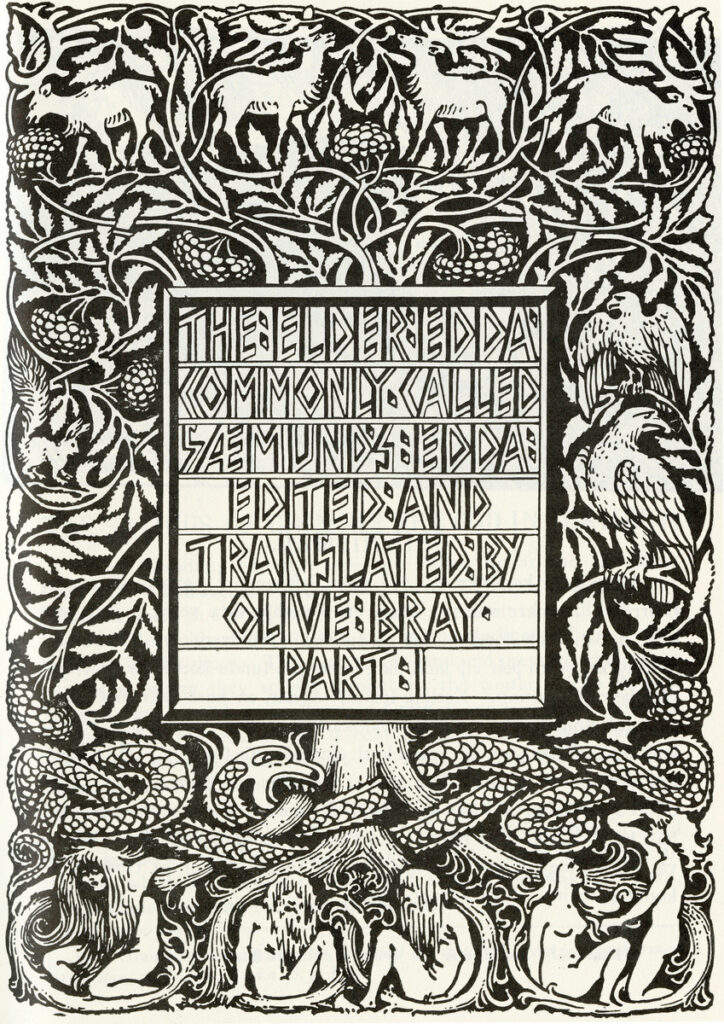
Yggdrasil is mentioned in both the Poetic Edda, a 13th century compilation of older Norse sources, and in the Prose Edda, written in the 13th century by the Icelandic Christian Snorri Sturluson.
Most of the references in the two books are to descriptions of the tree and how it holds the worlds of Norse mythology together. However, Yggdrasil also features in two other stories, (1) the story of Odin’s quest for knowledge of the runes, and (2) the prophecy of Ragnarok.
Odin and the Runes

Odin, the chief of the Aesir gods and the god of both war and wisdom. He was infamously greedy for knowledge, plucking out his own eye to drink from the Well of Wisdom and learning the art of Seidr magic from Freyja, despite it being considered a feminine art.
He reportedly saw the Norns at the base of Yggdrasil, writing destiny into the bark of the tree using the runes. Understanding that the runes were not just an alphabet, but powerful magical tools that could be used to shape destiny, Odin needed to understand them. He hung himself from Yggdrasil while pierced by his own sword for nine days and nine nights until the secrets of the runes were revealed to him. He then shared those secrets with mankind.
Odin later described how he used his knowledge of the runes to heal, bind his enemies and render their weapons useless, free himself from constraints, put out fires, expose and banish practitioners of black magic, protect his friends in battle, wake the dead, and win lovers.
However, his knowledge of the runes cannot prevent his fate at Ragnarok.
Yggdrasil’s Fate at Ragnarok
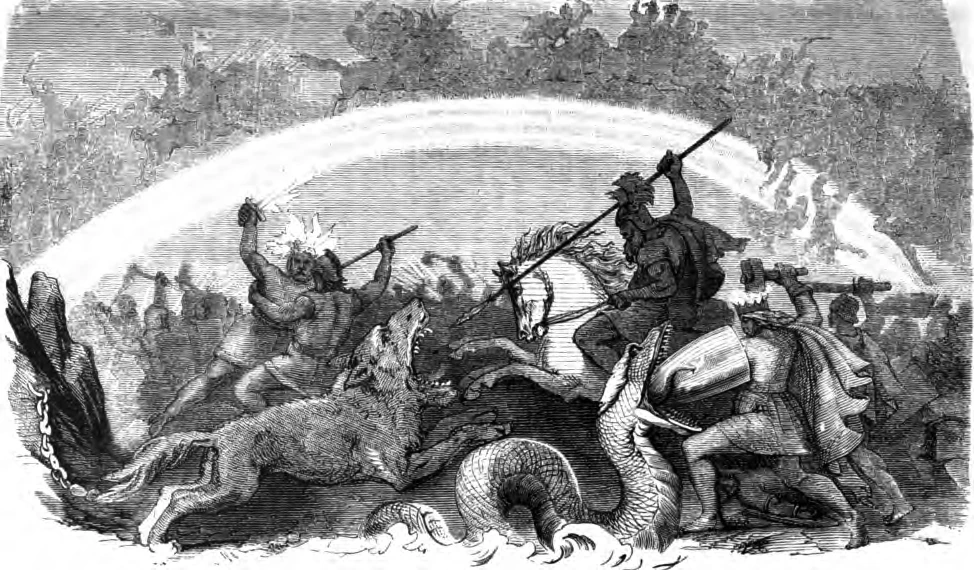
Ragnarok means “twilight of the gods,” and it is an inescapable prophecy that describes how the world will end.
Actions are already in motion to make the end of the world inevitable. It started with the Aesir gods imprisoning the three children of Loki with the giantess Angrboda: chaining the wolf Fenrir on an island, throwing the serpent Jormungandr in the sea surrounding Midgard, and sending Hel to oversee the underworld of Helheim (named for her). This breeds hostility between the children and the gods, and places them where they need to be for Ragnarok. This is made clear by the fact that the river that runs from Fenrir’s drooling mouth is known as “expectation.” This is followed by Loki killing the god Balder, which finally seems him expelled from the company of the Aesir and also imprisoned. With these prerequisites in place, Ragnarok is inevitable.
According to the prophecy, a rooster will warn Odin that the end of the world is nigh. Odin will then travel to Mimisbrunnr to consult with Mimir. Another rooster will warn the giants, and another will go to the underworld to tell the dead.
Meanwhile, the coming of Ragnarok is heralded in the world of men by a series of disasters including famine and war. Eventually there will be violent earthquakes in Midgard, caused by shockwaves that travel the length of Yggdrasil. These same shockwaves will crack open the world of Muspelheim, closed by the gods to imprison the fire giants, allowing Surtr to lead them out, setting much of the cosmos on fire with his flaming sword.

The earthquakes will also allow Fenrir to break his chains, and he will rampage through the worlds devouring everything before him. They will make Jormungandr leave his waters, and start spilling venom into the world. The earthquakes will also allow Loki to free himself and travel to Helheim.
The earthquakes will shake free the ship Naglfar, which is made from the fingernails and toenails of the dead. Loki will use it to sail to Asgard with an army of the unworthy dead to confront the Aesir gods.
While the destruction of the nine worlds of Norse mythology is described, the specific fate of Yggdrasil itself is not detailed. Some versions of the story suggest that all existence sinks back into the water of chaos and nothingness returns, in which case, Yggdrasil is probably utterly destroyed. Other versions of the story, probably influenced by later Christian ideas, have some of the gods surviving, as well as two humans, Líf and Lífdrásir, who are described as surviving the destruction by hiding in Hoddmimis Holt, which was probably another name for Yggdrasil. They will then go forth to repopulate the world of men.
Images of Yggdrasil
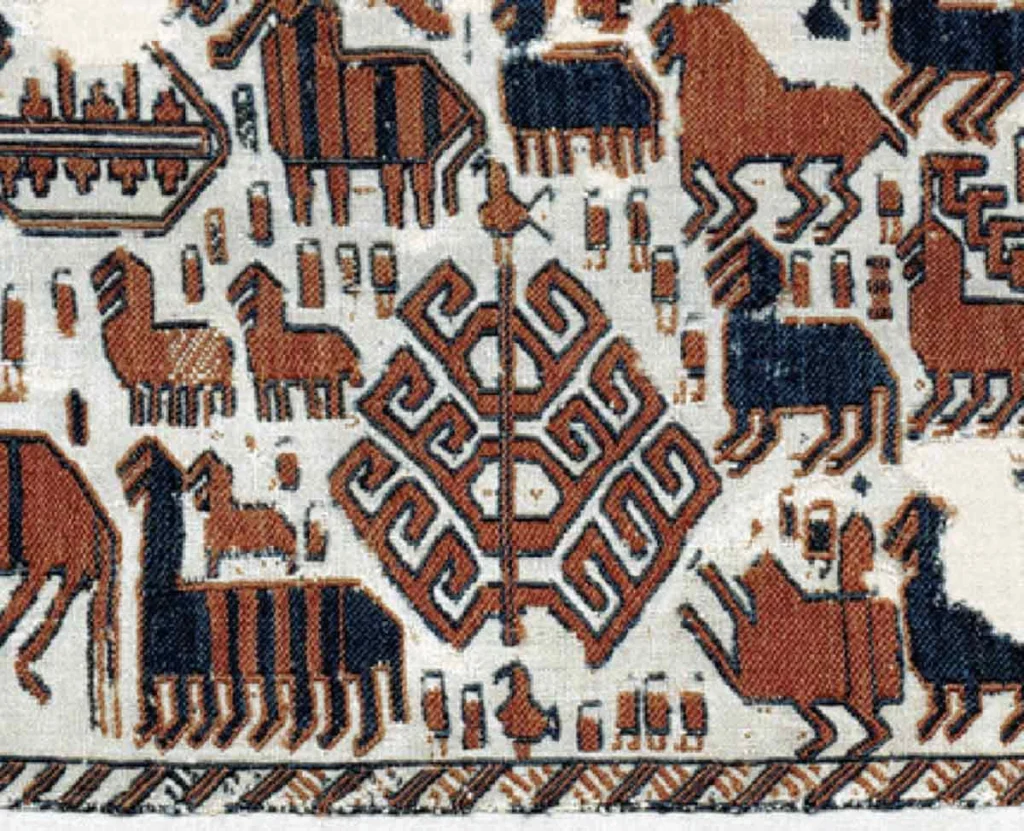
Despite being central to Norse mythology, images of Yggdrasil are surprisingly rare from the Viking Age, or are they?
The first definitive images of Yggdrasil were only identified when the Overhogdal tapestries were found in Sweden in the early 20th century. Dating to between 1040 and 1170, the tapestries show processional scenes, with the Christmas tree-like image assumed to be Yggdrasil. In some examples the tree is surmounted by a bird and several stags are pictured nearby, probably confirming the identification. The tree appears a couple of times in the large tapestry. In one example, an eight-legged horse is seen near the base of the tree. This is probably Odin’s eight-legged horse Sleipnir, so this may represent Odin visiting Mimir.

More recently, examination of tapestries found in the Oseberg ship burial, dating to the 9th century, have also revealed an image of Yggdrasil. It is different, with snake-like branches reaching up towards the sky. The tree is surrounded by figures, including humans, animals, ships, and carriages. They seem to tell the narrative of a procession, possibly a funerary procession considering the context, that led towards a great tree, potentially meant to represent Yggdrasil. Perhaps Yggdrasil represented the passage to the afterlife, as the deceased would leave Midgard to one of the other worlds.
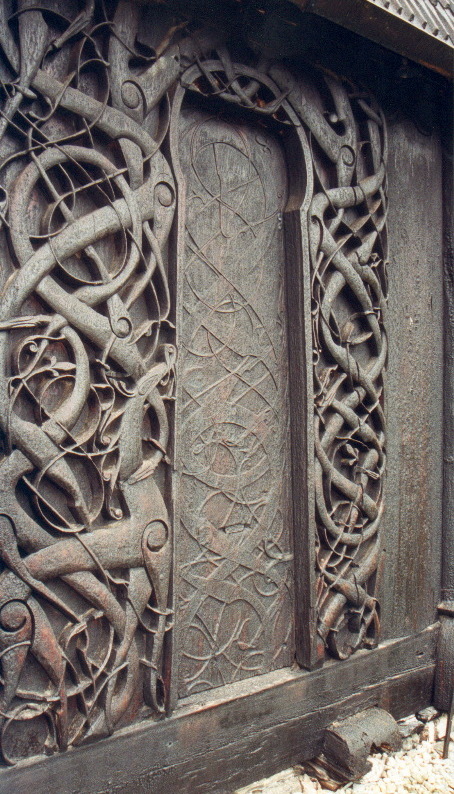
While these are the only confirmed Viking Age depictions of Yggdrasil, swirling branches were a common theme in Norse decoration. It seems highly possible that the Vikings conceived of these branches as belonging to Yggdrasil.
Yggdrasil in the VKNG Collection
Yggdrasil was part of the fabric of the universe, connecting the nine worlds, and perhaps operating as a “highway to the afterlife.” With that in mind, check out some of the stunning Yggdrasil-inspired pieces in the VKNG collection.
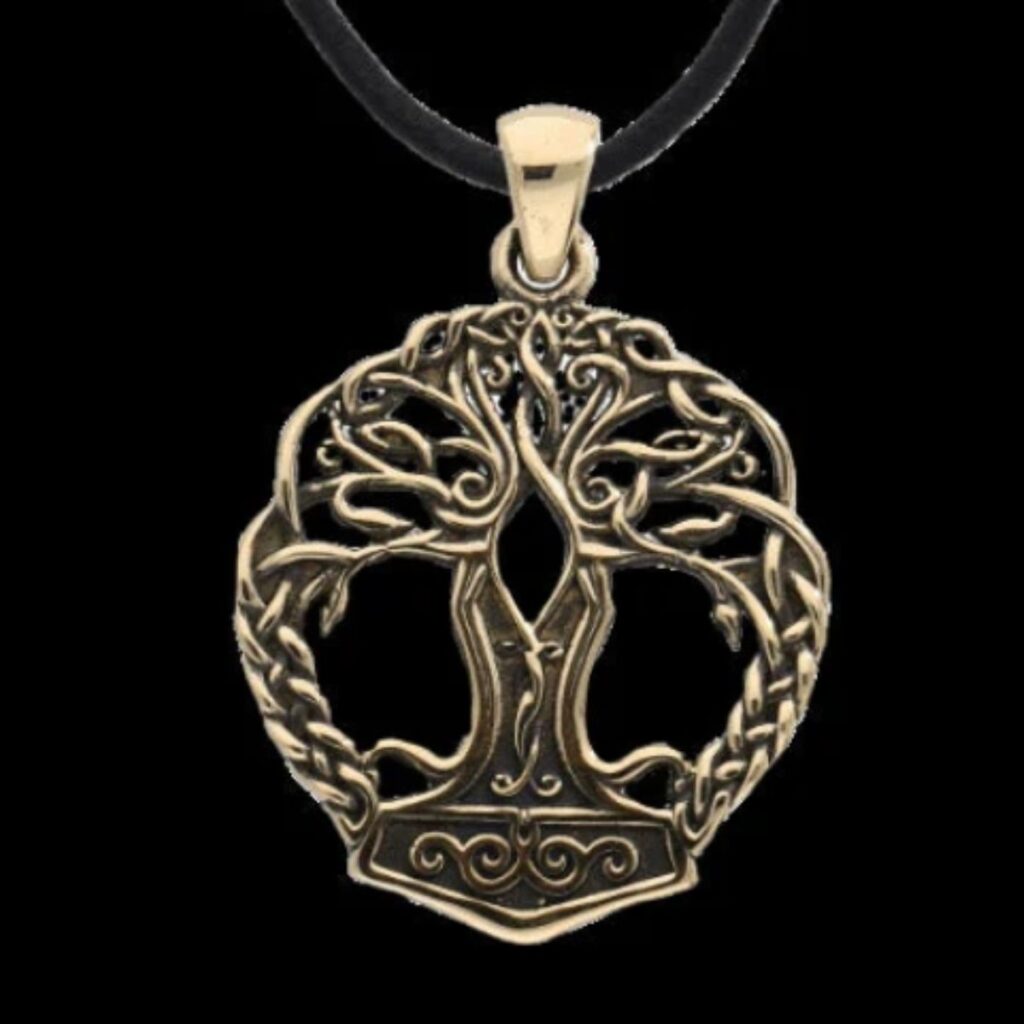
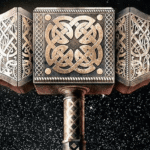
This bronze pendant combined Yggdrasil with a classic Thor’s hammer pendant, a popular symbol of protection in the Viking age, combining two potent symbols.
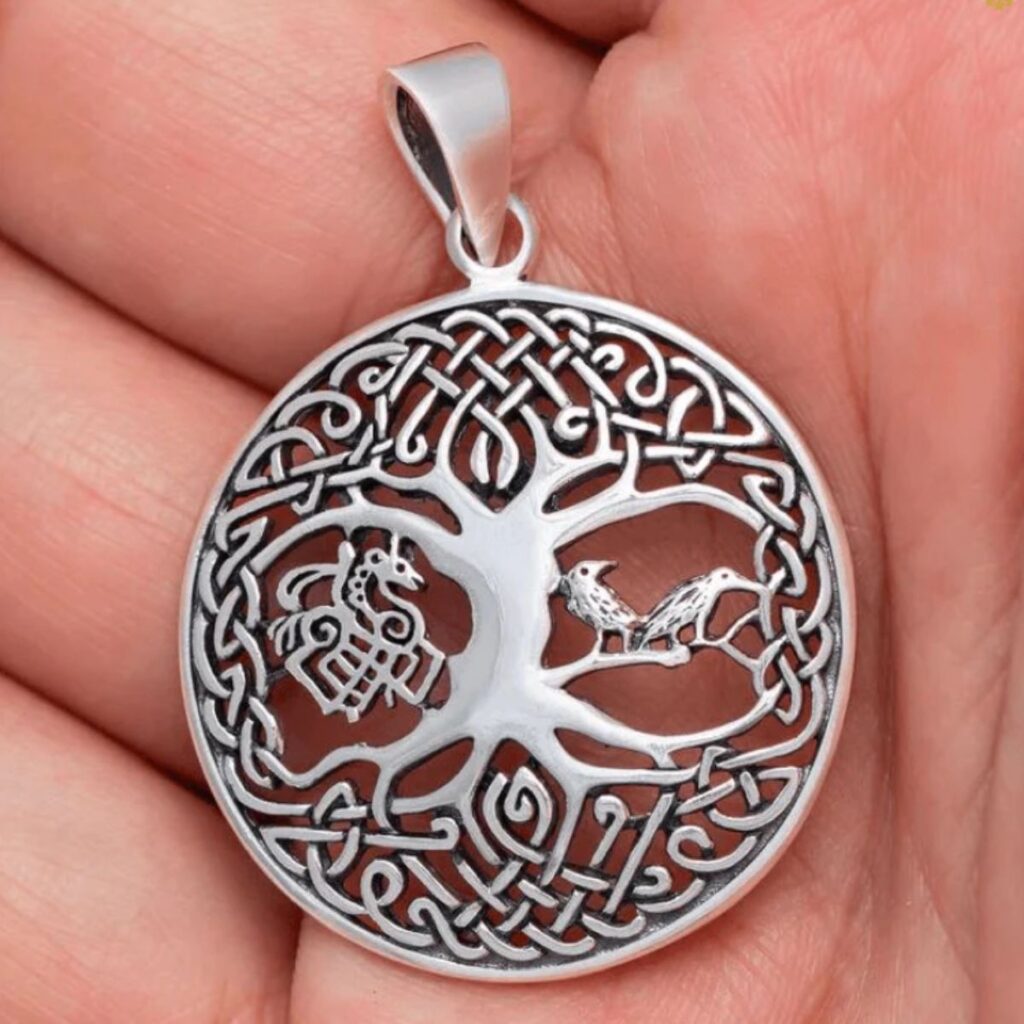
This sterling silver Yggdrasil pendant explores similar themes to the Viking tapestries, with Odin’s ravens and steed Sleipnir among the branches of the mighty world tree.
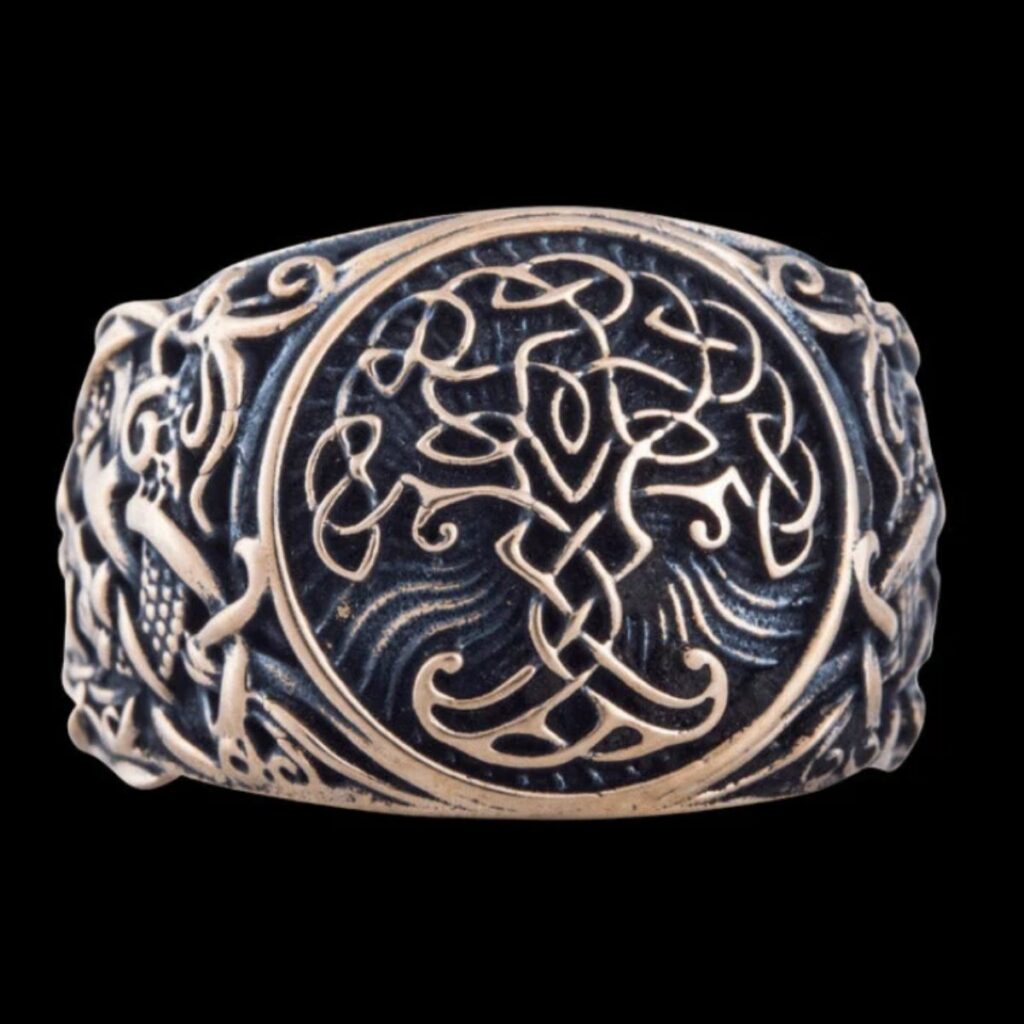
This bronze signet ring is the ideal way to adopt Yggdrasil as your symbol, celebrating the interconnectedness of all things and the power in understanding and recognizing those connections.
Famously, Odin saw the Norns writing fate into the bark of Yggdrasil with the runes. He hung himself from the tree for nine days and nights to learn the secrets of the runes. This is why Yggdrasil and the runes are intimately interconnected.
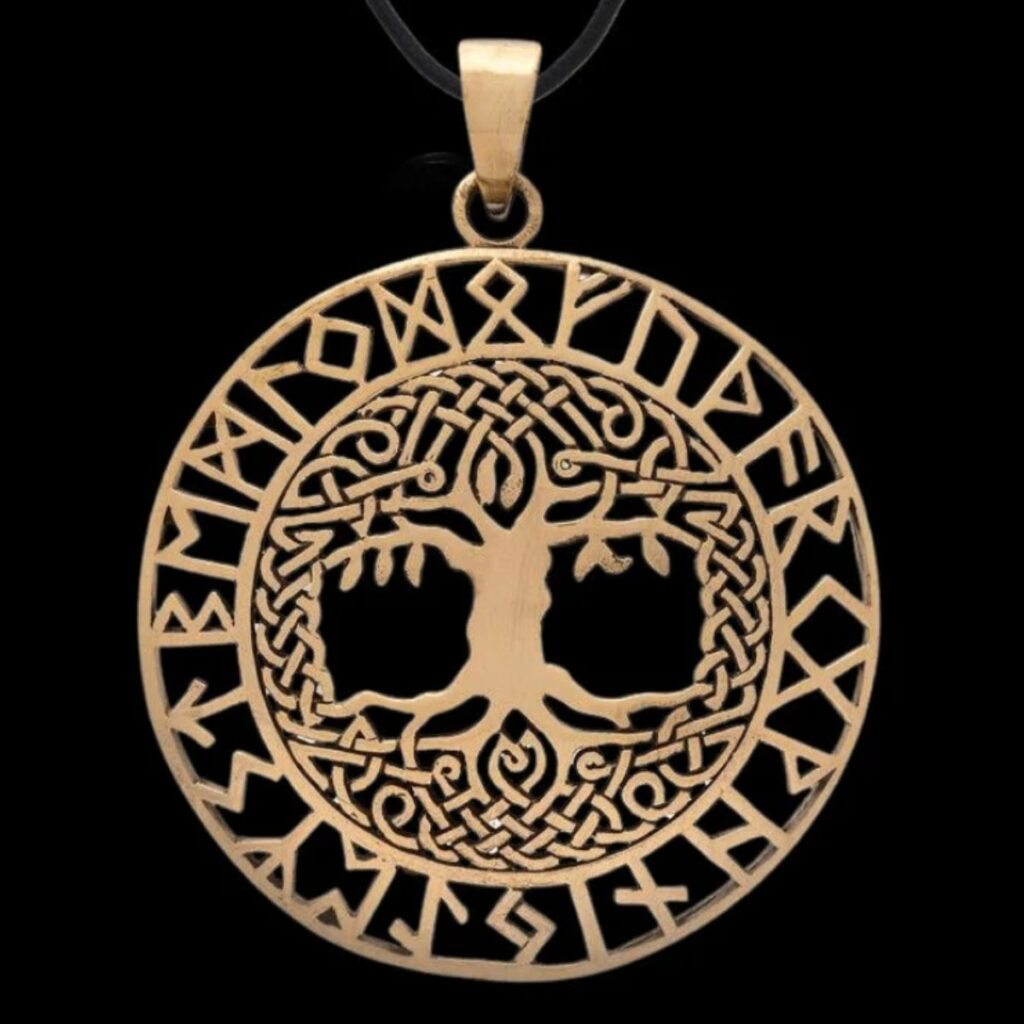

This bronze, antique-looking pendant expresses the power and beauty of Yggdrasil with a simple but compelling design.
FAQs
What is Yggdrasil in Norse mythology?
Yggdrasil is an enormous, evergreen ash tree that acts as the backbone of the cosmos, connecting and nourishing the nine realms of Norse myth.
What does the name “Yggdrasil” mean?
The name translates to “Horse of Odin,” which references the myth where Odin hung himself from the tree like a gallows to discover the secrets of the runes.
Where do the nine realms sit within Yggdrasil?
The nine realms are situated among the tree’s roots and branches, though surviving Norse sources often offer conflicting details on how they are linked.
How is Yggdrasil nourished?
The tree is fed by three distinct wells in three different realms: Urdarbrunnr (Well of Destiny), Mimisbrunnr (Well of Wisdom), and Hvergelmir (the burning hot well).
Which creatures live within Yggdrasil’s branches and roots?
The tree is inhabited by an unnamed eagle with a hawk between its eyes at the top, the dragon Nidhogg at the roots, four stags eating its buds, and the troublemaking squirrel Ratatoskr, who runs between them all carrying messages.
Why does Odin say Yggdrasil lives in great pain?
The tree suffers continuous damage from the animals living in it, such as four stags eating its buds, a stag eating its leaves, and the dragon Nidhogg constantly gnawing on its roots.
Are there surviving Viking-Age visual depictions of Yggdrasil?
Yes, rare historical depictions have been identified on ancient textiles, such as the 9th-century Oseberg ship burial tapestries and the 11th-century Överhogdal tapestry in Sweden.