Considering the warrior lifestyle of the Vikings, it is no surprise that weapons played an important role in Norse mythology. Almost all the Norse gods had special magical weapons that enhanced their warrior abilities.
Here are 10 of the most interesting and powerful mythological weapons wielded by the Norse Gods, according to Norse mythology.
1. What is Special About Odin’s Spear Gungnir?
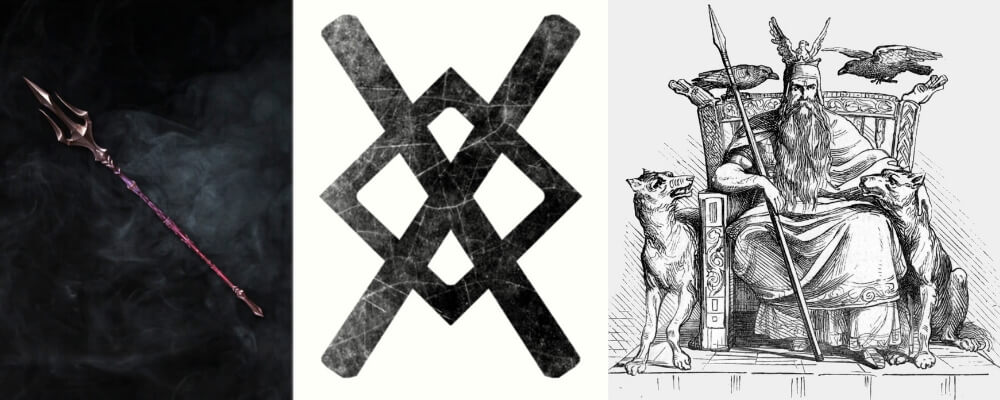
Gungnir, which means ‘swaying one’ in Old Norse, was the spear of Odin, god of war and knowledge, and the king of the Asgardian gods. The spear is said to be so well-balanced that it never misses its target, regardless of the skill of the wielder. The prophecy of Ragnarok says that this is the spear that Odin will use during the great final battle.
Spears were actually the most common weapon used by Viking warriors, so it is no surprise that the main weapon of the Viking god of war was a spear. In Norse mythology, Odin is described as throwing his spear over the heads of the Vanir gods before the mighty battle between the two divine tribes. The Vikings also used to throw their spears over the heads of their enemies at the start of battle as an invocation of Odin.
Gungnir was one of several mythological weapons used by the Norse gods made by the dwarves, whom the Vikings believed were the finest smiths in the cosmos.
You will find a variety of pieces inspired by Gungnir in the VKNG collection. They are symbols of Odin and the strength of warriors. They also often feature a Valknut, another symbol associated with Odin, which probably represents Valhalla, his great hall in Asgard, where he takes the bravest fallen warrior in the afterlife.


2. How Can Gleipnir Imprison the Mighty Wolf Fenrir?
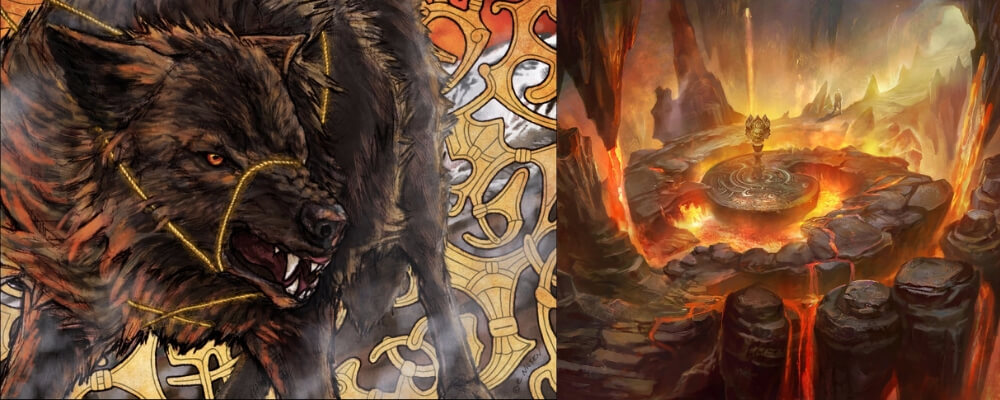
While an enchanted ribbon may seem like a strange artefact to appear in the myths of the ferocious Viking warriors, Gleipnir, which means ‘open one’ in old Norse, is actually one of the most important objects in Norse mythology.
To prevent the mighty wolf Fenrir, a son of the god Loki, from wreaking havoc across the nine worlds of Norse mythology, the Asgardian gods decided to chain him up. They needed to trick the wolf into putting the chains on himself, so they told him that the chains were a game and a test of his strength. Knowing his own strength, Fenrir agreed to don huge chains twice, which he easily broke. The Asgardian gods then asked the dwarves to create a chain capable of containing Fenrir. They created Gleipnir.
Gleipnir was said to be as thin as a silken ribbon but stronger than any iron chain. It was said to be fashioned from six impossible things: the sound of a cat’s footfall, the beard of a woman, the roots of a mountain, the sinews of a bear, the breath of a fish, and the spittle of a bird. As the chain was made from things that could not exist, it could never be broken.
Fenrir was very suspicious when the Asgard gods presented him with this ribbon as his next challenge, and he only agreed to put on Gleipnir if one of the Norse gods would put his hand in his mouth as a sign of good faith. Only the god Tyr was willing, knowingly sacrificing his hand. Norse mythology prophesies that the chains would bind Fenrir until Ragnarok, the end of the world, when he would break the chain and cause much destruction, including devouring Odin himself.
Wolves represented some of the most dangerous natural forces in the cosmos to the Vikings; they were to be feared and respected. But wolves could also be a source of strength. Berserker warriors would sometimes call on the spirit of the wolf to give them strength in battle, and Odin famously had two companion wolves, Geri and Freki. You can find many wolf symbol pieces in the VKNG collection.


3. Who Made Thor’s Hammer Mjolnir?
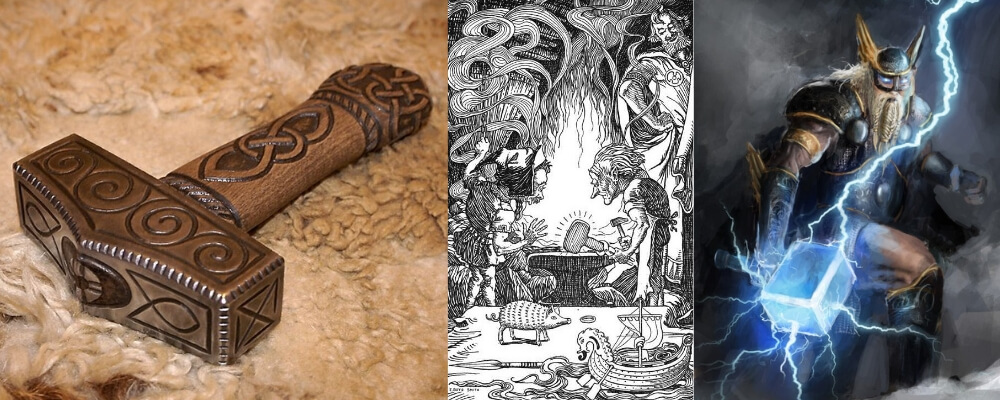
Yet another weapon fashioned by the dwarves of Norse mythology, Mjolnir, which means ‘grinder’ or ‘crusher’ in old Norse, is the hammer of Thor, the Norse god of thunder and fertility. It is considered one of the most fearsome weapons in Norse mythology, with the power to level mountains.
This is another mythological weapon that Loki obtained from the dwarves. Loki was forced to visit the dwarves when, in a particularly mischievous mood, he cut off the golden hair of Thor’s wife Sif.
This sent Thor into a rage and he demanded that Loki replace the hair. Loki visited the dwarves and asked them to fashion a new head of hair for Sif from gold. Two dwarves, known as the sons of Ivaldi, make Sif’s hair, Gungnir, and also a might ship called Skidbladnir.
Having completed his mission, Loki decides to stay in Svartalfheim, the home of the dwarves, to cause more mayhem. While there, he goads two other dwarven brothers, Brokkr and Sindri, into making him three more treasures: a living boar with golden hair called Gullinbursti, a magnificent magical ring called Draupnir, and Thor’s hammer.
Loki convinced them by suggesting they could not make pieces as fine as the Ivaldi. He said that if the gods judged one of their pieces the best, they could take his head. Not one to leave things to chance, Loki unsuccessfully tried to sabotage the brothers. When he saw Mjolnir, he started to worry.
Therefore, Loki steals the weapons made by the brothers to try to get out of his word. But when Brokkr and Sindri arrive in Asgard, the Asgardian gods agree that Mjolnir is the finest of all the treasures acquired by Loki. Loki gets out of the agreement by pointing out that he promised them his head, but not his neck, and he can’t take one without the other. Instead, the dwarves sew Loki’s mouth shut.
As Thor was both the god of thunder and fertility, his hammer had multiple meanings. It was,, of course, the weapon of a mighty warrior, used by Thor to defeat the giants, but it was also used to bless marriages, births, and funerals.
Many Vikings wore Mjolnir pendants as a symbol of the protection of the gods and their devotion to the Norse gods. You can find Mjolnir pendants, many inspired by real archaeological finds, in the VKNG collection.


4. What Was Magical About Holf Kraki’s Sword Skofnung?
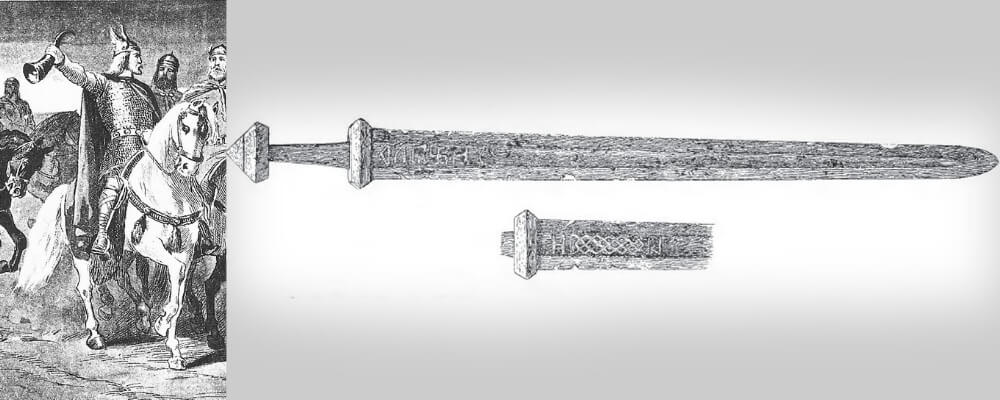
According to Norse mythology, Skofnung was the sword of the legendary Danish king Hrolf Kraki and was considered the best of all swords in the northern lands.
It was believed to be supernaturally sharp and hard and imbued with the spirits of the king’s twelve faithful berserker bodyguards. According to the sagas, the sword cannot be drawn in the presence of women, and the sun must never shine on the sword’s hilt. It is also said that a wound made by Skofnung will never heal unless rubbed with the Skofnung stone.
The king was believed to have been buried with the blade, as was common Viking practice, but according to the sagas, the Icelandic warrior Skeggi of Midfirth plundered the sword from his burial mound. It was then passed to his son Eid of As, and then to his kinsman Thorkel Eyjolfsson. Thorkel died in a shipwreck, and the sword stuck fast in some of the timbers of the ship and then washed ashore, to be retrieved by Thorkel’s son Gellir, with whom it is said that the sword was buried (again).
Swords were expensive in the Viking world, and only the wealthiest warriors owned them. Nevertheless, they were often buried with their owners, and the blade bent to prevent grave robbing. Find sword symbol pieces in the VKNG collection.


5. Why Was the Sword Dainslief so Deadly?
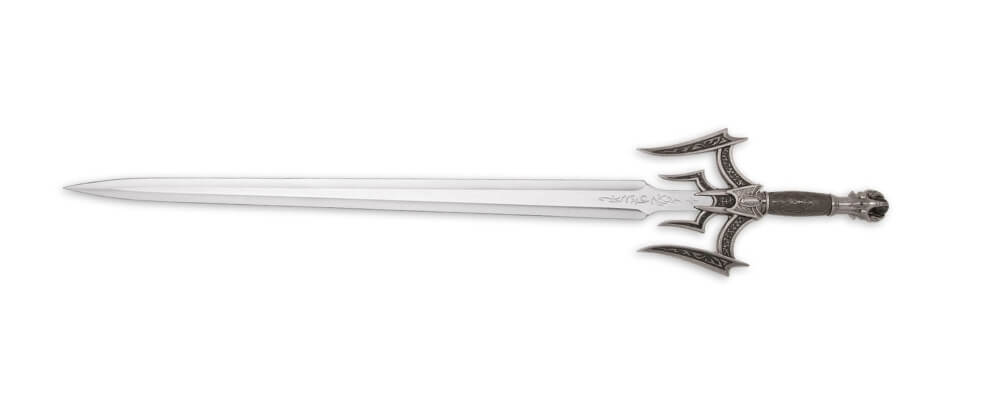
Another sword of a legendary king, Dainsleif, was the sword of King Hogni in Norse mythology. Dainsleif was made by the famous dwarven craftsman Dain. It was imbued with magic so that whenever it was drawn, it could not be sheathed again until taking a life. The sword never missed its target, and even the lightest scratch resulted in death.
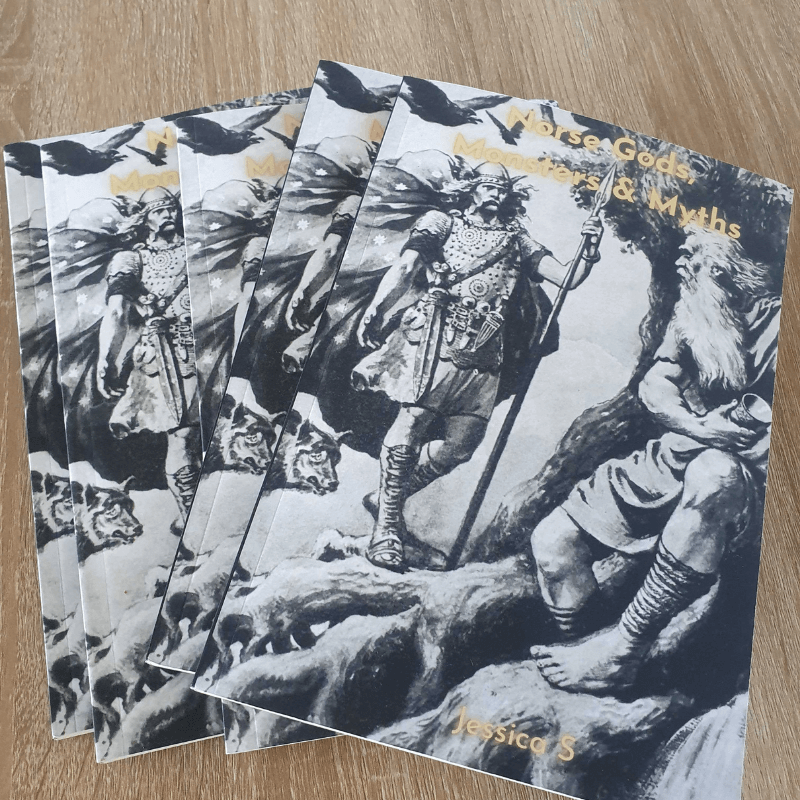
Get Your FREE e-Book
Norse Gods, Monsters & Myths
6. What Was the Runic Inscription of the Sword Angurvadal?
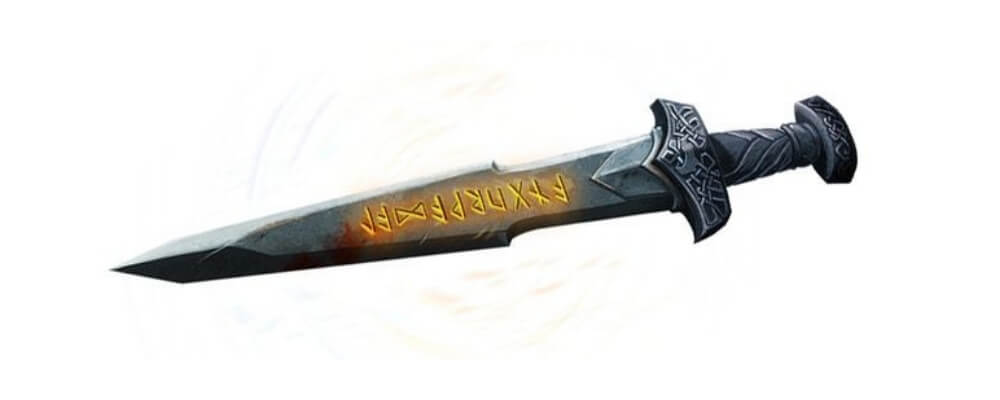
Angurvadal, which means ‘stream of anguish’ in Old Norse, was another magical sword. According to Norse mythology, it was inscribed with Runic letters that blazed in times of war, but only gleamed with a dim light in times of peace. According to Norse mythology, it belonged to Frithiof, son of the hero Thorstein Vikingsson.
The sons of the king of the Norwegian region, King Beli of Sign, were jealous of Frithiof as he was said to be the tallest, strongest, and bravest of men. In their jealousy, they prevented Frithiof from marrying their foster sister Ingeborg. They sent Frithiof on a mission to Orkney, and while he was away burned down his homestead and married Ingeborg to the elderly King Ring. Left with nothing, Frithiof sails off with Viking warriors to earn his fortune.
A number of years later he returns and visits King Ring, where he ingratiates himself with King Ring. Upon the elderly king’s death, he appoints Frithiof as earl of his kingdom, and soon Frithiof is able to marry his true love Ingeborg and become the true heir of the king. He uses his new found power to declare war on the Norwegian brothers and get his revenge.
Runes were often carved on objects in the Viking world to imbue them with magical properties. These inspired later magical runic staves found in Icelandic magical grimoires. One of the most popular of these staves was Aegishjalmur, of the Helm of Awe, which gave strength and courage in battle. Find Aegisjalmur pieces in the VKNG collection.


7. How Are Vidar’s Shoes Made?
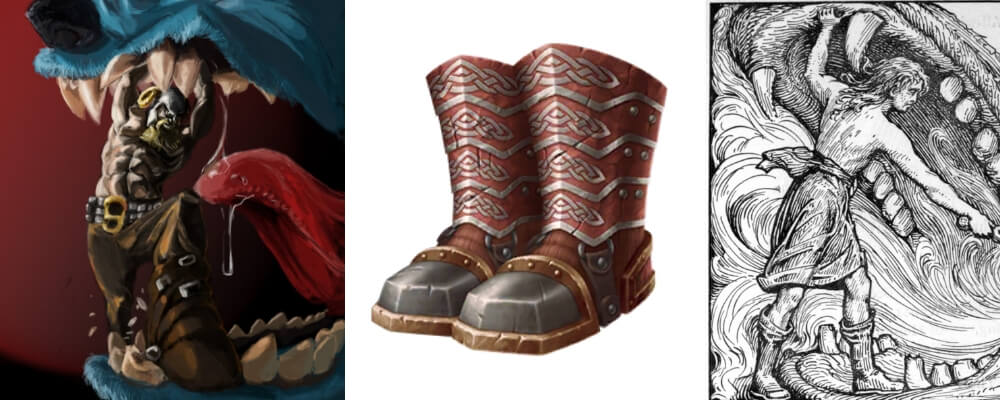
Vidar is one of the lesser-known Norse gods, as he is part of the younger generation prophesied to survive Ragnarok and rebuild the world. He was the son of Odin with the giantess Gridr, and, according to the Ragnarok prophecy, Vidar will use the shoes to avenge himself against Fenrir for the death of Odin.
Immediately following Odin’s death, Vidar will throw himself at Fenrir. The shoes are magically strong and sturdy, and with them Vidar will be able to kick open Fenrir’s open jaw, allowing him to hold his upper jaw open and cut the mighty wolf’s mouth to pieces with his sword.
8. What is Special About Freyr’s Ship Skidbaldnir?
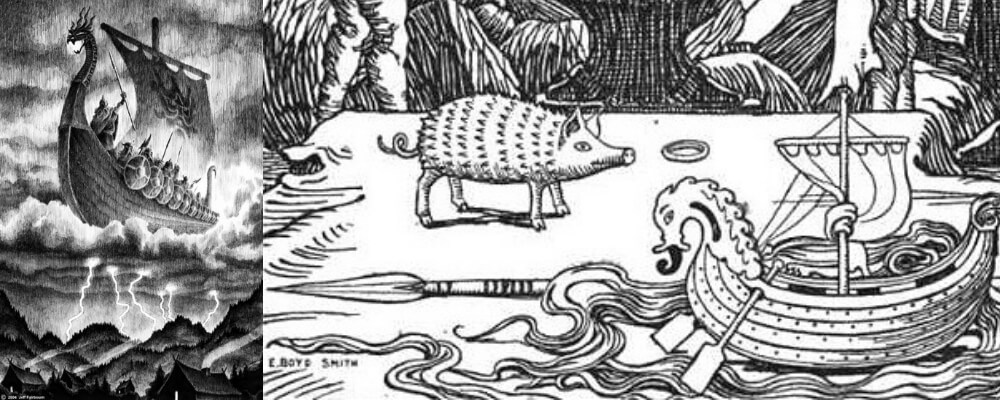
One of the mythological weapons made by the dwarves and acquired by Loki, he gave it to the fertility god Freyr, along with the golden boar Gullinbursti. The magic imbued in the ship meant that whenever its sails were raised, it would have a fair wind. The ship was large enough to carry all the gods in full armor and with all their weapons, but could also be folded up like a cloth and transported across land. It was common practice for the Vikings to carry their ships across land between rivers.
Viking longship technology was one of the factors that gave them the edge over their neighbors for centuries. But while their ships were more nimble, they were also more dangerous at open sea. Find pieces inspired by Viking ships in the VKNG collection.


9. What is Special About Heimdall’s Sword Hofund?
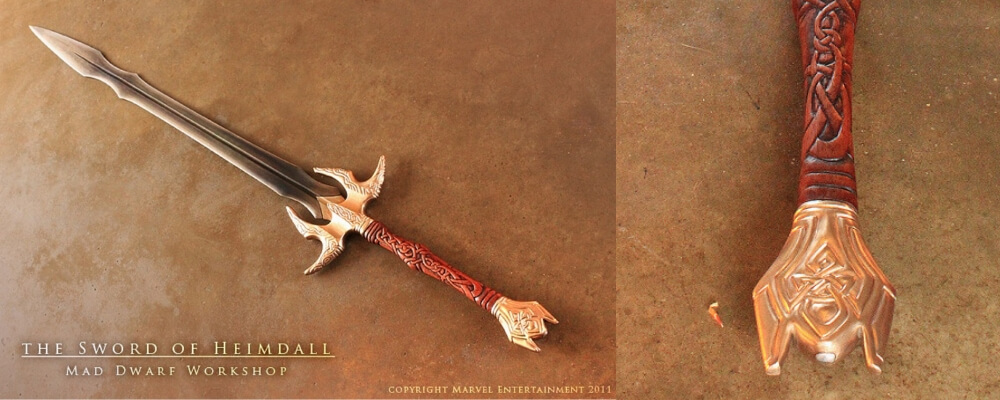
Hofund was a magical sword wielded by the god Heimdall, the Asgardian god charged with guarding the rainbow Bifrost bridge that grants access to Asgard, the home of the gods. Hofund, which means Heimdall’s Head, could be supercharged by Heimdall by drawing energy from other powers in the universe. In the Ragnarok prophecy, Heimdall will wield Hofund in his fight to the death with Loki.
10. How Does Gjallarhorn Signal the Arrival of Ragnarok?
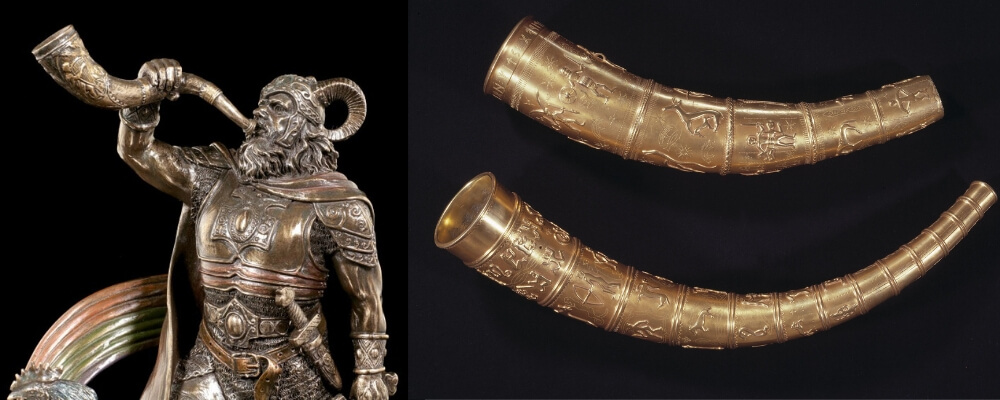
Gjallarhorn, meaning ‘resounding horn’ in Old Norse, was another mythological object carried by the god Heimdall that featured in the prophetic story of Ragnarok. When Heimdall sees the giant army led by Loki approaching the rainbow Bifrost bridge, he will sound Gjallarhorn, a sound that will tell the gods, and all living beings, that they are doomed. According to one story, Gjallarhorn was also used for drinking, a nice multi-purpose mythological weapon.
FAQs
What are the unique properties of Odin’s spear, Gungnir?
The name Gungnir means “swaying one” in Old Norse. It is perfectly balanced, ensuring it never misses its target regardless of the wielder’s skill level.
How was Thor’s hammer, Mjolnir, created?
Mjolnir (meaning “grinder” or “crusher”) was made by the dwarven brothers Brokkr and Sindri. Loki prompted its creation by betting the dwarves they could not make treasures as fine as those made by the sons of Ivaldi. Although Loki tried to sabotage the brothers during the forging process, the gods of Asgard judged the hammer to be the finest of all the treasures Loki acquired.
What makes the chain Gleipnir strong enough to hold the wolf Fenrir?
While it appears as thin as a silken ribbon, it is stronger than any iron chain. It was fashioned from six “impossible” ingredients: the sound of a cat’s footfall, a woman’s beard, the roots of a mountain, the sinews of a bear, the breath of a fish, and the spittle of a bird. Because it is made of things that do not exist, the chain can never be broken.
What magical abilities do the legendary swords Skofnung and Dainsleif possess?
Skofnung is imbued with the spirits of twelve berserker bodyguards and is incredibly sharp. Wounds caused by it cannot heal unless rubbed with a special “Skofnung stone”.
Dainsleif was created by the dwarf Dain, this sword cannot be sheathed once drawn until it has taken a life. Any scratch from its blade, no matter how light, results in death.
What is the significance of the Gjallarhorn?
Carried by the god Heimdall, its name means “resounding horn”. It is used to signal the arrival of Ragnarok; when Heimdall sees Loki’s giant army approaching the Bifrost bridge, he will blow the horn to warn all living beings of their doom.
How does Freyr’s ship, Skidbaldnir, function?
The ship is large enough to carry all the Asgardian gods in full armor, yet it can be folded up like a cloth and carried across land. Its magic ensures that whenever its sails are raised, it always enjoys a fair wind.