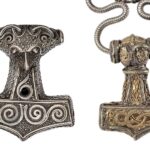
The god Tyr is always listed as among the most important Viking deities in the surviving sources. For example, he is one of the 12 gods enthroned in high seats in the Skáldskaparmál. Despite that, Tyr is rarely mentioned in the surviving sources and we know very little about him.
His name, Tyr, simply means “god.” The term is sometimes used to describe other gods. For example, a kenning for Odin is “victory-tyr,” and one for Thor is “chariot-tyr.” This has led to speculation that Tyr was once the most important god among the Germanic people who would become the Vikings, but many of his aspects were assumed by other gods by the Viking Age.
Nevertheless, Tyr continued in the Norse pantheon and was best known for being the bravest and most valiant of the gods due to his dealings with the mighty wolf Fenrir.
Who is the God Tyr?
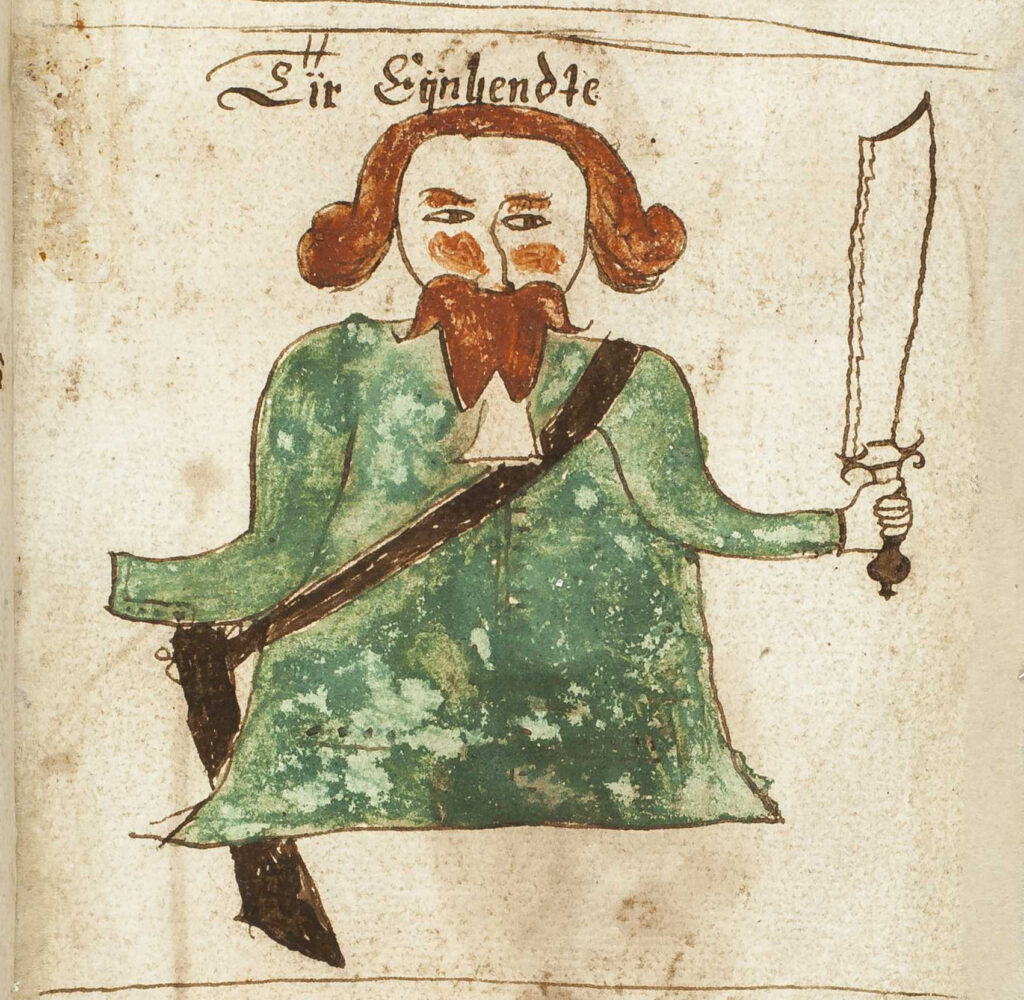
In the Gylfaginning (25), Odin, in the guise of High, explains that Tyr has power over victory in battle, and many men pray to him for success. That is interesting because in other sources, Odin himself is specifically credited with deciding the outcome of all battles. This points to the potential crossover between Odin and Tyr.
Odin is also described in glowing terms as the bravest and most valiant of the gods. Men who surpass others and don’t hesitate are credited with being valiant like Tyr. He is also clever, and men of exceeding cleverness are called “tyr-wise.”
What is Tyr’s Parentage
As is often the case, there is inconsistent evidence for where Tyr fits into the family tree of the Norse gods. In the Skáldskaparmál he is described using the kenning “son of Odin,” but the Hymiskviða has Tyr himself state that he is the son of the giant Hymir.
In the story, Tyr says his father has a great cauldron large enough to brew mead for all the gods. Therefore, Tyr and Thor travel to Hymir’s hall to borrow the cauldron. They first encounter Tyr’s grandmother, who is described as having 900 heads and being hated by Tyr. But then his mother, “fair with gold,” comes forth and gives her son a beer. She then hides the “kinsman of giants” because she suspects that Hymir will be in a bad mood when he gets home. She then immediately exposed them and everything was fine as the group sat and ate two oxen together.
This story culminates in the story of Thor’s fishing trip, during which Thor almost catches the great serpent Jormungandr on his fishing line.
The sources also indicate that Tyr is married, as in the Lokasenna (38-40), where Loki, while criticizing all the gods, tells Tyr that he can never be the right hand of justice because he lost his hand to Loki’s son Fenrir. Tyr responds that this is a small price to pay to see Fenrir bound until Ragnarok. Loki responds by claiming that he is the one who fathered Tyr’s son with his wife, and that Tyr never received compensation for the insult. The names of Tyr’s mysterious wife and child are not preserved in the sources.
What Role did Tyr Play in Imprisoning Fenrir?
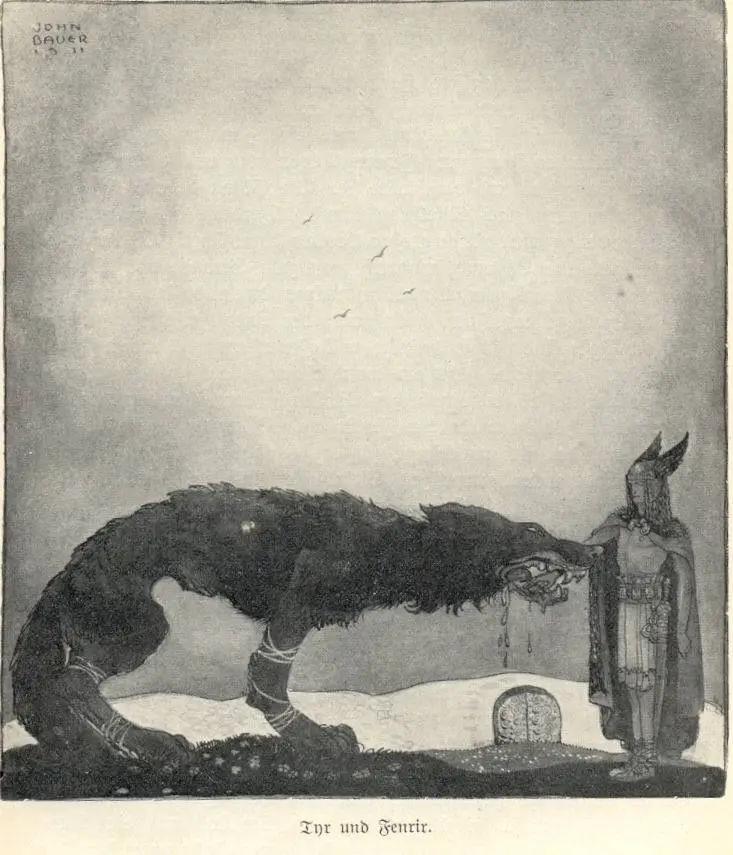
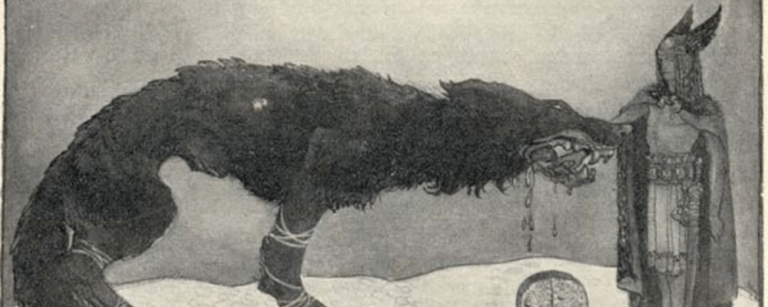
We cannot go further without recounting the most famous story about Tyr, his role in the imprisonment of Fenrir. According to the Gylfaginning, the gods decided that the great wolf Fenrir had to be imprisoned. One of the children of Loki with the giantess Angrboda, he was just too dangerous to let live. They decide to imprison him on the island of Lyngvi (overgrown with heather) in the middle of Lake Amsvartnir (pitch black) by chaining him to a rock.
The problem is that Fenrir is too strong to overpower, so he will have to be shackled willingly. They decide to present Fenrir with some chains and suggest that he put them on and then break them to show off his immense strength. The prideful wolf agreed and broke the first two shackles made by the gods – Læding and Dromi – the wolf broke with ease.
The gods then went to the dwarves, the master craftsmen in Norse mythology, and asked them to make an unbreakable chain. They made Gleipnir, which looked like a ribbon but was impossible to break because it was made from impossible things: the sound of a cat’s footfall, the beard of a woman, the roots of a mountain, the sinews of a bear, the breath of a fish, and the spittle of a bird.

When he saw the chain, Fenrir was rightly suspicious. He said that he would only put it on if one of the gods put their hand in his mouth as a guarantee that they would free him if he could not free himself. Naturally, none of the gods was willing because they knew this was indeed a trap. But Tyr agreed, and lost his right arm when Fenrir realized that he had been tricked.
The gods took a cord called Gelgja, which they attached to the fetter and a large stone slab called Gjoll. This was then fastened to a rock called Thviti as an anchor peg. Fenrir snapped at them as they worked, so the gods thrust a sword in his mouth, wedging it open, causing him to gag and drool, creating a river called Van or “expectation.”
What Happens to Tyr at Ragnarok?
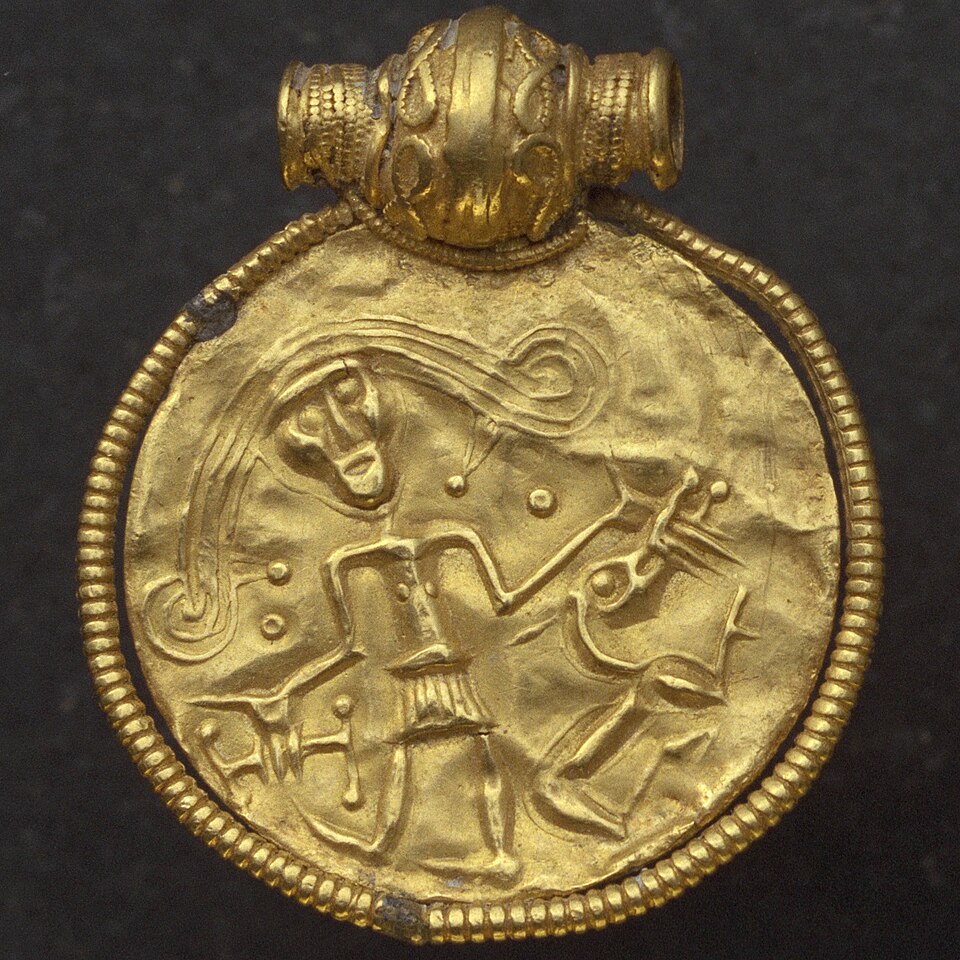
The name of this river refers to the prophecy that Fenrir will break his chains at Ragnarok. He will run through the universe devouring everything before him until he meets Odin on the field and devours him! He will then be killed by Odin’s don Vidar, who has special shoes that allow him to stand in Fenrir’s mouth without being devoured.
According to the prophecy, Tyr will fight to the death with Garm, the guard dog of Helheim, at Ragnarok, with the two killing one another. This is mentioned in the Gylfaginning, but his fate is strangely not included in the Völuspá, which is the most detailed account of Ragnarok.
It is clear that Garm, who is described as chained up at Gnipahellir and the “greatest monster,” is meant as a stand-in for Fenrir, who is busy killing Odin. This again suggests that there was one significant overlap between Odin and Tyr.
What Do We Know About Tyr from Before the Viking Age?
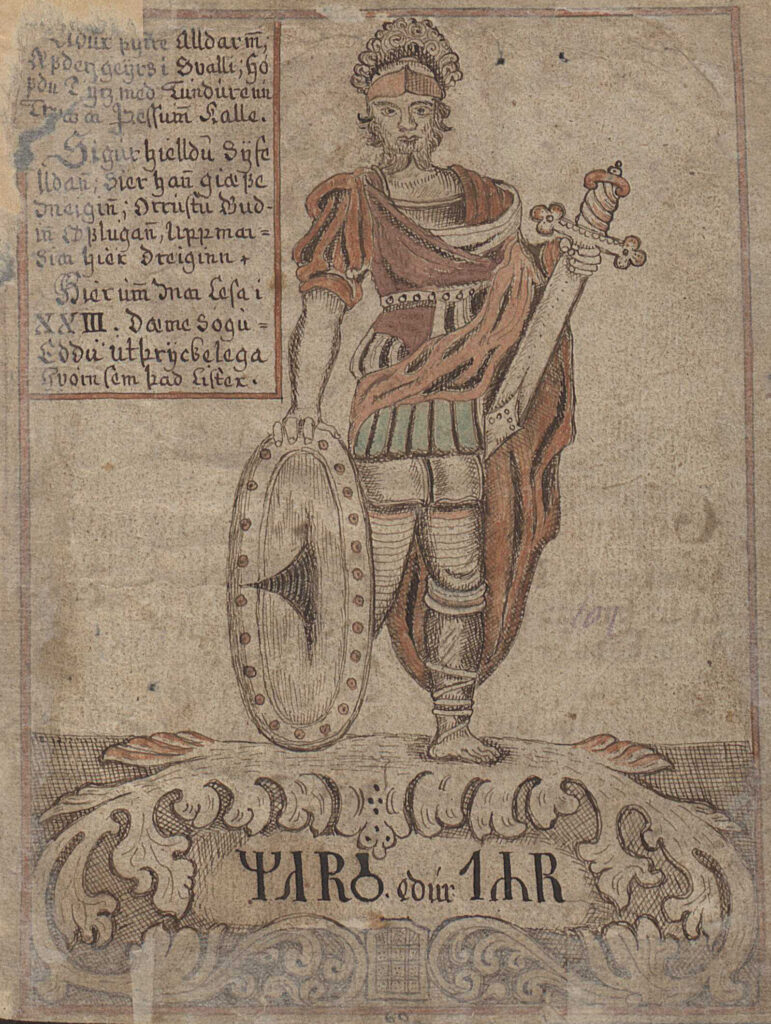
We actually know a little bit about Tyr before the Viking Age, when he was called Tiwaz by the Germanic tribes. The Romans mention him in their observations of the Germans, in which they associated him with their god of war, Mars.
In the first century AD, the Roman author Tacitus says that the primary deities worshiped among the Germans are Mercury (Odin), Hercules (Thor), and Mars (Tyr). However, he also notes that Mercury is the god they worship principally. This suggests that Odin had already become more important than Tyr, but Tyr was more closely associated with war. He also notes that while Odin often needed human sacrifices, Thor and Tyr could usually be satisfied with animal sacrifices.
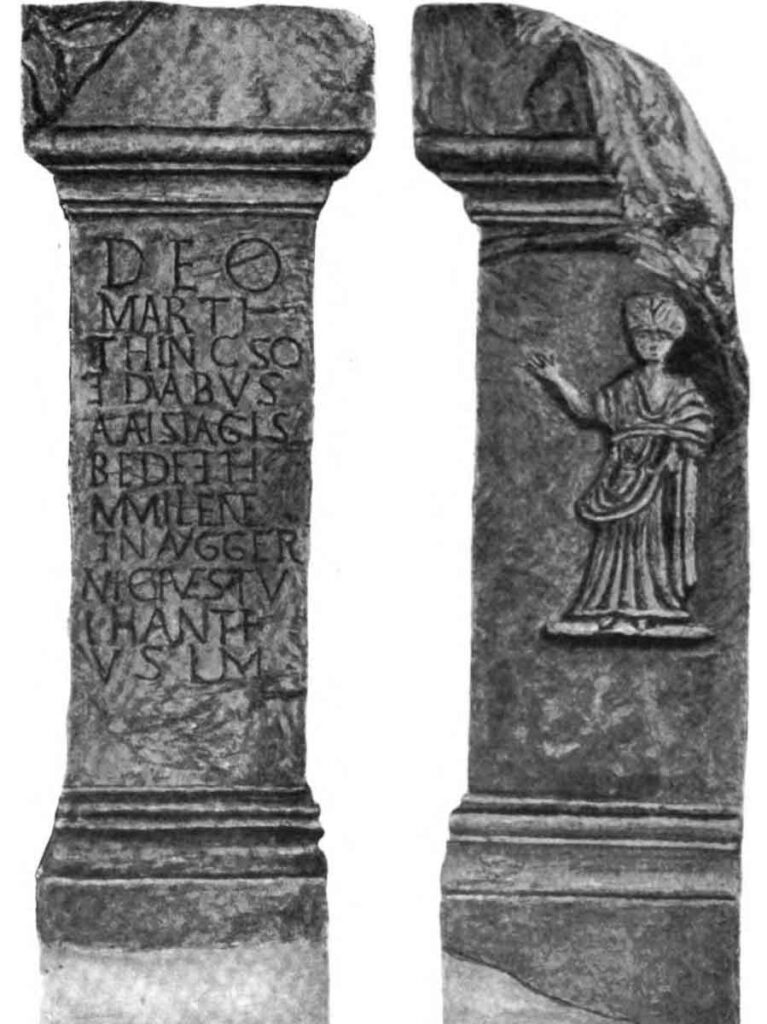
An inscription from a Roman fort on Hadrian’s Wall records a dedication to Deo Marti Thincso (or Thingsus), assumed to be Tyr. Even at this time, a Thing was a meeting of chiefs among the Germanic people where agreements were reached. This suggests that Tyr was associated with this meeting and the justice that was sometimes dealt out during them. This links with Loki telling Tyr that he can no longer be the right hand of justice because he has lost his hand.
What is the Connection Between Tyr and the Tiwaz Rune?
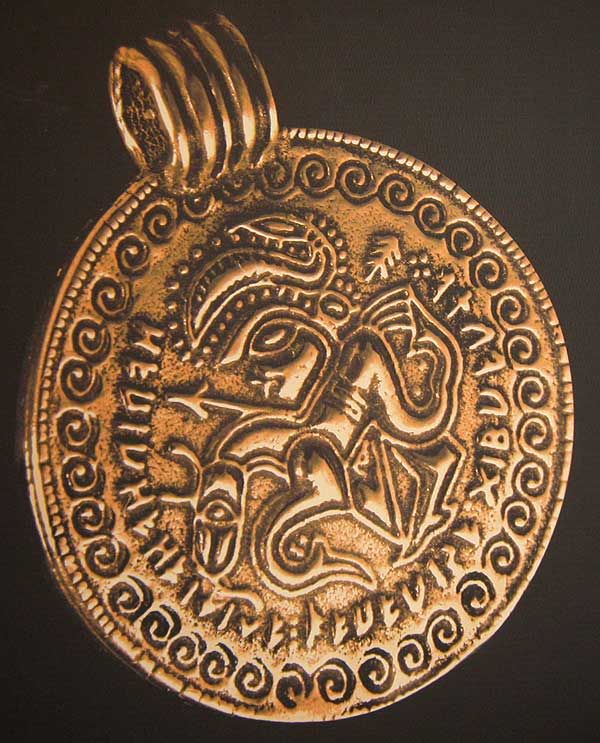
The Norse runic alphabet was complex. Each rune has a phonetic sound but also a representative meaning. The Tiwaz rune represented the god Tyr. The runes were also believed to have magical powers that could be harnessed by a runemaster.
A runic spell using the Tiwaz rune is specifically mentioned in the Sigrdrífumál, in which the Valkyrie Sigfrida tells the hero Sigurd about a runic charm:
You must know victory-runes if you want to know victory. Carve them into your sword’s hilt, on the blade guards and the blades, invoking Tyr’s name twice.
This reinforces the association of both the Tiwaz rune and Tyr with victory in battle.
Tyr in the VKNG Collection
Are you inspired by the Norse god Tyr? Find pieces featuring Tyr and the Tiwaz rune in the VKNG Collection.
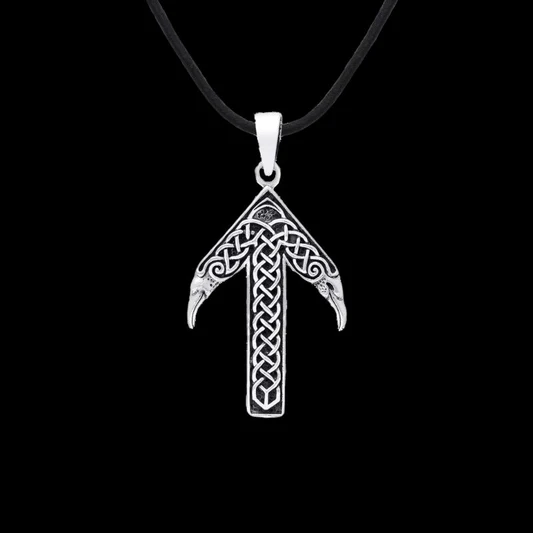
The Tiwaz rune sterling silver amulet might be able to grant you victory in battle.
The tips of the rune end with raven heads, referring to Odin, who was also called the raven god and had two raven companions, Huginn (thought) and Muninn (memory).
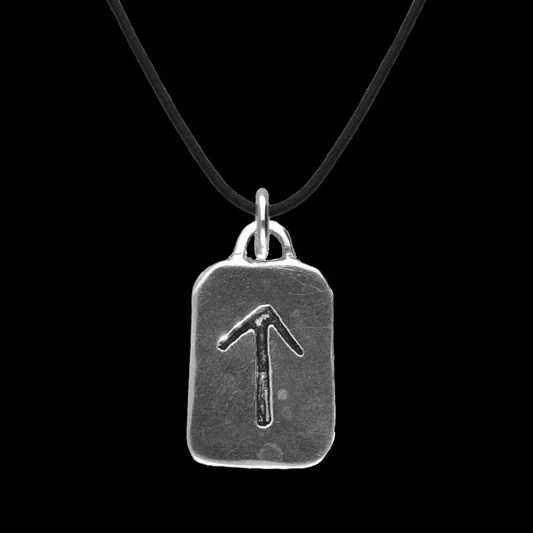
Combine dog tag symbolism with the power of the Tiwaz rune.
This sterling silver pendant is the perfect battle charm, whether fighting it out in the field or in the boardroom.
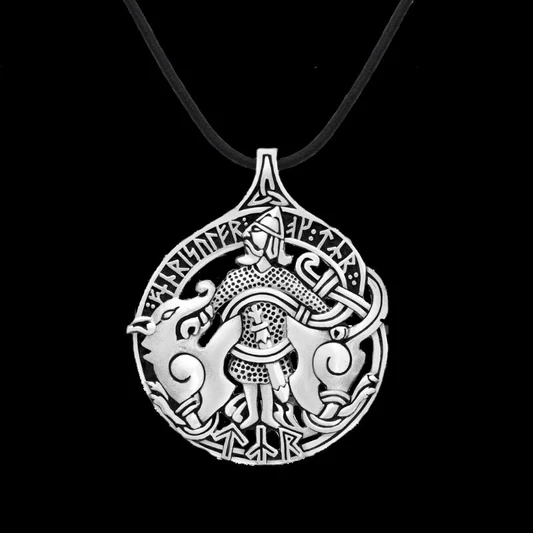
Our most unique Tyr piece, this sterling silver pendant shows Tyr sacrificing his arm to Fenrir.
It embodies bravery and the sacrifices it takes to get what you want.
Combine the symbolism of Thor’s Hammer, Mjolnir, a protective pendant worn throughout the Norse world, with the power of the Tiwaz rune with this handcrafted wooden pendant.

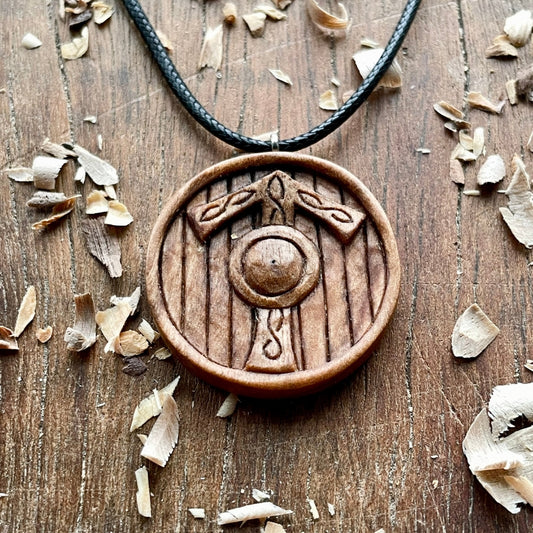
Combine the sword and the shield! The protection of the Viking round shield with the offensive power of the Tiwaz rune.
FAQs
What does the name “Tyr” actually mean in Old Norse?
The name simply translates to “god,” and it was often used as a suffix or kenning for other deities, such as “Victory-Tyr” for Odin. This linguistic overlap suggests that Tyr may have once been the primary Germanic deity before his roles were largely absorbed by Odin and Thor.
Who are Tyr’s parents according to the surviving myths?
The sources provide conflicting lineages, with the Skáldskaparmál identifying him as a son of Odin while the poem Hymiskviða claims his father is the giant Hymir. Regardless of his father, his mother is described as a beautiful, golden-haired woman who assists him and Thor during their visit to the giants.
Why did Tyr have to sacrifice his right hand to the wolf Fenrir?
The gods needed to trick Fenrir into wearing the unbreakable ribbon Gleipnir, but the suspicious wolf demanded that a god place a hand in his jaws as a pledge of good faith. Tyr was the only deity brave enough to make the sacrifice, losing his hand once Fenrir realized he had been successfully imprisoned.
What is Tyr’s ultimate fate during the events of Ragnarök?
According to the Prose Edda, Tyr is destined to engage in a fatal duel with Garm, the monstrous guard dog of Helheim. The two are prophesied to kill one another, mirroring the mutual destruction experienced by many other gods and monsters during the final battle.
How was Tyr associated with justice and law in ancient times?
Archaeological evidence, such as inscriptions to “Mars Thingsus,” suggests Tyr was the patron of the “Thing,” the traditional Germanic assembly for legal and governing matters. This connection to law is further emphasized in the Lokasenna, where Loki mocks Tyr by stating he can no longer serve as the “right hand” of justice.