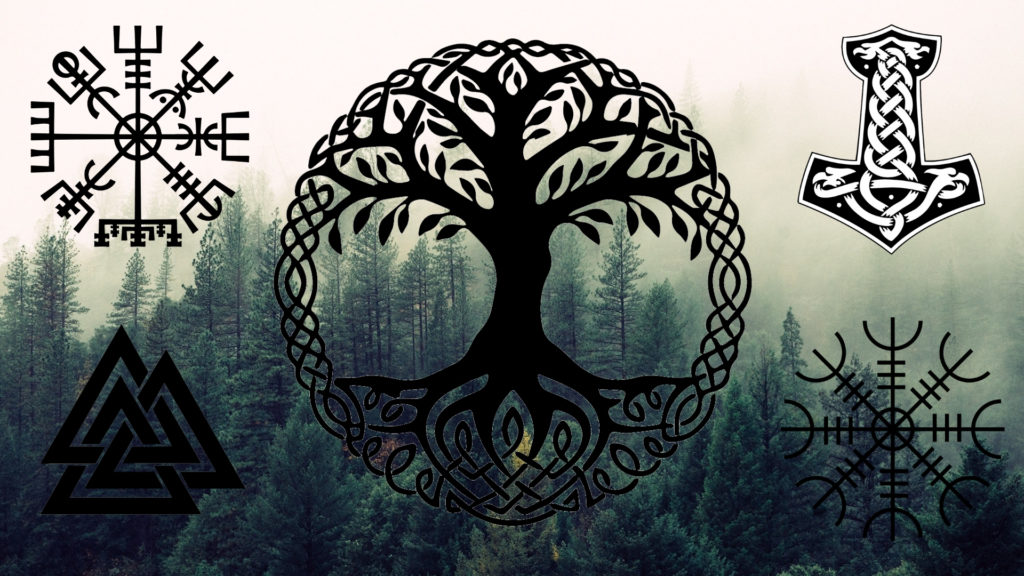
The Viking world was full of symbols, many of which have become popular designs for Viking tattoos (I may have one or two).
Understanding what common surviving symbols meant to the Vikings and how they were used is a bit like putting together an historical puzzle. We look at archaeological evidence, surviving art, and often obscure references in the written sources, all of which were written centuries after the Vikings converted to Christianity. This means that while we think we know a lot about certain symbols, elements are still open to debate. But the mystery is part of what makes them so interesting.
With that in mind, let’s take a look at ten of the most important and interesting symbols from the Viking world and their meanings. We’ll also share some of our favorite pieces in the VKNG store inspired by these symbols.
1. Mjolnir, Thor’s Hammer
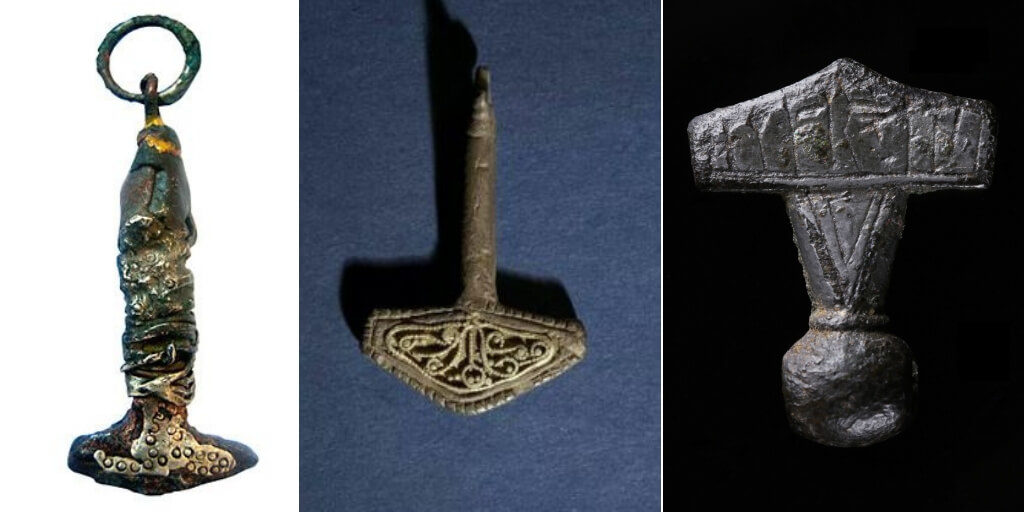
Thor’s Hammer, Mjolnir, is probably the most famous and familiar symbol from the Viking world.
According to myth, it was made by dwarves, the master craftsmen in Norse mythology. But Loki, as part of one of his mischievous plots, tried to distract the dwarves during the making process. As a result, it came out with a handle much shorter than the original design. Consequently, it took someone with the immense strength of Thor, the strongest of the Aesir gods, to wield the weapon. Nevertheless, the gods still agreed that it was still the finest weapon they had ever seen (causing Loki to lose a bet and get his mouth sewn shut – read the full story here).
Thor uses his hammer to protect both Asgard, the realm of the gods, and Midgard, the realm of men, from the giants (Jotun). It is powerful enough to slay most giants (with the notable exception of Utgard-Loki), and it causes lightning and thunder when it strikes. But it is not true that only Thor can lift the hammer, as there is a famous story of the Hammer being stolen.
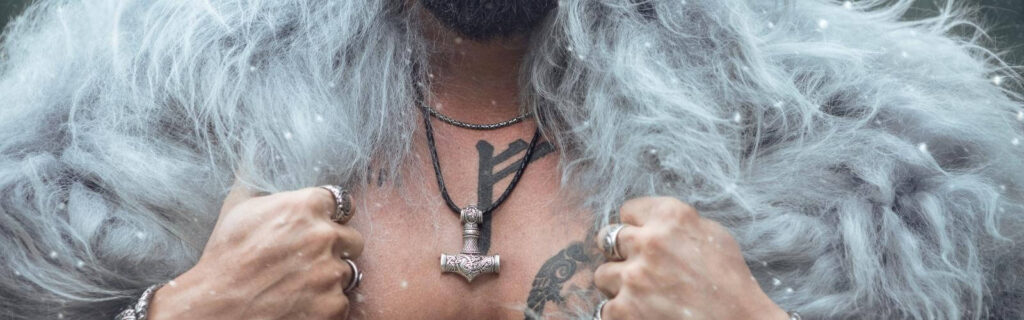
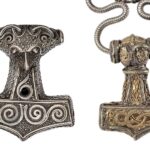
The Vikings wore the hammer as a symbol of protection. It was the most popular symbol worn in the Viking Age. More than twice as many Mjolnir symbol pendants survive in the archaeological record as all other symbols combined.
It was also one of the few symbols that continued to be used well into the Christian period, with evidence of Mjolnir pendants and Christian crosses being forged in the same workshops.
Below are some of the Mjolnir pendants that you can find in the VKNG store, based on genuine pieces of jewelry worn in the Viking Age.


2. The Valknut
The Valknut, a symbol of three interlocking triangles, is one of the most common Norse symbols. It always appears in combination with Odin, the All-Father and principal Norse god, or the dead. This has led to the theory that it was the symbol of Valhalla.
Valhalla is Odin’s hall in Asgard. He chooses the bravest fallen warriors to dwell there. There they live in paradise, training during the day and feasting at night in Odin’s Hall, until they are called on again to fight alongside the gods in the final battle of Ragnarok. It is the aspiration of all warriors to reach Ragnarok.
The Valknut symbol may have been used to indicate that the fallen warrior was now in Valhalla. It may also have been used to call the Valkyries, Odin’s divine shieldmaidens, to take his soul to Valhalla, or to ward off spirits that might want to take the soul of the warrior to one of the other Norse underworlds.
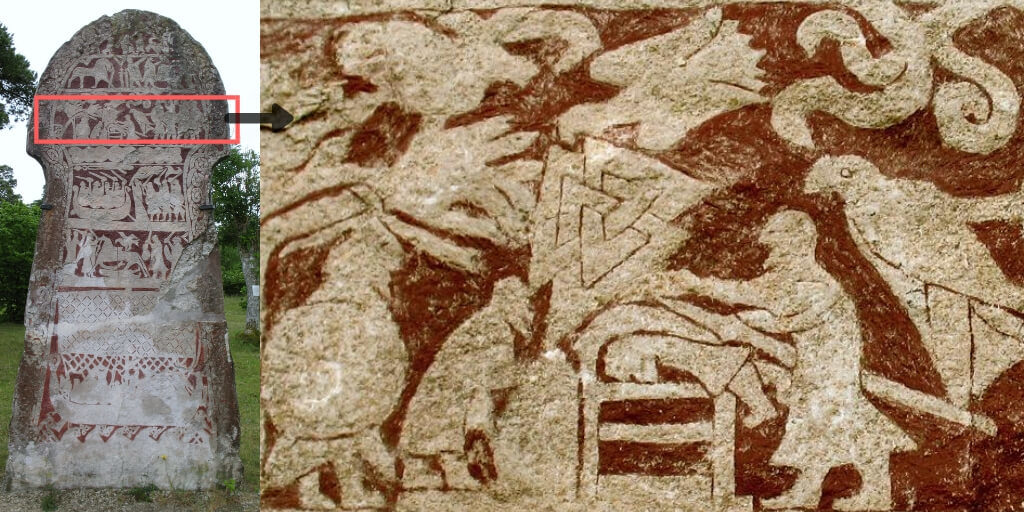
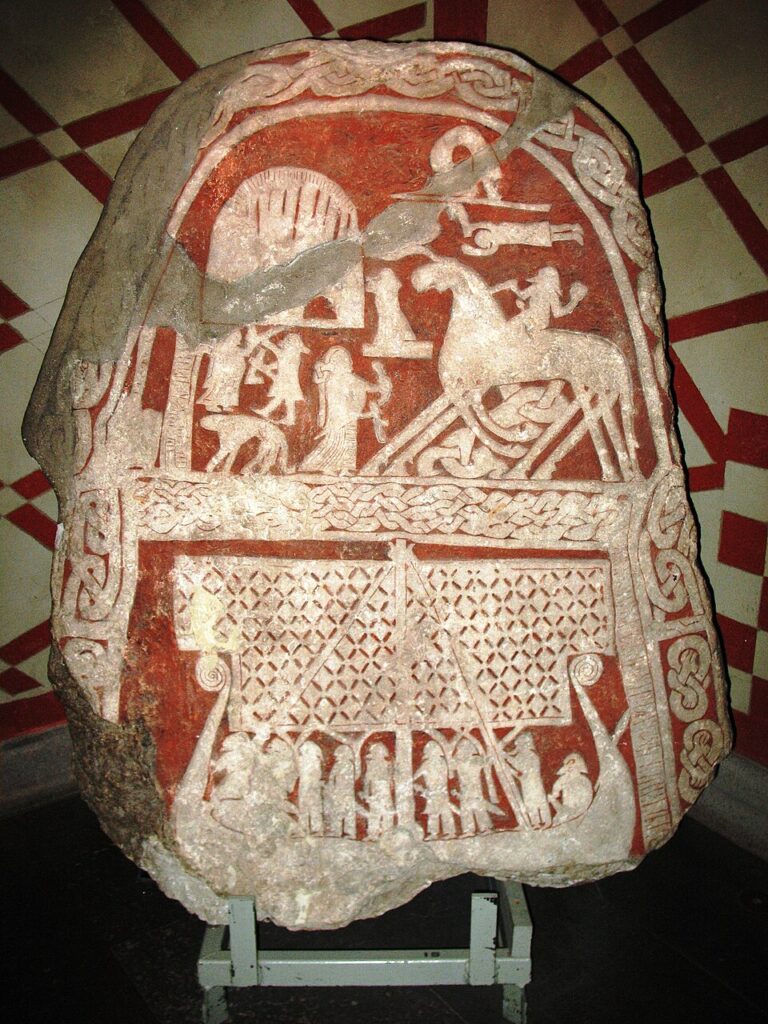
The Valknut features on the Stora Hammar stone of Lärbro in Gotland, Sweden. The scene shows Odin descending to recover a warrior fallen in battle. Odin is identified by his spear, Gungnir, and raven familiars. Odin’s hands form a sign of blessing, lifting the warrior’s body from his grave to Valhalla. The Valknut is represented in the sky.
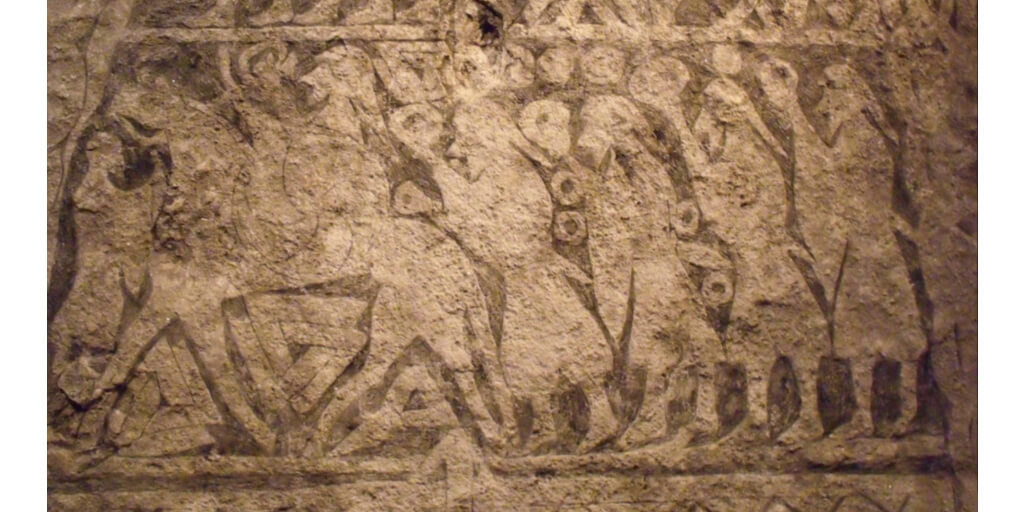
The Tängelgarda stone from Gotland also features the Valknut. The symbol appears between the legs of the warrior’s horse. The warrior is thought to be Odin, perhaps leading the warriors behind him to Valhalla.
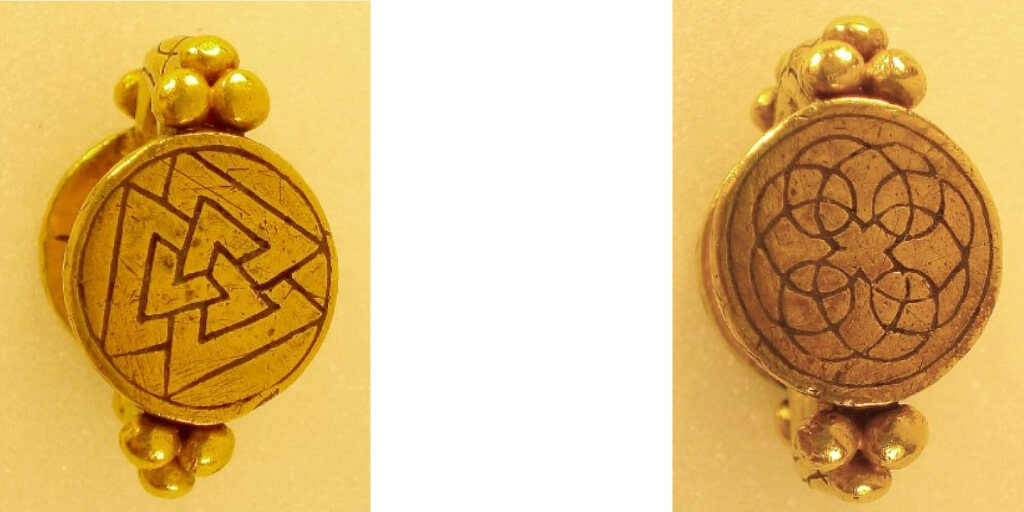
This 8th-century ring represents late Anglo-Saxon art and does not have the characteristics of a ring forged by the Vikings. It shows the Norse influence in England during their centuries of raiding and settlement. Found in the Nene River near Peterborough, it is composed of two discs placed opposite each other around the circle. On each side of the discs, there are clusters of three granules.
There are many other examples of Valknut surviving from the Viking Age, but considering the Anglo-Saxons were Christians in the 8th century, why did they identify with this symbol? It could be that the ring was made for a Norseman. Or, the Valknut represented the courage it took in life to earn a place in Valhalla in death, and that was something that the Anglo-Saxons respected.
Below are some of our favorite Valknut pieces in the VKNG Collection.


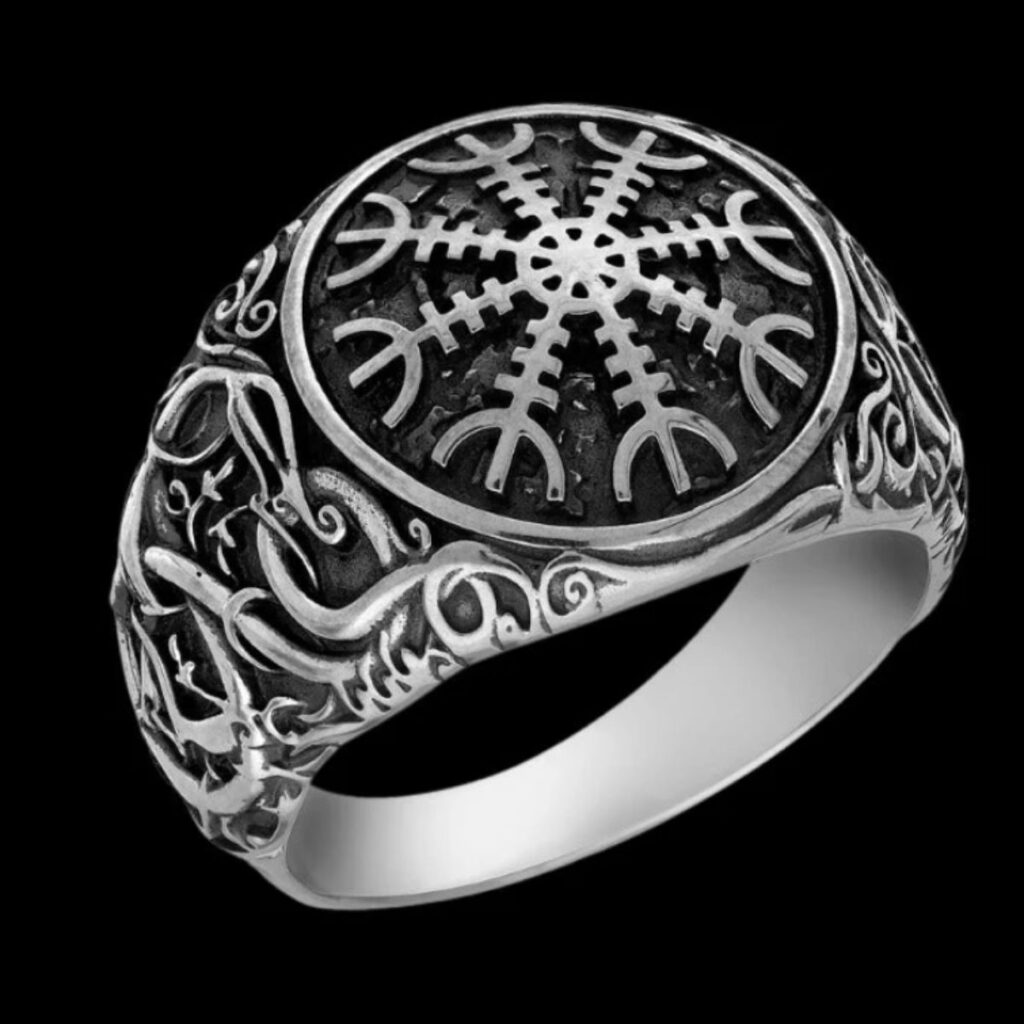
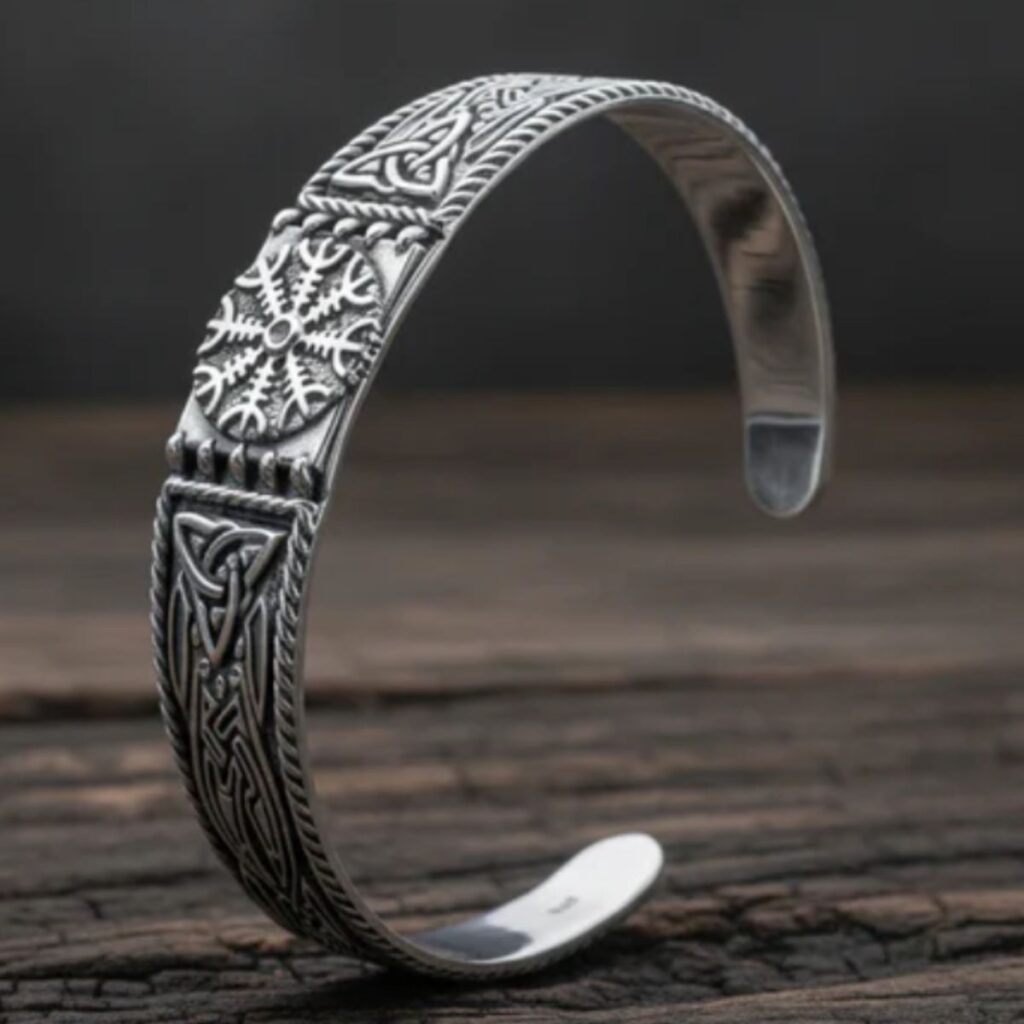
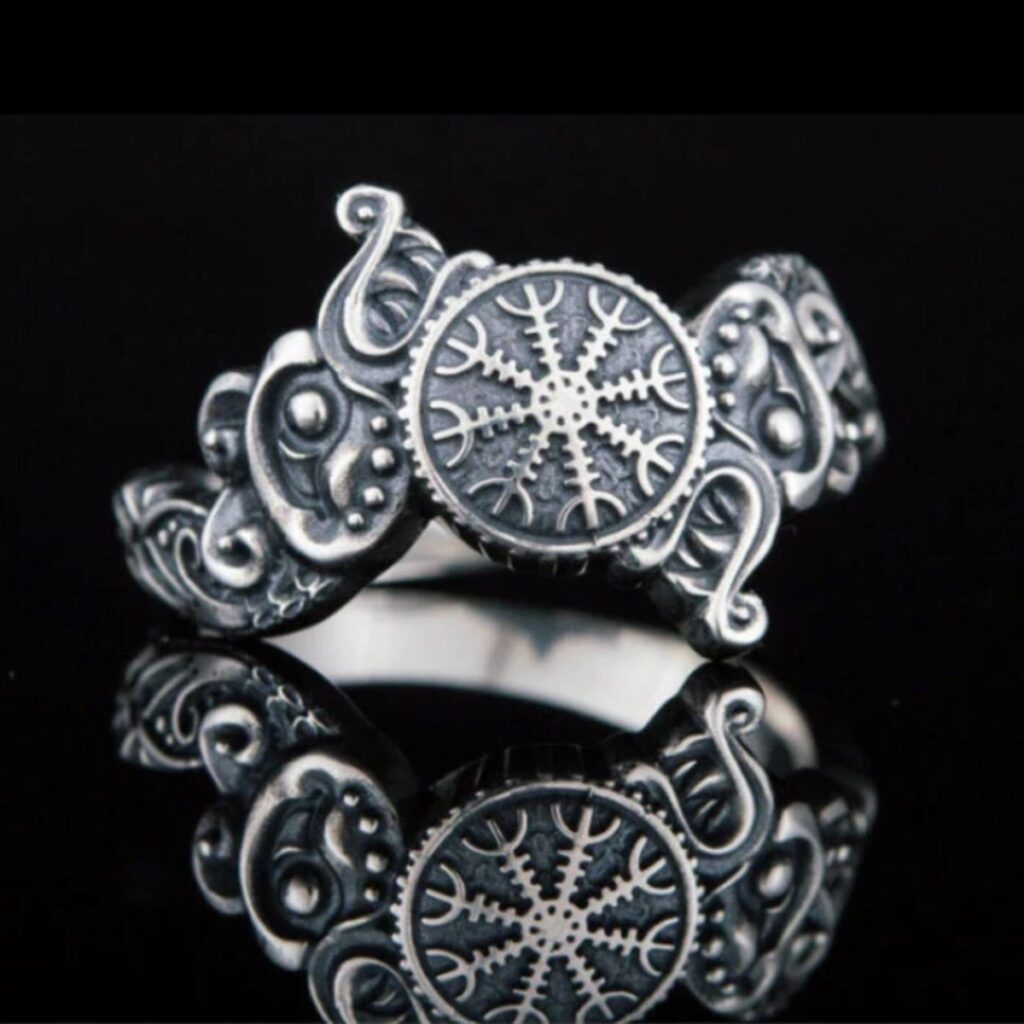
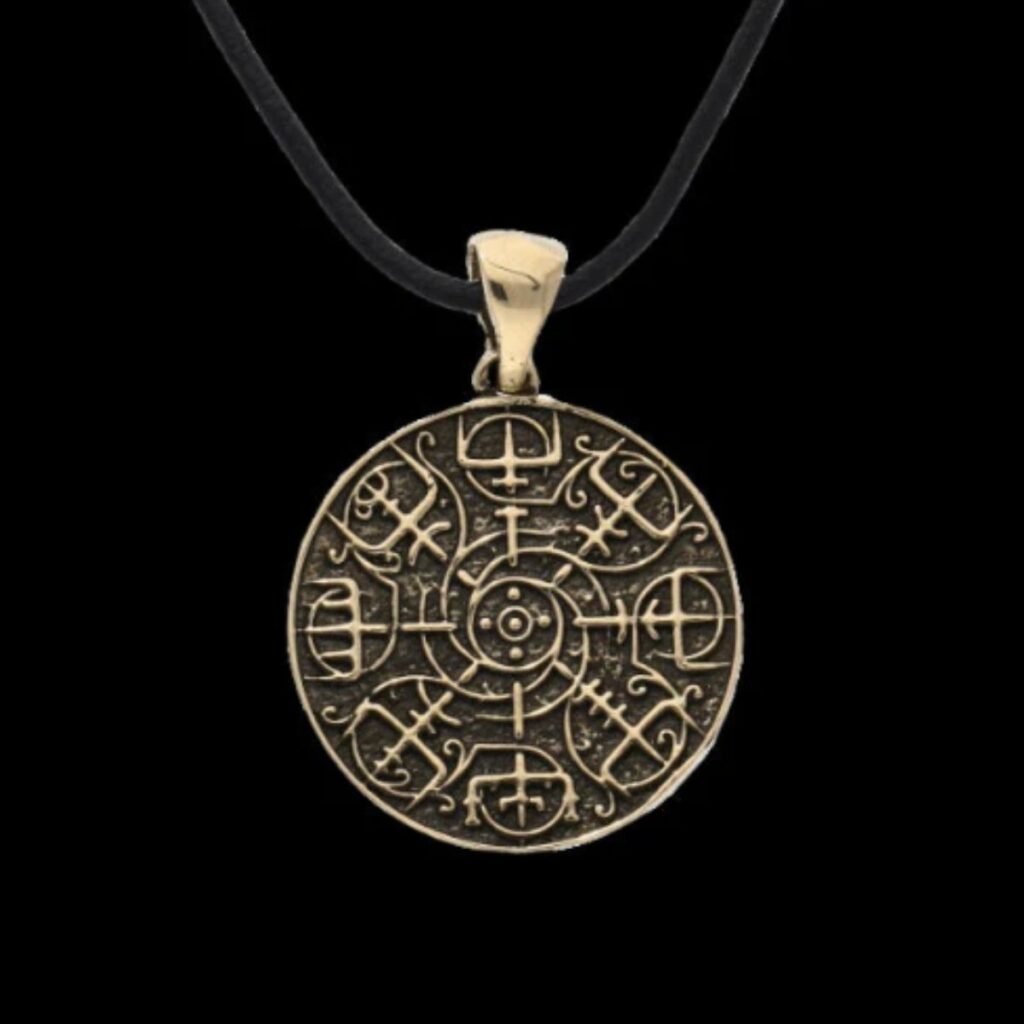
3. Aegishjalmur / Helm of Awe
The Vikings used a runic alphabet, but for them, the runes could do more than just describe the world. In the hands of a runemaster, they could be used to shape the world through magic.
The Norns, the Norse fates, write the destiny of men into the bark of the world tree Yggdrasil using the runes. Odin hung himself from Yggdrasil for nine days and nine nights while pierced by his own spear to learn the secrets of the runes. He then shared these with making.
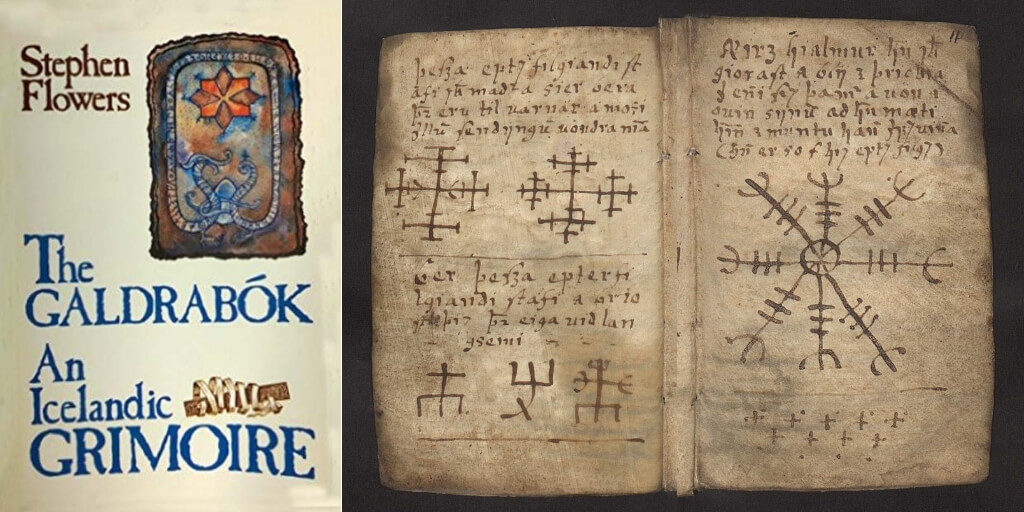
We do not know much about how the Vikings themselves used the runes, though there are many references to the use of rune magic. But we know how runes were used in Medieval Iceland thanks to a group of magical Grimoires dating from the 15th to 18th centuries. The grimoires demonstrate a mix of Christian mysticism and runic traditions, suggesting they drew, in part, on older Norse traditions. The grimoires include magical runic staves that stack runes to create potent magical symbols called Galdrastafir.
The most famous of these runic staves is Aegishjalmr, more commonly known as the Helm of Awe. It was a symbol of protection. According to the grimoire, warriors can draw the symbol on their forehead to invoke the favor of the gods and ensure their bravery and success in battle.
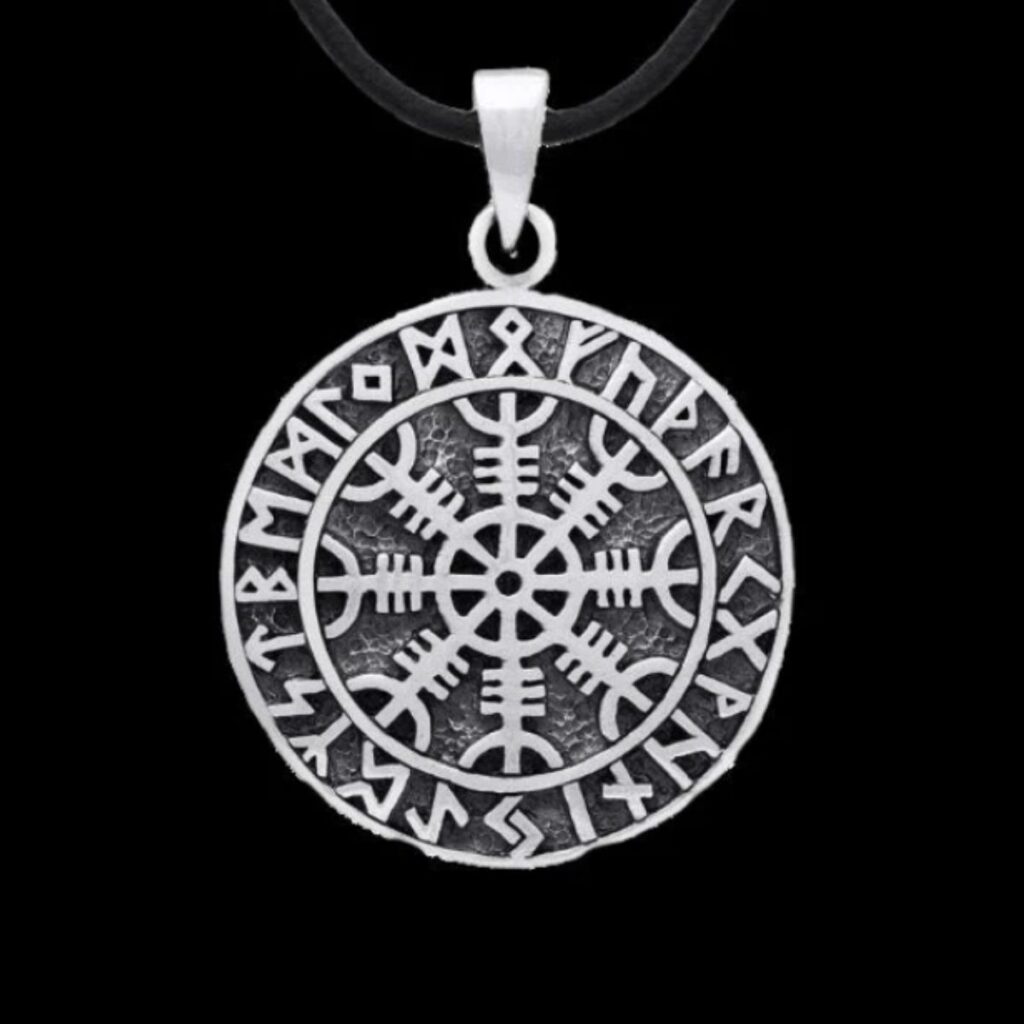
It is composed of 8 branches resembling radiant tridents around a central point. The central point may represent the thing to be protected, the tridents being the offensive means of this protection. If we look at the etymology, “aegis” means “shield” and “hjalmr” corresponds to the word “helmet” in Old Norse.
While no examples of the Aegishjalmur symbol survive from the Viking world, it is mentioned in a number of Viking texts. For example, in the Fáfnismál, the dwarf turned dragon Fafnir boasts of using the Ægishjálmur, making it invincible. However, he appears to be wearing a physical helm with magical properties, rather than a symbol.
In the VKNG store, we offer the best of both worlds, with fine pieces of jewelry featuring the Helm of Awe symbol.
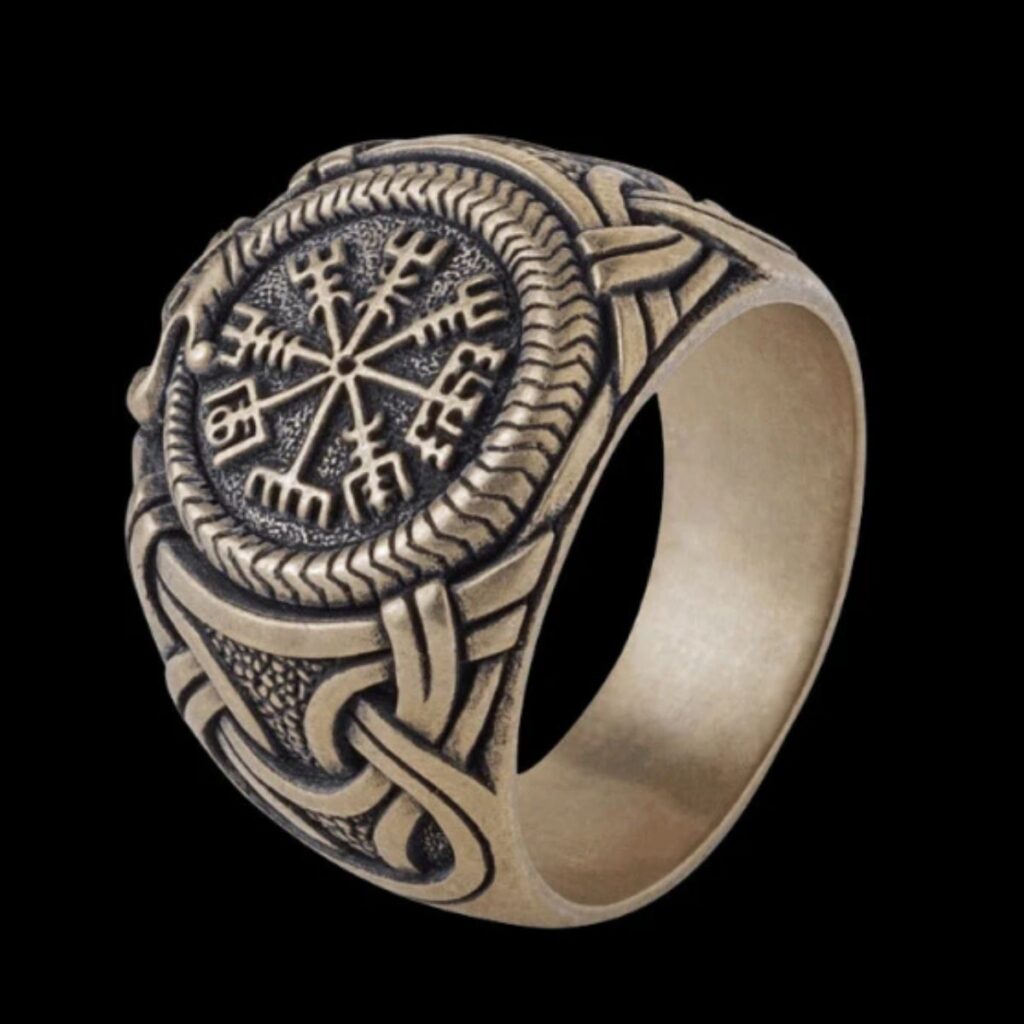
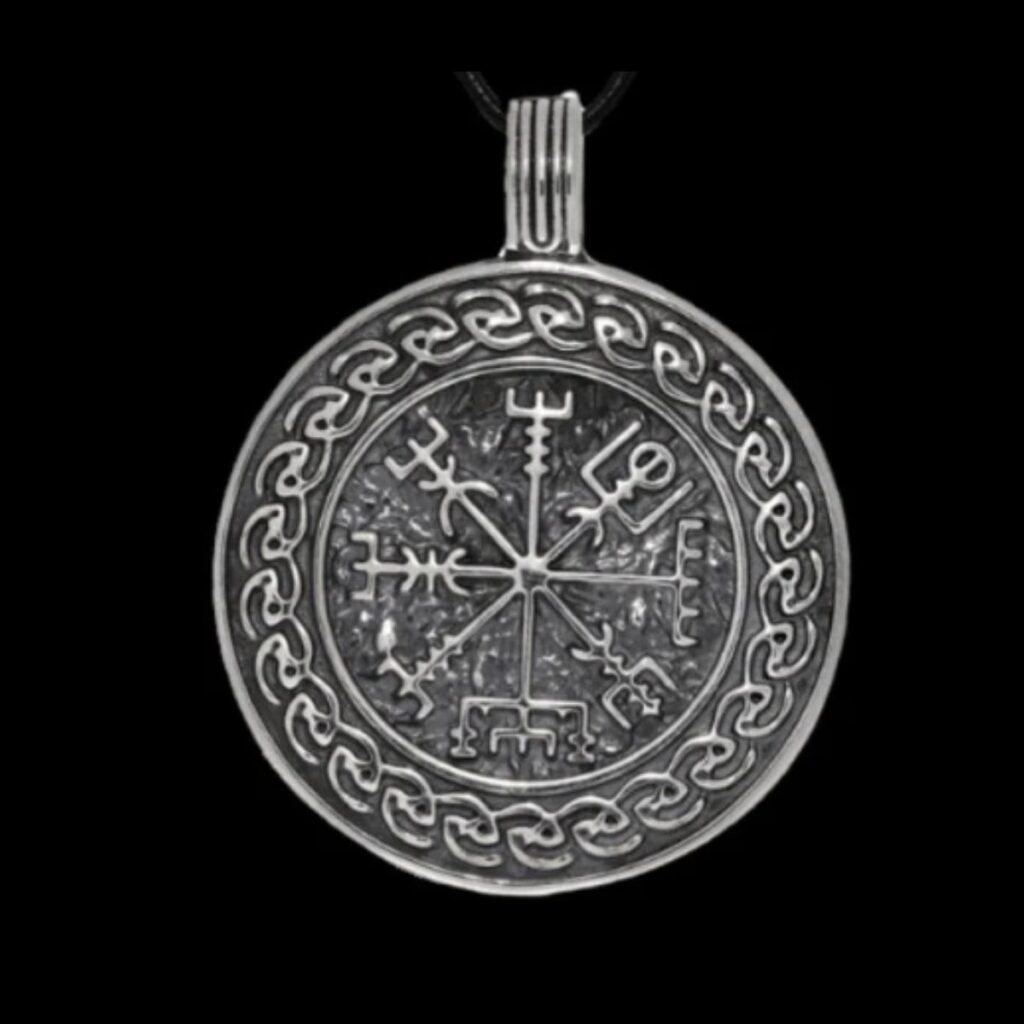
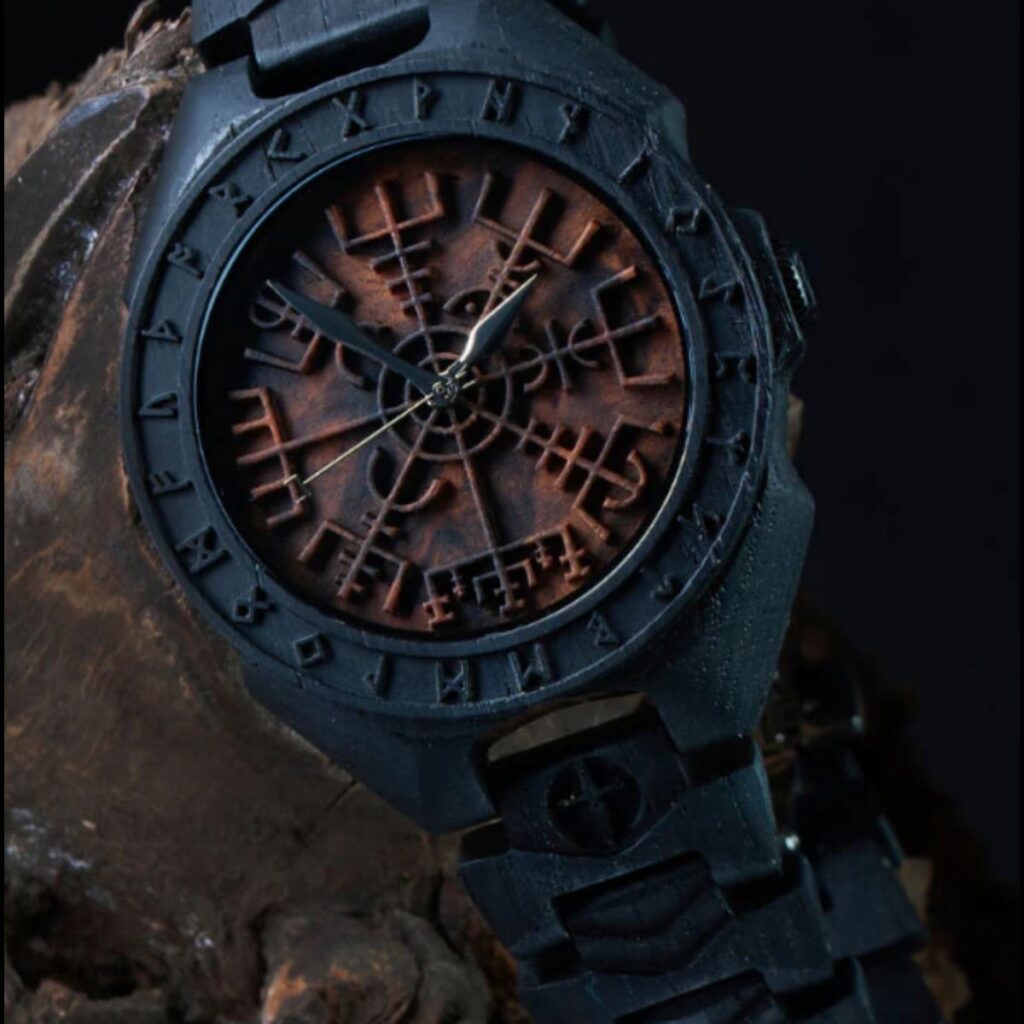
4. Vegvisir / Norse Compass
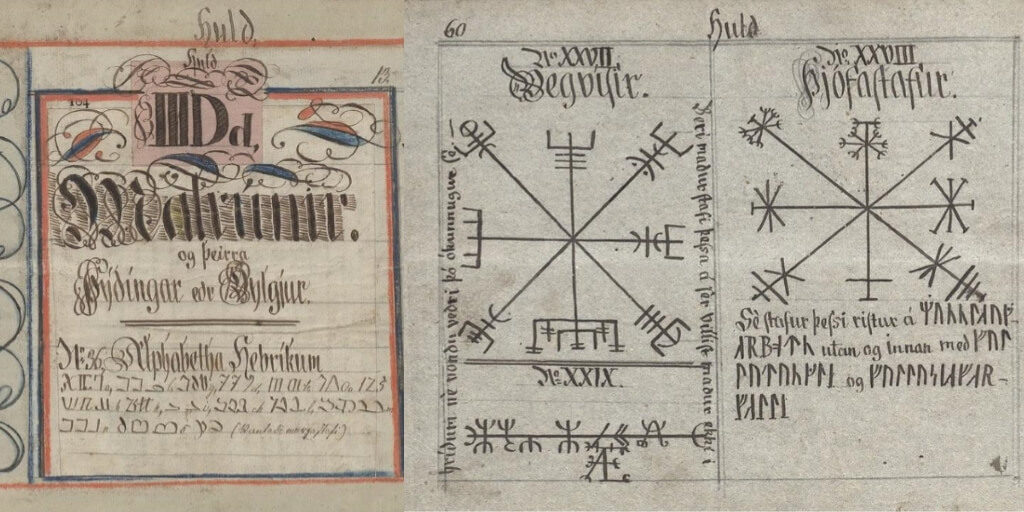
Vegvisir, also found in the Icelandic grimoires, is frequently confused with Aegishjalmur. Vegvisir also has 8 branches, but each is different from the other. According to the grimoires, it is a wayfinding symbol, and the user will never lose their way, even if they do not know where they are going. This is why it is called the Norse Compass.
Vegvisir is mentioned in two different grimoires. The first is the Galdrabok, ostensibly dating to 1600 but first published in 1921, which contains 47 spells. It was first published in 1921. It also appears in the Huld Manuscript, which dates to 1860. Written by Geir Vigfussen, it gathers and analyses many symbols and spells. Concerning the Norse Compass, it says the following: “If this sign is carried, one will never lose one’s way in storms or bad weather, even when the way is not known.”
Like Aegishjalmur, no examples of this symbol survive from the Viking Age. However, considering how little we know about Norse navigation and the fact that no Norse maps or navigational symbols survive, it may be no surprise that the Vikings used magic to steer their ships.
In modern Asatru, the symbol has also become associated with spiritual guidance. This is how we imagine it in the VKNG Collection.
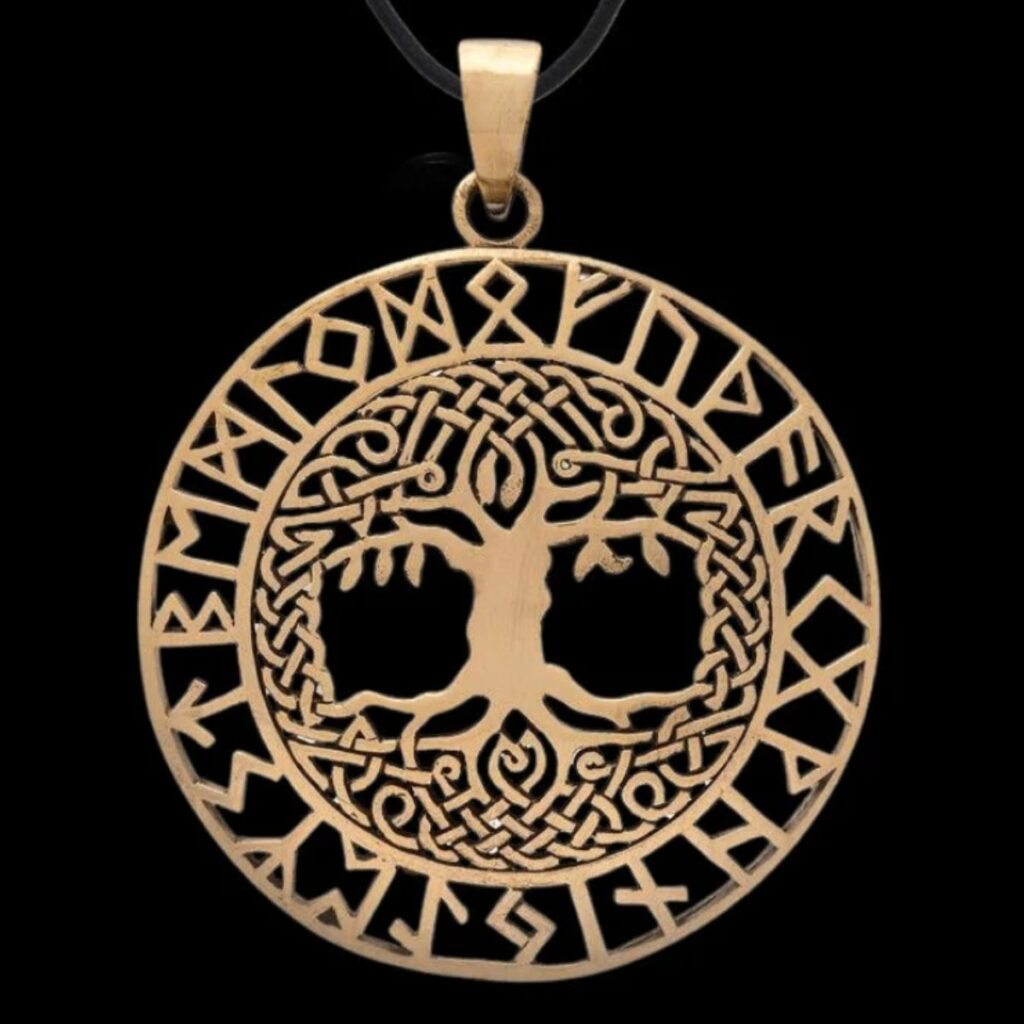
5. Yggdrasil / World Tree

Yggdrasil means “horse of Odin” or “horse of yggr”. “Ygg” means “the fearsome” and is one of the many names given for Odin in the Gylfaginning. “Drasill” means “horse”.
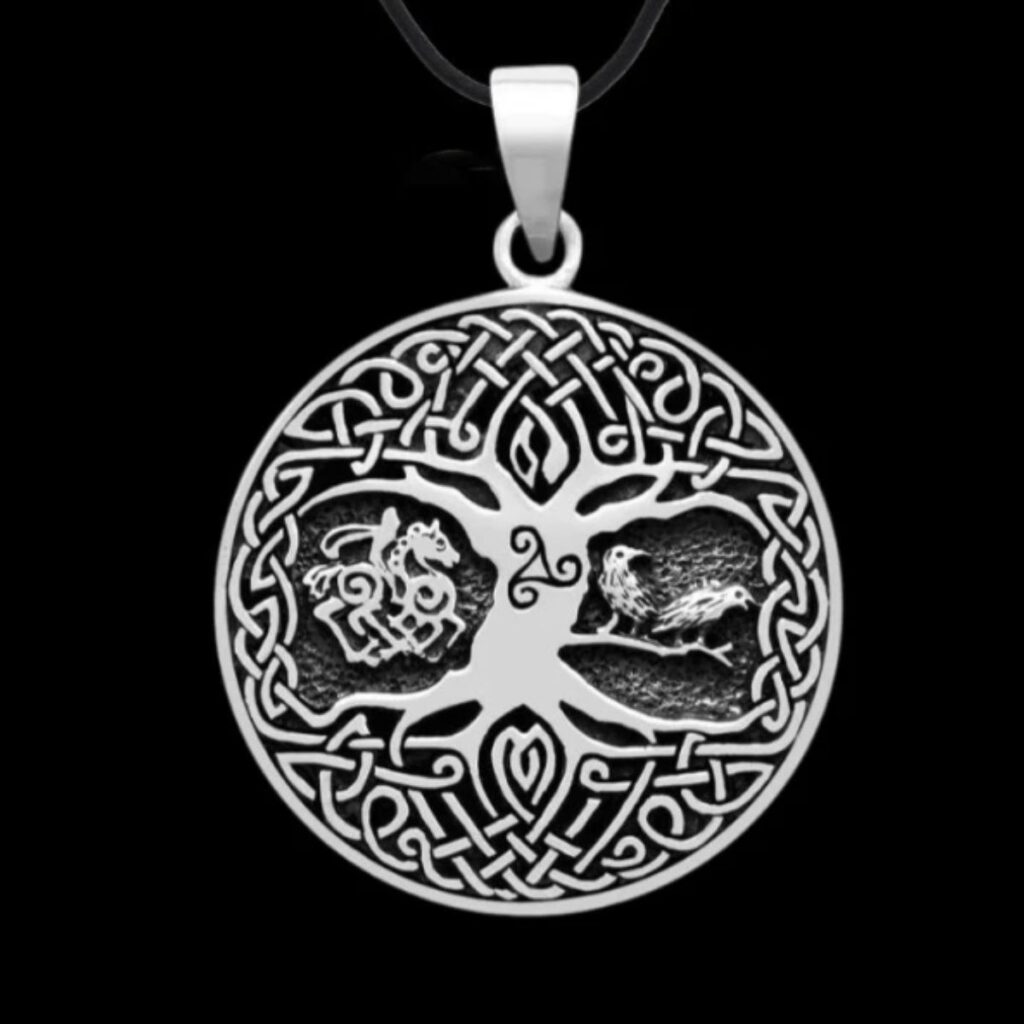
Yggdrasil or Yggdrasill is presented as an evergreen ash tree, the largest and most perfect of all trees. It forms the backbone of the universe with the heavenly realms (such as Asgard) among its branches and the underworld realms (such as Niflheim) among its roots.
Yggdrasil represents the connectivity of the universe, and also order, as it not only connects the nine realms, but keeps them separate and in place. It is no coincidence that the Norse write fate into the bark of Yggdrasil. The Norse dragon Nidhoggr lives among the roots of the tree, constantly gnawing on them. At Ragnarok, he will finally break through some roots, causing the extended winter (fimbulvinter), which signals the coming of the end.
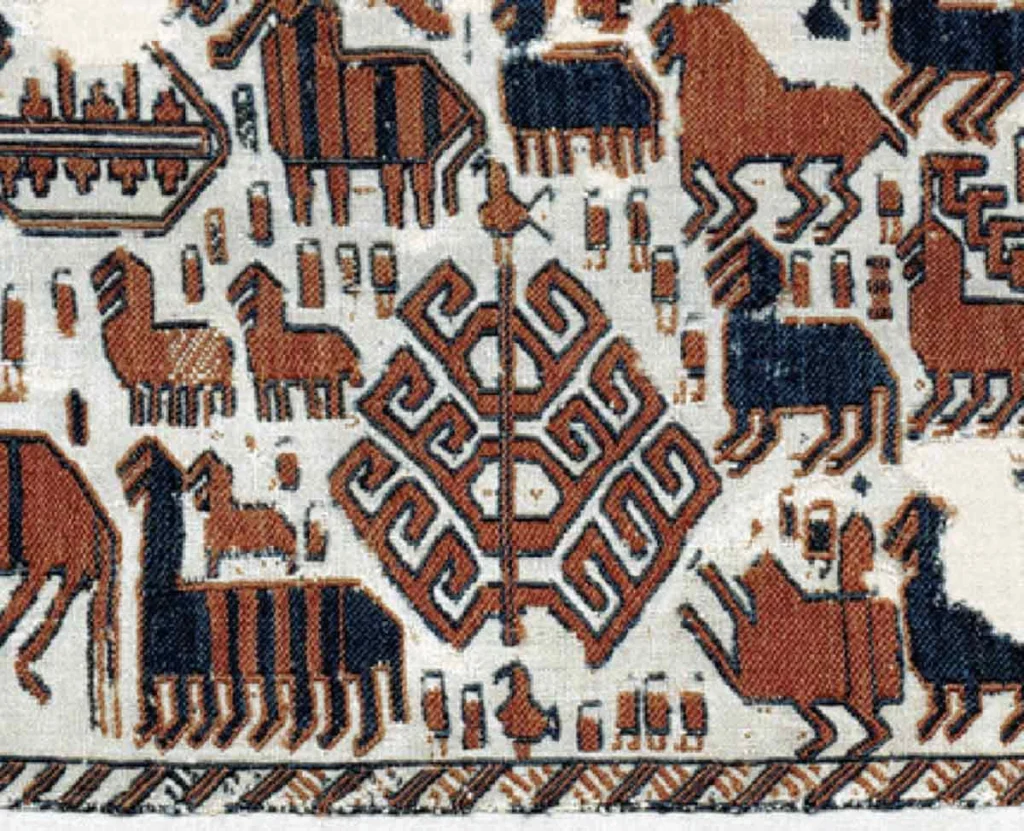
While tree imagery was common in Norse art as decoration, the only definitive images of Yggdrasil that we have come from tapestries, most famously the Overhogdal tapestry from 12th-century Sweden.
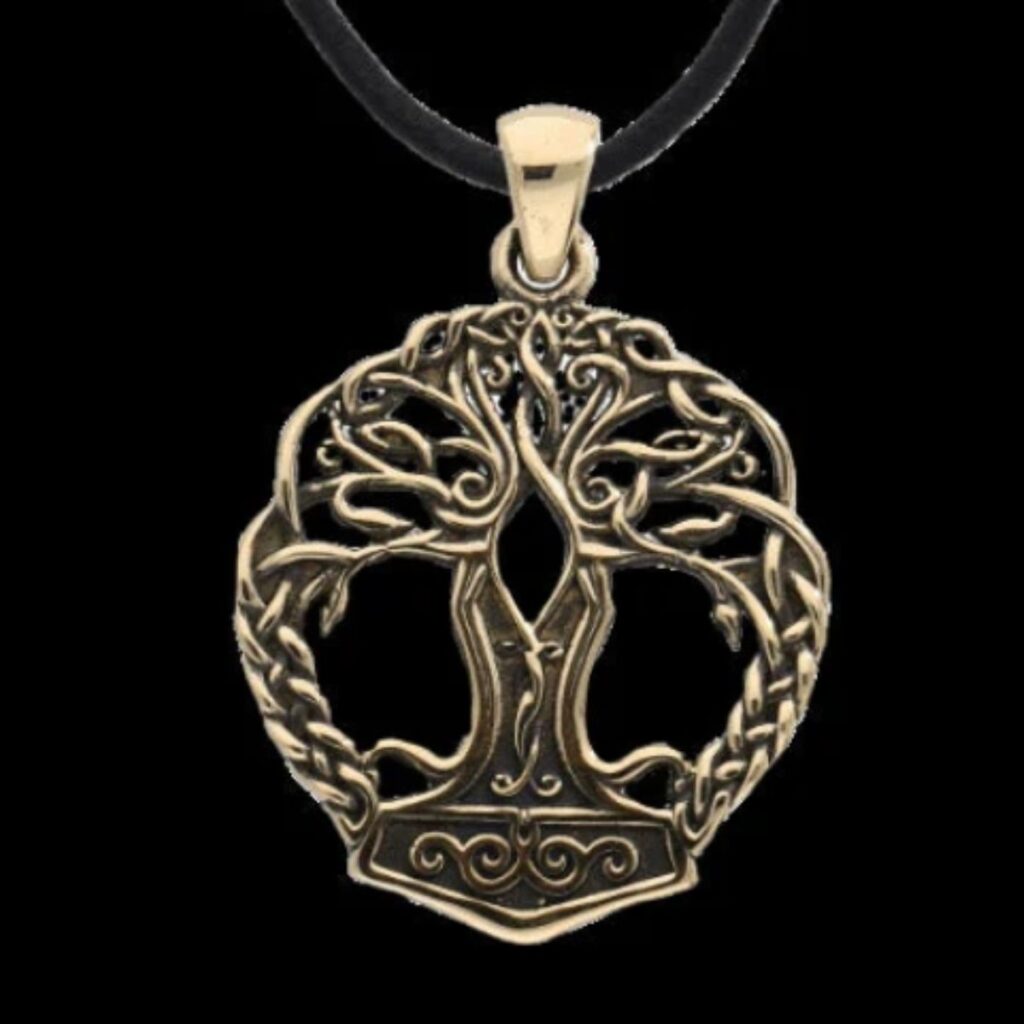
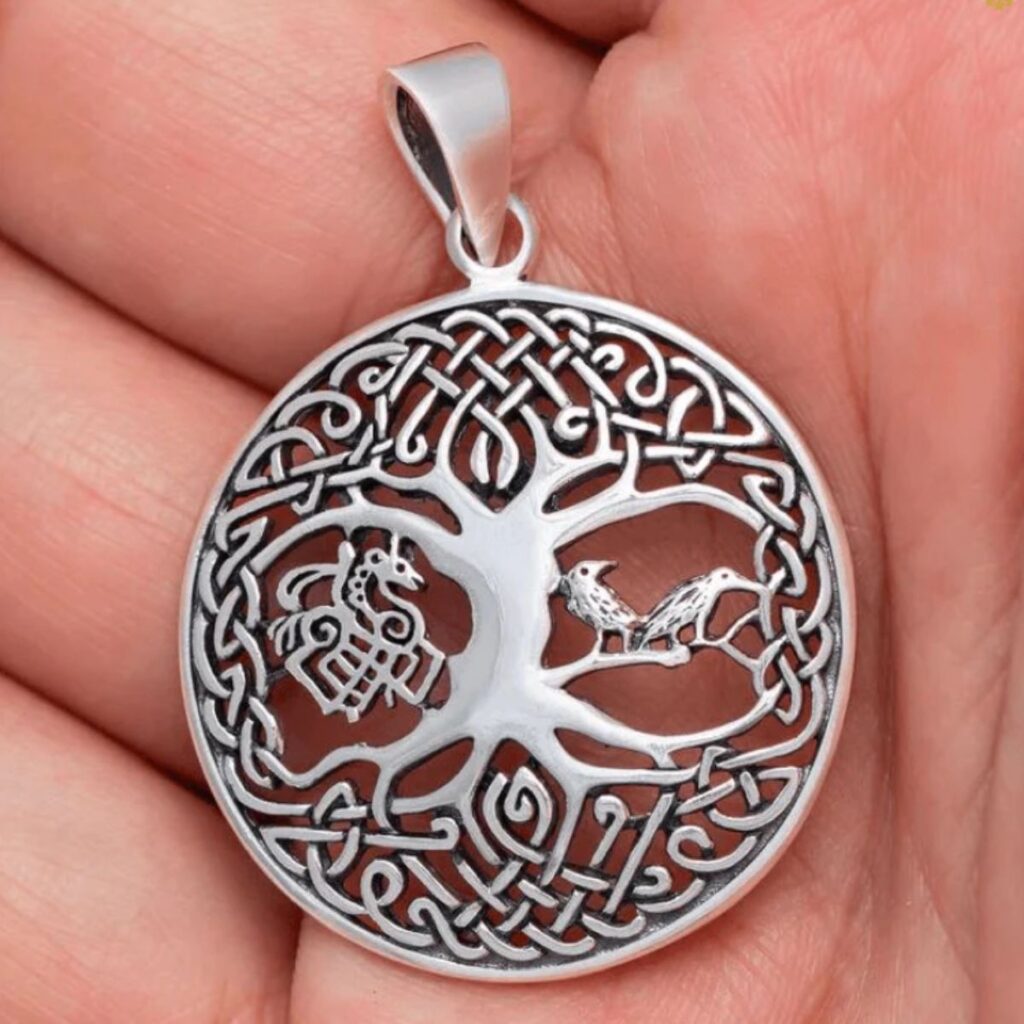
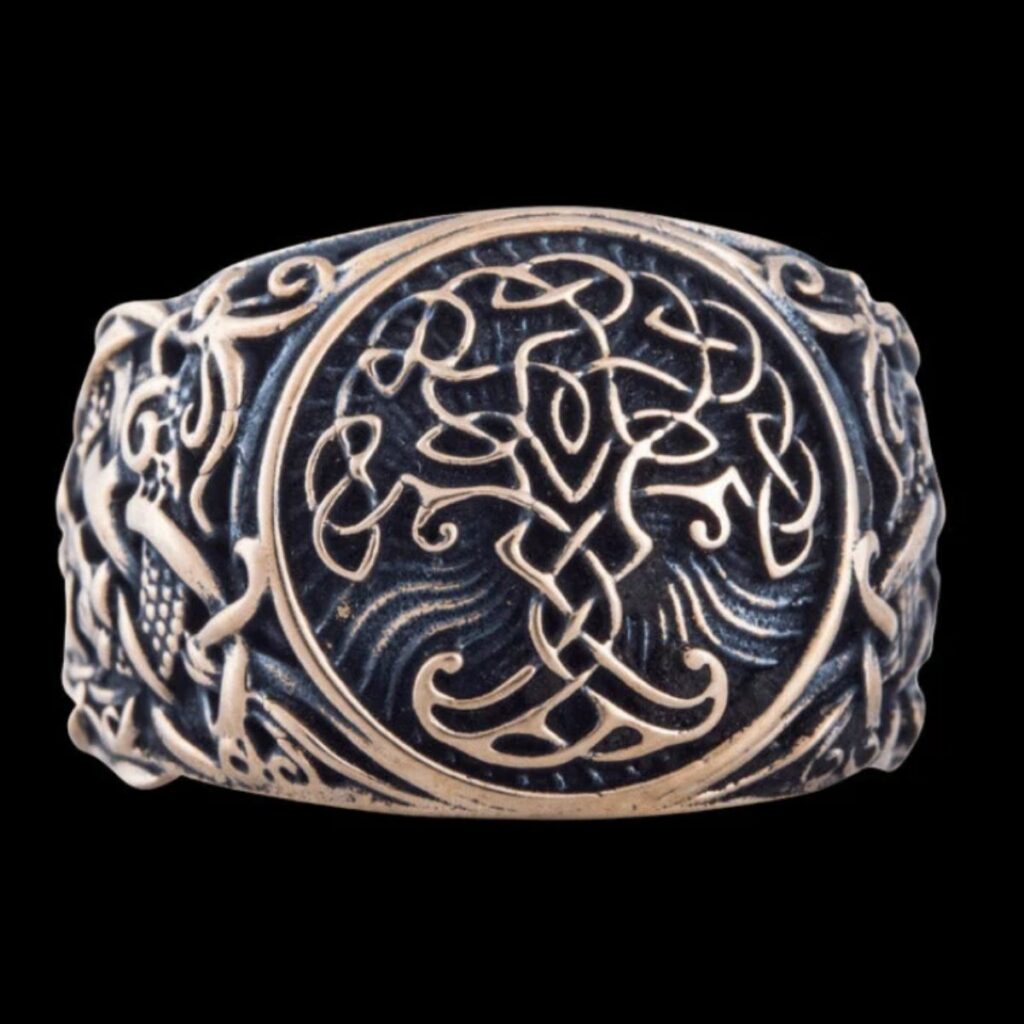
In the VKNG collection, our Yggdrasil pieces reference both Norse mythology and a connection with nature.
6. Sleipnir
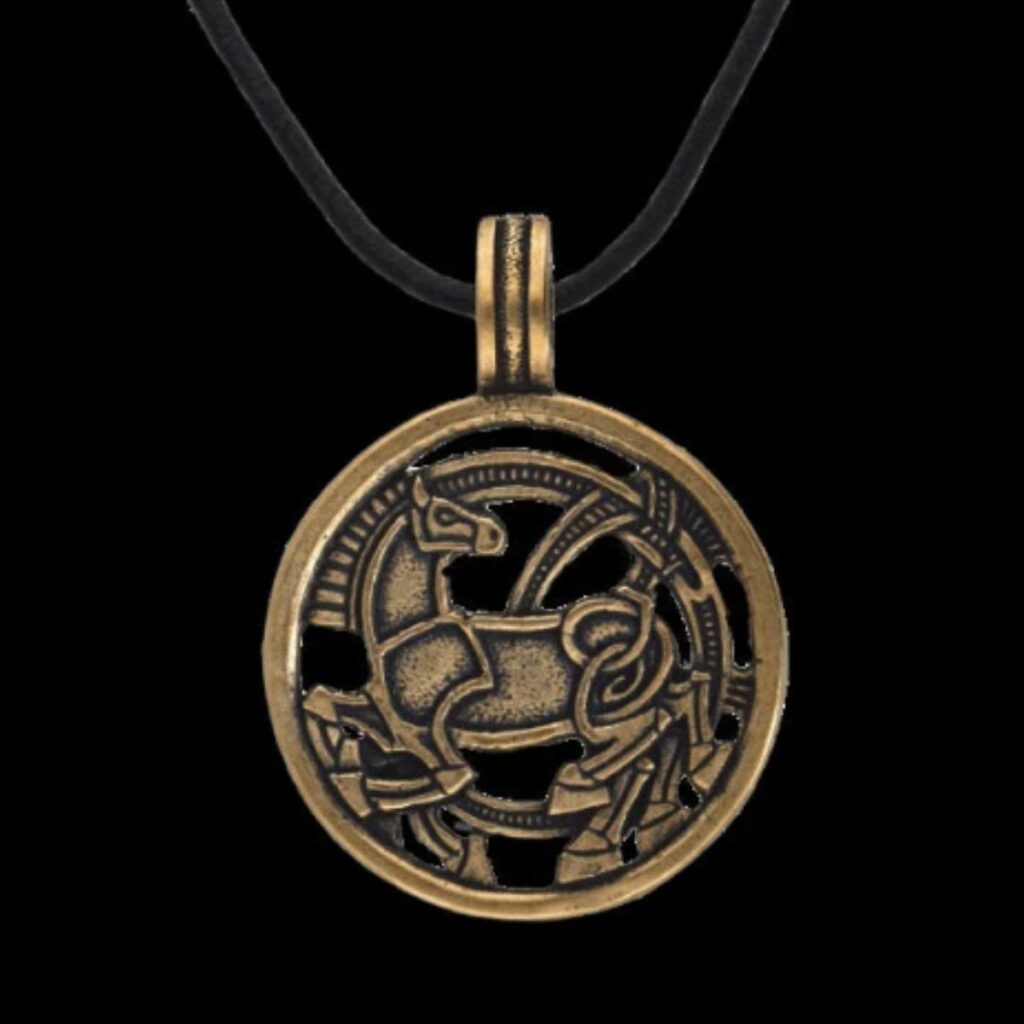
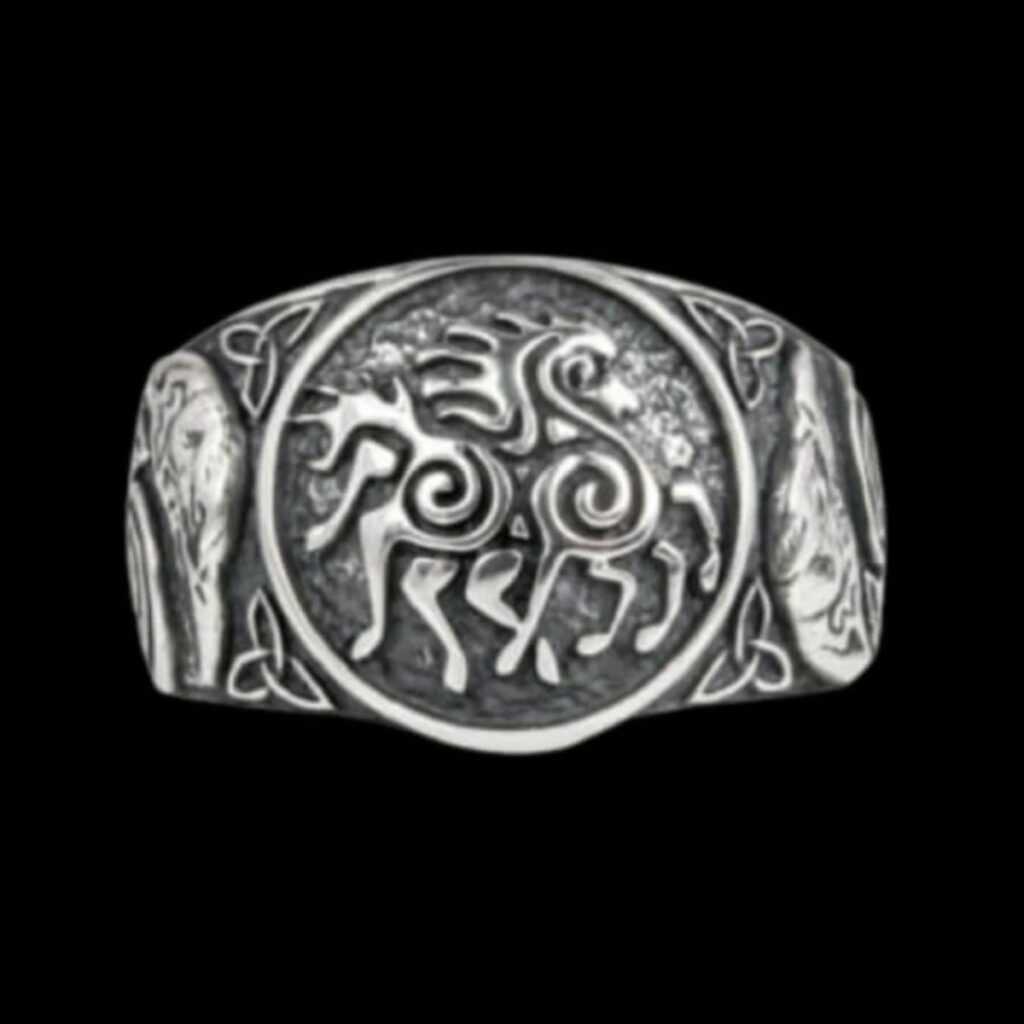
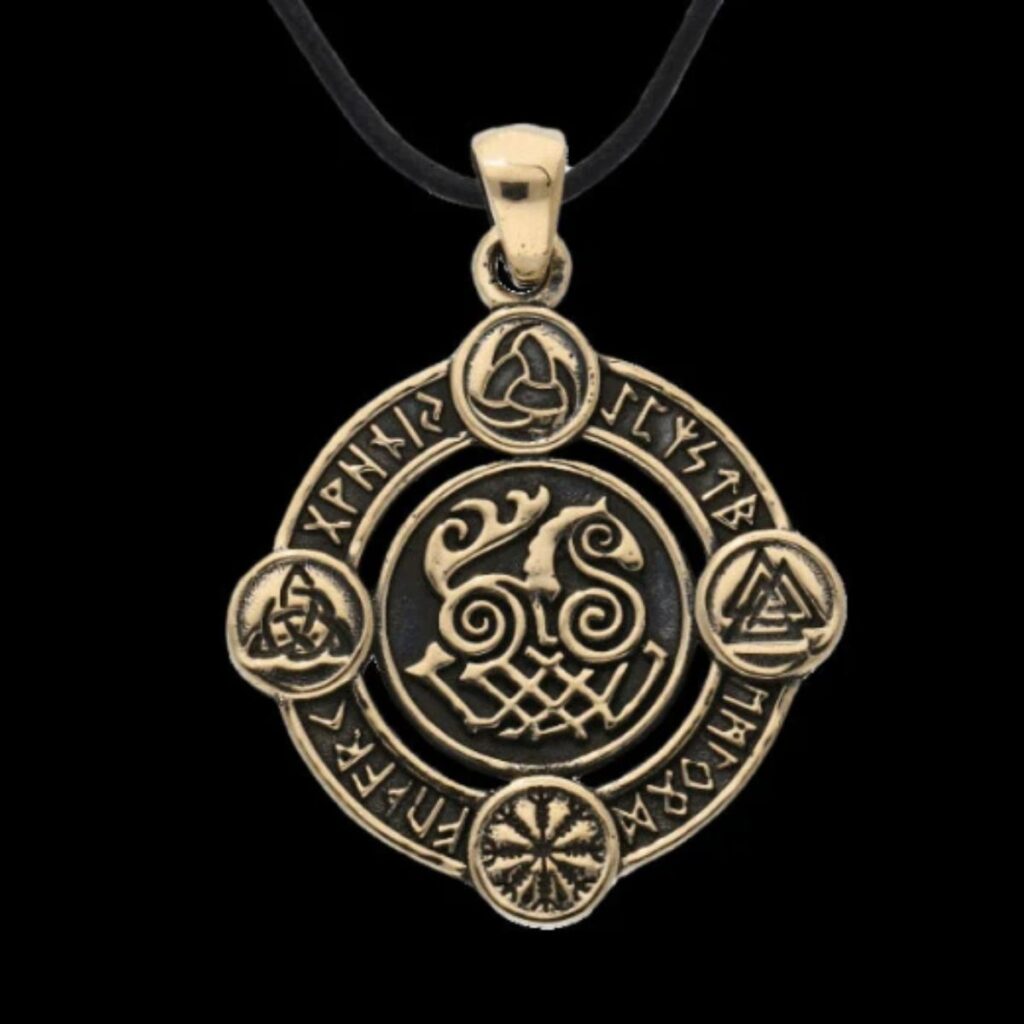
Sleipnir is Odin’s eight-legged steed that carries him between the nine worlds of the Norse cosmos while he wanders. It is one of the most common symbols to appear in Norse art, reflecting the important role that horses played in the Viking world.
As well as being essential for war and transport, the Vikings believed that horses had the ability to carry messages between the living and the dead. This is why horses were often slain and buried with the owners.
Sleipnir, with his eight legs (though older depictions often show him with just the standard four), was considered the fastest and best of all horses. Whenever he was challenged his always won. Unusually, Sleipnir was the child of Loki, but Loki was his mother. During one of his schemes, he transformed himself into a horse to distract a stallion called Svadlfari. While his plan worked, Loki also got pregnant and gave the horse to Odin as his steed.
Sleipnir represents the ability to adapt and transcend barriers. It is a favorite symbol in the VKNG store.
7. Gungnir
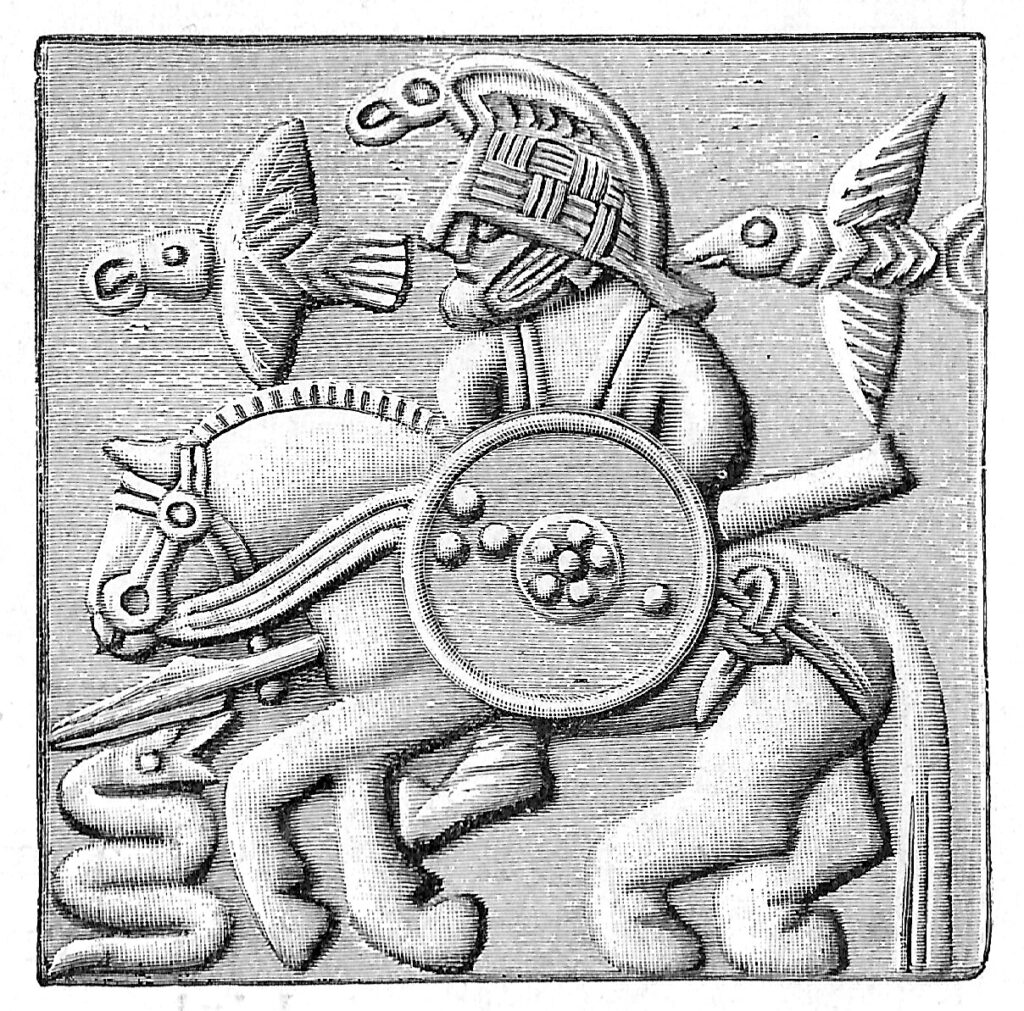
Gungnir, the spear of Odin, was obtained for Odin from the forges of the dwarves at the same time that Loki obtained Mjolnir. Since Odin was the god of war, it makes sense that a spear would be his symbol, as almost all Viking warriors carried one into battle. Swords were expensive and difficult to make. Only the wealthiest warriors carried them. Odin is almost always depicted with his spear in hand.
The war between the Aesir and Vanir gods in Norse mythology is described as officially starting when Odin threw his spear over the assembled Vanir gods, claiming his foe. In honor of this, the Vikings too would often throw their spears over the heads of their enemies to signal the start of the battle.
When the Vikings made human sacrifices to Odin, they would also do this with a spear, just as Odin stabbed himself with Gungnir in order to gain knowledge of the runes.
Gungnir is described as being so well-balanced that it could strike any target, regardless of the skill of the thrower. It also seems to have magic runes carved in its tip. The spear seems to have been associated with the military might of the Vikings, which will only fail at the end of days. Odin is portrayed as using the spear to engage with the wolf Fenrir during the battle of Ragnarok. At this moment, it is prophesied that the spear will finally fail Odin, and he will be devoured
Spears represent Odin and the day-to-day life of Viking warriors in the VKNG Collection.


8. Swastika
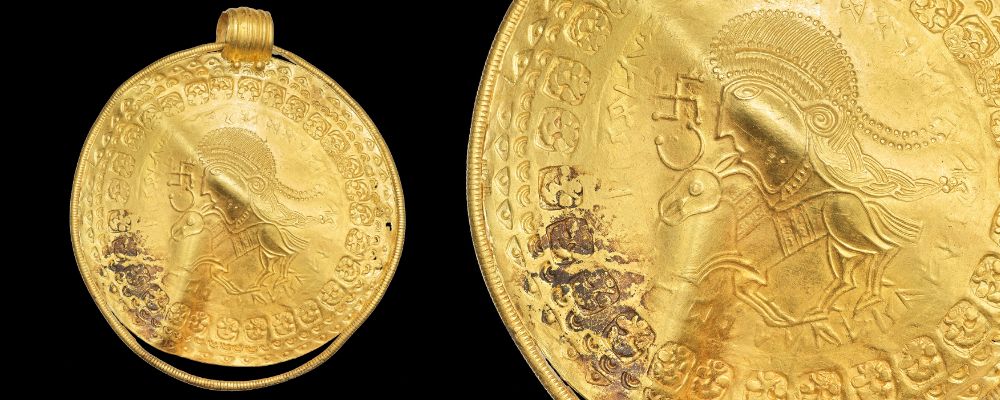
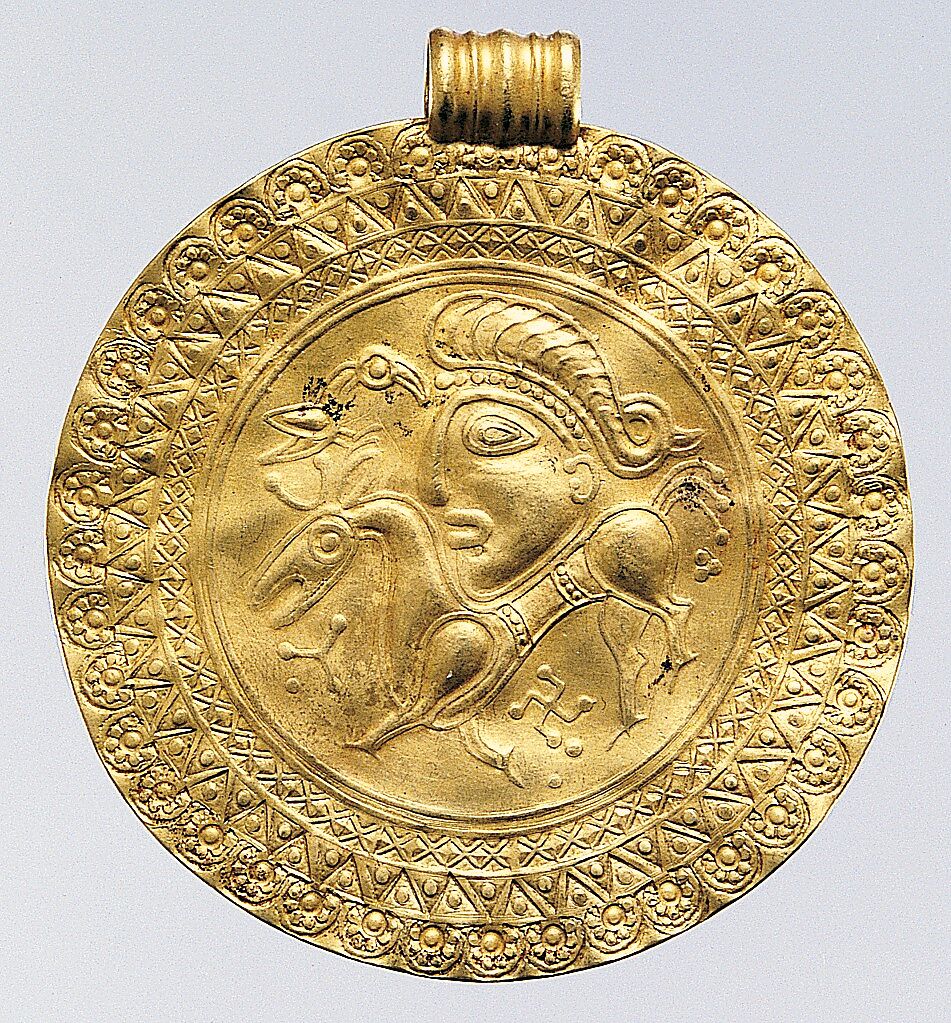
While the Swastika has taken on a very different meaning today, among the Vikings, it represented prosperity, power, and protection. It often appeared in association with Odin and Thor. For example, on the gold bracteate above, it appears near Odin on horseback. It often appears alongside Thor’s hammer, and was commonly carved onto personal objects.
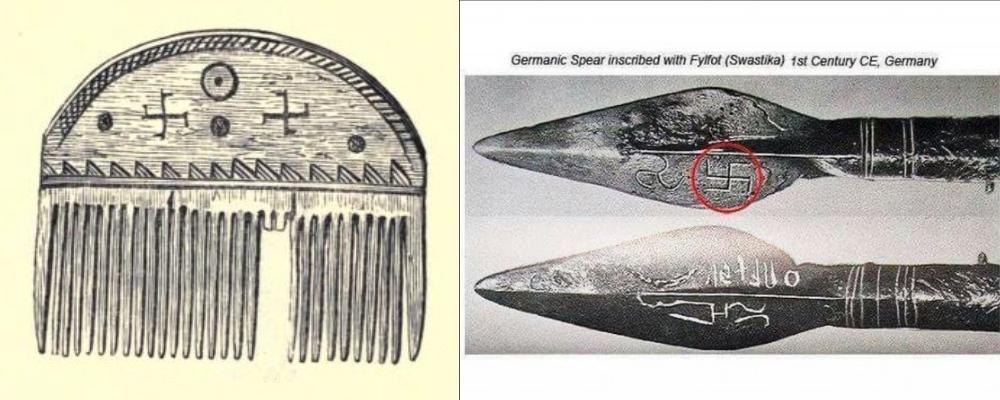
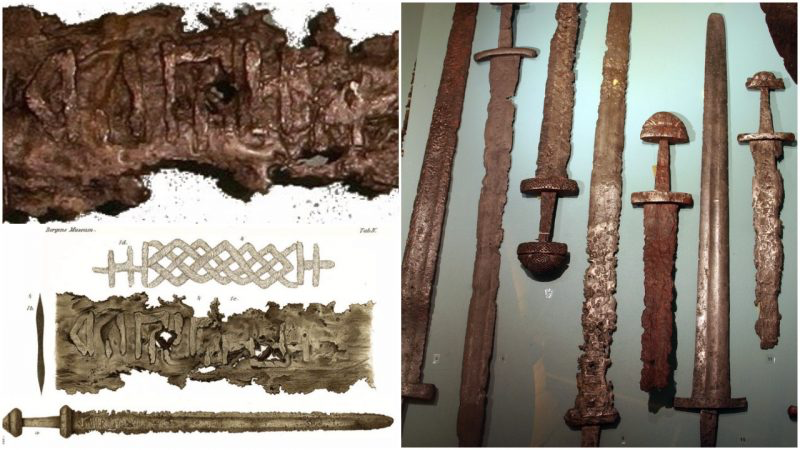
The swastika was a symbol used by a variety of cultures around the world. However, because of its appropriation by nationalist groups, it is one of the symbols we choose not to include in our collection for modern Vikings.
9. Web of Wyrd
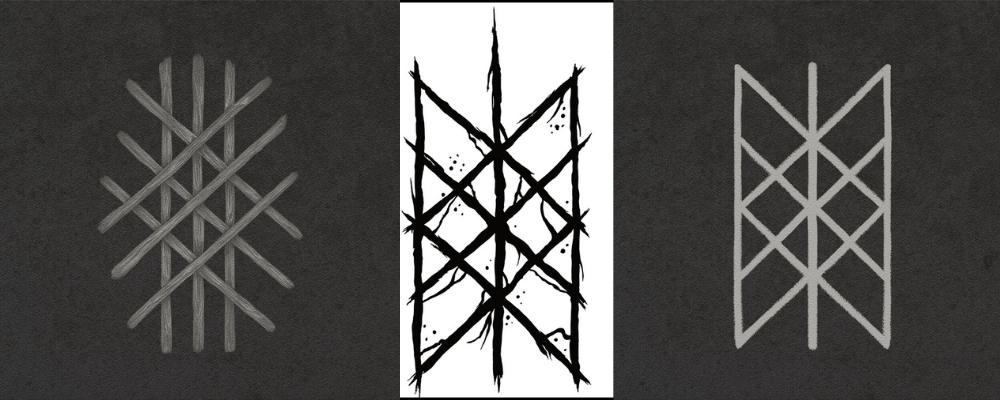
The Vikings believed in fate.
The fact that even the gods had a prophesied fate that they could not escape, in the form of the Ragnarok apocalypse, reflects the power that the Vikings gave to the idea of fate.
The Norse symbol is known today as the Web of Wyrd and represents the matrix of fates, as crafted by the Norns, who were known to “spin” fate as well as write it with the runes. According to some stories, the Norns arrived at someone’s birth and cut their life strand, determining the moment of their death. But in between those two points, how you weave your life is up to you.
The symbol is made up of nine interlocking staves, nine being a sacred number among the Vikings: there were nine worlds, and Odin hung off Yggdrasil for nine days to learn the secrets of the runes.
However, while the Vikings certainly had a concept of Wyrd, the first known appearance of the symbol we call the Web of Wyrd was in the 1990s.
10. Troll Cross
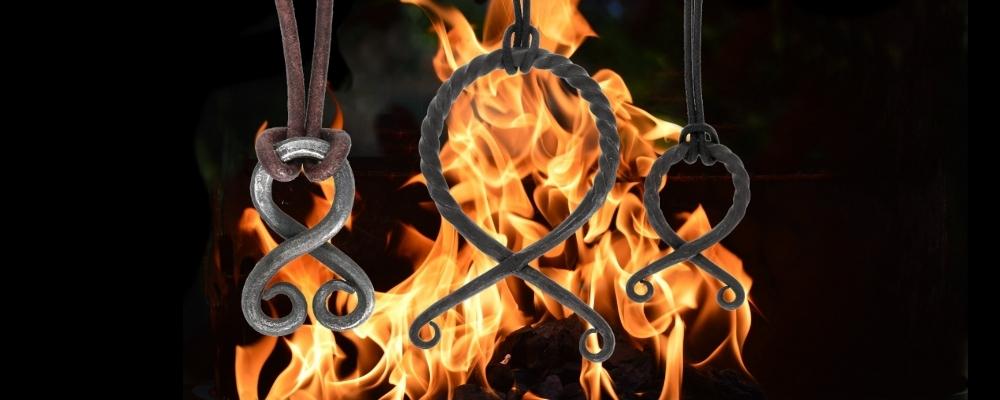
In Sweden and Norway the Troll Cross, or trollkors, is a bent piece of iron worn as an amulet to ward off malevolent magic.
The symbol seems to have fairly modern origins, created by a Swedish smith in the late 1990s, which she claims she copied from a protective rune that she found on her parent’s farm.
The symbol does bear a resemblance to the Othala rune used in Elder Futhark, but which is not part of the Younger Futhark commonly used by the Vikings.
It seems to have been linked with ideas of heritage and inheritance and may have been linked with ideas of calling on the protection and help of ancestors.
Get Your FREE e-Book
Norse Gods, Monsters & Myths

Thanks I would like to read any other printings you have on the Norse myths and folklore
Bravo pour le travail, on voit qu’il y a un ou des passionnés derrière et très bien fait pour quelqu’un de novice intéressé par ce sujet…..
Merci ! 🙂
Leyendo el significado que le dan a muchos de sus símbolos o guías pienso que bajo sus nombres y propias creencias pudieron ser gnósticos como eyggdrasill era el árbol de la vida y sus nueve mundos es igual a la divina comedia que se entiende perfecto en el libro si hay cielo y infierno detalla cada parte de los nueve mundos que para nosotros serian escaleras o pruebas para avanzar. Con diferentes palabras y significados para el momento la serpiente en el árbol lo dice todo
Y lo de Telaraña de Wyrd es para nosotros nuestra única forma de vida
gracias por esta informacion me encanto
Tell me you have no knowledge about the Norse without telling me. The Vegvisir is NOT a Viking symbol. It’s earliest appearance was in the Huld manuscript, which was recorded hundreds of years after the end of the Viking age and the original Norse religion died out. So The Norse never used it.
Thanks for the feedback. While I can see that the original author did say that the Vegvisir came from the Icelandic grimoires and that there is no evidence that it was used in Viking times, I can see how the article is a bit misleading. I’ll update it to make it clearer.
Please, please … I love the vegvisir but it is an Icelandic Norse symbol, sadly there is absolutely no archaeological finds or mention of this that relates it to the viking age. It appears only 600 years after. It uses runes, it is a bind rune but please make it clear it does not relate to the viking age… I thought it was Celt the first time I came across it and I am born and breed with the culture. Same with aegishjalmur. They are both beautiful symbols but till we discover otherwise not from the viking age.
Thank you for an otherwise beautiful text and site.
You make a good point Christina. This article does need rewriting to clear up some issues. I’ll be doing that within the next day or so. Thanks for your thoughtful feedback.