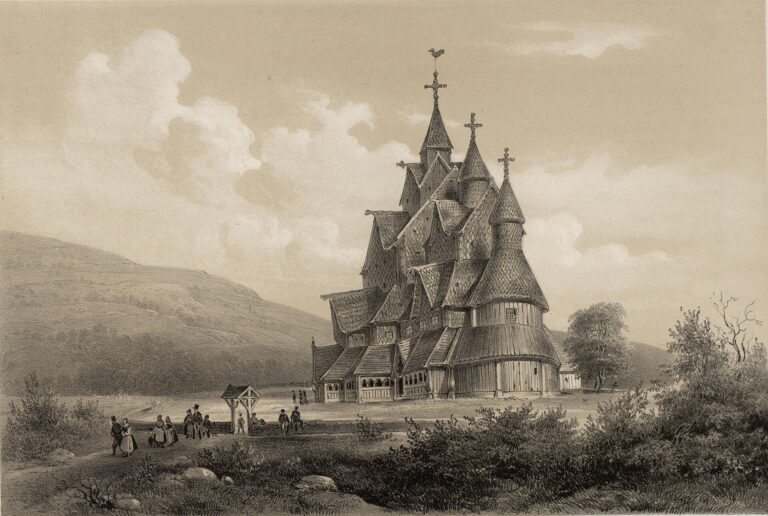
Today, Norway is famous for its distinctive medieval wooden stave churches. These were once constructed throughout the Viking world as they transitioned from the Old Norse religion to Christianity. Elements of the Old Norse religion found their way into these new houses of worship.
Stave Church Construction
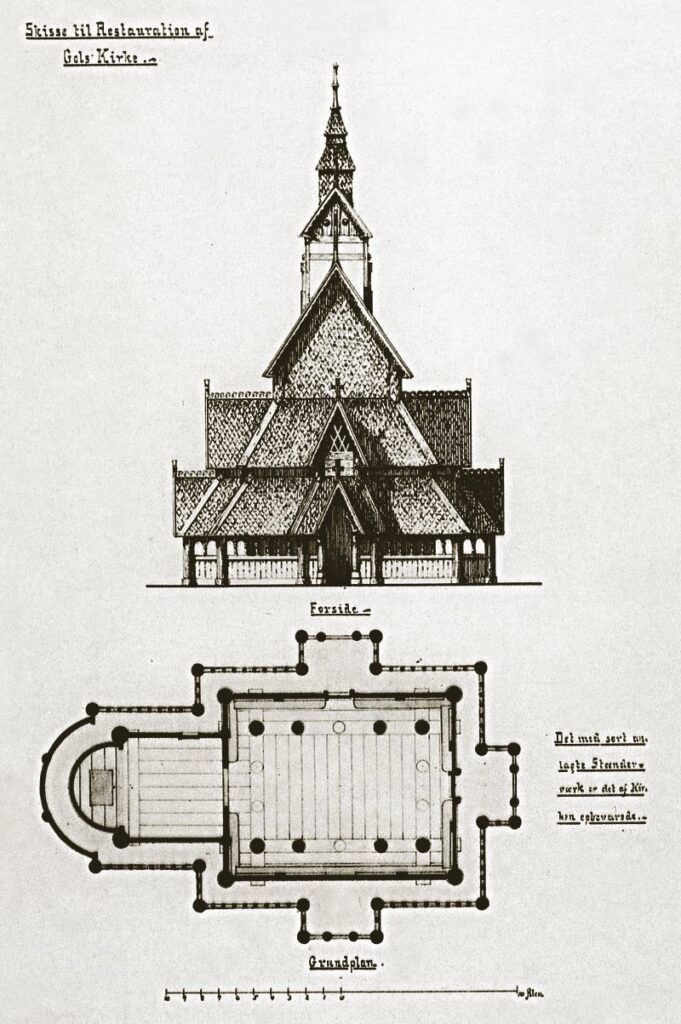
These churches are named stave churches because they were built with load-bearing ore-pine posts called stafr in Old Norse and stav in Norwegian. This design was based on post and lintel construction practices in the Viking Age. Logs were split in two halves, set or rammed into the earth, and given a roof.
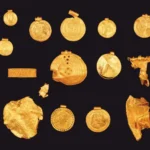
Evidence of these posts is relatively easy to identify in the archaeological record, and wood remains allow for dating through dendrochronology. We know that for Norse temples, the Vikings sometimes placed gulgubber in the post holes to sanctify the space for religious activities.
Norway is believed to have converted to Christianity at the end of the 10th century, with Hakon the Good and Olaf Tryggvason. Almost 2,000 stave churches were built across Norway between 1030 and 1350, only around 28 of which have survived to the modern day. It is unclear how many were erected in other Viking nations.
Link to Old Norse Temples
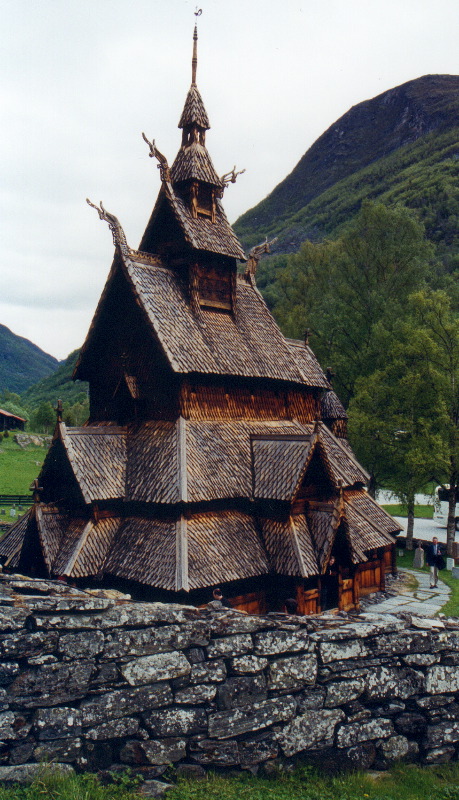
Some archaeologists argue that there is evidence to suggest the first stave churches were built on indigenous Norse worship sites. While the Norse worshipped in a variety of spaces, temples called hof were common. Hofs were square buildings with roofs raised on four columns. The theory is that the hofs were converted into churches, influencing the nature of churches in the Viking world. This assumption is questioned, but churches were built near feasting halls and graveyards, much like hofs.
There is firmer evidence that material from pagan temples was reused in the construction of churches, preserving elements of what Old Norse temples may have appeared.
There is also evidence that stave churches were based on the layouts of earlier temples, reflecting Old Norse cosmological beliefs. For example, some were constructed around a central point, like a world tree.
Ship Design
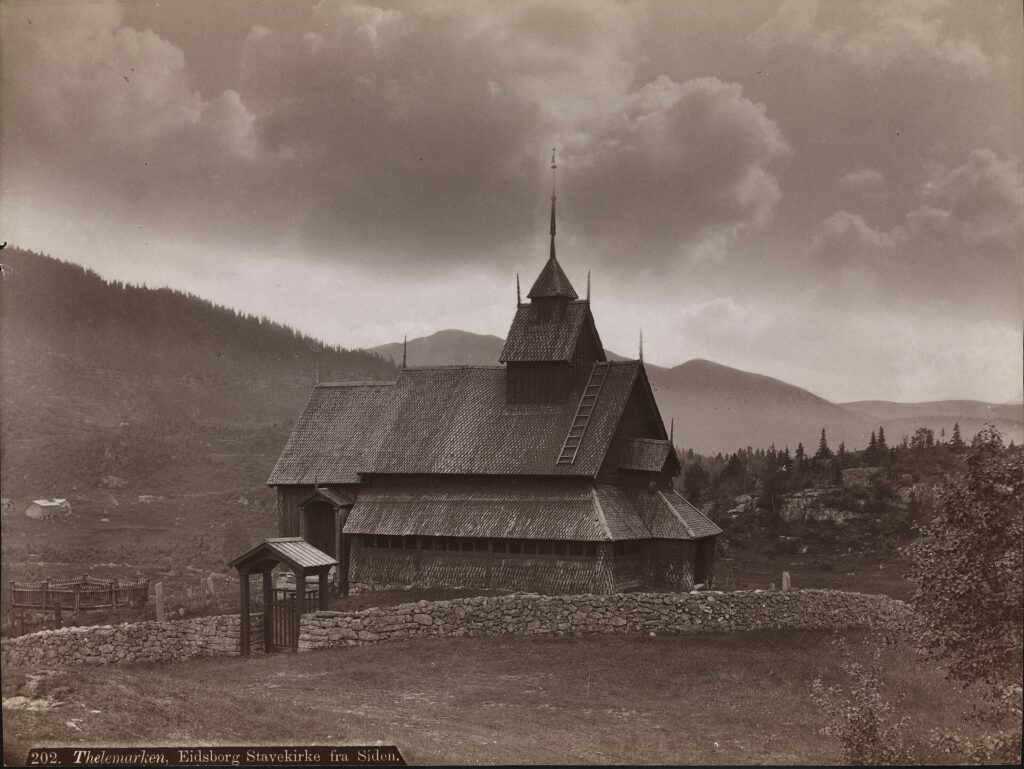
It is often noted that stave churches look like Norse longships, especially the drakkr, which were decorated to look like sea dragons. The presence of dragon heads on roof gables seems to be a direct reference. The roofs have also been described as constructed like the hull of a ship, just upside down, and the high staves resembling masts.
This makes sense in a theological sense, as the Vikings not only used their ships to raid, but they were also considered vehicles to move between the worlds of the living and the dead or the mortal and divine. This is why wealthy Vikings were often buried in ships, or in graves surrounded by stones to represent a ship. It makes sense that a building designed to create a bridge between the mortal and divine might be imagined as a ship.
Stave Portals
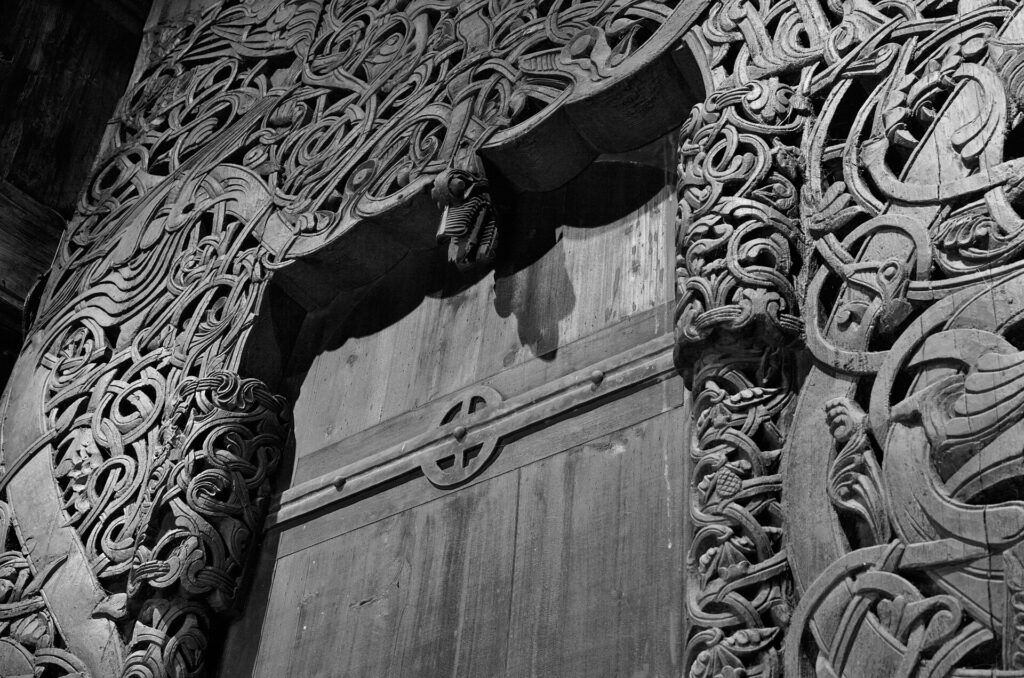
One common element of most stave churches was portal entrances, which allowed entrance into god’s house. These were simple portals framed by elaborate decoration. The most elaborate have continuous decoration around the portal.
The most common portal decoration themes are dragons and beasts mixed with elaborate twisting vines. This decoration does not seem to refer to specific biblical or Christian stories. However, lions overlooking the portals may be meant to represent Christ, as lions do not feature in earlier Norse beliefs.
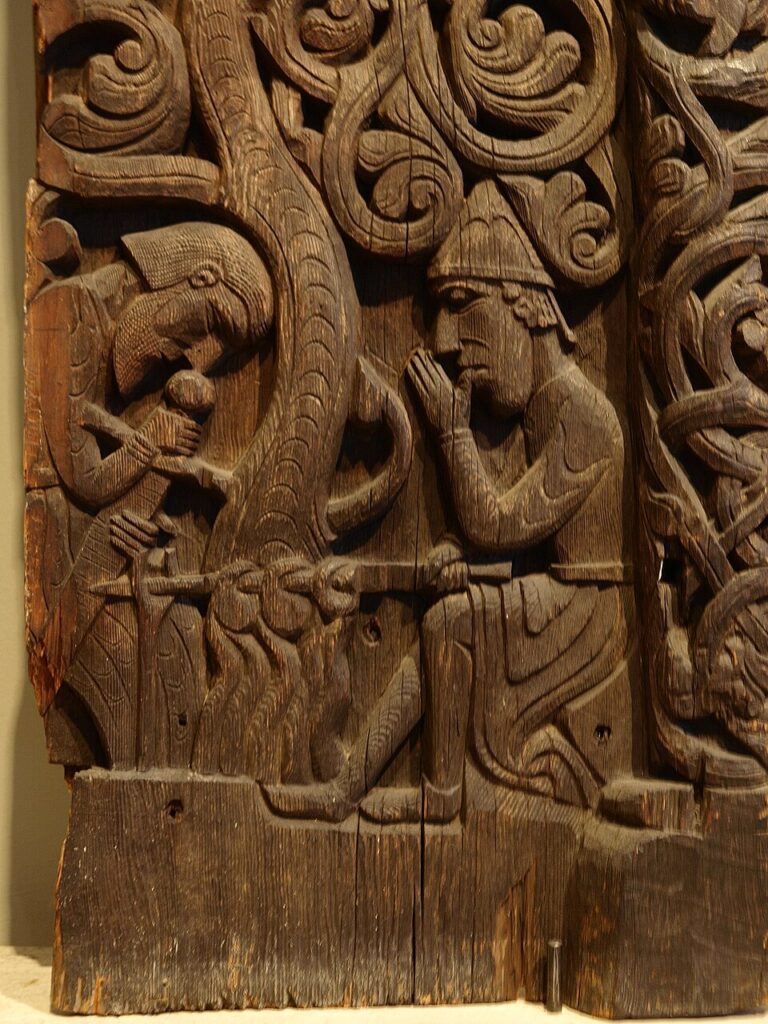
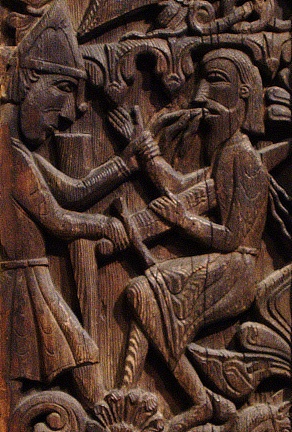
Some churches retain explicit references to Norse mythology. The most notable example is the Hylestad Stave Church, which shows images of the Norse hero Sigurd licking the blood of the dragon Fafnir off his thumb, and then killing Regin.
Urnes Stave Church
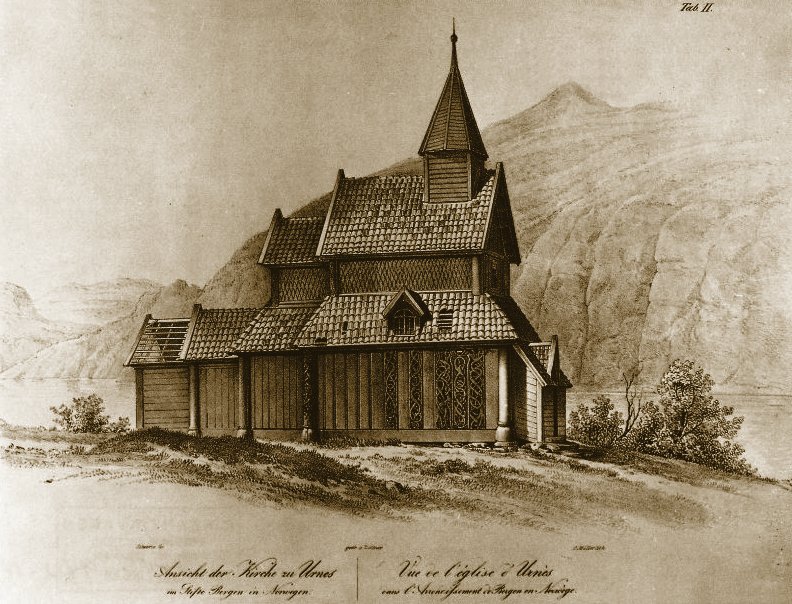
The Urnes Stave Church is probably the most famous and referenced example. It was built in the 11th century directly across the fjord from the village of Solvorn in Vestland, and then almost completely reconstructed in the 12th century.
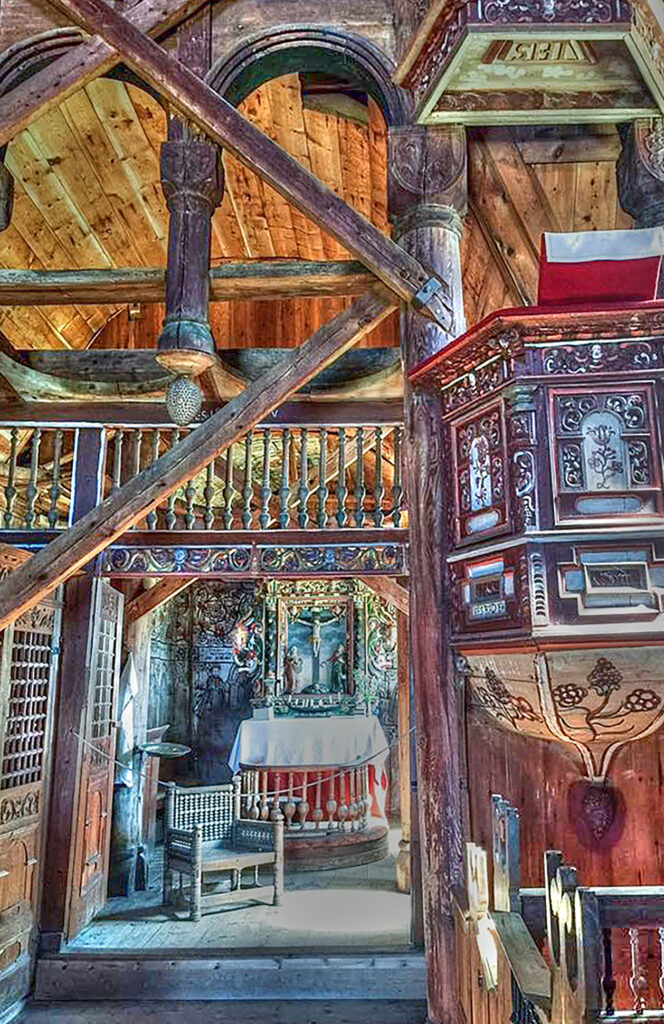
The church gives its name to the Norse “Urnes” art style, and its decoration preserves references to Norse mythology. The entirely wooden church follows the classical basilica plan from Europe with cubic capitals and semi-circular arches. The current church dates to the 17th century but retains earlier elements.
The decoration of the portal represents the chaos of the mortal world and the constant struggle between good and evil, which the person escapes when entering the church. The portal is decorated with a battle between a serpent and a great beast, interlocked with one another and vines and other vegetal elements.
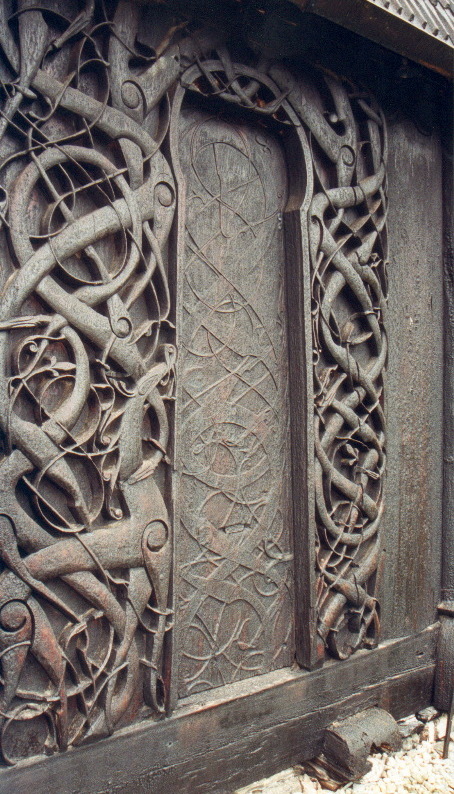
Many believe that the scene brings in elements of Norse mythology, such as the dragon Nidhoggr under the roots of Yggdrasil, Thor battling with the serpent Jormungandr, and Odin facing the wolf Fenrir at Ragnarok. Some believe that the first version of the church may have also had explicit scenes from Norse mythology. This may explain why the church was largely reconstructed in the 12th century, though the original portal was reused.
Urnes Jewelry in the VKNG Collection
Urnes is one of the most popular artistic styles from the Norse world and has inspired many pieces in the VKNG collection. Here are some of our favorite pieces.
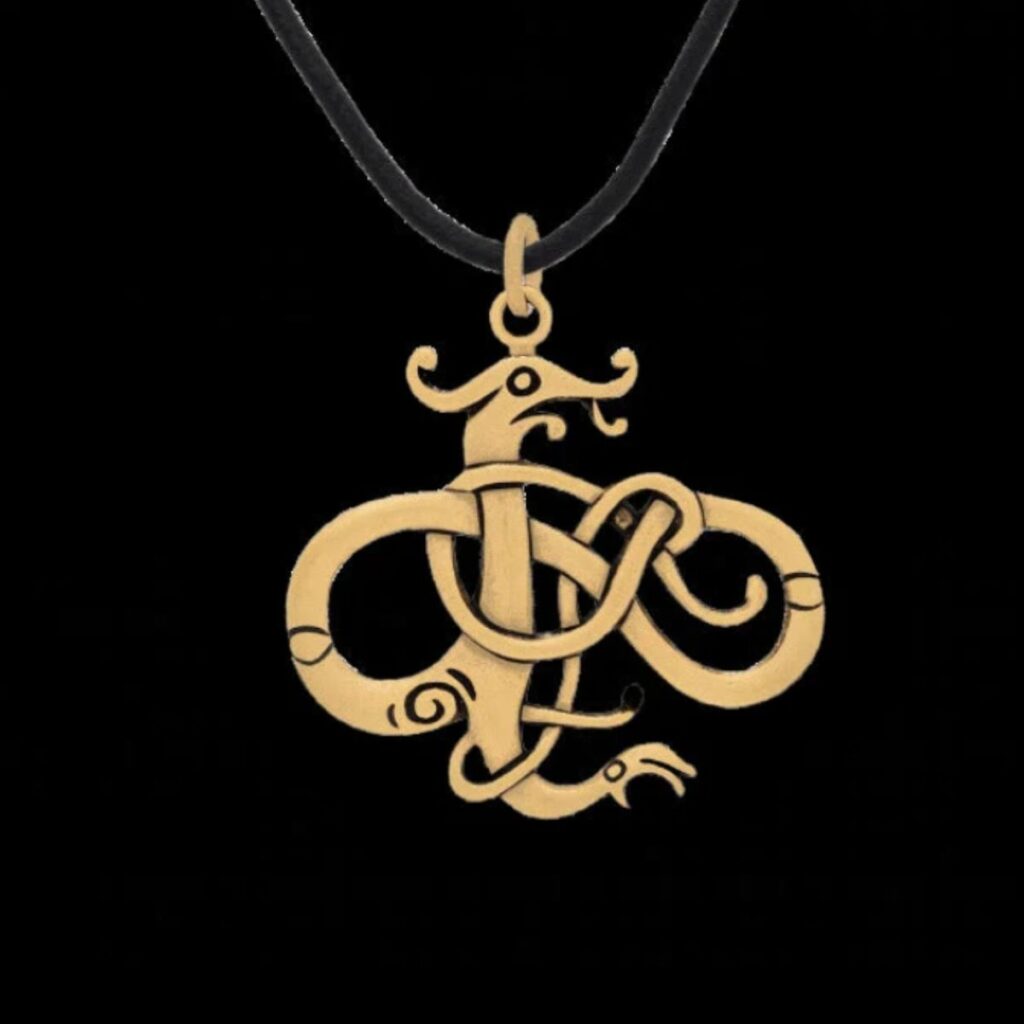
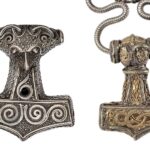
This bronze pendant features a serpent inspired by the portal of the Urnes Stave Church. It represents the chaotic forces in the world that we must overcome each day.
This classic arm ring is decorated in Urnes style with a dragon and a gripping beast locked in battle. Arm rings are symbols of oaths and commitments made.
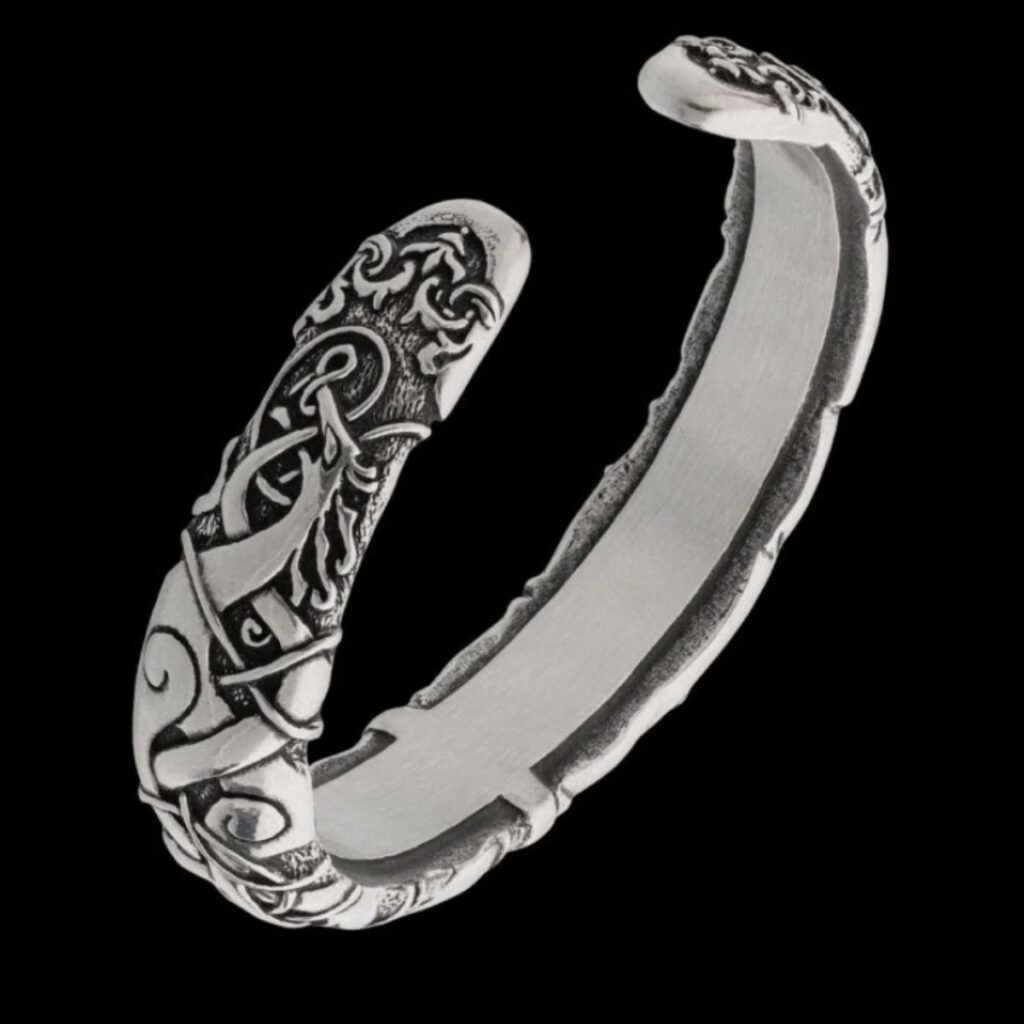
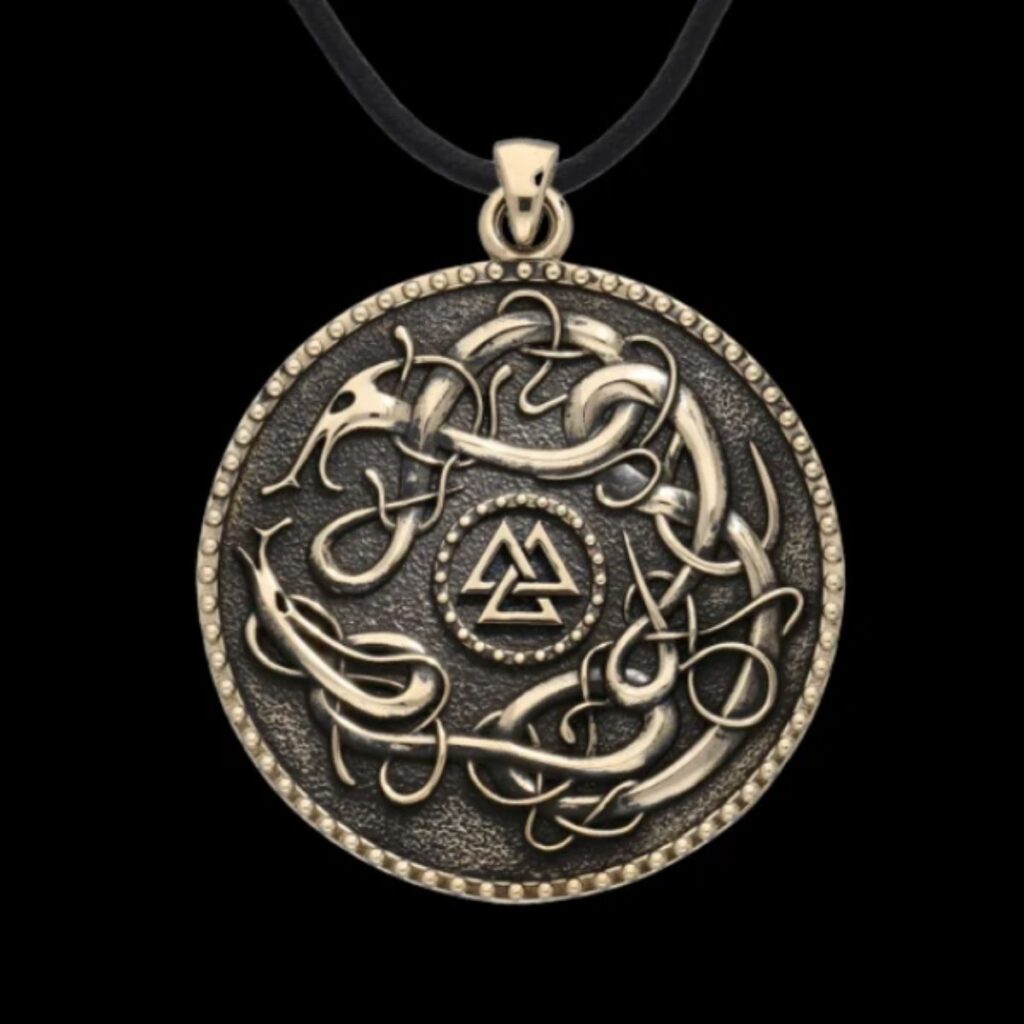
This pendant features the Valknut, the symbol of Valhalla, the most coveted Norse afterlife for fallen warriors in Norse cosmology. It is surrounded by a dragon in the Urnes style, representing what needs to be overcome to earn your place among the gods.
This signet ring features a Viking ship, which carried the Vikings across the sea and between the mortal and supernatural worlds. The band is decorated in classic Urnes style.
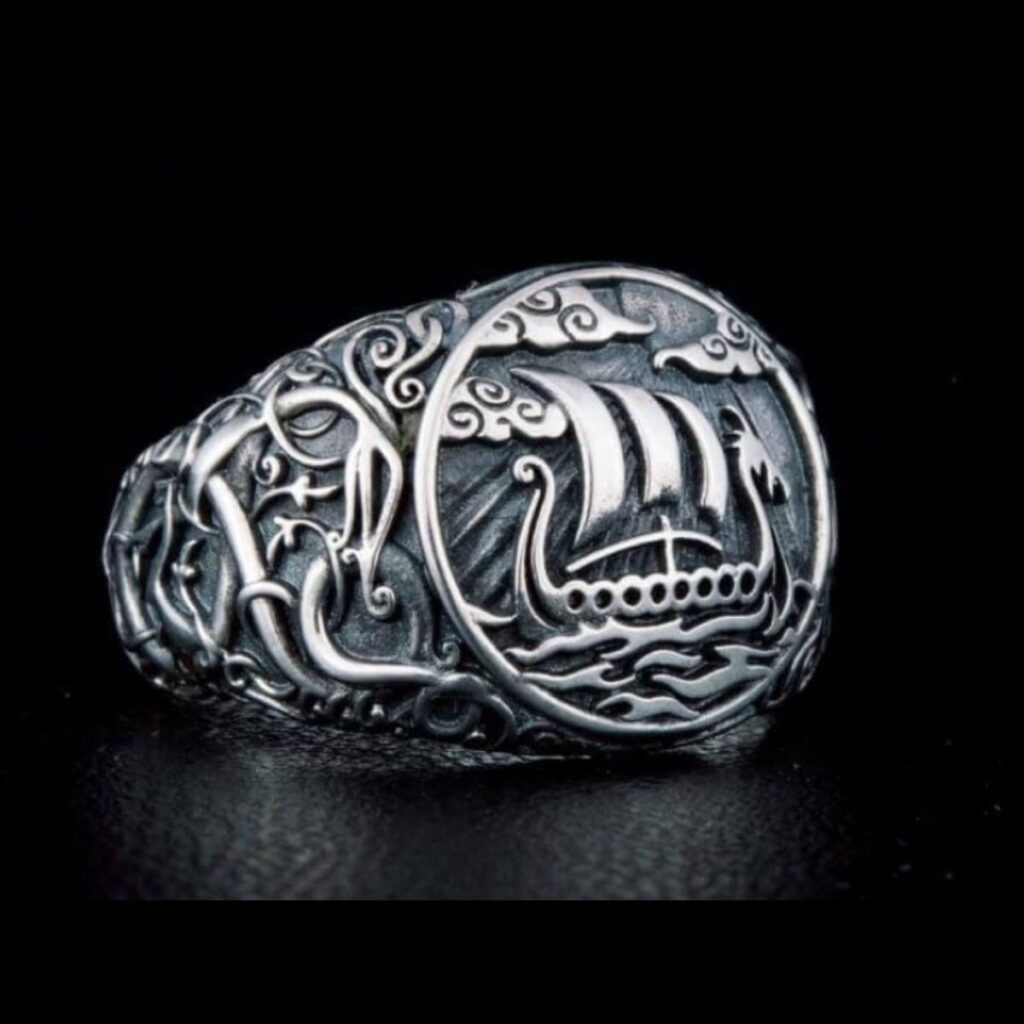
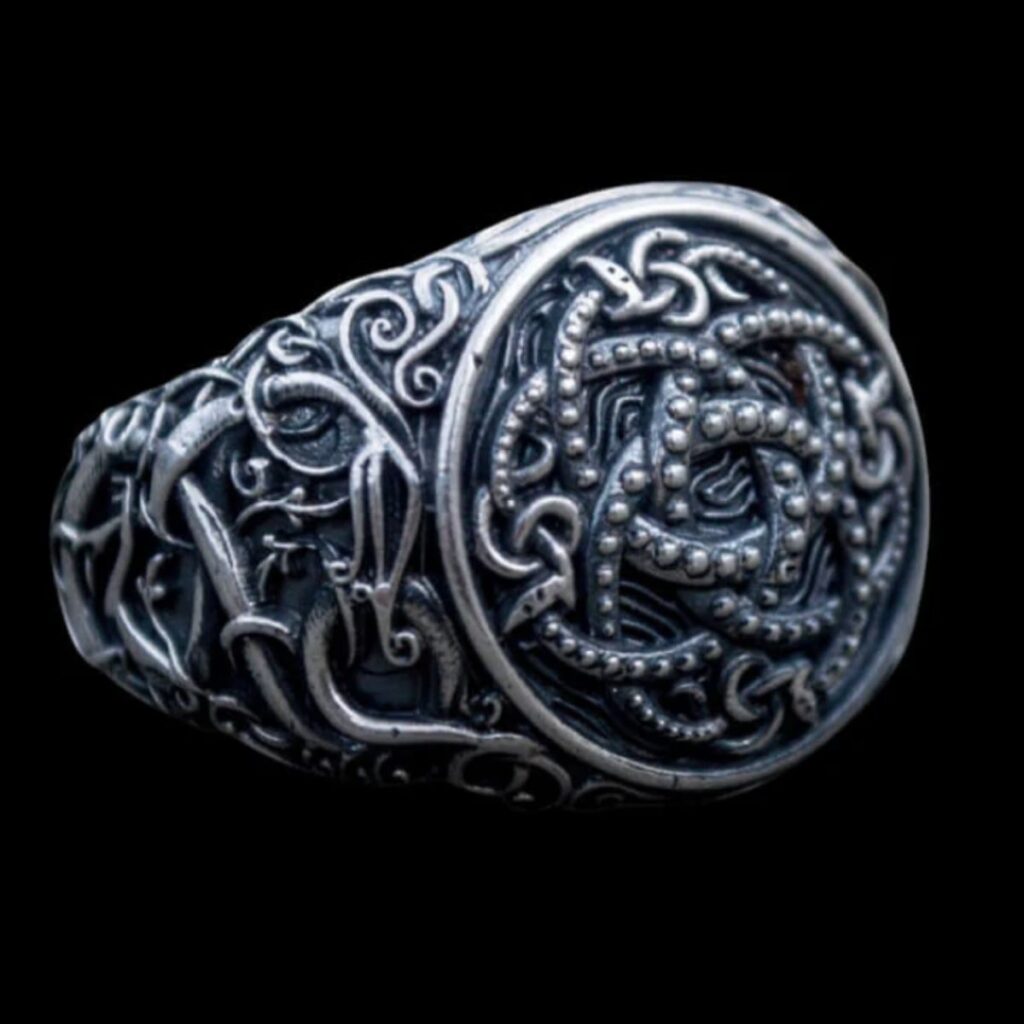
This is a similar signet ring, featuring a serpent in the Urnes style on the signet. It represents overcoming life’s challenges.
FAQs
What is a “stave” church, and how did it get its name?
The name comes from the Old Norse word stafr (Norwegian: stav), which refers to the massive, load-bearing ore-pine posts used as the building’s skeleton. This vertical post-and-lintel construction was a direct evolution of Viking Age building techniques.
Is there physical proof that stave churches were built on pagan sites?
While it is a popular theory that churches replaced pagan temples (hofs), archaeologists are still debating it. However, there is firm evidence that materials from pagan temples were reused in church construction.
Why do some stave churches look like Viking ships?
The resemblance is intentional. Beyond the aesthetic of the dragon-head gables, the roof construction often mimics an upside-down ship’s hull, and the tall internal staves resemble masts. Theologically, the Vikings viewed ships as vehicles that traveled between the mortal and divine worlds; a church was seen as a similar “vessel” for the soul.
Why would a Christian church feature carvings of Norse heroes like Sigurd the Dragon Slayer?
This is a classic example of syncretism. The Church used the legend of Sigurd (specifically him killing the dragon Fafnir) as a cultural shorthand for the victory of good over evil. By portraying Sigurd, the Church made Christian concepts more relatable to a population raised on Norse mythology.
What does the “Urnes Style” represent in these churches?
Named after the Urnes Stave Church, this style features thin, looping figures of animals and serpents. In a Christian context, these carvings—often showing a “great beast” battling a serpent—represented the chaos of the mortal world and the eternal struggle between good and evil.