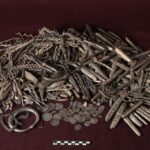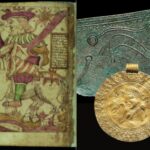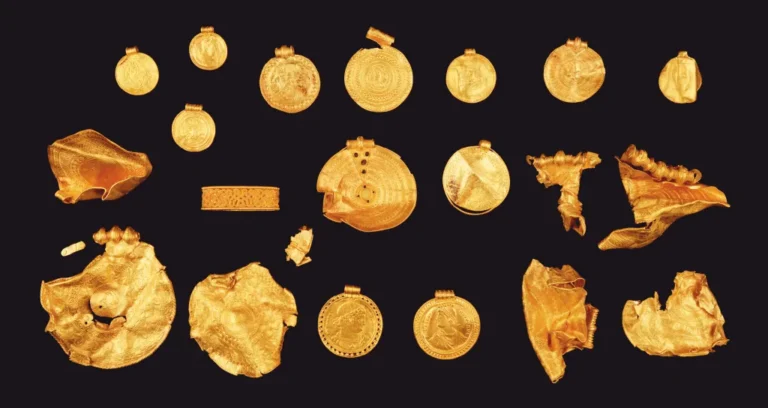
In 2020, one of the most spectacular golden hoards of the Norse world was discovered at Vindelev in Denmark.
Dating to the 5th century, it is from the period of lavish wealth just before the start of the Viking Age, also known as the Vendel Period. While the Viking era was an age of silver, the Vendel Period was a golden age. The contents of this fantastic hoard reflect that glorious wealth.
Discover the treasures of the Vindelev Hoard and what they tell us about the Vendel era.
The Vendel Era
The Vendel period is dated from AD 540-790, just after the Migration Period (AD 300-600), which saw widespread migration across Europe, including Germanic people into Scandinavia, and before the Viking Age characterized by raids.
It is called Vendel after a rich boat inhumation cemetery found at Vendel Parish in Uppland, Sweden. It is also the period in which the famous poem Beowulf was set.
It is often described as a period of proto-Viking culture. It was in this period that the main elements of Norse religion were established, that the older Elder Futhark runes were replaced by the Younger Futhark runes of the Viking Age, and that the warrior class that made the Viking Age possible emerged.
There is another important difference between the two periods. The Viking Age is also sometimes called the Silver Age because silver formed the basis of its bullion economy and most jewelry was made in silver. Meanwhile, the Vendel period had abundant gold.
The availability of gold was largely leftover from the collapse of the Roman Empire and the rise of Byzantium in the east. Germanic and Norse warriors who served as mercenaries in the Roman and Byzantine armies were paid in gold coins known as the solidus. Plus, when Rome and Byzantium bought peace from northern tribes, they paid in gold. This precious metal filtered up into Scandinavia.
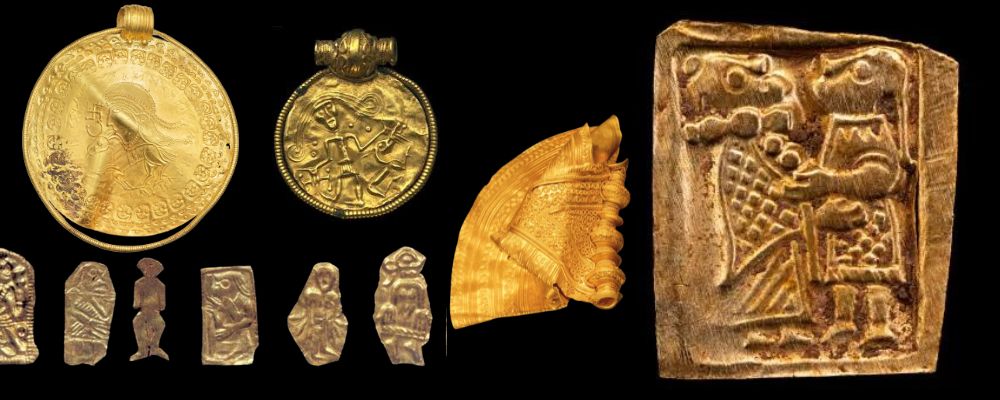
The gold came into the hands of elite chiefs and served as a symbol of their power. Unlike silver in the Viking Age, it was too valuable to underpin the economy, so instead it was made into status symbols, such as elaborate jewelry, or made into ritual offerings, such as gullgubber.
Discovery of the Vindelev Hoard
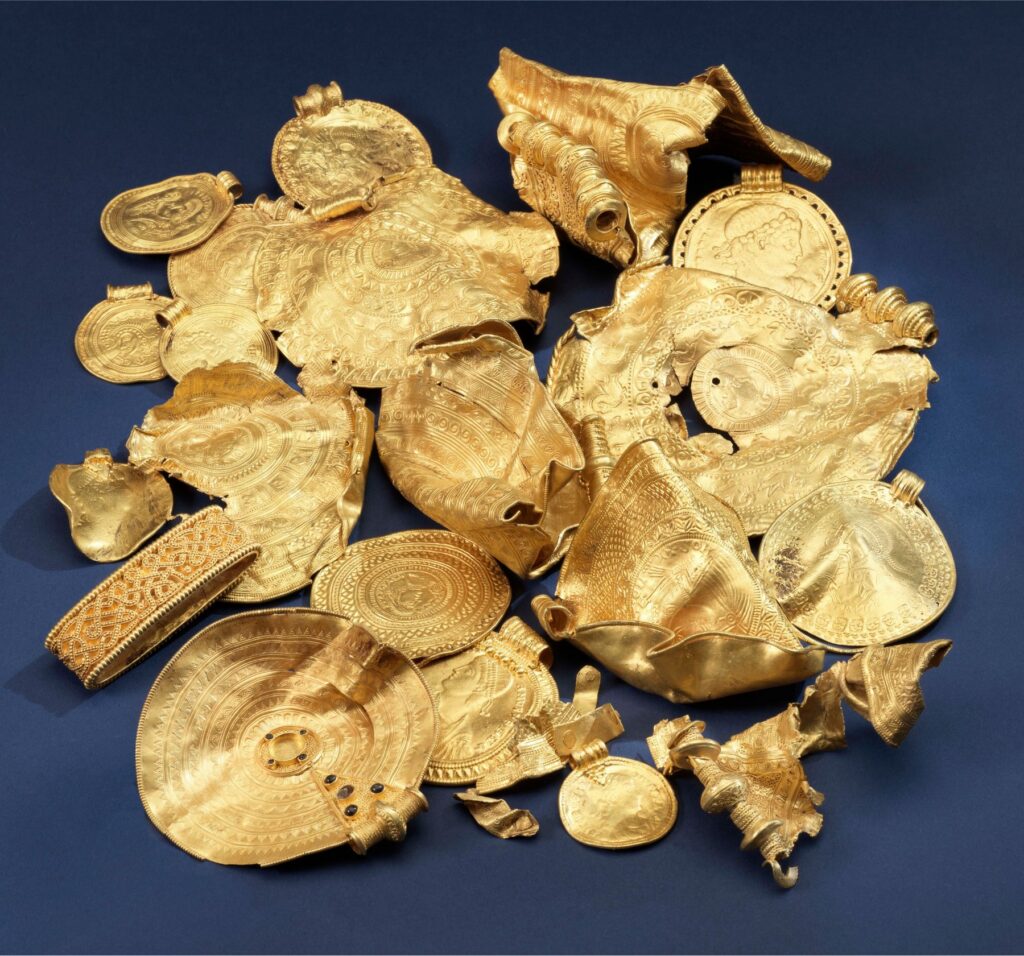
In December 2020, prospector Ole Ginnerup Schytz was exploring a field in Vindelev, just northeast of Jelling, a Viking capital, on the island of Jutland.
The pieces he recovered were about 10 cm below the surface in the plough layer, suggesting that the pieces could easily have been moved around by farming activity. Nevertheless, the majority of pieces were in two groups only about four meters apart, so they were probably found close to where they were originally buried. However, at least one piece seems to have been broken by farming activity, and a few pieces were found as far as 90 meters away.
A total of 23 pieces, making up 18 objects, were recovered, weighing 794 grams (1.75 lbs) in gold. Some pot sherds, glass fragments, and remains of silver fibulae were also recovered and must have formed part of the original deposit.
Archaeologists also identified 840 postholes, dated through radiocarbon dating to the 6th century, that indicate the presence of several buildings. The treasure seems to have been buried beneath a longhouse that was surrounded by smaller houses. This suggests it was a princely residence, and the contents of the hoard suggest it belonged to a powerful chief.
What’s in the Vindelev Hoard
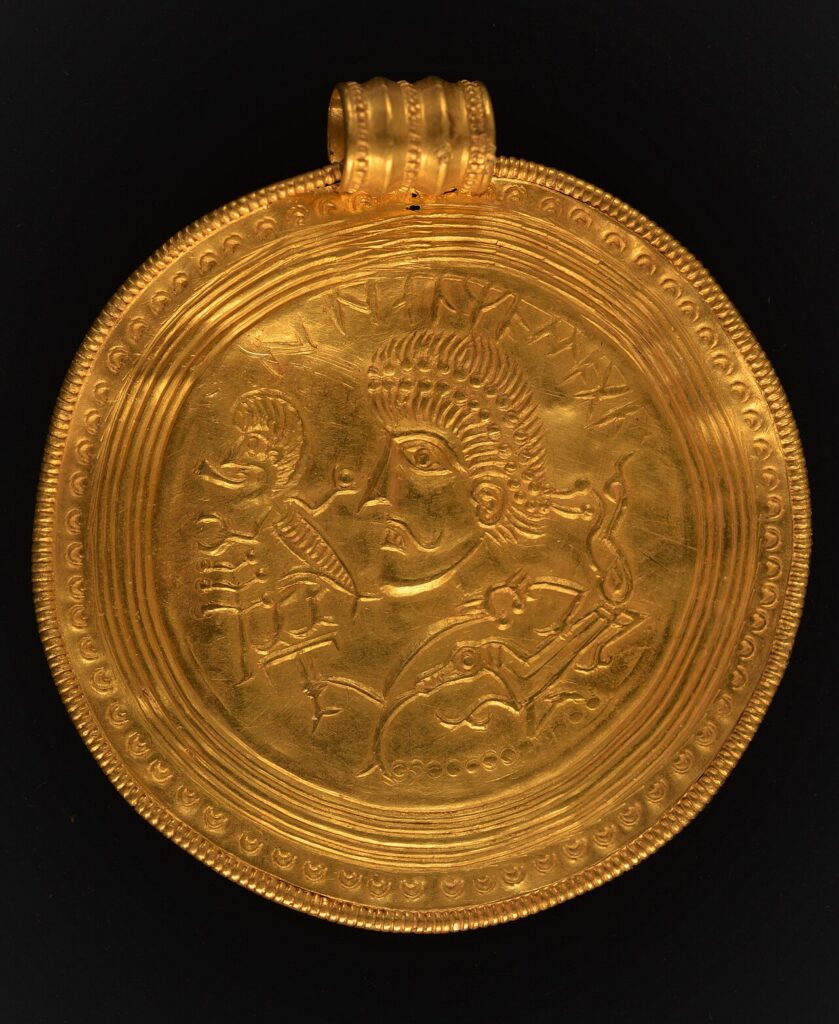
So, what exactly did the Vindelev Hoard contain? Four Roman coins, 16 gold bracteates, and the gold fittings of a scabbard.
Bracteates look like coins, except they are much flatter and decorated on only one side, and they were worn as jewelry. Decorations added to the golden Roman coins suggest that they were also worn as jewelry.
In general, there are five identified bracteate “types” that have been identified from the Vendel era:
- A – A human face, mimicking the portraits on Roman coins
- B – Between one and three humans standing or seated in a formation, and sometimes
- C – A larger-than-life head above a four-legged animal, assumed to be a horse
- D – Stylized animals
- E – A triskele under a circular feature within a circular band
Eight of the Vindelev bracteates are type A, and five are type C. Most have runic inscriptions, which researchers are still interpreting.
The bracteates are extremely large, with the 16 found in this hoard weighing as much as 100 bracteates found in other hoards. The largest is an incredible 14 cm in diameter.
The large bracteates, unusually, also seem to have been rolled up and folded before being deposited, suggesting some kind of ritual act.
The Roman Coins
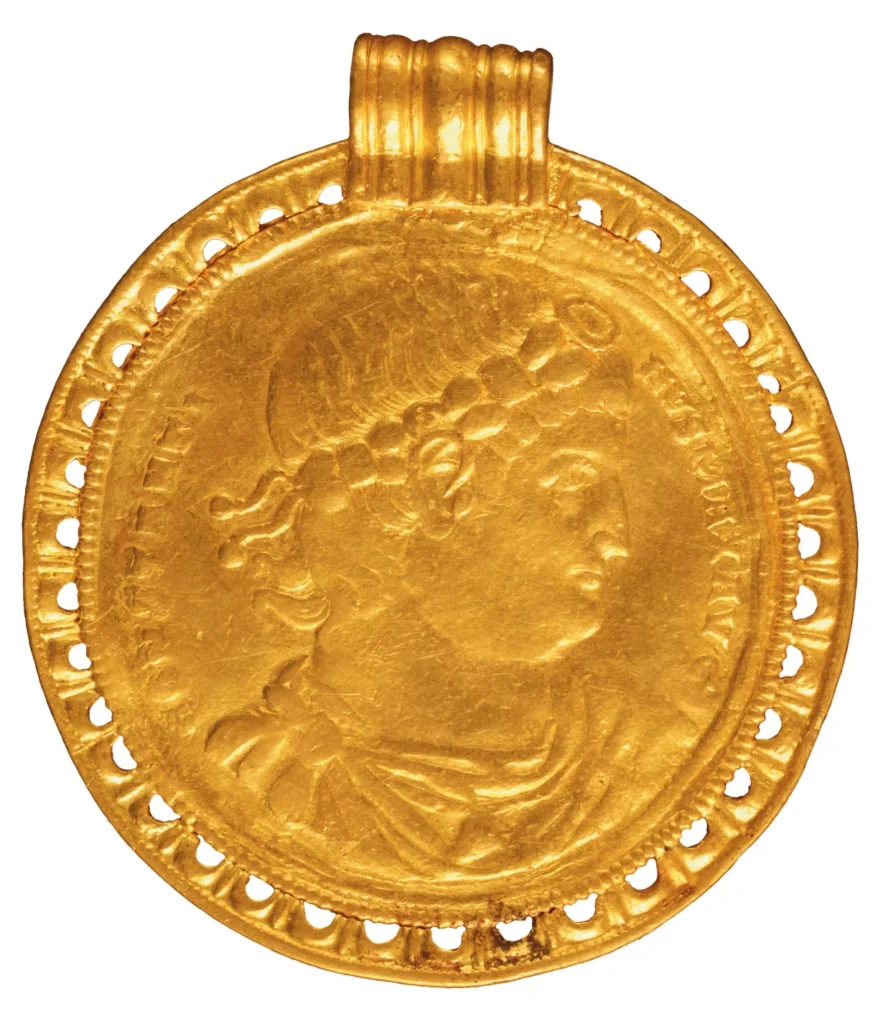
The Roman coins in the hoard are of a type known as the solidus. These were extremely pure gold coins introduced by Constantine in the early 4th century after the Roman Empire’s silver currency had been irredeemably debased and people had lost confidence in it. This new coin established the gold standard across the Empire and was principally used to pay soldiers, and yes, the word soldier comes from solidus.
The coins in this hoard include one showing Constantin I (AD 306-337), one showing Constans (AD 337-350), one showing Valentinian I (AD 364-375), and one showing Gratian (AD 375-384). They were all minted in different parts of the Empire, including distant Thessalonica.
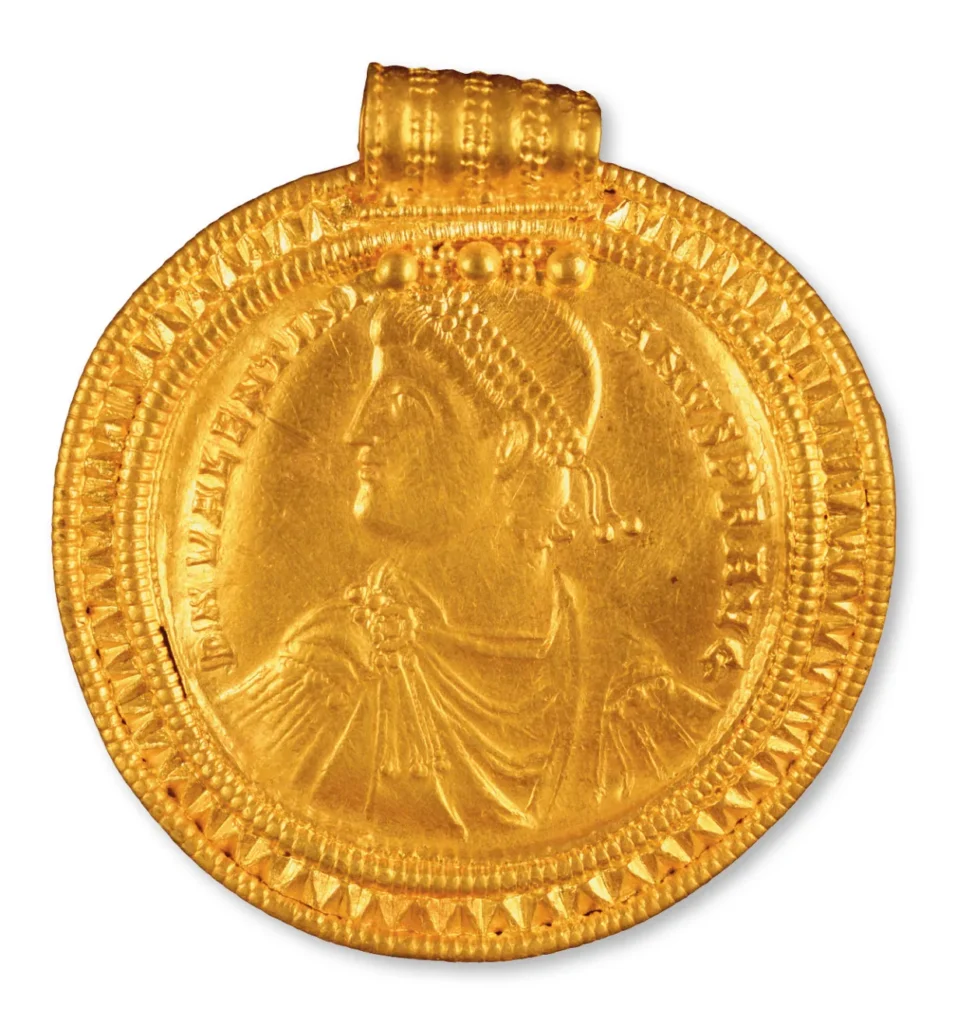
The coins were altered to have a decorative edge and an eyelet so that they could be worn as pendants. This was common among Germanic people at the time, but these are the first examples found in Scandinavia (though later examples of silver Arab dirhams worn in the same way are common), and it is the first time that these types of coins have been found alongside bracteates at the same site.
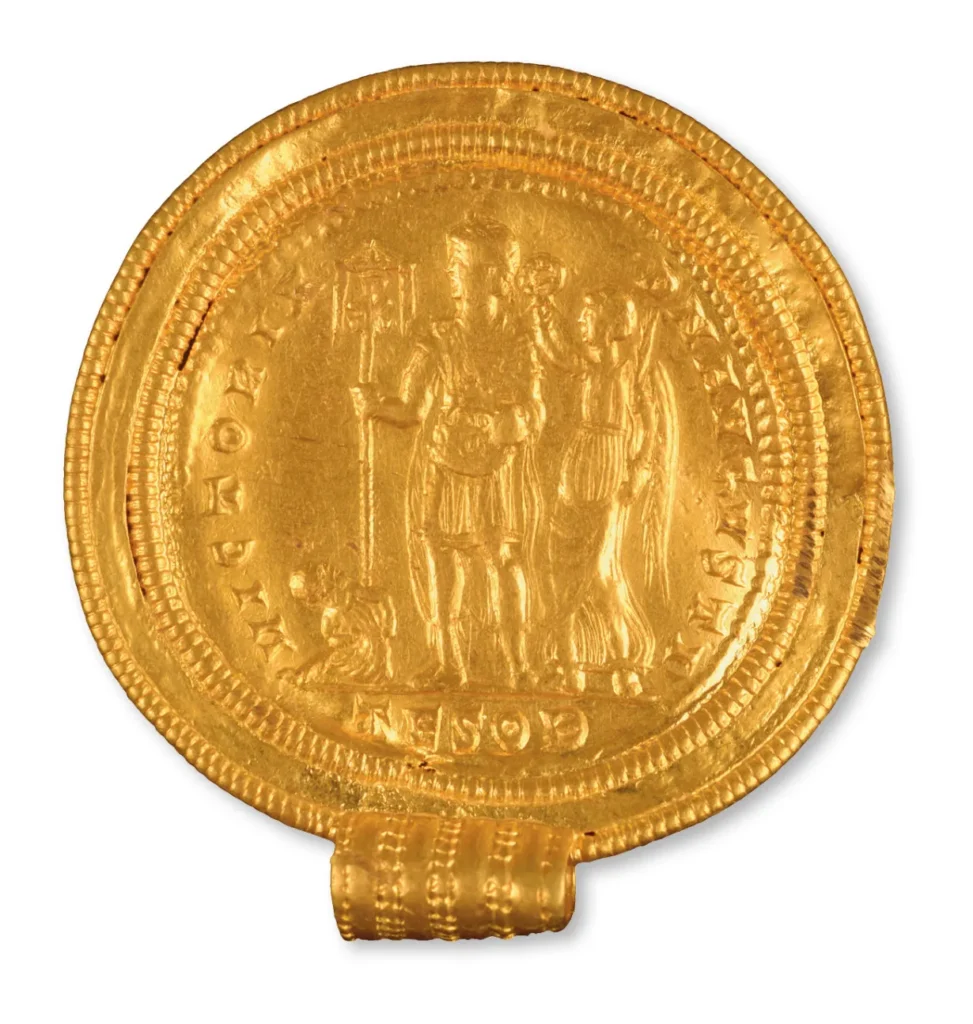
In 2024, the archaeologist Helle Horsnæs discovered that the decorative loop of the Valentinian solidus is almost identical to that of a stem-identical coin of Valentinian, also reworked, which belongs to a hoard of Roman coins, jewelry and some bracteates found at Zagorzyn, Poland. She concluded that both coins were reworked into pendants in the same workshop outside the Roman Empire. It suggests an international demand for these prestige pieces in the post-Roman world.
The High One Bracteate
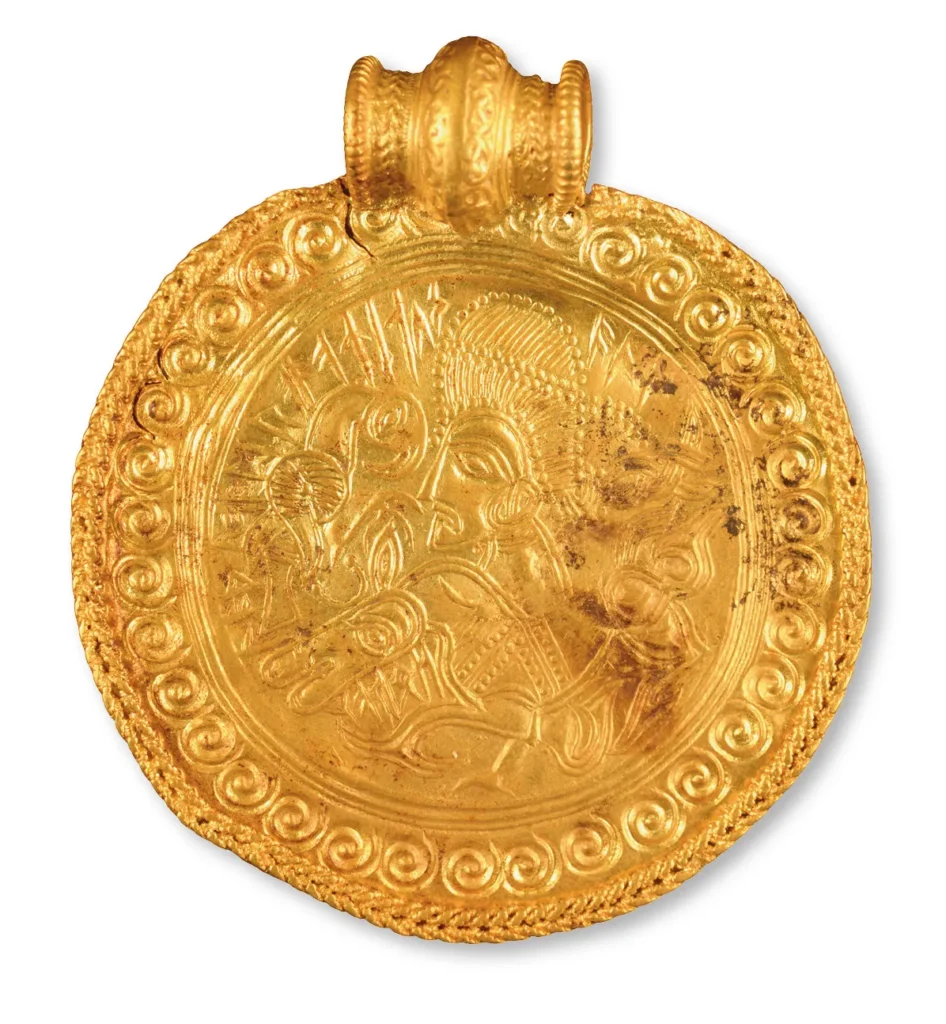
The bracteate labelled X4, a C-type bracteate, is often considered the most interesting in the hoard. It is almost identical to another previously found at Funen in Denmark, suggesting they may have been made in the same workshop.
It shows a man and a four-legged animal, which is probably a horse, plus a runic inscription. The man has an impressive hairstyle ending in a long braid, and he wears a crown with two rows of beads running along his hairline. Above the horse and beside his head is a bird of prey, probably a raven. Under the horse’s muzzle are the runes HOUAR, which means “High One,” one of the names associated with Odin. This is one of the earliest possible references to the god.
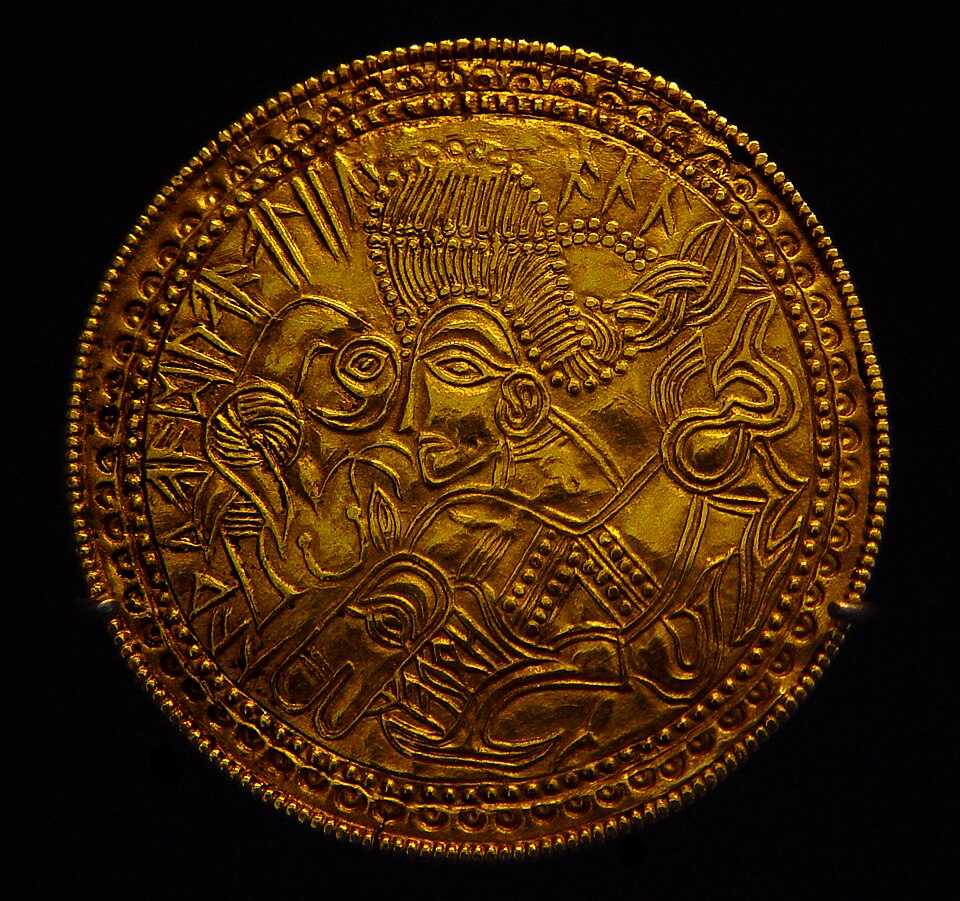
The bracteate has other runes. Behind the man’s head is ALU, which was a protective formula, or it also literally means “beer.” At the bird’s tail, it says LAÞU, meaning “I invite.” These parts of the inscription may reference his power as the chief of the mead hall.
The Wodan Bracteate
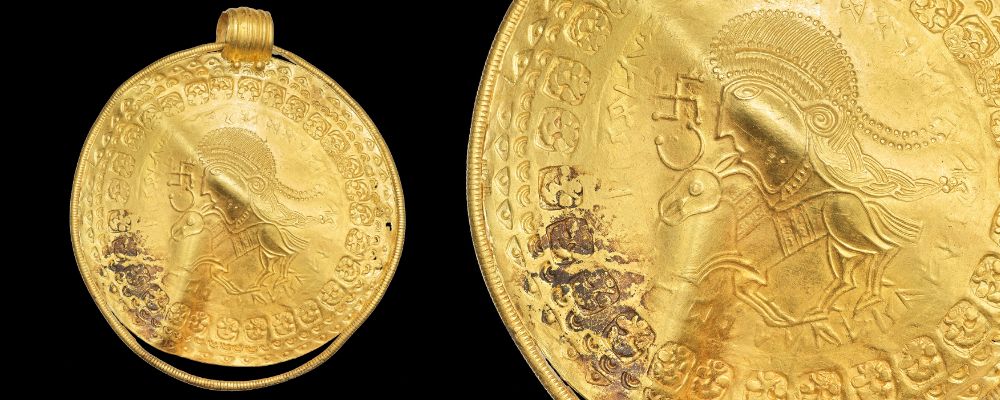
The X13 bracteate has an even more explicit reference to Odin, verifying that the god was already extremely important at this time. A C-type, with the man and horse, it also has a swastika and an open neck ring next to the head. A bracteate previously found at Bolbro seems to have the same image.
The runic inscriptions on the bracteate are subject to debate. The Norse text may begin with the word HOSTIOZ, which is a loanword from the Latin hostia, and means sacrificial animal. The following words relate to hunting. The inscription then ends with IZ WODANAS WERAZ, which means “He is Odin’s Man.” This is the oldest record of the name Odin. The next oldest is the 6th-century Nordendorf I fibula. The person who is “Odin’s man” seems to be called JAGAZ.
The Giant Bracteate
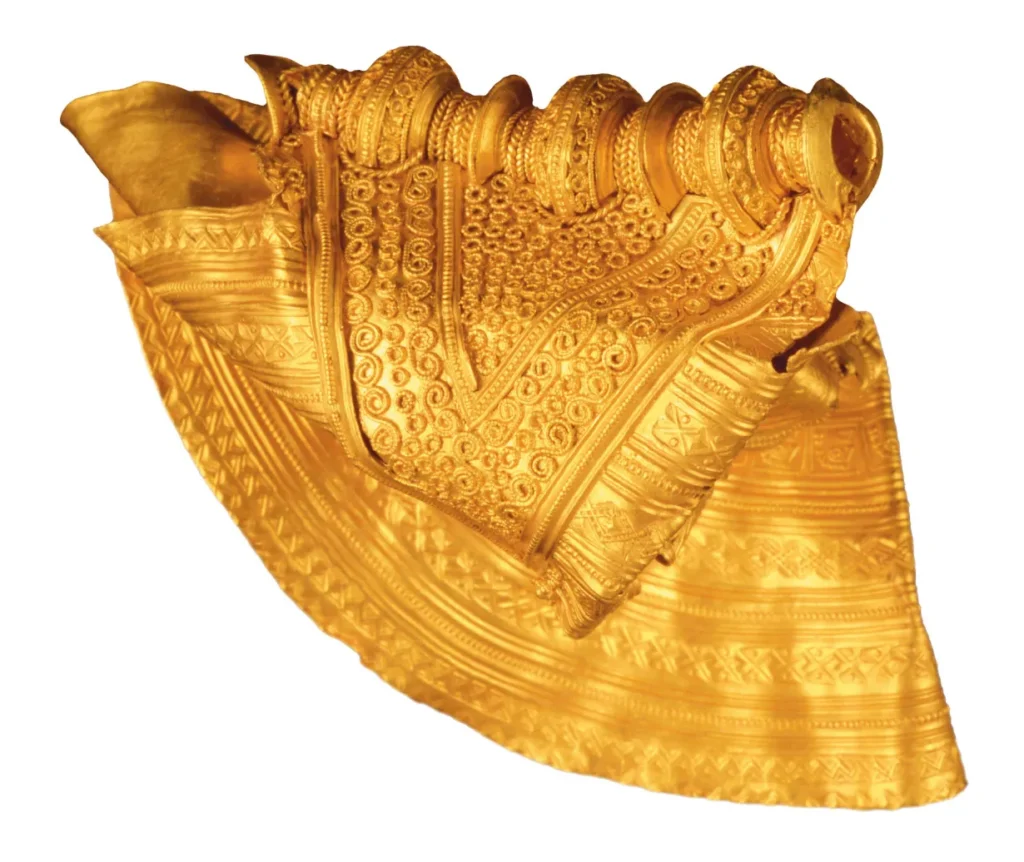
The giant 14-cm bracteate, 1.5 cm wider than the next largest known bracteate, is known as X10. While it is still folded up, X-rays suggest that it shows twin kings looking out in the same direction, similar to images seen on other bracteates, such as X20 in the Vindelev Hoard.
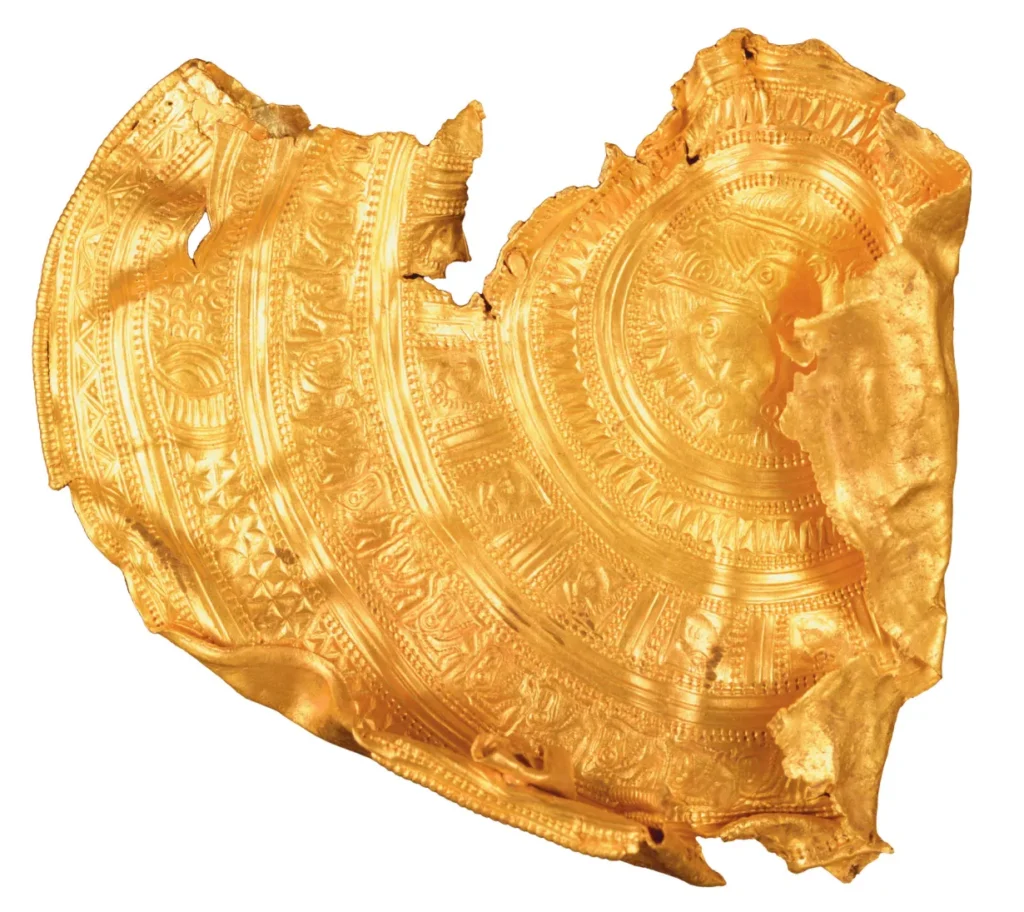
On the X20 version, the central image shows two identical busts in profile, adorned with tiaras, and wearing clocks held by fibulae at the shoulder. A triskelion floats between their heads. The central image is surrounded by several concentric circles of stamped ornaments, including a row of horse heads and a snake. It is very similar to a bracteate previously found at Gudme, Denmark, dating to the 5th century.
Other Interesting Pieces
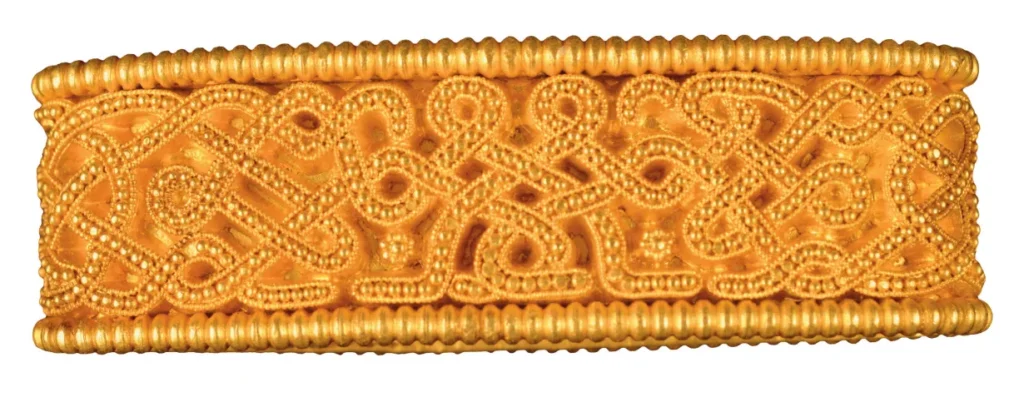
There are several other interesting bracteates in the collection.
X9 shows a man wearing chainmail and holding a globe in one hand and a drinking horn in the other, in the first known depiction of a Scandinavian drinking horn.
X1, X3, and X14 all show a crowned person in an unusual embroidered robe, believed to be the garb of a Roman consul. He also holds a globe in one hand, which was a symbol of rulership in the Roman world.
X7 shows a man with a Roman imperial diadem and a torque, mixing Roman and Celtic symbols of leadership. There is a stylized tree next to the figure, which may be meant to represent the world tree Yggdrasil, which can rarely be identified in Norse art. The runic inscription has not yet been interpreted and may shed light on this mystery.
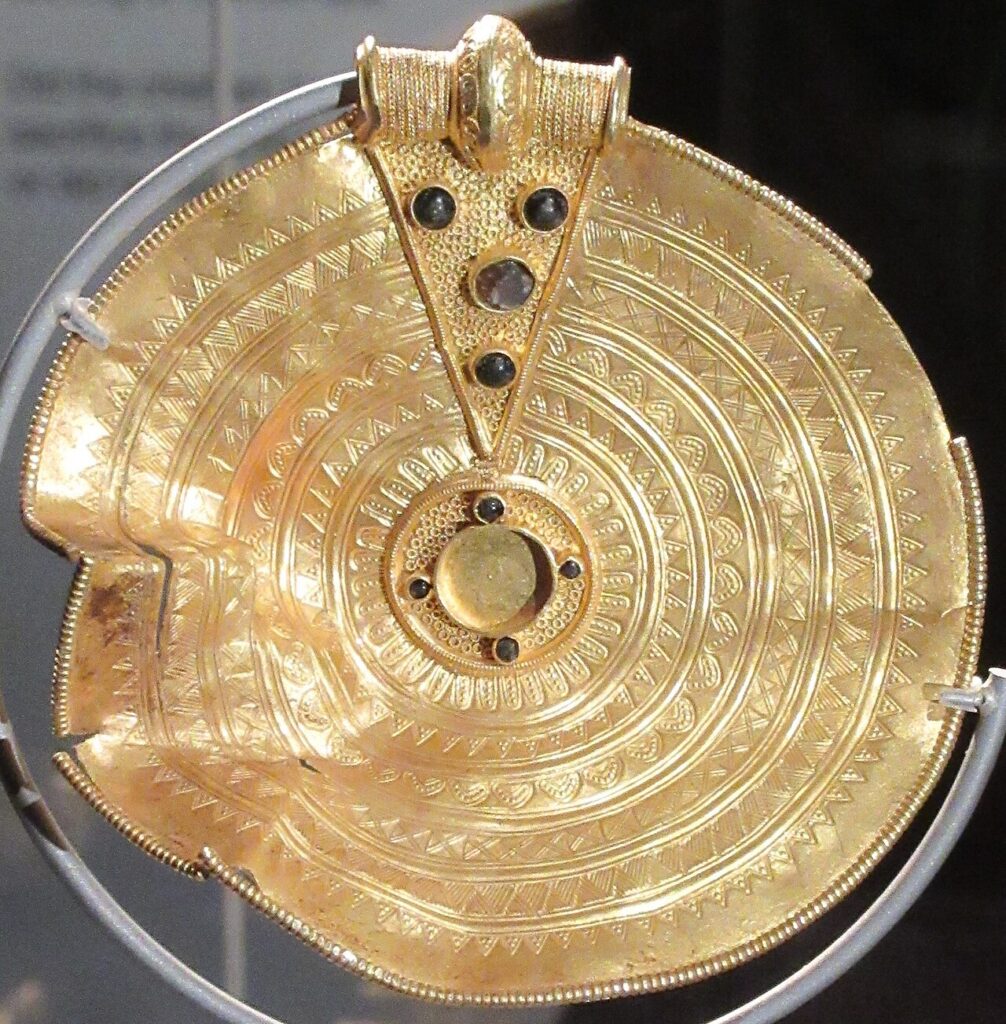
The hoard also includes the 6 cm mouthpiece of a sword scabbard. It is highly crafted with knotwork, which may feature the animal heads that characterize later Norse art.
There is also a large medallion that does not contain a picture, like the bracteates, but is decorated with glass inlays.
Gold Pendants in the VKNG Collection
This gold hoard was almost certainly buried as a religious offering, as indicated by its location and ritual elements, such as the folding of the larger bracteates. Some scholars suggest that it was buried in response to the environmental chaos of the volcanic winter of AD 536, which was probably one of the catalysts that caused the rise of the Viking Age.
Nevertheless, wear marks indicate that these gold pendants were worn before they were buried, suggesting that they were important status symbols in the Vendel era.
If you are a fan of gold pieces like this, find Nordic Gold Pendants in the VKNG collection. Check out some of our favorites below.
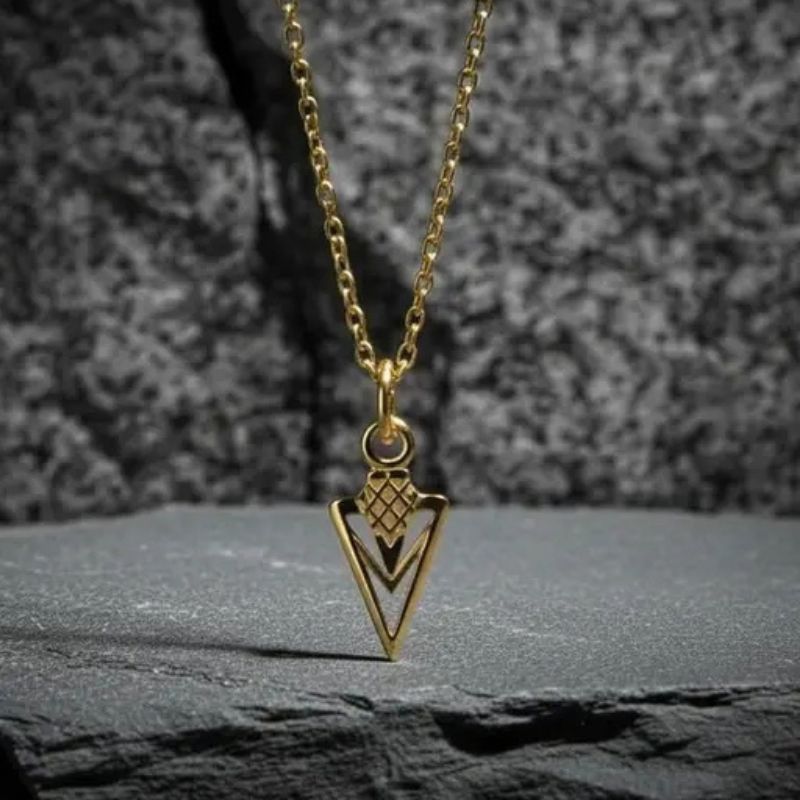
This gold pendant features a spearhead. While spears were the most common weapon carried by Viking warriors, in Norse art, spears were always a symbol of Odin, who famously carried his spear Gungnir.
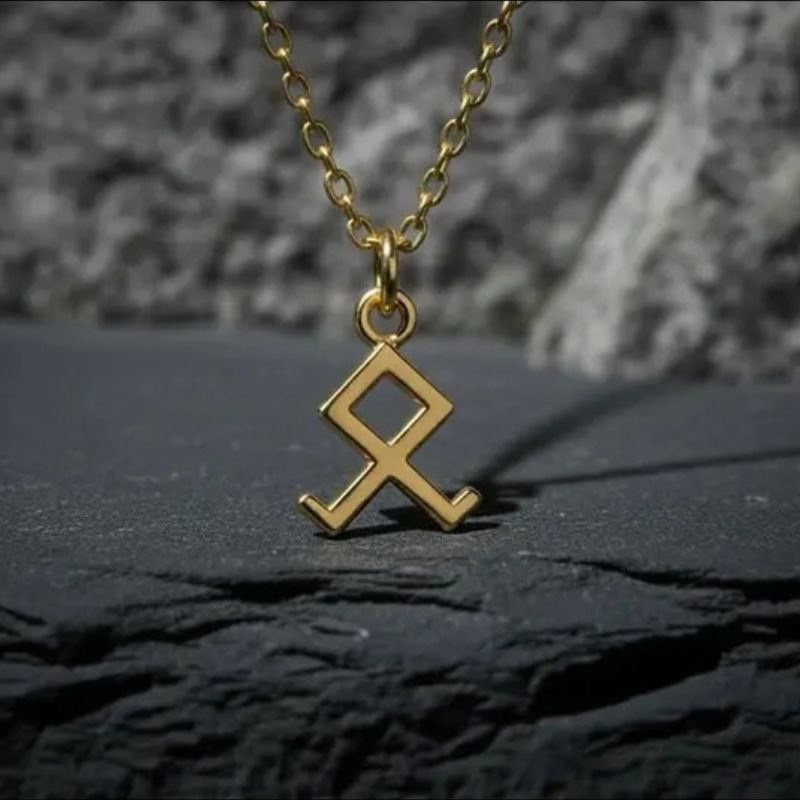
More than just an alphabet, the runes held powerful magical properties in the Norse world. The Othala rune, used for this pendant, was associated with Odin. It also represented ancestors and generational wealth and power.
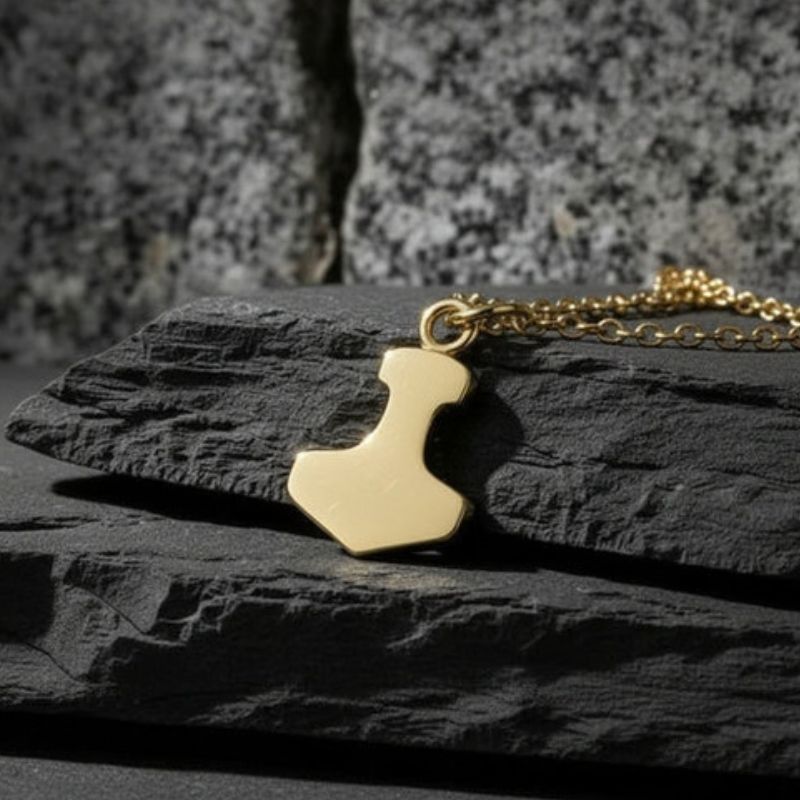
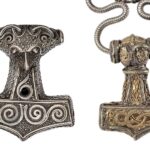
In the Viking world, it was very common to wear Thor’s Hammer pendants as symbols of the protection of the gods. More Mjolnir pendants survive in the Norse archaeological record than all other pendant symbols combined.
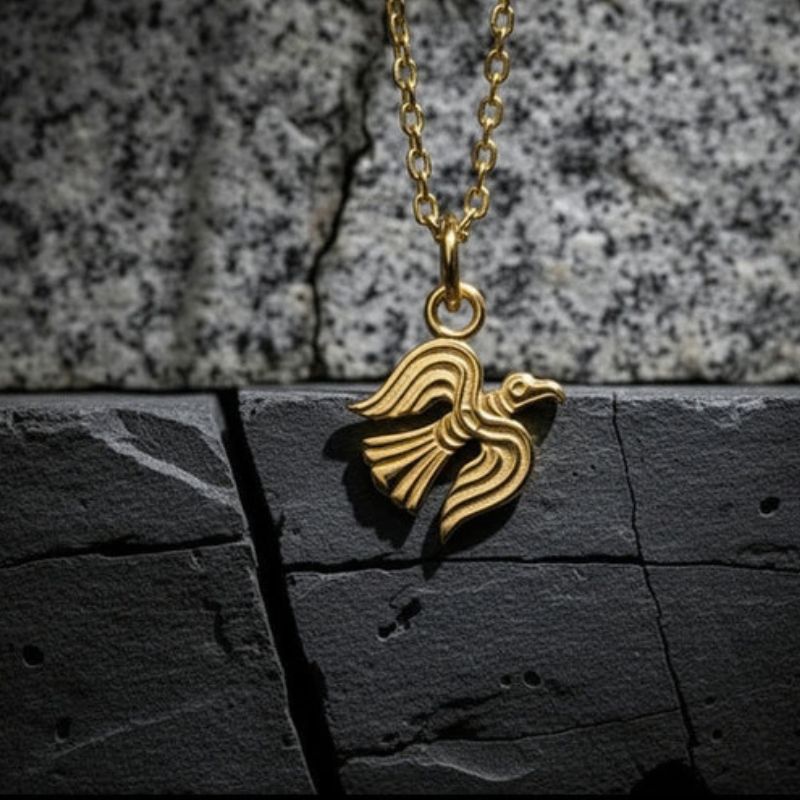
Ravens were the familiars of Odin and often depicted alongside him. They acted as his eyes and ears in the world. Seeing ravens circling the battlefield was a good sign, as it meant that Odin was present to choose the bravest fallen warriors to take to Valhalla.