In 1066, the Vikings had a very good claim to the throne of England. Harald Hardrada, King of Norway, set sail to assert his rights. But an invasion that could have seen the Vikings overrun England ended in disaster when they were defeated at the Battle of Stamford Bridge. Moreover, by splitting the English resources and attention, and by losing first, the Viking failure helped the Normans take England later that same year.
What Was the Viking Claim to England in 1066?
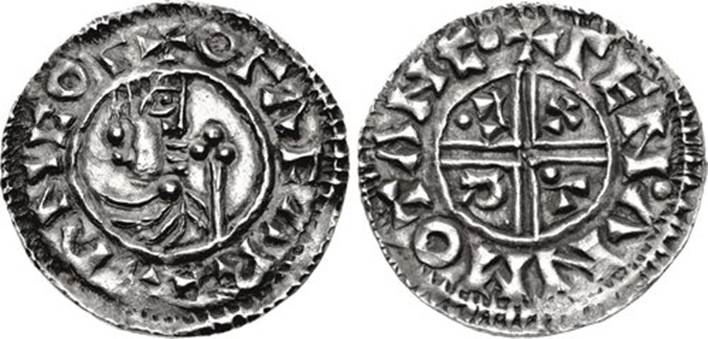
Following a decade of raids and campaigning, Sweyn Forkbeard pushed the Anglo-Saxon king Aethelred the Unready and his two sons, Edward and Alfred, out of England to take refuge with the Duke of Normandy. At the end of 1013, he was crowned king of England, the first Viking to enjoy the title (Anglo-Saxon Chronicle).
While Forkbeard’s sons struggled to hold the territory initially, within a few years, England was squarely in the hands of Sweyn’s son, Cnut the Great. It was part of his great North Sea Empire that also included Norway, parts of Sweden, Pomerania, and Schleswig. When he died in 1035, he was succeeded by his son Harold Harefoot, and two years later by his other son Harthacnut (Encomium Emmae Reginae).
But with Harthacnut dying childless in 1042, Viking domination fizzled. Harthacnut was the son of Cnut with Emma of Normandy, previously the wife of Aethelred and the mother of the exiled Alfred and Edward. So, when her son Harthacnut died without an heir, she had her son Edward recalled to rule. England was back in Anglo-Saxon hands with no bloodshed (Vita Edwardi Regis).
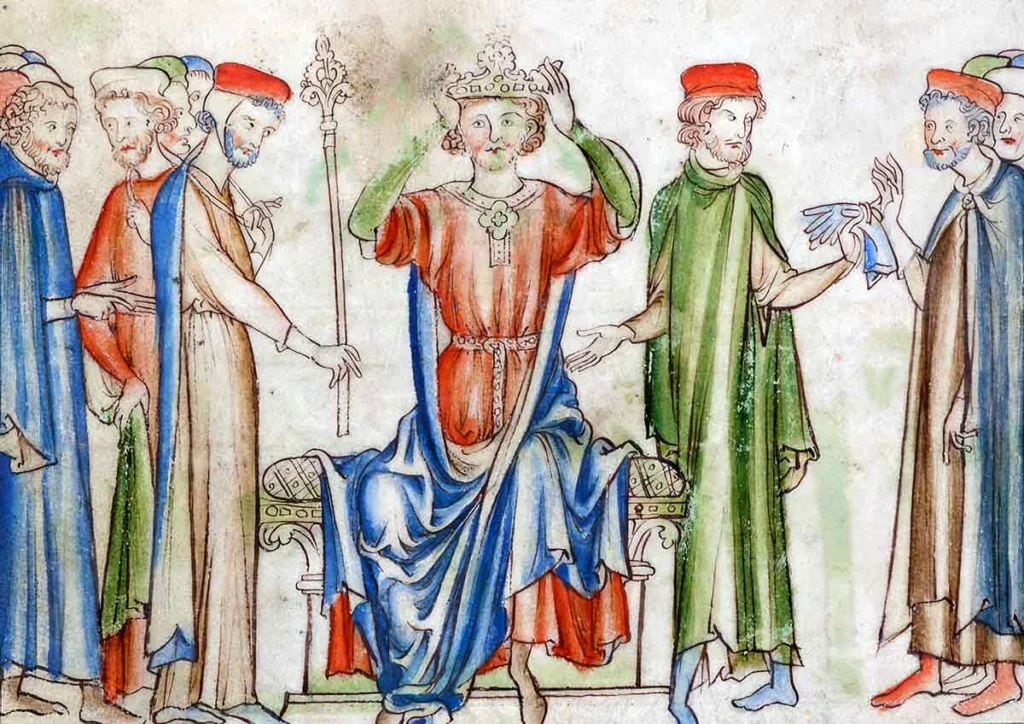
Edward, known as the Confessor, also died childless in January 1066. It seems that during his life, Edward had promised quite a few people that they would be his successor. Harald Hardrada, now the king of Norway, who considered himself the successor of Cnut, thought that Edward would pass power to him. In his Heimskringla, Snorri Sturluson claims that Harthacnut and Magnus the Good, then King of Norway, had agreed that if either died, the other would inherit, giving Norway a legal claim (Heimskringla 18).
Meanwhile, William, Duke of Normandy, who had sheltered Edward, had similar ideas. But when Edward died, he was succeeded by a powerful Anglo-Saxon nobleman, Harold Godwinson. It wasn’t long before both Harald Hardrada and William of Normandy decided to sail for England to assert their claims (Adam of Bremen, Gesta Hammaburgensis Ecclesiae Pontificum 3.52).
Who Was Harald Hardrada?
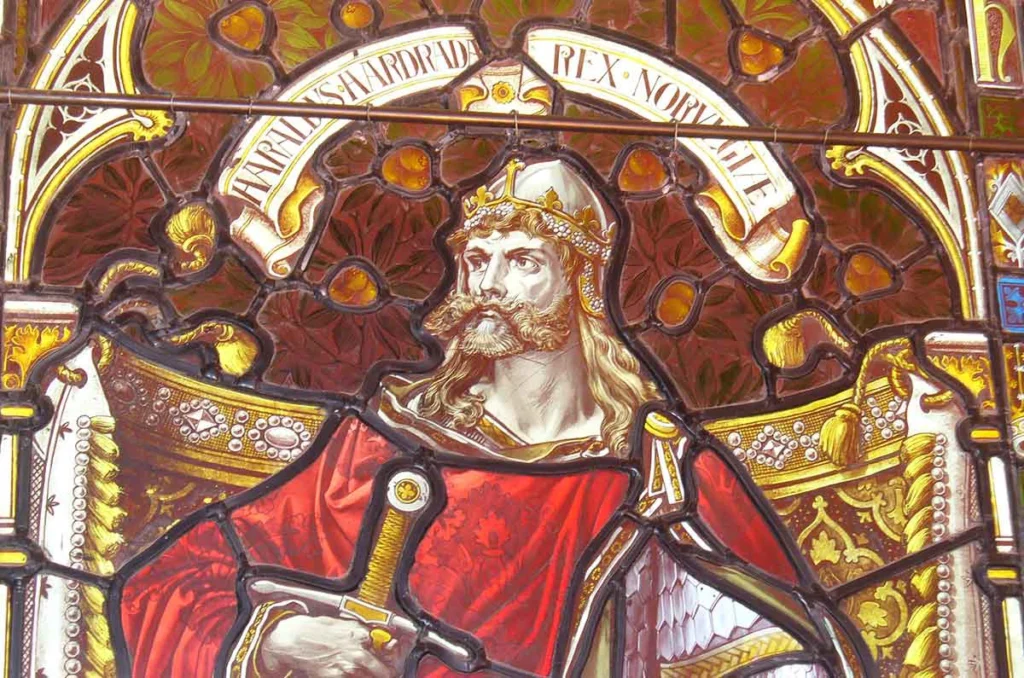
Harald Hardrada is often called the last true Viking, as the Viking way of life was changing in the 11th century. This was down to both widespread conversion to Christianity, as the church discouraged Christians from raiding one another, and to the fact that the people whom the Vikings had victimized for centuries were getting better at defending themselves, making raiding less lucrative than it used to be.
But Hardrada had impeccable Viking credentials. The half-brother of King Olaf of Norway, Hardrada was defeated alongside his brother at the Battle of Stiklestad in 1030, and he was forced into exile. He lived among the Kievan Rus for several years as a war commander. He then served in the Byzantine Emperor’s Varangian Guard in Constantinople, becoming extremely rich.
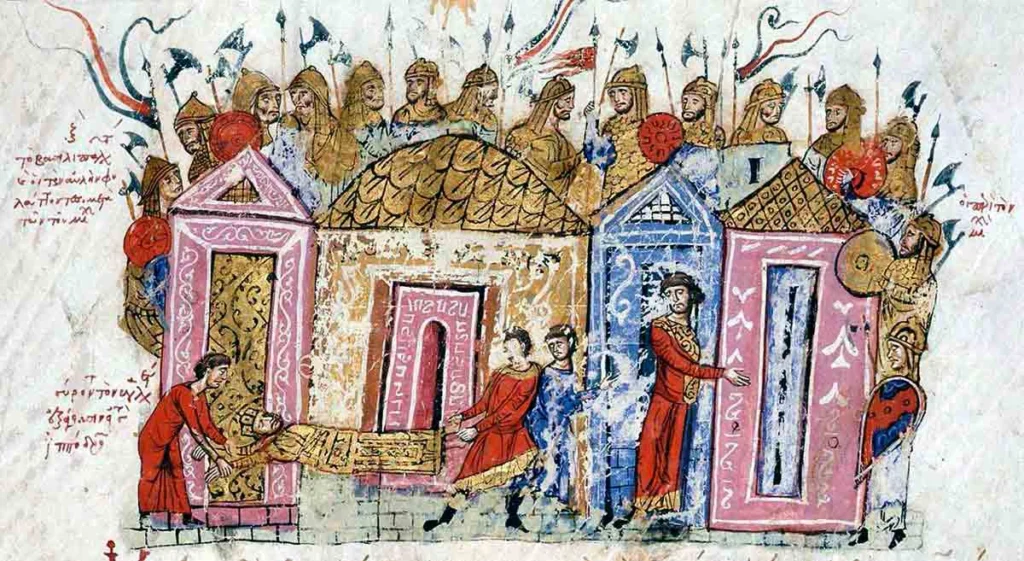
In 1046, Hardrada returned to Norway, where his incumbent nephew Magnus agreed to share power with him in return for some of the wealth he had made as a mercenary. Magnus died not long after, leaving Hardrada sole ruler. But his ambitions did not stop there; he dreamed of rebuilding the North Sea Empire of Cnut the Great. He spent decades trying to reclaim Denmark. But when Edward the Confessor died, he turned his attention to England.
Tostig Godwinson, the disgruntled brother of the new English king, reached out to Harald to make an alliance, saying that he would help him claim the English throne. Hardrada organized 10,000 troops and 300 ships and sailed for England in September 1066. His flagship was the Serpent with a banner known as the “Land Ravager” (Saga of Harald Hardrada).
How Did the Viking Retake York?
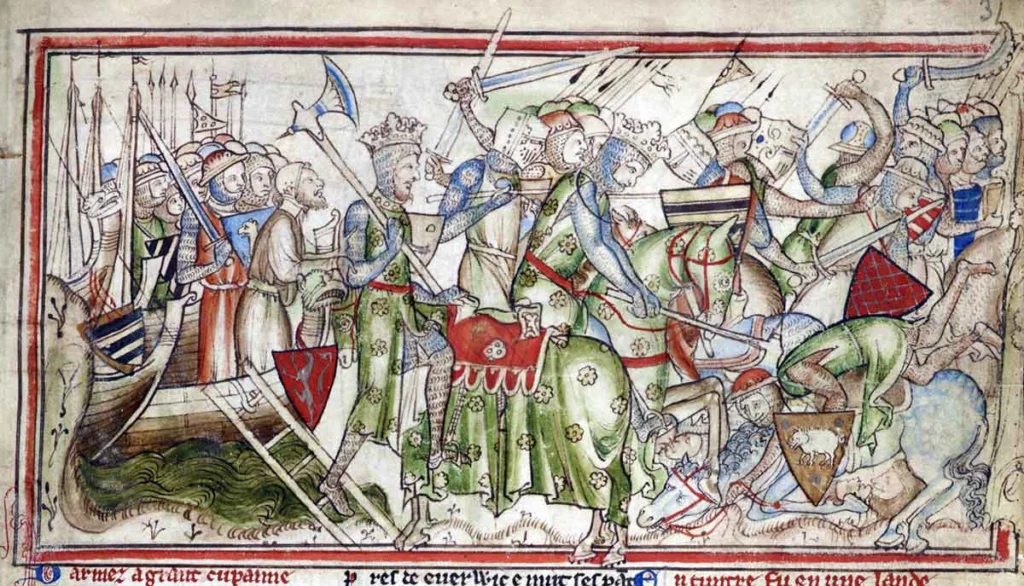
Hardrada and Tostig met on the River Tees and began raiding the coast. News of the raids reached Northumbria and Mercia. The leaders there raised their armies and met the Vikings outside Fulford to block their way to York. Originally a Viking settlement established by Ivar the Boneless in the 9th century, the Vikings lost York to Northumbria in 954 when the Northumbrians expelled Eric Bloodaxe. Hardrada defeated the English troops on September 20 and retook York, which was both a strategic and a psychological victory for the Vikings.
What exactly happened when Hardrada arrived in York is unclear. Somehow, the locals managed to persuade Hardrada that he could leave the city unmolested and unguarded and that they would meet him later at a location outside the city walls to agree on who would rule in his name. They even persuaded him to exchange hostages, an equal number of Norse and English, as security. This perhaps reflects Harald’s desire to enter as king rather than conqueror.
Hardrada took his hostages and supplies and returned to his fleet station at Riccall. There, the Vikings reportedly drank and feasted, while the English were preparing their counterattack.
What Happened When Harald Hardrada and Harold Godwinson Met?
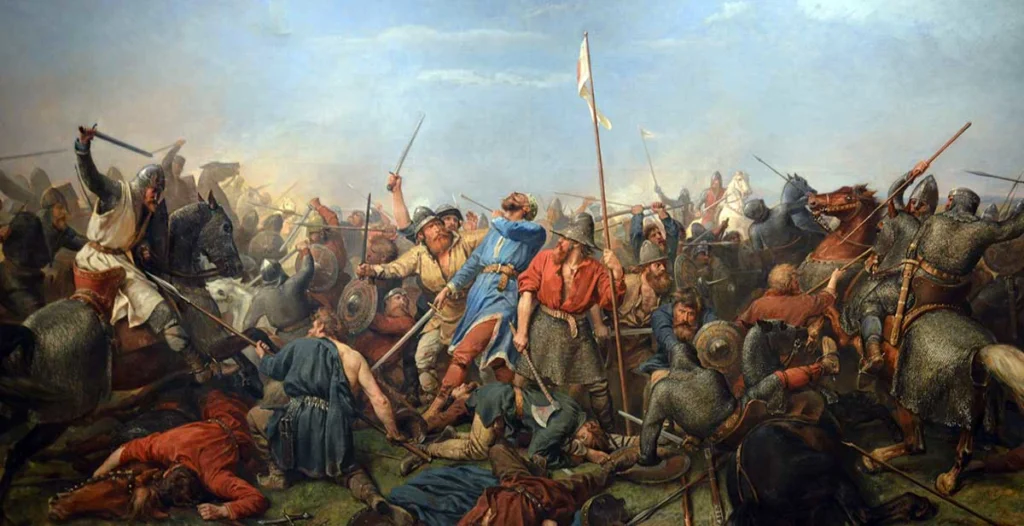
Harold Godwinson had been on the south coast waiting for William of Normandy, but when he heard of Hardrada’s landing, he marched 200 miles north in just five days to meet him. He arrived in Tadcaster, near the moored Viking fleet, the same day that Hardrada walked into York.
Stamford Bridge was reportedly where Hardrada and Tostig had agreed to meet the men of York. But when they arrived, they found Harold Godwinson and a new English army waiting for them on the other side of the bridge. Since they had found York empty, the English had been able to march right through to meet the Vikings.
Reportedly, a single man rode up to Hardrada and Tostig, giving no name. He offered Tostig the earldom of Northumbria in the name of the king if he turned on Hardrada. Tostig snorted and asked what Godwinson would give the king of Norway for his trouble. The man replied, “Seven feet of English ground, as he is taller than other men.” When the man left, Tostig told Hardrada that the man was none other than Harold Godwinson himself.
How Did the English Win the Battle of Stamford Bridge?
According to the Heimskringla (94), Hardrada rallied his troops with some inspiring words:
“In battle storm, we seek no lee,
With skulking head, and bending knee,
Behind the hollow shield.
With eye and hand we fend the head;
Courage and skill stand in the stead
Of panzer, helm, and shield,
In hild’s bloody field.”
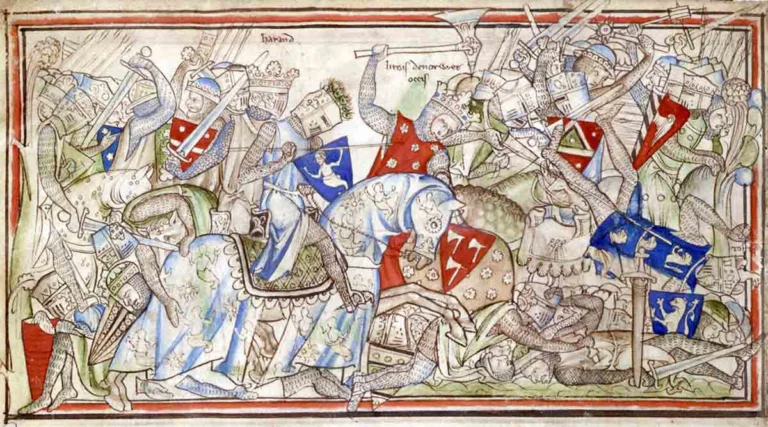
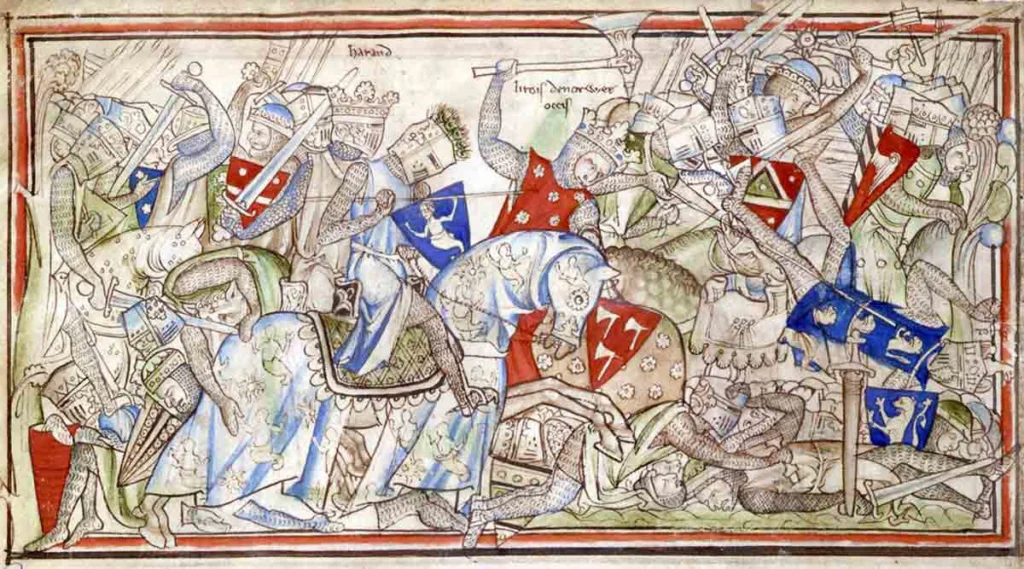
According to the surviving descriptions of the battle, the Vikings charged across the river against the larger English force but were driven back. Following them back over the bridge, the English met a single Norseman swinging a giant axe. The 12th century historian Henry of Huntingdon writes that he killed 40 Englishmen alone. He was finally brought down when someone floated a boat beneath the bridge and speared him from below.
Now in a more traditional battle formation, the Norse occasionally broke ranks to charge their attackers. This gave the English an opportunity to break the Norse shield wall and attack from multiple sides. Adam of Bremen called Hardrada the “Thunderbolt of the North,” and enraged by his lines breaking, he threw himself into the thickest part of the battle, killing men with both hands.
Eventually, Hardrada was killed by an arrow to the windpipe. The Norsemen retreated to Tostig, but the loss of their king threw them into confusion. Godwinson again offered Tostig Northumbria and escape to the survivors, if they gave up, but according to the Heimskringla, the Northmen were resolved to die with their king.
It was reportedly at this moment that Viking reinforcement arrived from the fleet, but their hurried march had left them exhausted. They dropped their shields and then threw off their mail, making them easy targets for the English. By the end of the day, all the Viking leaders and Tostig were dead, and the army began to dissolve. Reportedly, 50 years later, the field was still white due to the piles of bones of the dead left behind.
Battle Won, War Lost
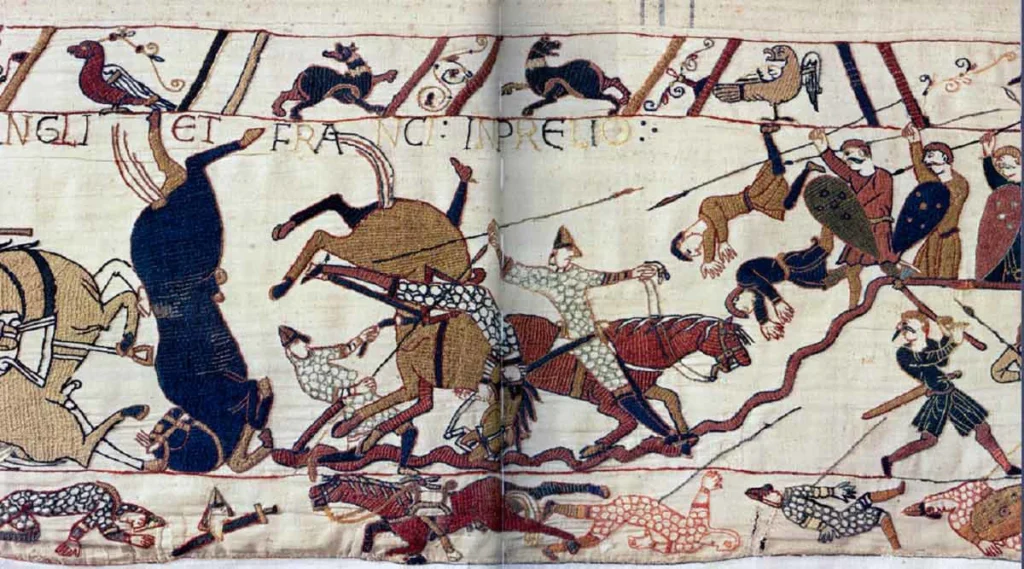
Godwinson’s swift march and strategic planning saw him defeat one of the most feared men in Europe, but he still lost England. While he was dealing with the Vikings in the north, William of Normandy had landed on the south coast. Godwinson had to march his exhausted army back south for another 200 miles.
The Battle of Hastings was fought on 14 October 1066. Harold tried to pull off a similar miracle by surprising the Normans, but he was expected. Godwinson reportedly died by taking an arrow to the eye. His leaderless forces quickly collapsed. The rest is history.
Are You Inspired by Stories of the Past?
Are you inspired by stories of the past? You might also be inspired by some of our jewellery of the past, including many pieces inspired by genuine archaeological finds from places like Viking York.
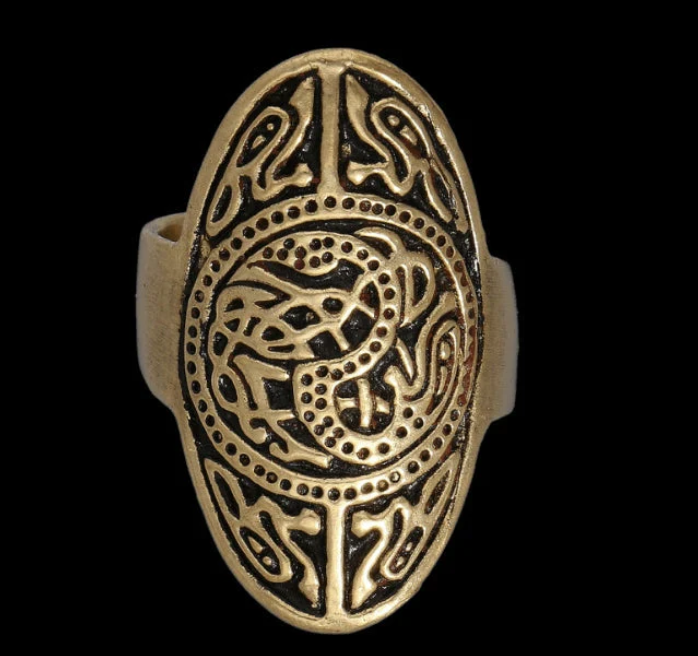
This handcrafted bronze ring is based on an Anglo-Saxon ring found in the Thames River. It reflects the coming together of Anglo-Saxon and Norse cultures in the 10th and 11th centuries, featuring Nordic-style zoomorphic patterns.
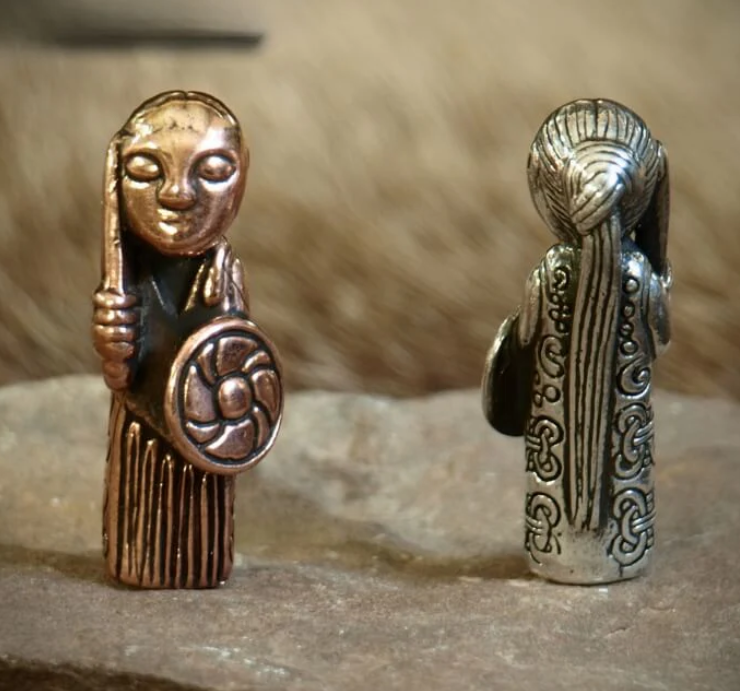
This pendant, available in bronze or silver, depicts a Viking shieldmaiden, probably one of the divine Valkyrie. It is based on a small silver figure found at Harby in Denmark.
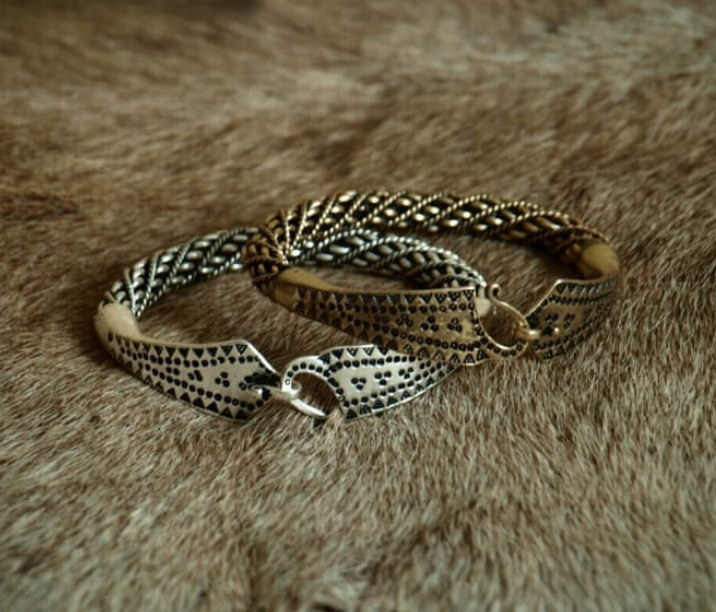
These stunning bronze bracelets with Norse geometric designs are copies of pieces found in the Vulum Hoard, Norway, dating to the 10th or 11th century.
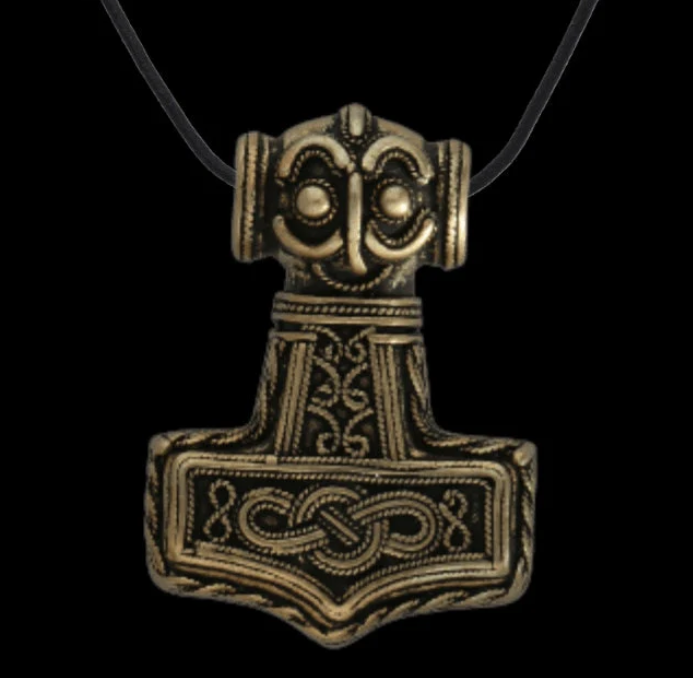
This bronze Thor’s hammer pendant is inspired by a Mjolnir amulet found at Odeshog in Sweden. Pendants like this were worn as a symbol of the protection of the Norse gods.