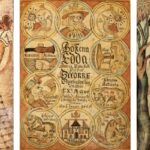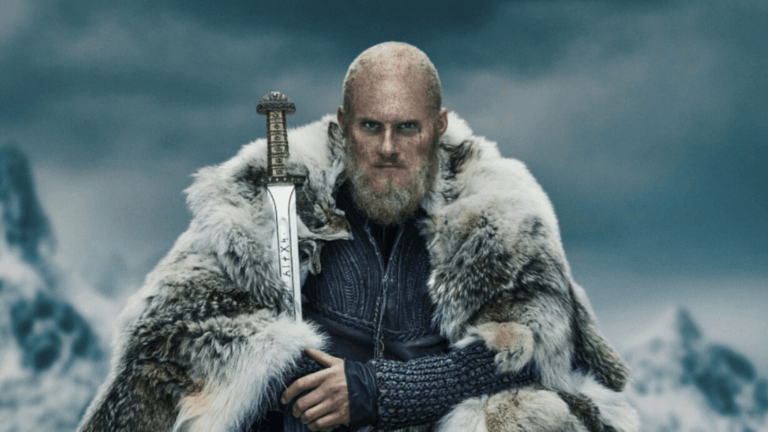
The Viking sagas are full of powerful warriors who called themselves kings as they raided across Europe. Written centuries after the fact by Christian authors looking back at a now-foreign pagan world, the accounts of many legendary Vikings are more myth than history. When these larger-than-life characters are reimagined for modern audiences through shows like the History Channel’s Vikings, it becomes hard to tell where history, legend, and fiction collide.
One of the most memorable of these legendary figures is the 9th-century Viking raider, Bjorn Ironside. One of the many sons of Ragnar Lodbrok, according to the Saga of Ragnar Lodbrok and his Sons, Bjorn raided across Scandinavia, France, England, and the Mediterranean before returning to Sweden as king, establishing the Munso dynasty.
Was Bjorn Ironside a Real Person?
It is impossible to know how much of Bjorn Ironside’s story is historic and how much is legend. While some of the stories attributed to him were probably real, others were likely made up or acquired from less famous Vikings whose names have been lost to time. However, we can say that Bjorn Ironside was a real person who lived in the 9th century, as he is mentioned in the contemporary sources, specifically the Annales Bertiniani and Chronicon Fontanellense.
Bjorn Ironside’s Parentage and Heroic Lineage
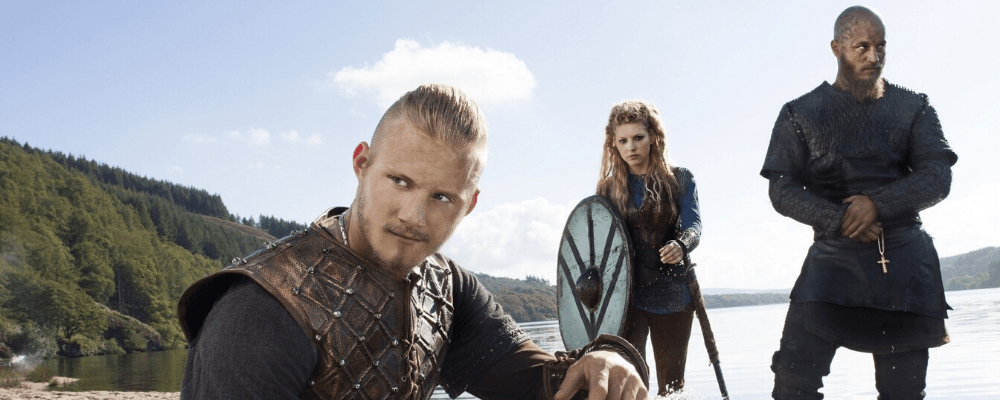
Almost all Norse sagas start with an account of the great deeds of the main character’s ancestors. This was considered an important part of the story, as character traits, good luck, and divine favor were all thought to be inheritable; therefore, where you came from mattered.
A man named Bjorn Ironside is mentioned in the 13th-century sagas about Ragnar Lodbrok and his son as one of the many sons of the legendary Ragnar. This is presumably the same Bjorn Ironside mentioned in the 9th-century sources.
According to these sagas, Ragnar was the son of the King of Denmark Sigurd Ring. Ragnar. His first wife may have been the shieldmaiden Lagertha, but the two separated and their son, Friedlief, stayed with her. He then married Thora, a daughter of the Jarl of Gotland, reportedly after ridding the kingdom of a dragon, and had two sons, Eirik and Agnar.
While raiding the Norwegian coast, Ragnar then encountered Aslaug. She is said to have been the daughter of the hero Sigurd and the Valkyrie Brynhild. Aslaug lost her parents at a young age and lived with a poor family that called her Kraka to hide her parentage. Despite her apparent humble origins, Ragnar fell for her looks and wit. She then conveniently revealed her regal bloodline, making her an excellent match for a king. Together, they had several sons: Ivar the Boneless, Bjorn Ironside, Hvitserk, Rognvald, and Sigurd Snake-in-the-Eye. Ubbe was another son with an unknown mother.
Bjorn probably had some sisters as well, but their names have not come down to us through history.
A Brotherhood of Menaces in Scandinavia
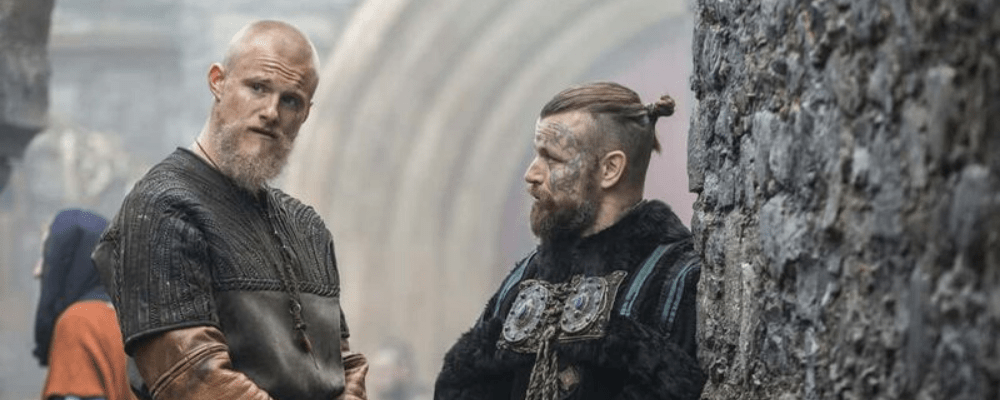
Bjorn Ironside spent most of his life as a Viking raider. It seems that when his father became King of Denmark, he followed the Viking custom of expelling second sons to reduce conflict over inheritance. It seems that while Ragnar kept his two sons by Thora with him, the rest were sent away. Though they were far from rejected. They were equipped with ships and warriors to make their way in the world.
It seems that the brothers first set their sights on Scandinavian territories, setting themselves up on Zealand with the oldest of them, Ivar the Boneless, as their leader. From there, they raided Jutland, Gotland, Oland, and other minor islands.
While Ivar seems to have been the strategist of the group, Bjorn was known as the muscle and was considered a particularly ferocious warrior whose presence could turn the tide of battle. He earned his nickname Ironside for his iron hard muscles.
The pressure that their presence put on the Swedish king led their older brothers, Eirik and Agnar, to go to the king and request his surrender. Instead, they were killed. The younger brothers released their vengeful wrath on Sweden, conducting brutal raids on the territory, burning, pillaging, and killing everyone they encountered. Eventually, as a result of this pressure, Sweden came under the aegis of Ragnar.
Bjorn the Raider
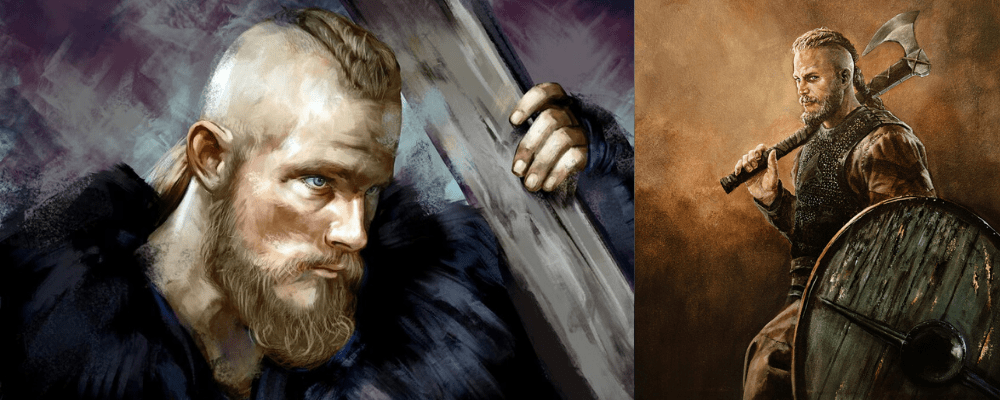
It seems that after the Swedish conflict, the brothers parted ways for a time, conducting their own raids around Europe.
We hear of Bjorn in France in 855, where he teamed up with another Viking leader, Sigtrygg, to sail up the Seine and assault the forces of Charles the Bald. While the Viking army did not defeat the French forces, and the other Viking leader left, Bjorn created a fortress for himself on the island of Oissel near Rouen, where he conducted raids, including on Paris. Unable to dislodge him, Charles the Bald soon came to an agreement with Bjorn, letting him keep the territory that he had won in exchange for respecting the rest of his kingdom.
In 861, Bjorn joined another Viking leader called Hastein, and together they sailed around the Spanish Atlantic Coast and into the Mediterranean, bound for Rome and her riches. On the way, they sacked Pisa before ending up at Luni, which they mistakenly thought was Rome. Seeing the defenses of the city, they decided that a siege would take too long, and so resorted to trickery.
The Vikings sent a message to the Bishop of Luni saying that their leader was either dying or dead, and at the last minute he had converted to Christianity and wanted to be buried on sacred ground. The bishop was taken in and let a small group of Vikings into the city. Upon passing the city gates, Bjorn jumped up, either from his sick bed or his coffin, and held the gates open to let the Vikings enter the city.
Despite their success, the Vikings did not continue on to Rome, deciding that it was just too far and probably too well defended if it was even greater than Luni.
Bjorn Ironside and the Saga of Ragnar Lodbrok
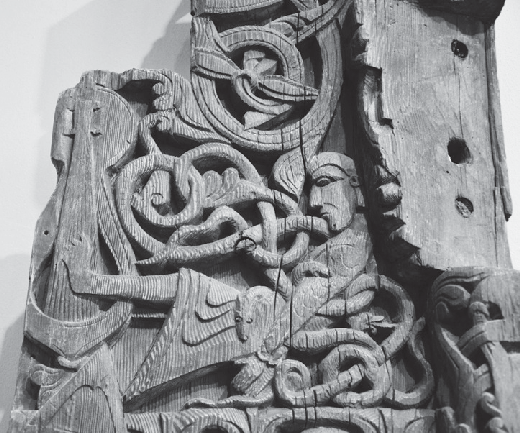
The brothers found themselves reunited in 866 by the death of their father Ragnar. It seems that the aging Viking warrior was getting too arrogant and claimed that he could take England with only two ships. Instead, he was captured and killed by King Aella of Northumbria, who apparently threw him into a snake pit.
Seeking vengeance, the brother descended on England with 400 ships and set themselves up in York, where Ivar the Boneless had created a stronghold and found allies. Together, they led a “Great Heathen Army” that devastated England and destroyed the forces of King Aella. The king himself they tortured to death. According to the stories, they carved an eagle into his back and then salted the wound. After this, they extracted his ribs with a sword in such a way that it also pulled out his lungs. This was an elaborate method of execution known as the Blood Eagle.
Bjorn Ironside, the Munso King
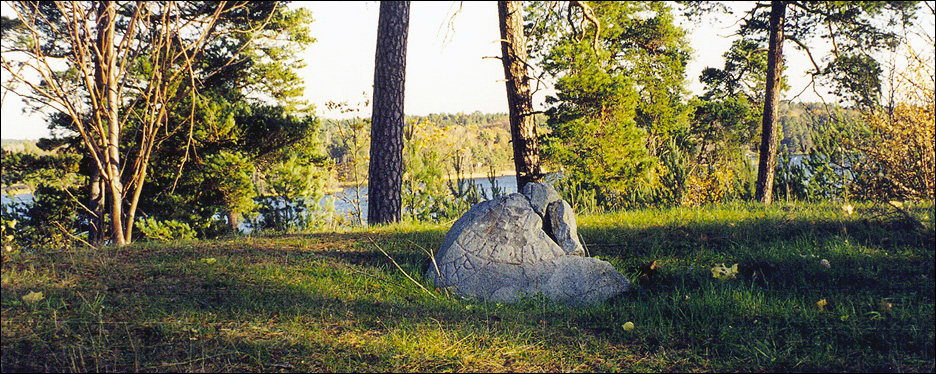
According to the sagas, Bjorn left England after Aella was dealt with, while some of his brothers remained. Bjorn instead became the king of Sweden, or at least the part of it around Uppsala and the center. He either inherited upon the death of his father, or he may have been gifted the territory before his father’s death.
How did Bjorn ironside die ?
Nothing is recorded about the death of Bjorn. It may have been peaceful, as he was succeeded by his son Eirik, who was in turn succeeded by the son of Bjorn’s other son, Refil. Bjorn may have had more sons and daughters, but no other information survives about his wife and children.
Bjorn is credited with founding a dynasty that ruled in Sweden from the 860s until 1060, called the House of Munso. The dynasty is named after a barrow found on the island of Munso in the 18th century. At the time, antiquarians claimed it belonged to Bjorn. This has since been disproven, as the burial probably dates to at least a century after his death.
Thus, Bjorn’s legend lived on and became part of the fabric of Swedish culture. But what do you think? How much of Bjorn Ironside’s story is history, and how much is legend?
Mjolnir (Thor’s Hammer) Pendants in the VKNG Collection
As a Viking warrior, Bjorn Ironside probably wore a Mjolnir pendant, depicting Thor’s hammer, as a symbol of the protection of the gods and also as an aspirational symbol to be as mighty a warrior as the god Thor.
You can find Mjolnir pendants in the VKNG collection inspired by genuine Mjolnir pendants found in the archaeological record, like the examples below.

This design is based on a 10th-century Mjolnir pendant found at Östergötland, Sweden. It features swirling loops, which were extremely common for jewelry decoration in the Viking Age.
This design is based on a Mjolnir pendant found in Scania, Sweden. The handle of the hammer looks like a raven or a warrior’s head, a common feature of many Mjolnir designs. It is probably a reference to Odin, the god of war and ravens.


This pendant is based on a Mjolnir amulet found on Bornholm Island, Denmark. The pattern of round circles was a common design on Norse jewelry, especially Mjolnir pendants.
This pendant is based on a 10th-century artifact from Iceland. It has a distinctive design with its wolf-head clasp and what seems to be a Christian cross integrated into the design. It dates to a time when Iceland was in the process of converting to Christianity, and religious lines and symbolism were being blurred.

FAQs
Did Björn Ironside actually exist in history?
While historical records from the 9th century mention a Viking leader named Berno who raided France and the Mediterranean, he was probably Bjorn Ironside. He also appears in the Norse sagas as one of the sons of Ragnar Lodbrok, where his story is a mix of history and folklore. Most historians believe his grand backstory was embellished by later writers to create an epic ancestry for Swedish kings.
Was Björn Ironside really the son of Ragnar Lothbrok?
According to Norse sagas like The Tale of Ragnar’s Sons, Björn was indeed the son of Ragnar Lothbrok and Aslaug. However, contemporary historical sources cannot conclusively verify this relationship, as Ragnar himself is a heavily mythologized figure.
Did Björn Ironside actually sack Rome?
Björn famously set out to raid Rome but mistakenly attacked the Italian town of Luna instead, believing its grand marble walls belonged to the capital. He supposedly gained entry by pretending to be on his deathbed and requesting a Christian burial, only to leap from his coffin and open the gates for his fleet.