As an historian, one of the most common questions I get about warfare is what happened to the bodies of the dead after battle. In the case of the Vikings, this is a complicated question to answer, as it is not addressed by contemporary sources. We must infer what probably happened based on what we know of Viking culture and beliefs, comparative evidence, and a few archaeological sites.
So, this is a “best guess” about how the Vikings probably retrieved and treated their dead, at least until some new, illuminating evidence turns up!
Death on the Battlefield

Throughout history, there are very few examples of cultures that left their dead on the battlefield. Collecting the dead and administering funeral rites was both a question of sanitation and religious belief. For this reason, most cultures had a system for agreeing a post-battle truce to let both sides retrieve their dead.
There are rare exceptions where the dead were left to rot. These tend to be mentioned in the surviving sources because it was considered so horrific.
In AD 9, the Roman legions of Varus were ambushed and slaughtered by Germanic tribes in the Teutoburg Forest. The Romans were destroyed almost to a man, leaving no Romans to gather the corpses. The Germans left the bodies where they fell, or mutilated them, nailing heads to trees as trophies.
When Germanicus returned to the area looking for vengeance six years later, the troops arrived to see a field of whitening human bones and shattered weapons. Germanicus and his men, now victorious, collected the bones for burial.
Passing into the Afterlife
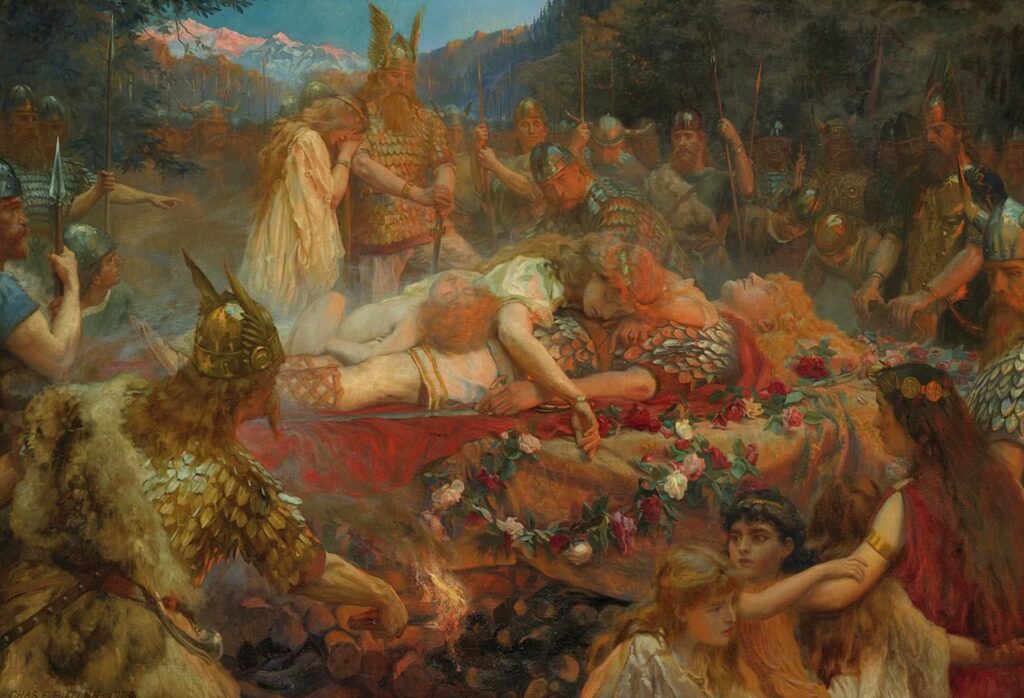
The Vikings believed in life after death. They had several afterlives, all of which looked much like the living world. This is why people were buried with grave goods they might need in the next life, from jewelry to household goods to weapons.
The most venerated Norse afterlife was Valhalla, Odin’s hall among the gods in Asgard. According to the sources, written by Christian Norsemen living centuries after the Viking Age, Odin and the Valkyries chose the bravest fallen warriors from the battlefield to dwell there. But other sources suggest that there was more to making the journey into the next life than just dying well.
It was the Viking custom to cremate bodies and then bury them in the ground. They were often buried with means of transportation, from ships to chariots to horses, both real and symbolic, that were clearly meant to help them make the journey. Also, according to “Odin’s Law,” you could take the things burned and buried with you into the afterlife. This suggests that funerary rituals mattered.
Moreover, the Vikings believed that those who were not properly buried could come back to life as a revenant. Many stories of revenants, often called draugr, survive from the time when the Vikings were converting to Christianity. The new religion required that the bodies not be burned before burial, as the body must remain intact for resurrection. This caused a crisis for the Vikings, as it took centuries to break the belief that burning was not an essential part of the funerary process.
Victory After Battle – Recovering the Dead

It is assumed that in ideal circumstances, the Vikings retrieved the dead. If they won the battle, and therefore controlled the battlefield, they probably retrieved their dead for burial and the injured for care. Injuries were treated. There are records of medics attending the battlefield. One method of determining whether an abdominal wound had pierced the intestines was to give the warrior onion or garlic soup. If the wound quickly began to smell of onion, it was probably fatal.
They probably also looted enemy bodies for valuables such as weapons and armor, killed any enemies they found still alive, and prepared captured fighters to be sold back to the enemy or sold as slaves – either way, they represented cash! When the Vikings left the battlefield, the locals probably did their best to retrieve and bury the remaining dead.
When possible, the Vikings seem to have tried to bury their dead with complete rituals, even when post-battle casualties were high. The Heath Wood Barrow Cemetery at Ingleby in England is a 9th-century Viking cremation cemetery with 59 burial mounds. Excavations indicate that the surviving members of the army built massive timber pyres to cremate their fallen comrades according to Norse tradition, alongside things they might need in the afterlife, including horses, dogs, and cattle (few weapons, they were too valuable). The ashes were then buried in Norse-style earth mounds.

But when circumstances were not ideal, the Vikings adapted. We see this at Repton in Derbyshire in England, a camp used by the Great Heathen Army between AD 873-4. Here, many men seem to have died in a recent battle. The Vikings repurposed a local stone church within their camp as a burial ground. Without burning, they stacked the bodies neatly around a central, high-status individual, surrounded the mass grave with goods, weapons, and sacrificial animals, and then covered the structure with earth.
Defeat – Saving the Fallen
However, it was not always possible to recover the dead. If a raiding party was pressed for time or overwhelmed, they might need to leave the dead and wounded behind. They might make an extra effort to take the body with them if it was their leader, as they had sworn an oath to protect him. It was a cultural disgrace to return without their leader, dead or alive, so much so that they often struck out on their own rather than return.
Losing the battle often meant losing the dead, potentially meaning that the fallen, no matter how brave, did not make it to Valhalla.
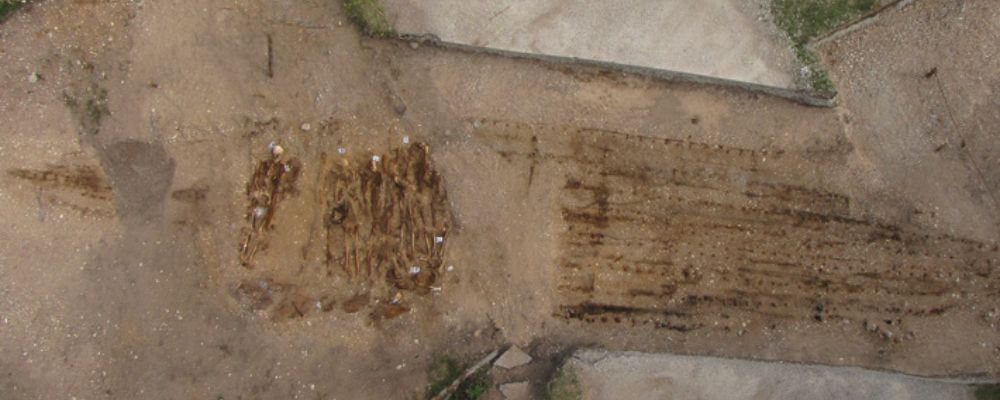
But there is evidence that, even in defeat, the Vikings tried to care for the dead. This is made clear from the Salme Ships, found on the island of Saaremaa in Estonia. The Vikings were defeated in battle around AD 750 and forced to pull their boats up onto the shore on the island. It seems that at this time there were 34 dead and 7 survivors. The survivors neatly stacked the dead inside the larger of their two ships, placing grave goods within the stack, including swords, shields, dogs, and carved game pieces. The remaining seven then died of their wounds or exposure, their bodies found where they lay on the smaller boat.

As the Vikings terrorized many people with their raids, their bodies were usually not treated well in defeat. We see this at Ridgeway Hill in Dorset, England, where the Anglo-Saxons defeated the Vikings sometime between AD 970 and 1025. Here we see 54 decapitated skeletons, revealed to be from Scandinavia through isotope testing in the teeth, who were decapitated. There were only 51 skulls in the pile, suggesting that the others were taken as trophies.
War, Death, and the Afterlife
Death in battle was a bleak reality for a culture that valued warriors, like the Vikings. They inevitably found a way to reconcile their beliefs about the afterlife and proper funerary rites for the dead with death on the battlefield, often far from home.
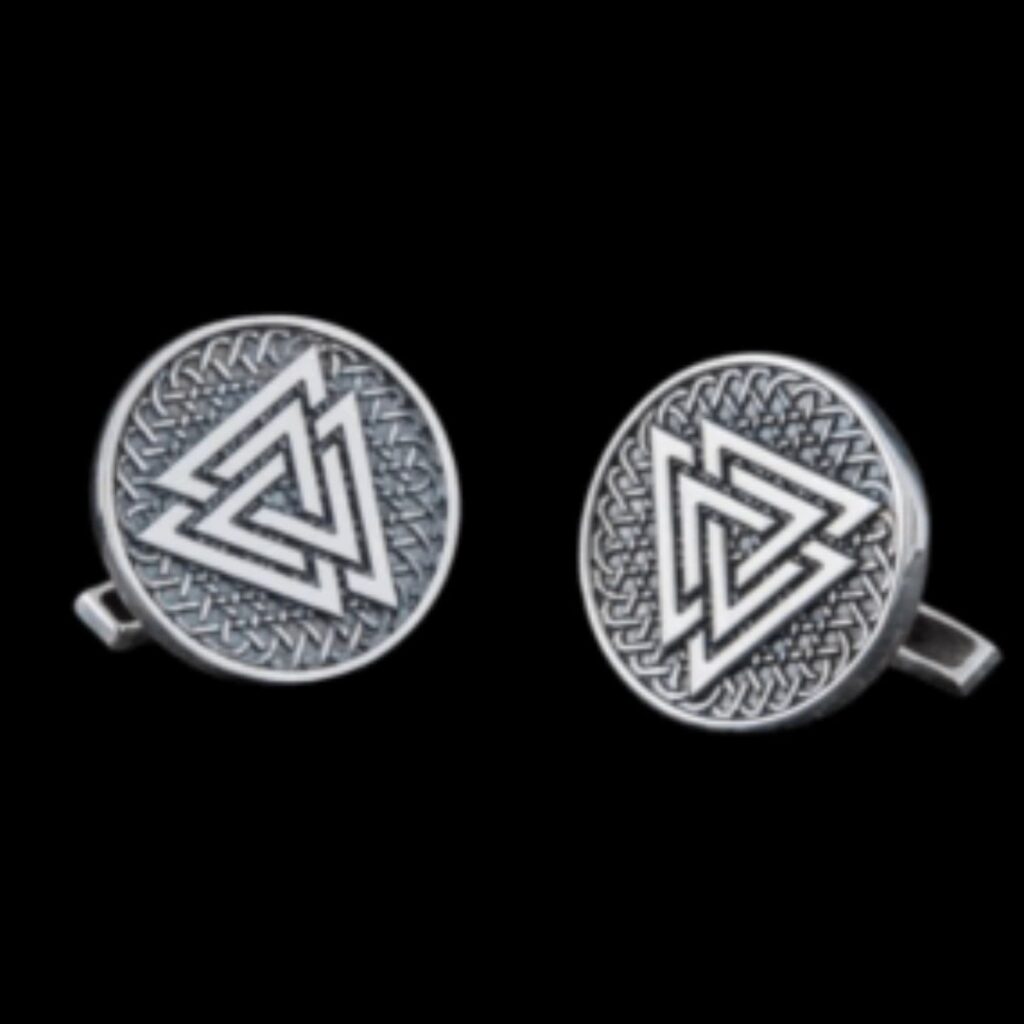
The Valknut was very likely the symbol of Valhalla in the Norse world, as it is always found in association with Odin and the dead. If you are inspired by the Viking attitude to the next life, find Valknut pieces in the VKNG Collection.

This bronze Valknut signet ring allows you to adopt this symbol as your own, making it your mantra: live bravely and embrace all challenges with courage!
The ring setting uses animal ribboning design popular in Old Norse art.
This stunning silver pendant places the Valknut in the center surrounded by ribboned wolves and serpents in the traditional Norse Urnes style.
These animals are threatening, and represent life’s challenges, while the Valknut represents the courage needed to face these challenges.


This stunning wooden watch features the Valknut and a symbol of the bear. The Berserker warriors communed with the spirit of the bear to embrace their ferocity before going into battle. While in this ecstatic state, they were believed to be invincible.
This stunning wooden watch features the Valknut and a symbol of the bear. The Berserker warriors communed with the spirit of the bear to embrace their ferocity before going into battle. While in this ecstatic state, they were believed to be invincible.

This stunning bronze Valknut pendant associates the symbol with the ravens of Odin, who surround it on three sides.
When Odin’s ravens circled the battlefield it was believed to be a good omen, as it meant that Odin and the Valkyries were present to take the bravest fallen warriors to Valhalla.
FAQs
What happened to Viking dead when their warband lost a battle?
When Vikings lost, their surviving comrades were forced to flee, leaving the fallen behind to be looted and exposed on the field. Without control of the land, they could not perform traditional burial rites or retrieve their dead.
Did Vikings ever bury their dead in mass graves?
Yes, when fighting abroad or after major clashes, Vikings buried dozens of fallen warriors together in ship trenches or mounds. Sites like the Salme ship burials in Estonia show they carefully interred large groups with their weapons and animals.
How did surviving Vikings identify or collect their fallen comrades?
Warriors relied on tight-knit warband ties (lið) to locate their oathsmen and leaders immediately after a victory. They used wooden shields as stretchers to carry bodies back to camp for formal cremation pyres or mound burials.
What did the victors do with enemy bodies left on the battlefield?
Victorious forces stripped enemy corpses of valuable armor, weapons, and silver before leaving them in basic pits or exposed to nature. In cases of failed raids, captured Vikings were often executed and dumped into unmarked mass pits.
How were high-status Viking leaders treated compared to ordinary warriors?
Chieftains and jarls were given elaborate ship burials or large cremation pyres surrounded by grave goods, horses, and sacrificed animals. Ordinary fighters were buried alongside them in simpler layers or mass graves to conserve time and resources.