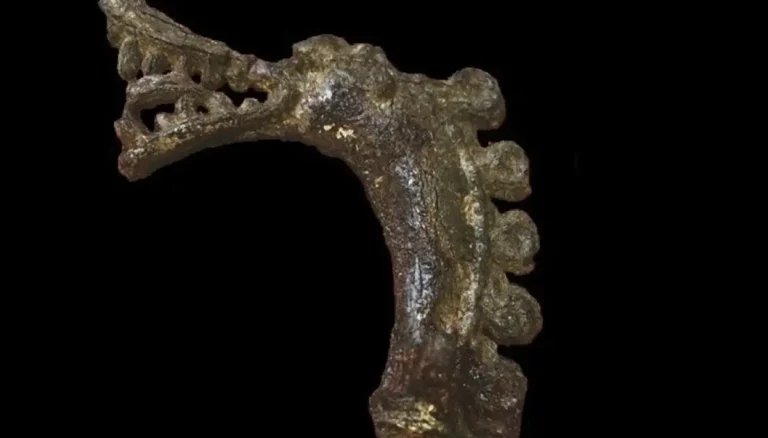
Title Image: Tin alloy dragon head found in Brika, Sweden, c. 750-900. Source: Science Nordic
Dragons are important figures in many mythologies, including Norse. However, understanding Norse dragons can be difficult because almost everything we know about them comes from Christian sources, which project established Christian ideas about the mythical beasts onto the Norse stories.
Nevertheless, the original Norse dragons were clearly powerful and could be threatening beings. Serpentine, though often with clawed legs, they spewed venom rather than fire. Their dragon form was often the sinister disguise for another being.
Let’s take a closer look at Norse dragons, including the most famous dragons from myth, the lesser-known dragons of Scandinavian folklore, and dragons in Norse art.
What is the Difference Between Dragons & Serpents in Norse Myth?
Norse stories feature both dragons, dreki, and serpents, ormr, but not always with a clear distinction between the two. Dreki was a word borrowed from Latin, while ormr comes from the Norse language. While they are not used interchangeably, they do seem to refer to the same class of beings.
This lack of distinction is not necessarily surprising. We have spoken previously about how challenging it is to distinguish between gods, giants, elves, and divinized ancestors in Norse myth. Sorting things into clear and distinct categories just doesn’t seem to have been that important in the Norse mindset.
Who is Nidhoggr? The Primordial Dragon
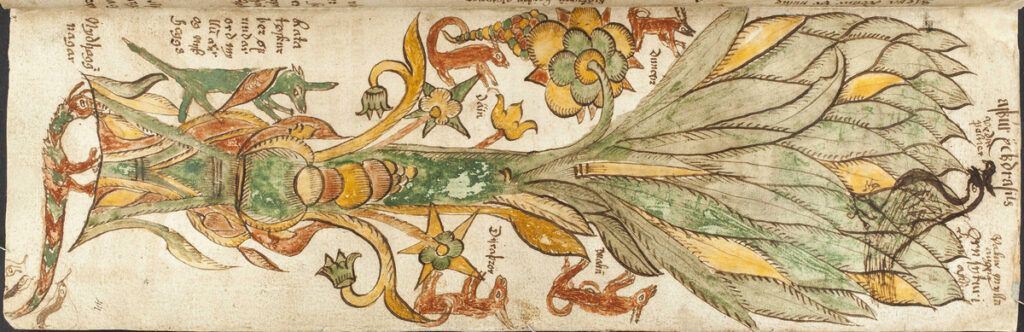
Nidhoggr, whose name means “malice striker,” formed a part of the Norse cosmos. He lives in the realm of Niflheim, among the roots of Yggdrasil, the world tree, gnawing on them and causing the tree immense pain.
According to descriptions, Nidhoggr’s body is covered in bright scales, horns erupt from his head, and bat-like wings. A pair of forelegs, complete with massive claws, help him to rip at the roots of Yggdrasil, but he has no back legs, only a serpentine tail.
One of the Norse underworlds, Helheim, is located in Niflheim. Consequently, Nidhoggr is often associated with Hel, the giantess who rules the underworld. In later Christian accounts of Helheim, which align the Norse underworld with Christian ideas of Hell, Nidhoggr is sometimes described as presiding over Náströnd, the “shore of corpses,” where the wicked were sent to be punished.
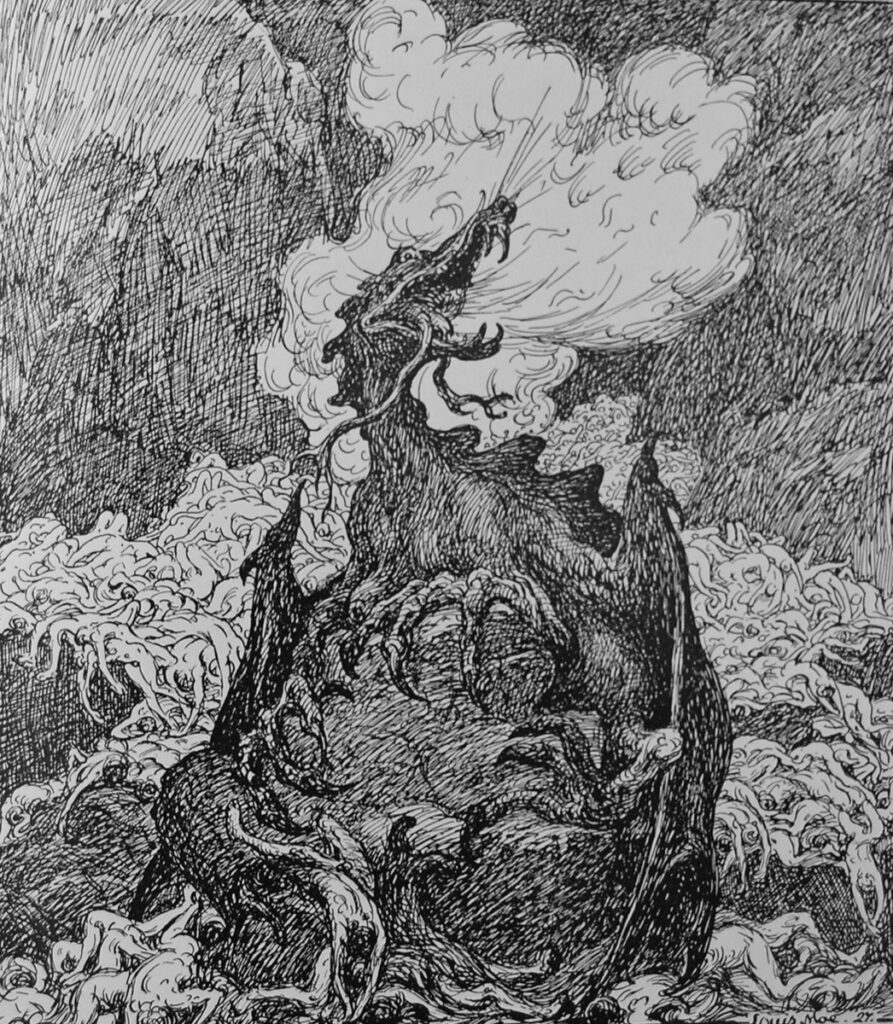
Nidhoggr seems to play a role in the inevitable end of the world, captured by the Norse Ragnarok prophecy. In the Völuspá, in which a seeress recounts what will happen at Ragnarok, Nidhoggr is described as finally gnawing through some of Yggdrasil’s roots, causing the tree to turn yellow and the world to be plunged into three years of winter. Later, he flies out from beneath Yggdrasil, presumably to join the giants and other beasts to destroy the Aesir gods.
Who Are the Norse Dragons?
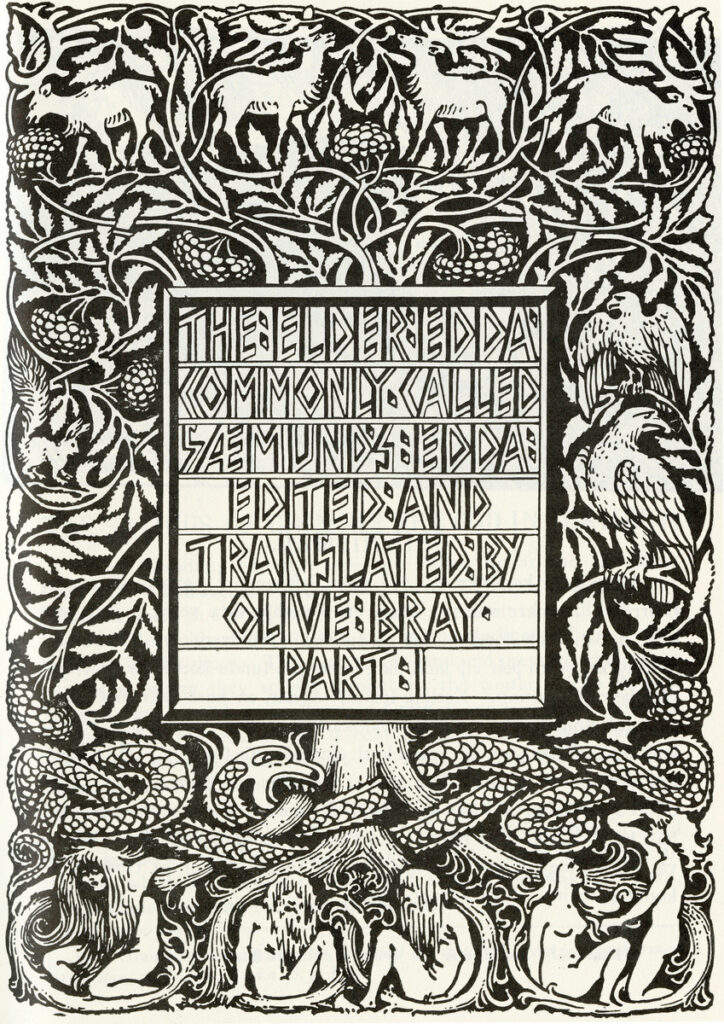
Nidhoggr is not the only dragon to call Yggdrasil home. According to two poems, the Grímnismál and Gunnars slagr, several other serpents also occupied the roots of Yggdrasil.
More serpents there are | beneath the ash
Than an unwise ape would think;
Goin and Moin, | Grafvitnir’s sons,
Grabak and Grafvolluth,
Ofnir and Svafnir | shall ever, methinks,
Gnaw at the twigs of the tree.
Yggdrasil’s ash | great evil suffers,
Far more than men do know;
The hart bites its top, | its trunk is rotting,
And Nithhogg gnaws beneath.
Grábakr means “greyback,” and also appears in an 11th-century Skaldic poem as a kenning for the ship Ormr inn langi.
Grafvitni, which may mean “wolf dwelling in a pit,” is the father of Goinn and Moinn. Goinn probably means “land animal,” while Móinn means “bog animal.”
Grafvölluðr may mean “field rodent,” while Ofnir means “twisting one,” and Svafnir is “sleeper.”
Is Jormungandr, the Midgard Serpent, a Dragon?
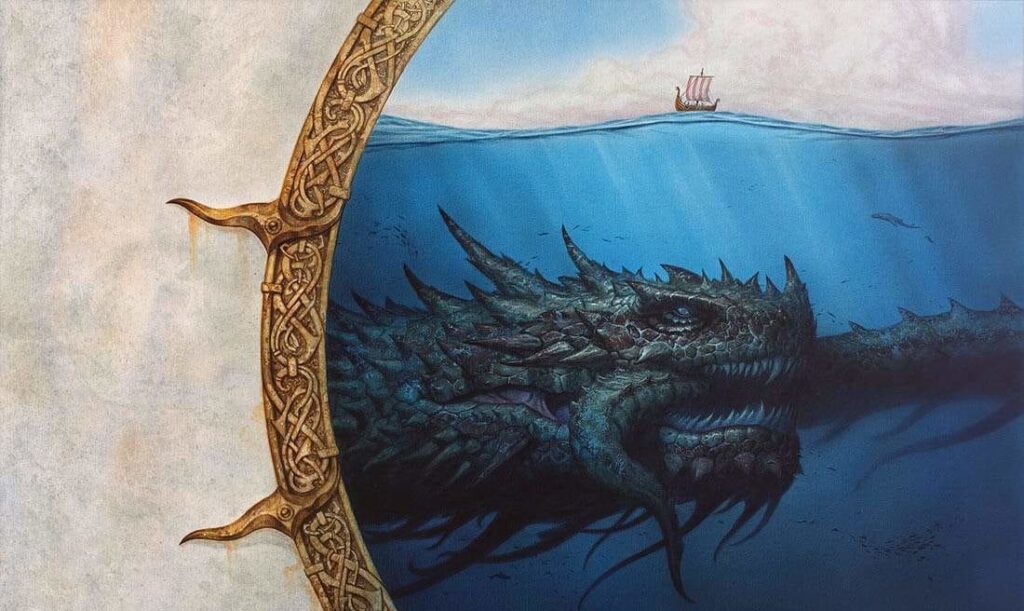
The most famous dragon-serpent in Norse mythology is Jormungandr, the Midgard Serpent. One of the children of Loki with the giantess Angrboda, the gods feared the offspring of such a monstrous union. To protect the world, the gods threw Jormungandr into the waters surrounding Midgard, the realm of men. There, he grew to such an enormous size that he encircles the entire world and holds his tail in his mouth.
Jormungandr’s most important role in Norse mythology is at Ragnarok. According to the prophecy, as the world cools, Jormungandr will emerge from his waters and start spewing his venom into the world. Thor will engage the beast, and while Thor will kill him with his hammer, he will spew so much venom onto Thor during the battle that he will also die.
But while Jormungandr’s main threat is at Ragnarok, he pops up occasionally in other myths as an ever-present threat.
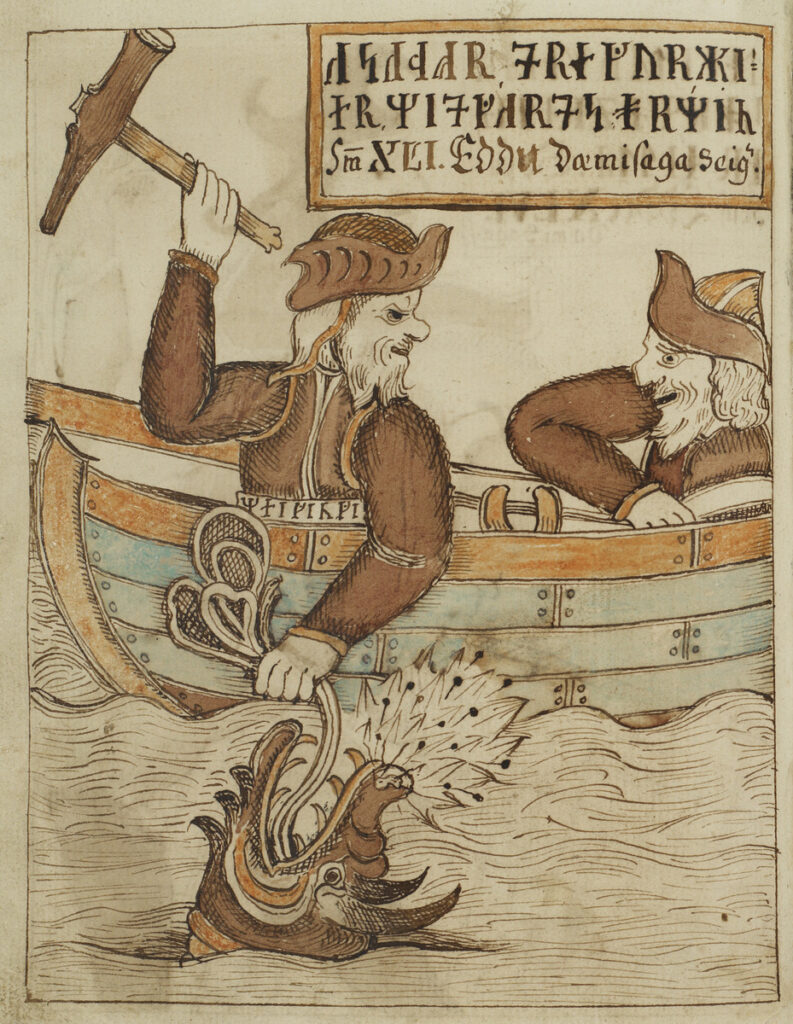
When Thor travels to Jotunheim and engages in challenges in the long hall of Utgard-Loki, Thor is tricked into trying to lift up the enormous serpent, which has been made to look like a cat. Thor is only able to lift one leg, but it is enough to cause dangerous water currents because of the movement of his great body.
In another story, Thor goes on a fishing trip with the giant Hymir. Thor uses ox heads as bait and insists on sailing out into the deepest waters to try to catch the serpent. He soon catches something on his line that is strong enough to unbalance the god. Hymir realizes that this must be Jormungandr, and he begs Thor to give up the hunt, but the god ignores him. Eventually, in fear, Hymir cuts the line.
It is noteworthy that Jormungandr lives in the sea, and this may be why the Vikings chose to decorate some of their ships to look like dragons, to strike terror into the hearts of those who saw them on the horizon. Many of the dragons that appear in the sagas loved or fought on water.
Who is Fafnir? The Shapeshifting Lindworm
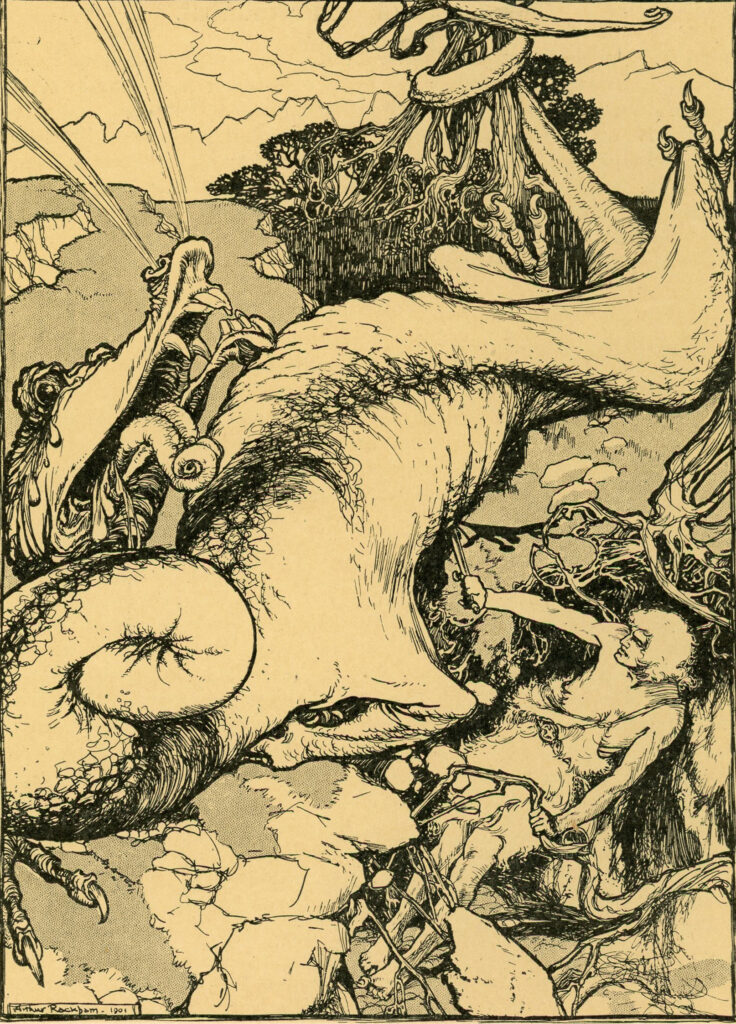
The third most famous Norse dragon is Fafnir, an ormr or worm. Fafnir is actually a dwarf with the power to shapeshift. When his father, the dwarf king Hreidmar, comes into possession of a great treasure, including a cursed ring, Fafnir, as the strongest of his sons, is charged with protecting it.
Due to the power of the cursed ring, Fafnir and his brother Regin became upset that their father did not share his treasure with them. They kill their father, and then Fafnir shapeshifts into a dragon to drive off his brother and everyone else from the kingdom so that he can have the treasure for himself. In this way, he is the archetype for the great dragon Smaug in The Lord of the Rings.
In addition to his dragon form, Fafnir was in possession of the Helm of Awe, a magical artifact that also increased his strength. He also struck terror into the heart of anyone who came close to him.
He was eventually killed by the hero Sigurd, but only with the help of Odin. In the final battle, Fafnir is described as breathing poison into the air before being stabbed and bleeding out. Sigurd then drinks some of Fafnir’s blood for strength. He also cooks the heart and eats a small portion, which allows him to understand the speech of birds, which leads the hero on another set of adventures.
What Are Scandinavian Lindworms?
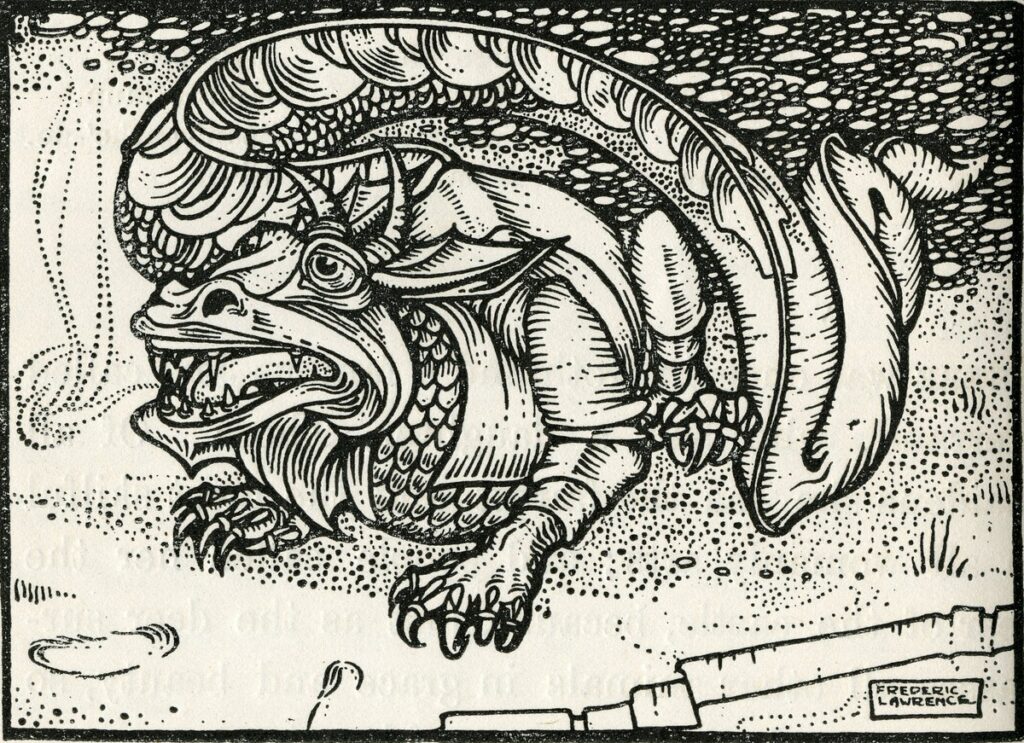
Fafnir seems clearly to be a type of lindworm, a serpentine dragon common in Scandinavian folklore. They tend to live in forests and other remote areas, and can spit a foul, poisonous substance. When hunting, they grasp their own tails to form an ouroboros wheel and roll at high speeds to pursue prey.
Lindworms grew very fast and so were very long. Also, whatever they lie on top of grows at the same rate, so they often lie on top of treasure to increase it.
Lindworms appear as adversaries in many stories. Most famously, the legendary Ragnar Lodbrok faced off against a lindworm to win the hand of Thora in marriage. According to some versions of the story, Thora was the daughter of a Swedish king and was given a small lindworm as a pet. It grew quickly. While it originally slept in a small box on a bed of gold, it quickly grew to encircle Thora’s entire house, guarding both her and its treasure. Worried for his daughter, the king offered her hand in marriage to whoever could kill the beast. Enter Ragnar Lothbrok, who killed the dragon and married the princess.
Do Dragons Appear in the Norse Sagas?
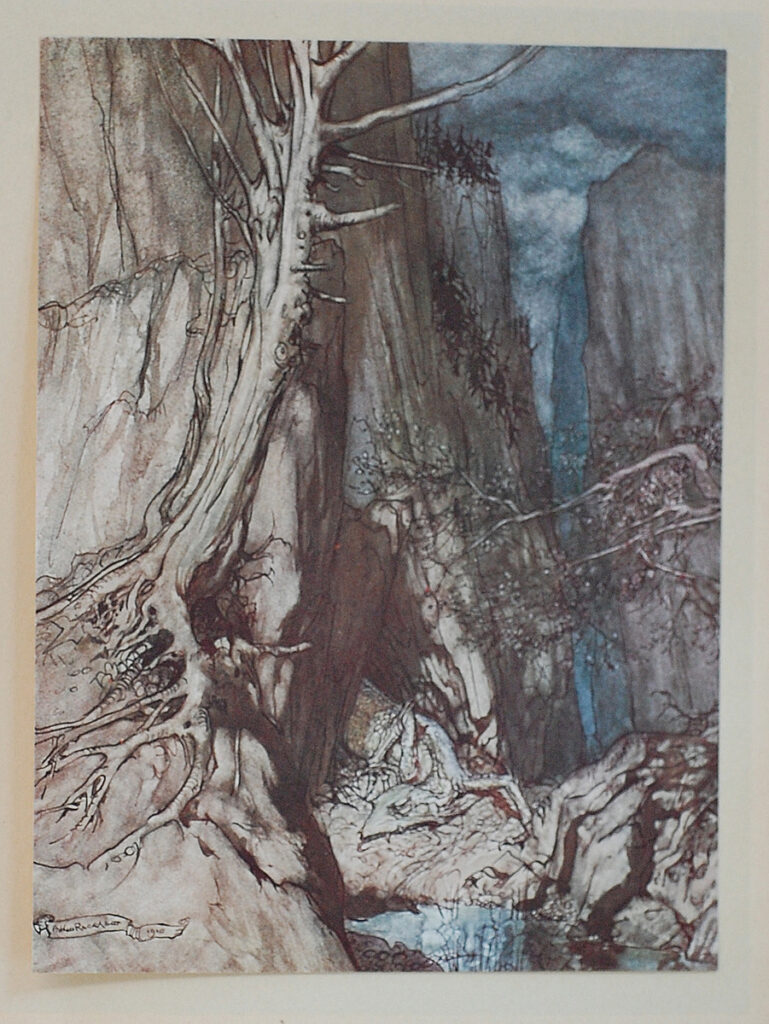
Dragons appear frequently in the Norse sagas, with more than 50 examples in the sagas composed between the 12th and 15th centuries.
As was the case with Fafnir, many people shapeshift into flugdreki, which means flying dragons. In the Icelandic saga of Gull-Thorir, Gull Thorir and a man named Valr and his sons all transform into dragons. The sagas of the Jomsvikings and Olaf Tryggvason both mentioned dragons as shapeshifting enemies, asdo the Bosa saga Herrauds, Gingu-Hrolfs saga, and Sorla saga sterka, amongothers.
In most other examples, dragons raid and terrorize local populations (e.g. Tristrams saga ok Isondar), they kidnap people (e.g. Orvar-Odds saga and Thidreks saga), or they guard treasure (e.g. Yngvars saga vidforla).
Were Norse Dragons Symbols of Fertility?
In another story about a lindworm, a childless queen consults a witch who tells her to eat two onions to ensure her fertility. She forgot to peel the first onion before she ate it, so when she gave birth to twins, the first was a lindworm, while the second was perfect.
The older lindworm brother insisted that the younger brother could not marry until he did. Many maidens were chosen for him, but as each disappointed him, he ate them.
Eventually, a shepherd’s daughter is presented to him, but she consulted the same witch before arriving. She told her to arrive in every dress that she owns. Each time the lindworm asked her to take off a dress, she demanded that he shed a skin. He shed enough skins that he eventually revealed his human form, and they married.
A similar story appears in the 13th-century Legendary History of Gotland. A man named Hafthi married a woman named Huitastierna. The first night they slept together, she dreamed that three snakes were coiled within her womb and seemed to crawl out of her. Her husband interpreted this as meaning that she would give birth to three sons. They were later born and settled on the island of Gotland.
This story has been linked to a runestone called Nar Smiss III from Gotland, which is sometimes called the snake witch stone and probably dates to between the 5th and 7th centuries. It shows a large triskele of three animals, probably a boar, a raptor, and a dragon. Beneath the group is a human figure, probably female, with legs outstretched and holding a serpent in either hand. It seems to link serpents and dragons with fertility.
Dragons and Gripping Monsters in Norse Art
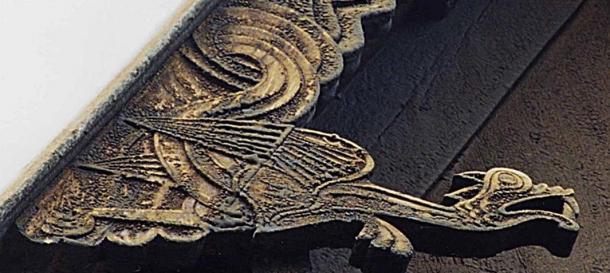
This early depiction from Gotland seems to link to how dragons were usually depicted in Norse art throughout the Viking Age, as “gripping beasts.” Norse art was characterized by tightly interlaced, dense carvings of animals with long bodies and small heads. They are called gripping beasts because they are often depicted with claws gripping onto nearby objects. It is not always clear what animals these are meant to be, such as wolves and cats, but some are clearly meant to be dragons or serpents.
The 12th-century U 871 runestone from Sweden has been interpreted as representing dragons in red and lindworms in white.
The same style is used to represent Fafnir on the right portal plank of Hylestad Stave Church, made in the 12th century, which shows Sigurd slaying the dragon. Many runestones also show Sigurd in his battle with Fafnir.
Dragons in the VKNG Collection
As such compelling creatures, dragons have inspired designs in the VKNG collection. Here are some of our top picks.
This handcrafted bronze belt buckle depicts dragons in the gripping-beast style, specifically emulating the Ringerike stye that was popular in Norway in the 10th century.
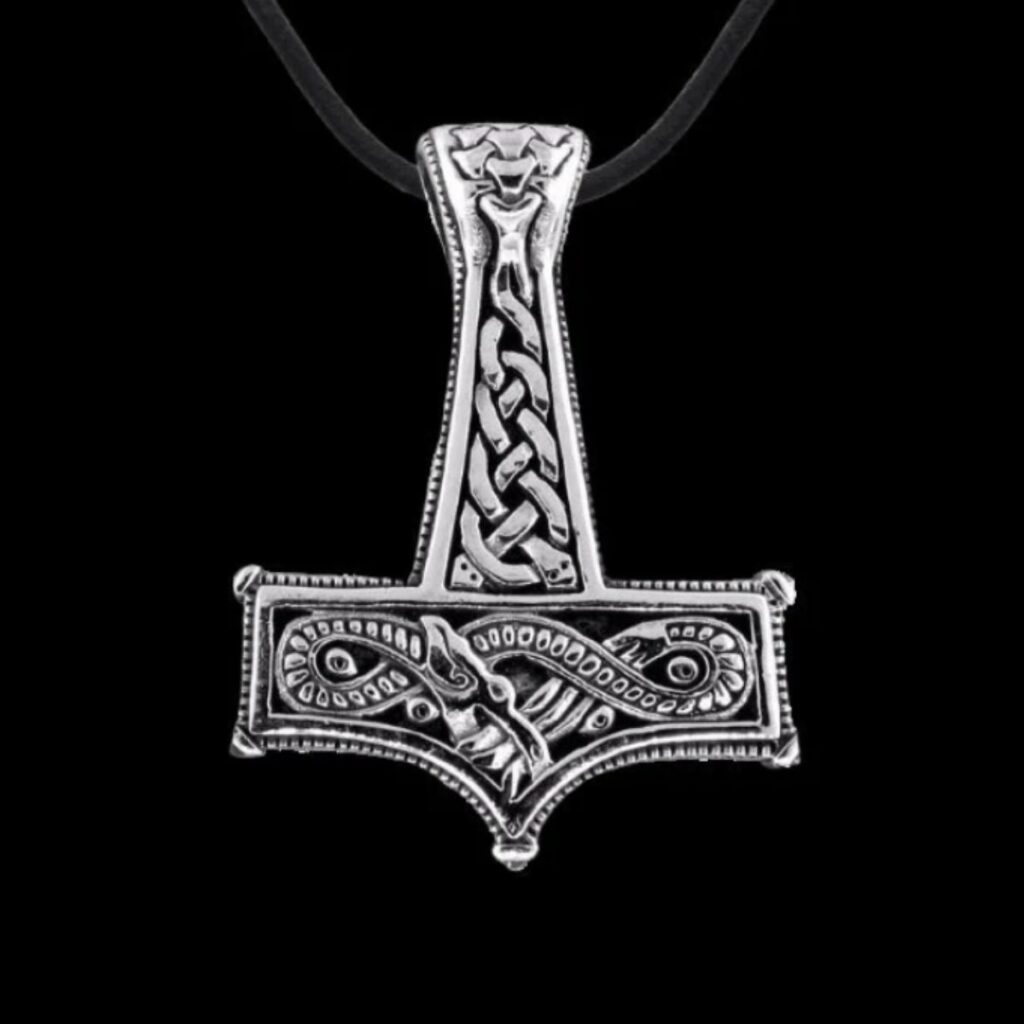
This silver Thor’s Hammer Mjolnir pendant is embellished with a Norse-style dragon. It alludes to the mighty battle between Thor and Jormungandr, referencing both the protection of the god and the inevitability of fate, which must be faced with courage.
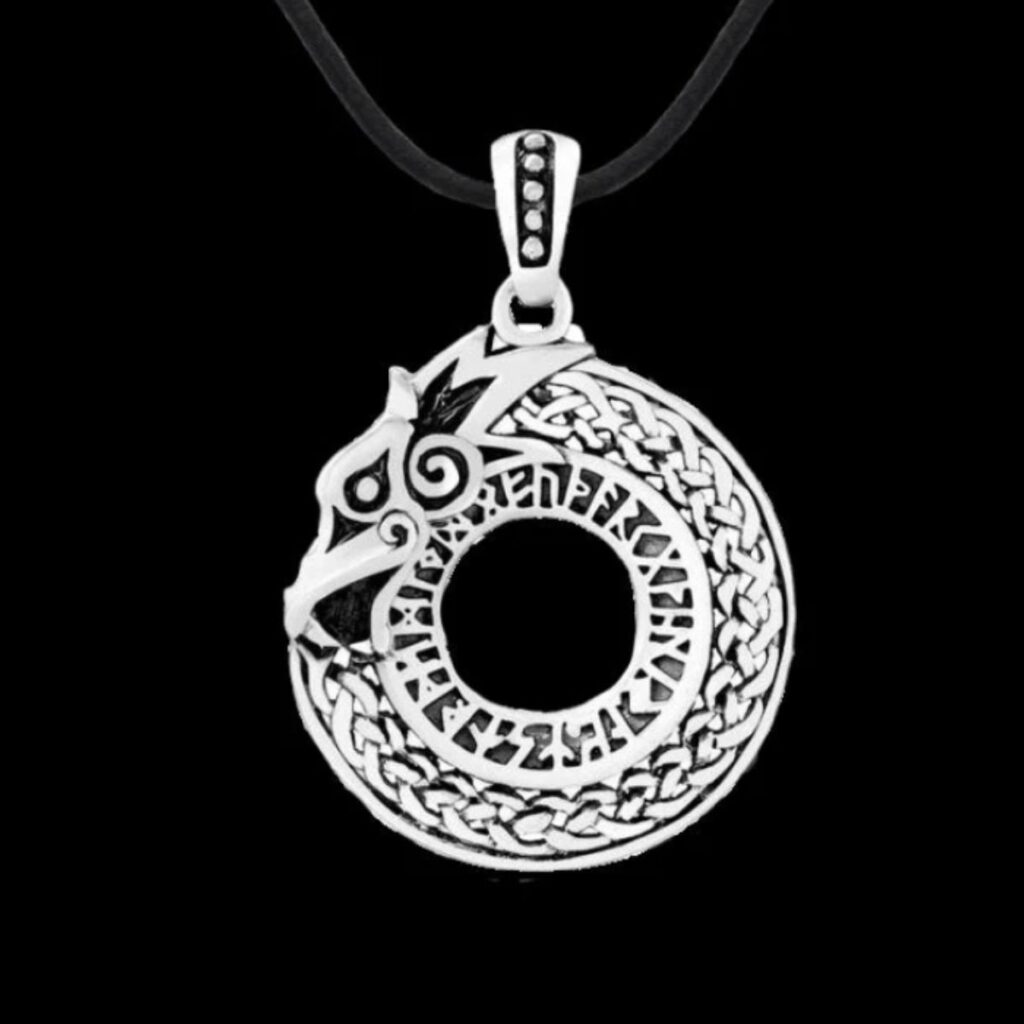
This Ouroboros pendant alludes to Jormungandr holding his tail in the waters surrounding Midgard. It also features the magical Norse runes in the interior of the design.
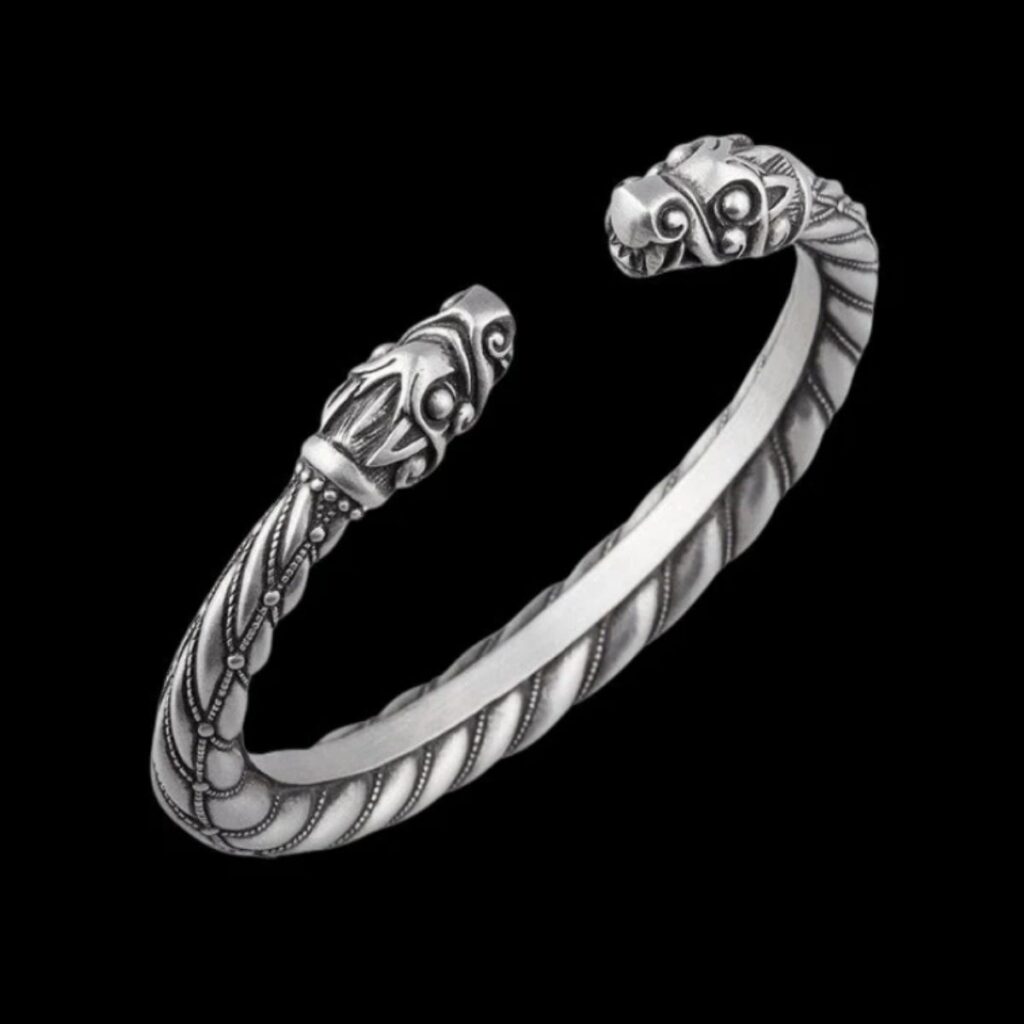
This classic Viking-style silver arm ring features dragon heads in the style found on Gotland, alluring to dragons as both powerful beings and protectors.
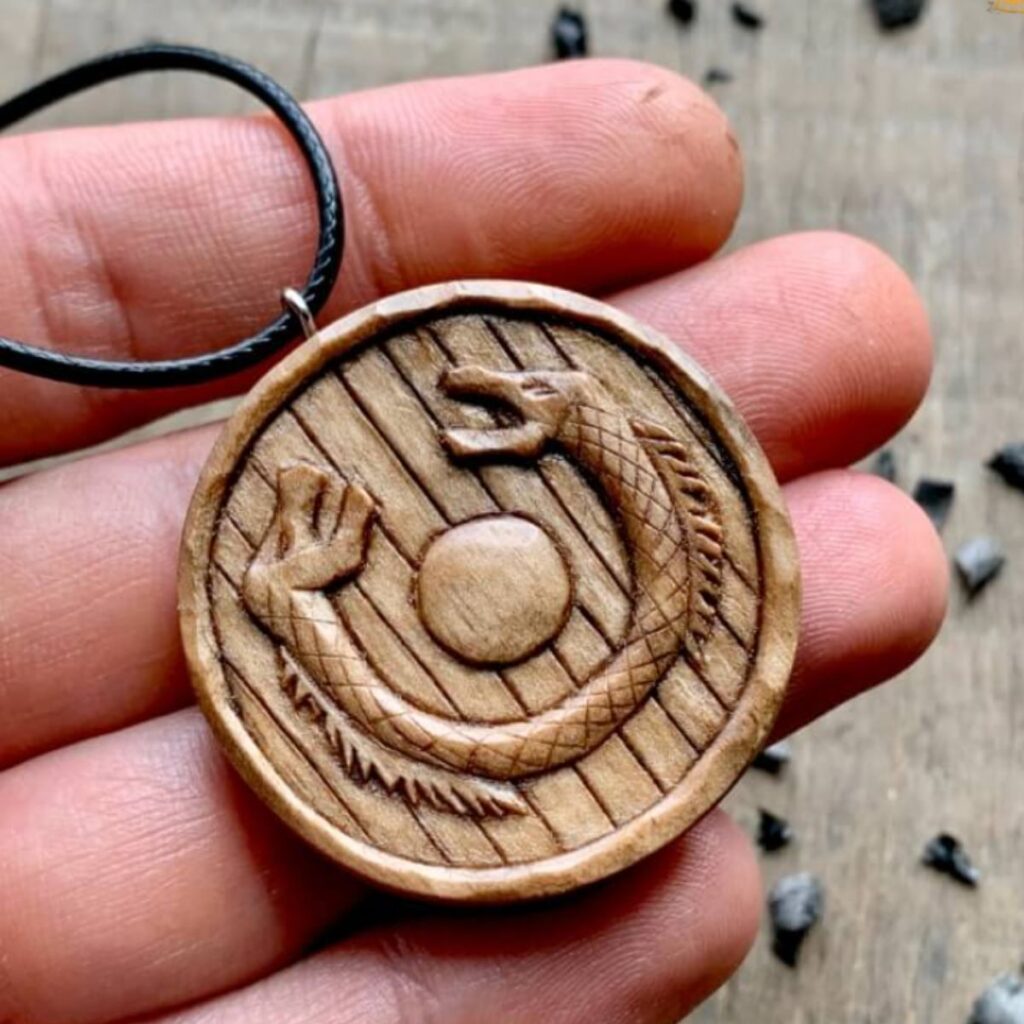
This rustic, hand-carved walnut pendant features two dragon serpents on a Viking round shield.