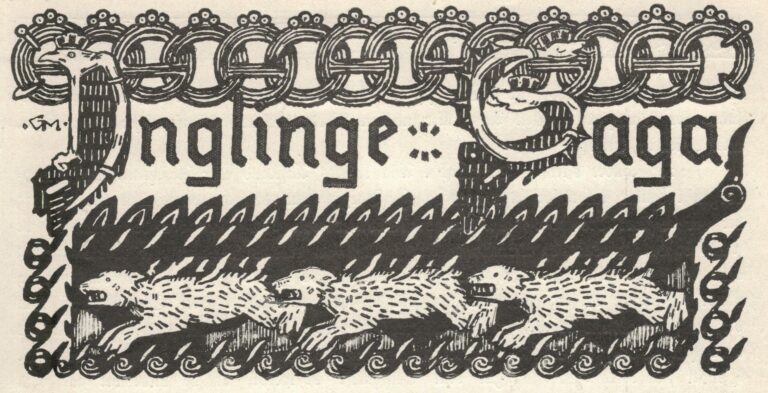
The Ynglinga Saga is one of the most important Old Norse sagas. It is one of the works composed by the Icelandic Christian scholar Snorri Sturluson in the 12th century. It is part of his Heimskringla and is based on a 9th-century Skaldic poem called the Ynglingatal by Thjodolfr of Hvini.
The saga tells the story of the origins of the kings of Norway, who came from the kings of Sweden, who were themselves considered descendants of Odin. But in this saga, Odin, while clearly exceptional and “other” in many ways, is not a god. Therefore, while the saga includes many stories familiar from other sources for Norse mythology, it is euhemeristic, with the gods recast as ancestors.
What information about the Norse gods is found in the Ynglinga Saga?
Cosmology in the Ynglinga Saga

The Ynglinga Saga provides interesting insight into how the Norse imagined the world, which complements the description of the Norse cosmos with its nine worlds found in mythological texts.
It refers to the “earth’s circle” inhabited by the human race, which is Midgard. The Norse imagined Midgard as circular because it is encircled by the serpent Jormungandr. The earth itself is divided into three parts with the Black Sea at the center: Asia in the east, Europe in the west, and Swithiod the Great in the north.
But these places on earth also seem to correspond to places in myth. It says that the northern part of Swithiod is uninhabited due to the cold and frost, while in the south Blueland, which is Saharan and sub-Saharan Africa, is a burning wasteland. This seems to align northern Swithiod with mythical Niflheim and Blueland with Muspelheim.
It says that the rest of Swithiod is inhabited by various races, including giants, dwarves, blue men, and other strange creatures, such as huge wild beasts and deadly dragons.
Pushing further into myth, it says that to the south of Swithiod, beyond the inhabited world, is a land called Vanaheim, which is clearly meant to correspond with the land of the Vanir gods in Norse mythology.
It also suggests that the country at the far east of Asia, again at the edge of the world, is a land called Asaland or Asaheim, of which the chief city is Asgard, so the realm of the Aesir gods in Norse mythology.
The saga also mentions the Roman chiefs who subdued much of the world, and how it caused Germanic people to flee from their traditional domains, marrying mythology and history.
Odin as a Mythological Man
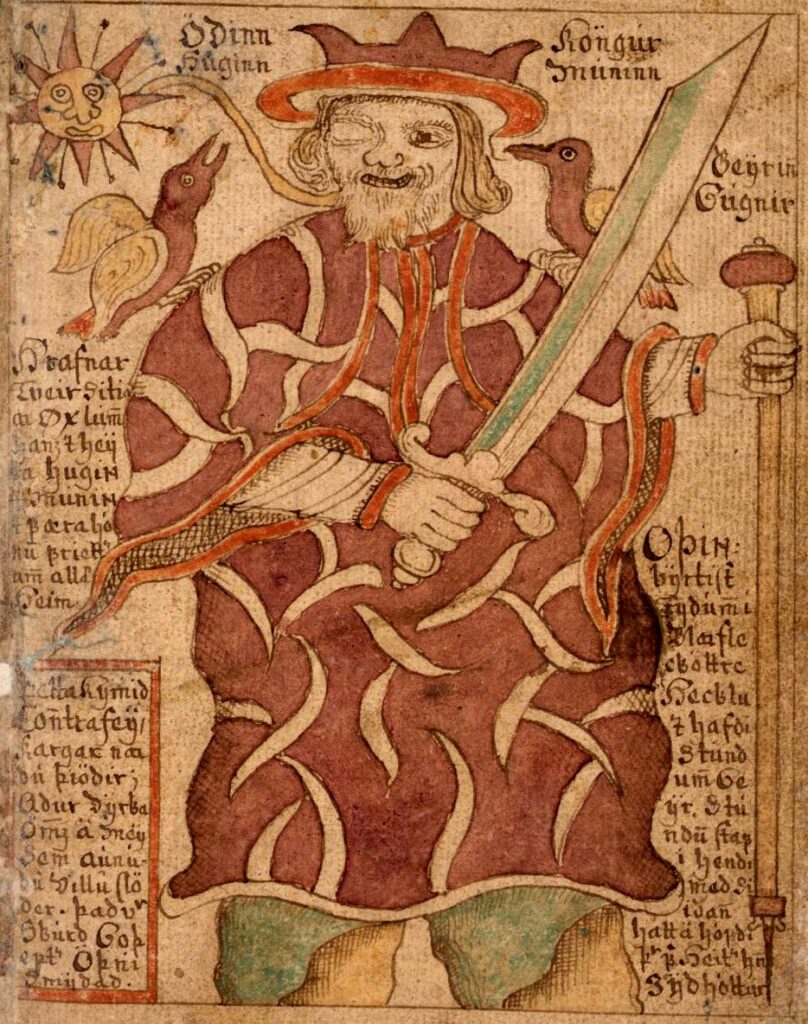
The saga recounts that Odin is the chief of Asgard, and that it was a highly religious place where sacrifices were made. Just like Odin the god, this Odin is a wanderer who is far-traveled and often passes many seasons away from home. He has also conquered many kingdoms and always has victory in war, which is appropriate for the god of war.
Just like in mythology, Odin has two brothers, Vili and Ve, who govern in his absence. Once he was gone for so long that they took Odin’s wife, Frigg, as their own wife. But he did return to reclaim her.
Odin is described as an incredible man. He is the cleverest of men and is always keen to learn from others and then share his knowledge, specifically including knowledge of the runes. But one moment he was learned and dignified, and the next a ferocious warrior.
He is also a shaman who can change his skin and wander the world in other forms. He is also a master of the spoken word and often spoke in rhyme. He had knowledge of magic and many spells. The magic spells described here are one of our principal sources for the type of magic the Norse believed in.
Some of Odin’s attributed as mentioned, including his ravens. They also give him the ship Skidbladnir, which could sail over wide seas and then be rolled up like a cloth. Elsewhere in Norse mythology, this is associated with Freyr.
The Aesir-Vanir War
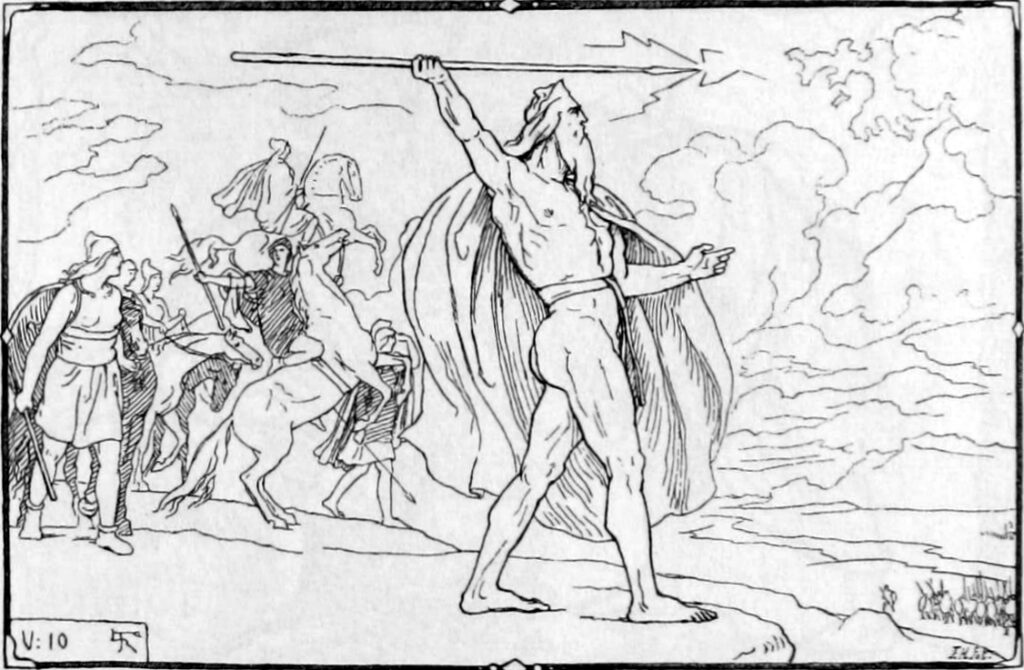
The war between the Aesir and Vanir gods is an important touchpoint in early Norse mythology and also appears in the euhemeristic version. It records that the war was a stalemate and that the two sides met to exchange hostages. Njord, his son Freyr, and his daughter Freyja were sent to Asgard. They were made priests among the Aesir, and Freyja taught magical arts, customary in Vanaheim, to the people of Asaland. It also specifically mentions brother-sister marriage among the Vanir, which was forbidden among the Aesir.
The saga also says that Kvasir was a Vanir sent to Asgard, though elsewhere he is a being created from the mixed spittle of the Aesir and Vanir gods collected as part of the peace agreement.
Hoenir and Mimir were sent to Vanaheim. The story recounts that charismatic Hoenir was made the new leader of the Vanir, while wise Mimir was his constant counsellor. Mimir was so important that Hoenir could give no advice without Mimir by his side. The Vanir soon considered themselves deceived and so beheaded Mimir and sent his head to Asaland.
Odin, now a shaman rather than a god, smeared his head with herbs so that it would not rot and sang incantations over it. This gave the head the power to speak, and it told him many secrets.
The Gods Arrive in Scandinavia
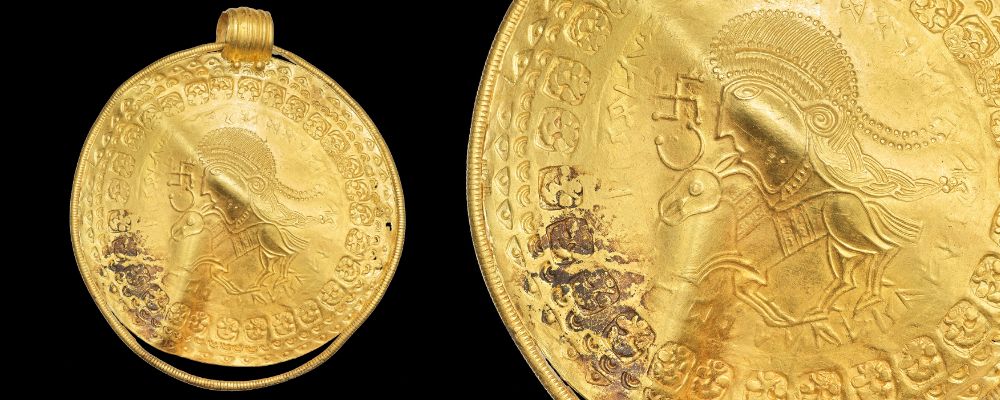
The saga describes how Odin arrived in Scandinavia, leaving his brothers in charge in Asaland. Odin first went to Gardarike in the west and Saxland in the south, both in Germany, having many sons and leaving them in charge. Odin himself went north into Denmark.
Odin sent Gefion north to discover new territories. She met King Gylve, who said she could claim land that she could plough. Therefore, she went to Jotunheim, presumably even further north in Swithiod, and had four giant sons. She transformed them into oxen for her plough. They ploughed so deep that they broke off a piece of land into the ocean, and it became part of Odin’s domain as Zeeland.
Odin then conquered Gylve and took control of Sweden, where he established religious sacrifices according to the traditions of Asaland. He created kingdoms for many of his kin. Njord dwelt in Noatun, Freyr in Upsal, Heimdall in the Himinbergs, Thor in Thrudvang, Balder in Breidablik. Therefore, transformed Sweden into a replica of Asgard.
Odin dies in Swithiod. When he saw that his death was near, as he is credited with foresight, he told the people that he was going to Godheim. He said that there he would welcome his friends and that brave warriors should be dedicated to him, therefore establishing the idea of Valhalla. He also established the law that burning was the way to transfer men and goods from the mortal world to the divine one.
Odin’s Successors
Njord then succeeded Odin as the king of the Swedes. The relationship between the two gods and why Njord was his successor is unclear. The story does say that Njord married Skadi, but the marriage was unhappy, so Odin took her, and they had many sons. Regardless, Njord ruled such a prosperous period that the Swedes believed he had power over crop growth and prosperity.
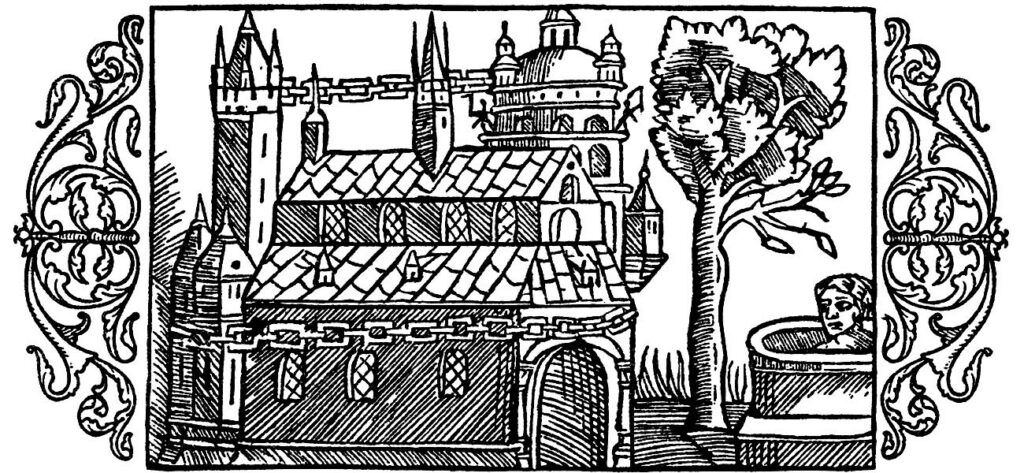
Upon his death, Njord was succeeded by his son Freyr, also known as Yngve, which gave the Yngling dynasty its name. His reign was just as prosperous, so much so that he was more worshipped than the gods, and he built the great temple at Uppsala. His wife was Gerdr, daughter of Gymir, and they had a son Fjolnir. When Freyr died, he was so beloved that his death was hidden for three years. All taxes were brought to the mound and given to the dead Freyr, and prosperity continued. Freyr was also worshipped after his death, and archaeology suggests that Freyr was one of the most popular gods in the Norse world.
After the death of Freyr, only Freyja remained of the arrivals from Asaland. The saga mentions that her husband was Oder and that they had two daughters, Hnoss and Gerseme.
The saga then tells the story of the semi-legendary kings of Sweden, which we will look at in another post.
Odin in the VKNG Collection
Are you inspired by the idea of Odin as the great ancestor of the Vikings? Find Odin-inspired pieces in the VKNG collection.
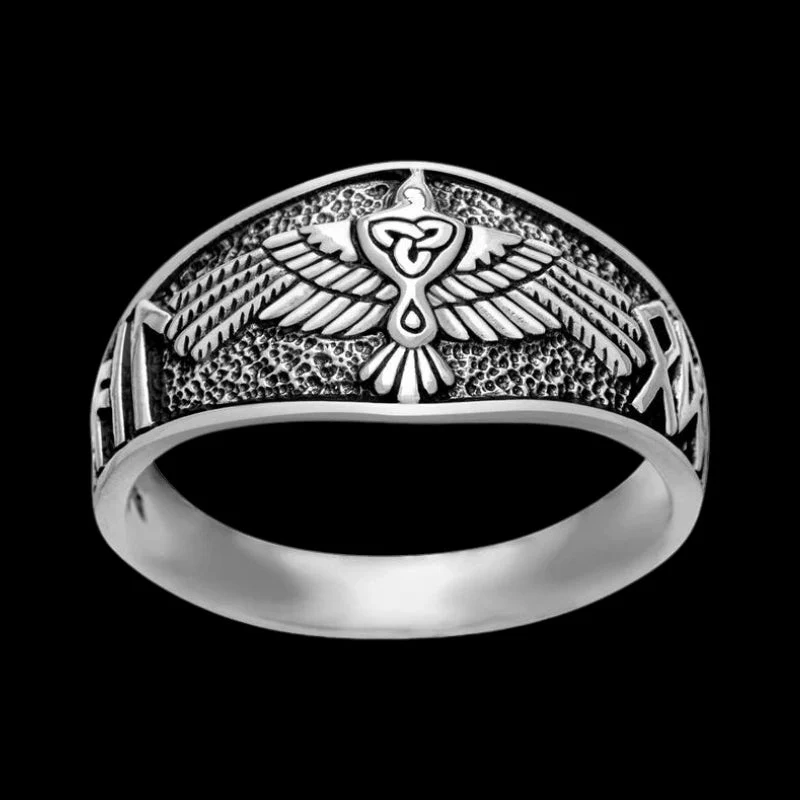
This stunning sterling silver ring combines an Odin raven symbol with the runes for Hail Odin. The raven is embellished with a fine Triquetra, common in both Celtic and Norse designs.
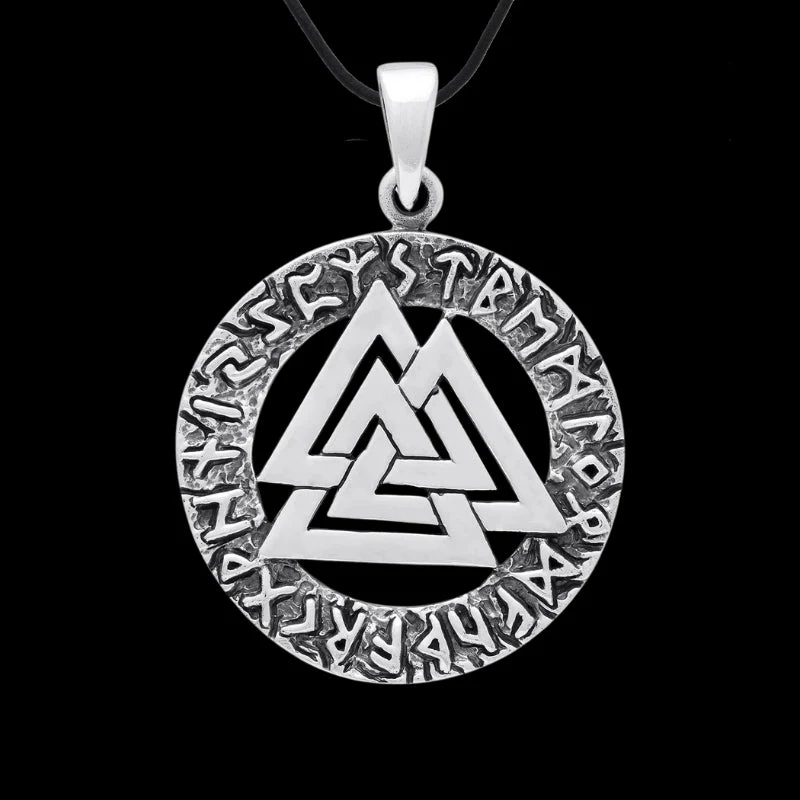
This sterling silver pendant features the Valknut, the symbol of Valhalla, often depicted alongside Odin, enclosed by a circle of Norse runes.
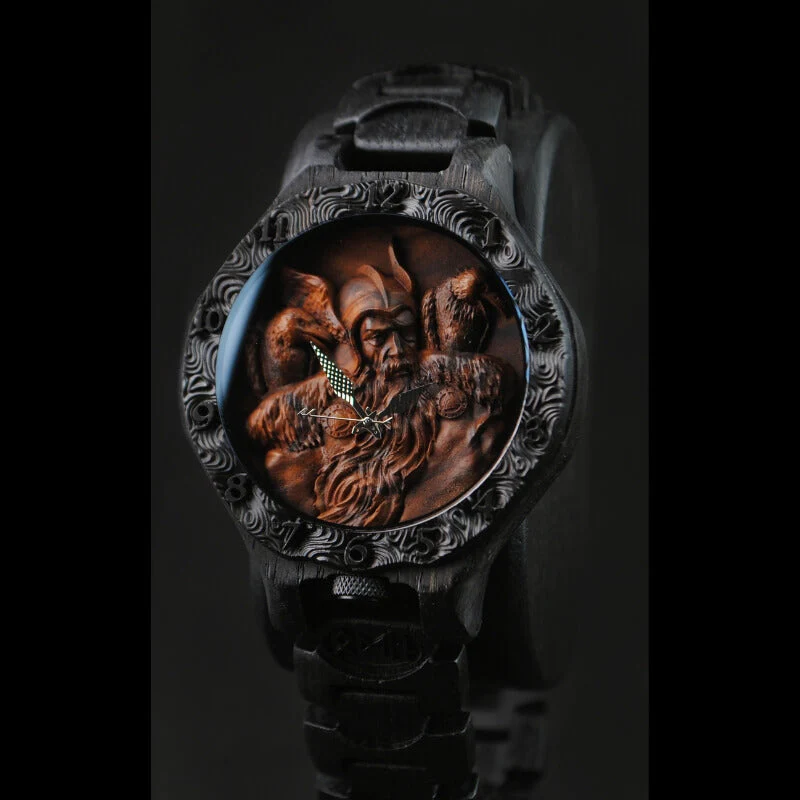
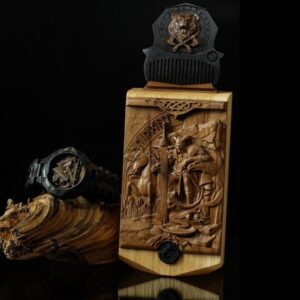
This handmade wooden watch features Odin with his two ravens. It is a collector’s item that comes in a specially designed wooden box.
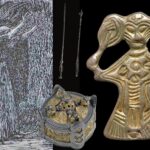
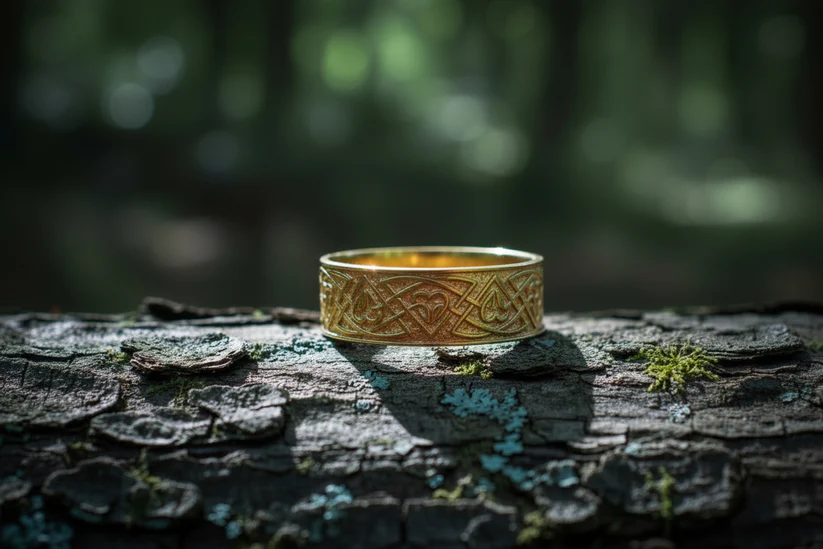
According to myth, Odin had a gold ring called Draupnir that was incredibly fine, and every nine days, it produced eight rings of equal quality to itself. It may have looked much like this Norse ornament gold ring.
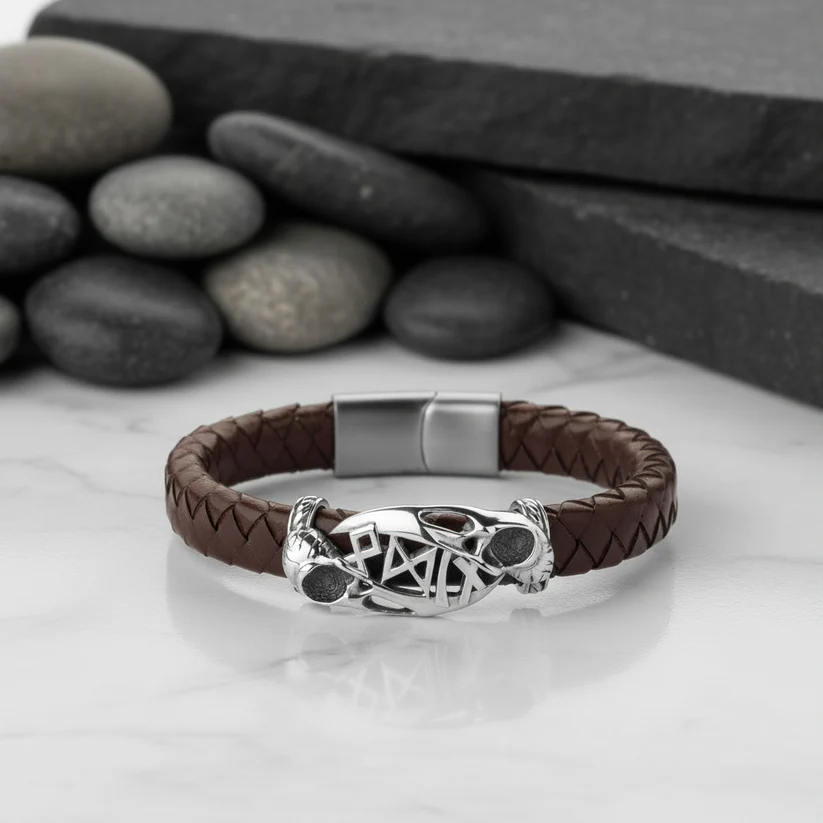
The clasp of this stunning leather and silver bracelet features two raven skulls enclosing the runes for Odin.
FAQs
What is the Ynglinga Saga and who wrote it?
It is an important Old Norse saga composed in the 12th century by the Icelandic Christian scholar Snorri Sturluson. It forms part of his Heimskringla and is based on an older 9th-century Skaldic poem called the Ynglingatal.
How does the Ynglinga Saga portray the traditional Norse gods?
The saga uses a euhemeristic approach, meaning it strips away the divinity of the gods and recasts them as exceptional human ancestors. In this narrative, Odin is depicted as a powerful king and shaman rather than an actual deity.
How did Odin and his followers eventually establish themselves in Scandinavia?
Odin traveled north through Germany and Denmark before conquering King Gylve to take control of Sweden. Once established, he recreated a replica of Asgard by settling his kinsmen—like Thor, Balder, and Heimdall—into their own regional Swedish domains.
Who succeeded Odin as ruler of the Swedes, and what dynasty did they inspire?
Njord succeeded Odin and presided over a highly prosperous era before being succeeded by his son Freyr, also known as Yngve. Freyr’s alternate name and immense popularity gave rise to the historic Yngling dynasty of kings.