Are you looking for a strong Norse name for your baby boy? Are you having a little Viking? Below is a list of Norse names from the Viking sagas and Norse mythology with their meanings and connections to surviving people and stories.
Don’t forget that Viking men had the habit of taking the name of their father as their last name, therefore Leif, son of Erik, was Leif Erikson. But it was also common for Vikings to use nicknames, so Leif’s father was known as Erik the Red, either because of the color of his hair or his red hot temper.
Bjorn
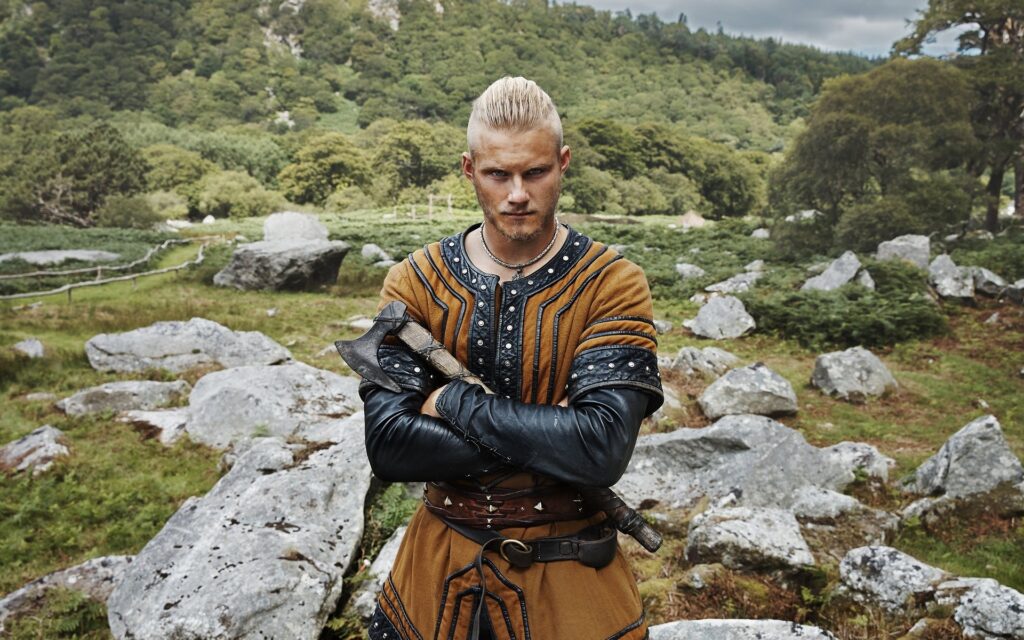
Bjorn name means “bear” and is appropriate for a boy you believe will grow up to be strong and ferocious. It is also a clear nod to Bjorn Ironside, one of the sons of Ragnar Lodbrok, who was part of the Great Heathen Army that attacked England, and he sailed into the Mediterranean as far as Italy.
Egil
Egil means “awe or terror” and was the name of Egil Skallagrimsson, a larger than life warrior and bard from Iceland who reportedly drank as a toddler, killed grown men as a youth, and got in a deadly feud with Erik Bloodaxe as an adult.
Erik
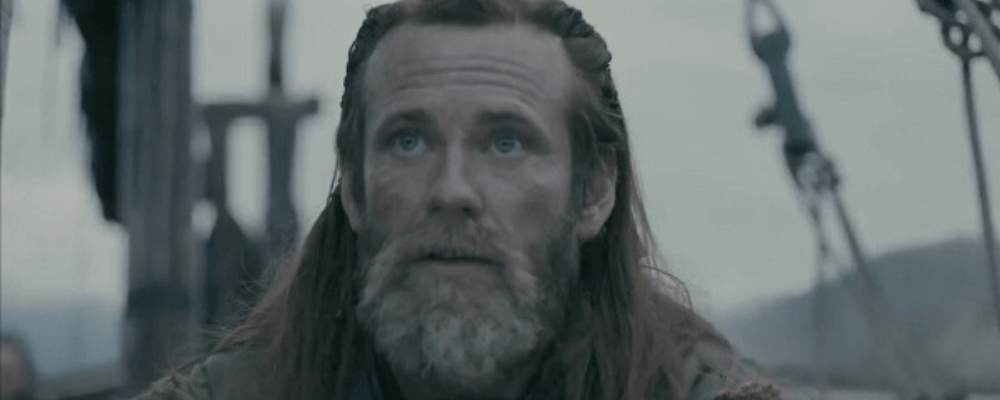
Erik means “eternal ruler” and was a popular name among Norse royal families. Erik Bloodaxe was the son of Harald Fairhair and ruled Norway briefly before being overthrown and exiled. He became the king of Northumbria in England and was known as a ruthless warrior. Erik the Red was outlawed from Iceland, which led him to colonize Greenland and become the chief of that new nation. It is perfect for someone you think will grow up to be a leader.
Eystein
Eystein means “island stone” and is another name that shows up repeatedly in the sagas. Many kings from the start of the 12th century onwards were named Eystein, including Eystein Magnusson and Eystein Haraldsson of Norway, and the Swedish king Eystein Beli, who was a patron of poets.
Gunnar
Gunnar means “warrior,” and was the name of a 10th-century Icelandic warrior, Gunnar Hamundarson, who features in Njals Saga. He was supposedly a remarkably handsome chieftain with blue eyes and thick, lustrous hair. He was so strong that he could leap his full height in full armor, and s talented that he could throw a rock and hit an enemy between the eyes from meters away.
Hakon
Hakon means “high son” and was another name common among Norse ruling families. Hakon the god was a son of Haral Fairhair raised at the English court of King Athelstan who then overthrew his brother to become king of Norway.
Harald
Harald means “army ruler” and was a name that indicted future potential. Harald Fairhair was considered the first ruler of a unified Norway, while Harald Bluetooth united Denmark and Norway under his rule. Harald Hardrada is often called the last great Viking and was named for his hard and ruthless nature. He served as a mercenary in the Varangian Guard before claiming the Norwegian throne. He also tried to take control of England in 1066, the same year as the Normans, but lost the battle and his life at Stamford Bridge.
Ivar
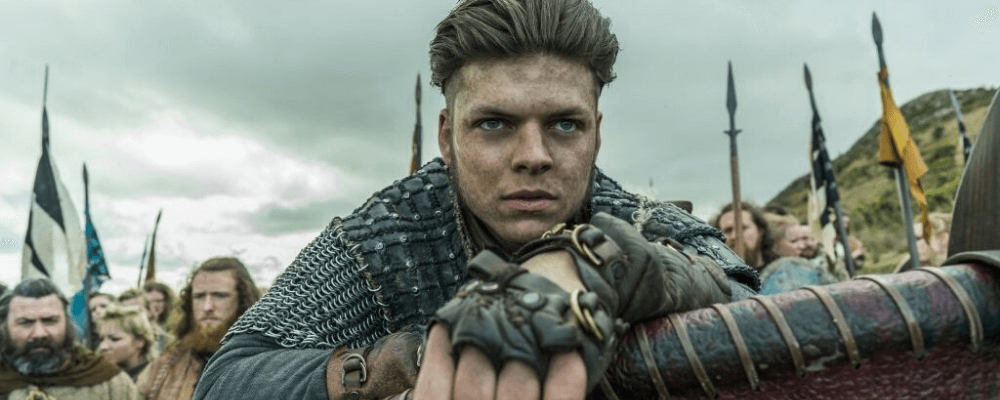
Ivar means “archer” and is most closely associated with Ivar the Boneless, one of the sons of Ragnar Lodbrok known for his intelligence and cunning. He was part of the Great Heathen Army that traveled to England. While his brothers were losing battles, he was making alliances and creating a foothold in York. From there, they killed Aella, the king of Northumbria responsible for Ragnar’s death. He then set himself up as king of York, and later Dublin. The name is synonymous with intelligence and cunning.
Knut
Knut (or Cnut) means “knot” and brings to mind the Valknut, the symbol for brave fallen warriors. The name also nods to Cnut the Great, who created the North Sea Empire, encompassing England, Denmark, and Norway.
Leif
Leif means “heir” and was the name of the son of Erik the Red, Leif Erikson, who discovered North America, followed his father as ruler of Greenland, and converted the Greenlanders to Christianity. It is the name for someone with a big and unconventional future.
Olaf
Olaf means “heir of the ancestors” and is a strong name for families who care about tradition. Olaf Tryggvason was an adventurous Viking who served as a mercenary in the east before returning to reclaim his birthright as king of Norway. He converted to Christianity after an encounter with a seeress and did much to convert his country. He died in mysterious circumstances and there were many sightings of him years after his death.
Ragnar
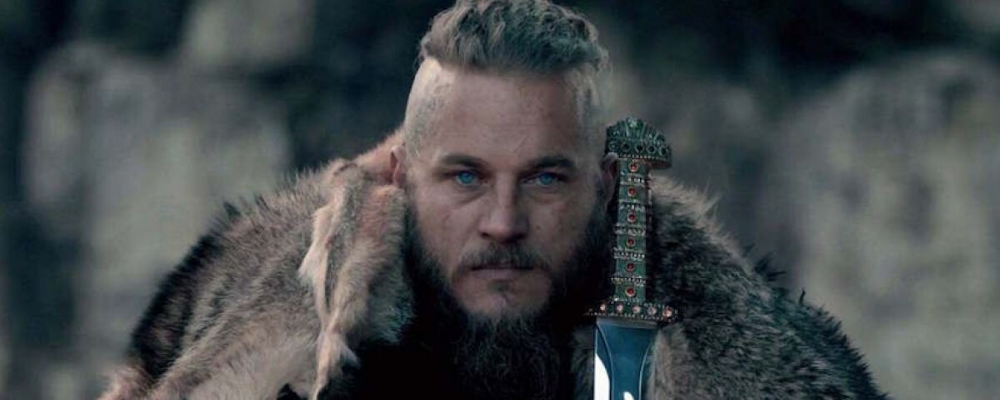
Ragnar is another Norse word for “warrior” (they had many) and is, of course, associated with Ragnar Lodbrok, the semi-legendary king of Denmark and Norway who was a legend in his own day, fighting dragon and raiding across the globe. He is famous today as the main character in the History Channel’s Vikings series.
Rollo
Rollow, meaning “famous wolf,” was the name of a famous Viking who raided across France, claiming the territory of Normandy. He was so powerful that the local French kings had to acknowledge his position, and he created the dynasty that would later invade England.
Sigurd
Sigurd means “victorious guardian” and was the name of another son od Ragnar, Sigurd Snake-in-the-Eye, who was born with an ominous mark on his eye. Sigurd was also the name of the famous dragon slayer in the Volsunga Saga who fell in love with a Valkyrie and possessed both a magical sword and a magical ring (that inspired the One Ring in Tolkien’s The Lord of the Rings).
Snorri
Snorri means “one who attacks” and was the name of Snorri Sturluson, the Icelandic author who recorded most of what we know about Norse mythology.
Swein
Swein, or Svein, means “squire” and was the name of Swein Forkbeard, who led several waves of raids on England after the St Brice’s Day Massacre and eventually made himself the first Viking king of England.
Thorsten
Thorsten means “Thor’s stone” and was a name given to sons in the hope that they would have the strength of the god Thor. One of Erik the Red’s sons who visited the New World was called Thorsten, as was an important Viking chief in 9th century Scotland.
Ulf
Ulf means “wolf,” and the name is recorded on a Swedish runestone from the 11th century. While Berserker warriors communed with the spirit of the bear before battle, Ulfhednar communed with the spirit of the wolf before battle to take on their power. Wolves were some of the most powerful creatures in Norse myth, from the villainous Fenrir to Odin’s companion wolves Geri (greedy) and Freki (ravenous). There were also two wolves that chased the sun and the moon, Skoll (treachery) and Hati (hate).
Divine Boy Names
Or maybe you want to name your son after one of the gods?
| Balder (bold) | A son of Odin, considered the best and most beautiful of the gods, unfortunately killed |
| Borr/Bur (son or born) | Son of Buri, the first of the gods, and father of Odin |
| Bragi (foremost) | A famous skald turned god when he died and was invited to be the poet of Asgard |
| Buri (producer) | The first god and the progenitor of all the gods |
| Forseti (presiding one | The god of justice who resolved the disputes of Asgard |
| Freyr (lord) | The Vanir god associated with fertility and good fortune |
| Heimdall (illuminating) | The watchman of Asgard with super senses to help him patrol the Rainbow Bifrost Bridge |
| Hermod (fury of war) | A messenger god often considered the equivalent of Hermes/Mercury |
| Hodr (warrior) | The blond god who accidentally killed his brother Balder under Loki’s influence |
| Hoenir (long-legged) | A charismatic god sent to rule the Vanir gods following a truce |
| Loki (lock) | The trickster giant who lives among the Aesir gods, creating problems, but also helping solve them |
| Magni (strength/might) | A son of Thor who matches his father in strength |
| Mani (moon) | Created by the sparks of Muspelheim, he pulls the moon across the sky in his chariot |
| Mimir (the rememberer) | The smartest of the gods whose disembodied head sits at the Well of Wisdom to provide wise counsel |
| Modi (bravery) | A son of Thor who will survive Ragnarok |
| Njord (power) | The Vanir god of the sea and prosperity |
| Odin (lord of frenzy) | “All-Father,” and chief god associated with war, wisdom, wandering, witchcraft, and writing |
| Thor (thunderer) | The god of thunder considered the strongest of the gods and the ideal warrior |
| Tyr (deity) | God of war and leader of the gods before Odin, he was the only god brave enough to sacrifice his hand to imprison Fenrir |
| Ullr (glory/splendor) | The god of winter who also holds men to their oaths |
| Vali (little warrior) | A son of Odin with the giantess Rindr who grew to manhood in a single day to avenge the death of Balder |
| Vidar (wide warrior) | The silent god associated with strength and vengeance as he will avenge the death of his father Odin |
Other Ideas
Here are a few other names inspired by words in the Old Norse language and less common Norse names
- Ari – Eagle
- Arvid – Eagle Tree
- Asmund – Divine Protection
- Atli – Little Father
- Bjarni – Little Bear
- Einar – One Warrior
- Erling – Descendant of the Jarl
- Eskil – Divine Cauldron
- Finn – Person from Finland
- Floki – Hairy or Tuft of Wool
- Grim – Masked One
- Gorm – He who worships God
- Hallvard – Rock Guardian
- Hrafn – Raven
- Hrolf – Famous Wolf
- Hrut – Ram
- Jarl – Leader
- Kari – Curly Hair or Wind
- Kolbeinn – Coal-Leg
- Odd – Point of a Sword
- Orm – Serpent or Dragon
- Sten – Stone
- Sturla – One who distributes
- Thorarin – Heart of Thor
- Trygve – Trustworthy
- Vermund – Humen Protection
- Viggo – War
Find the Perfect Mjolnir Pendant
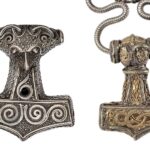
The Vikings wore Mjolnir pendants as symbols of divine protection, as Thor protected the people of Asgard and Midgard with his mighty hammer, Mjolnir. Have you thought about getting a Mjolnir pendant for your little one? Here are some of our top picks from the VKNG collection. These are all inspired by genuine Mjolnir pendants found during archaeological excavations.