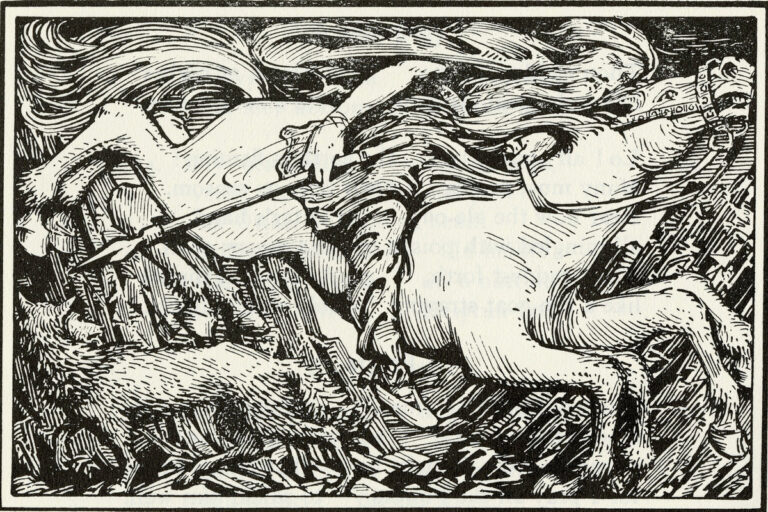
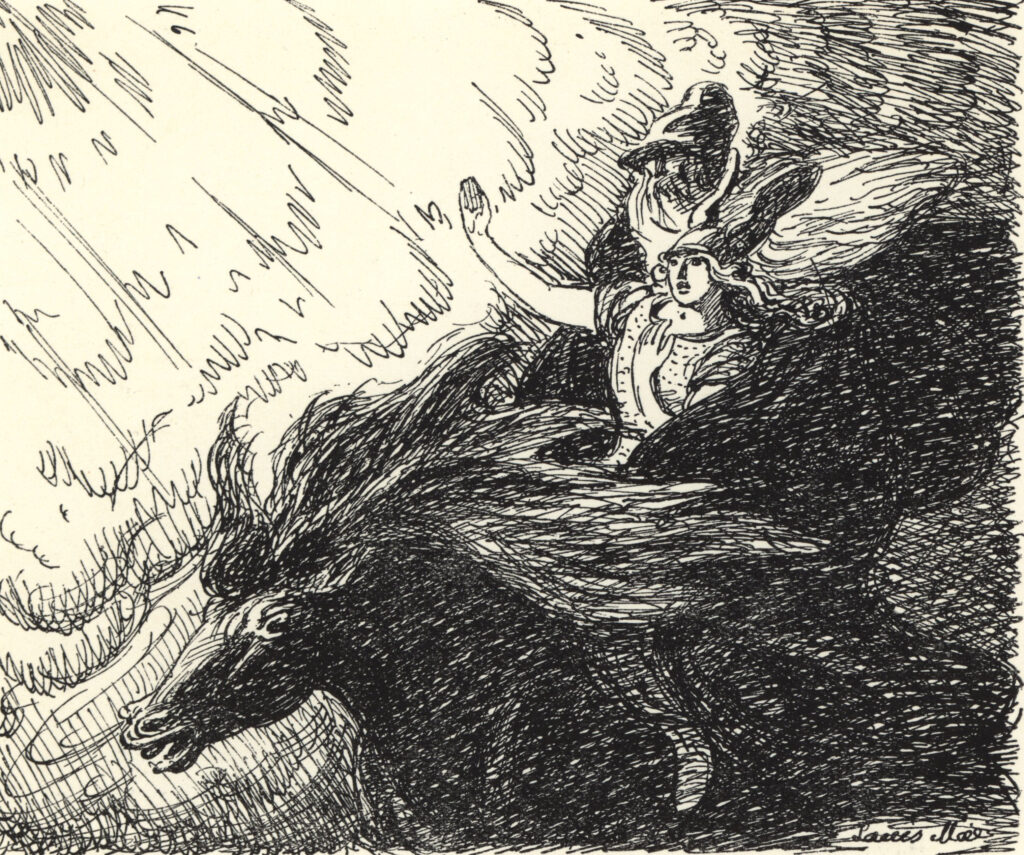
Title image: Hermodr riding Odin’s steed Sleipnir to Helheim, by W.G. Collingwood 1908. Source: University of Victoria, Canada
Before the rise of the motor vehicle, horses played an essential role in shaping human civilization. Horses were essential for everything from transportation to warfare. Viking society was no exception. Horses were functional tools, status symbols, and beloved companions. They also played a central role in Norse mythology and Viking belief. Horses were often included in sacrifices and burials.
While horses in general were important, the most famous and important horse in the Norse world was Sleipnir, the eight-legged steed of Odin. As well as being one of the animals most often depicted in the Norse world, he was considered the best of all horses and had very unusual origins.
Who is Sleipnir, Odin’s Eight-Legged Horse?
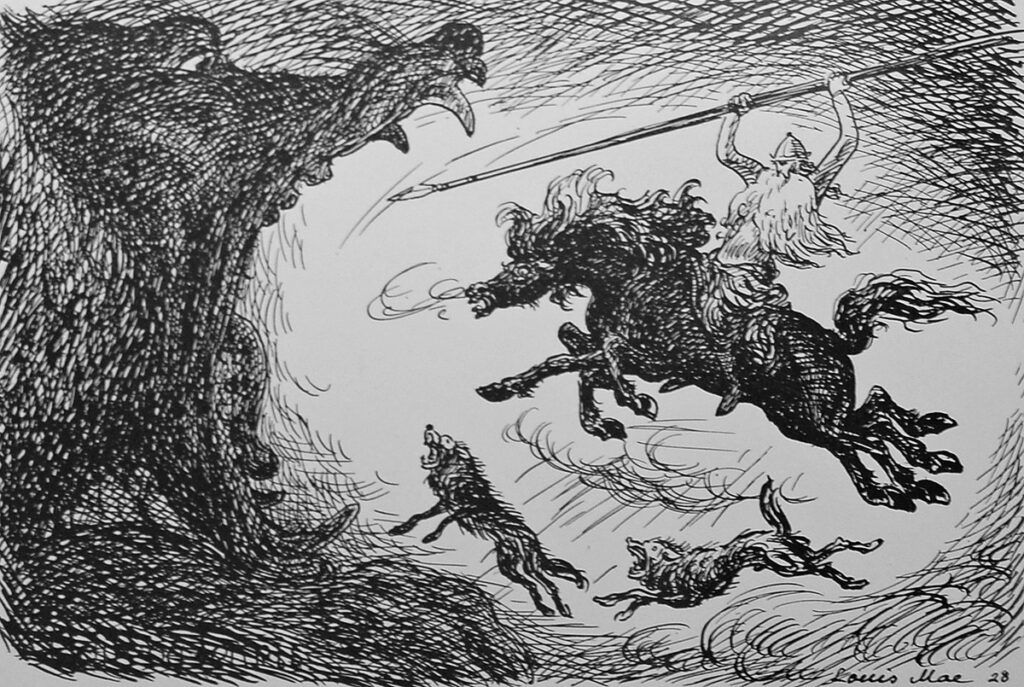
Sleipnir, whose name means “slipper” in Old Norse, is Odin’s steed. Called the “best of all horses,” he is often, but not always, described as having eight legs, which helps account for his speed and power.
In Norse mythology, Odin, the All-Father and principal Norse deity, has several animal familiars. He was accompanied by his ravens Huginn (thought) and Muninn (memory), as well as his wolves Geri (greedy) and Freki (ravenous). But Sleipnir is probably his most famous.
Sleipnir’s coat is grey like a stormy sky, while its tail and mane reflect a darker grey. He is swifter than the wind when he gallops over the sea. According to the Sigrdrífumál, Sleipnir had runes engraved on his teeth.
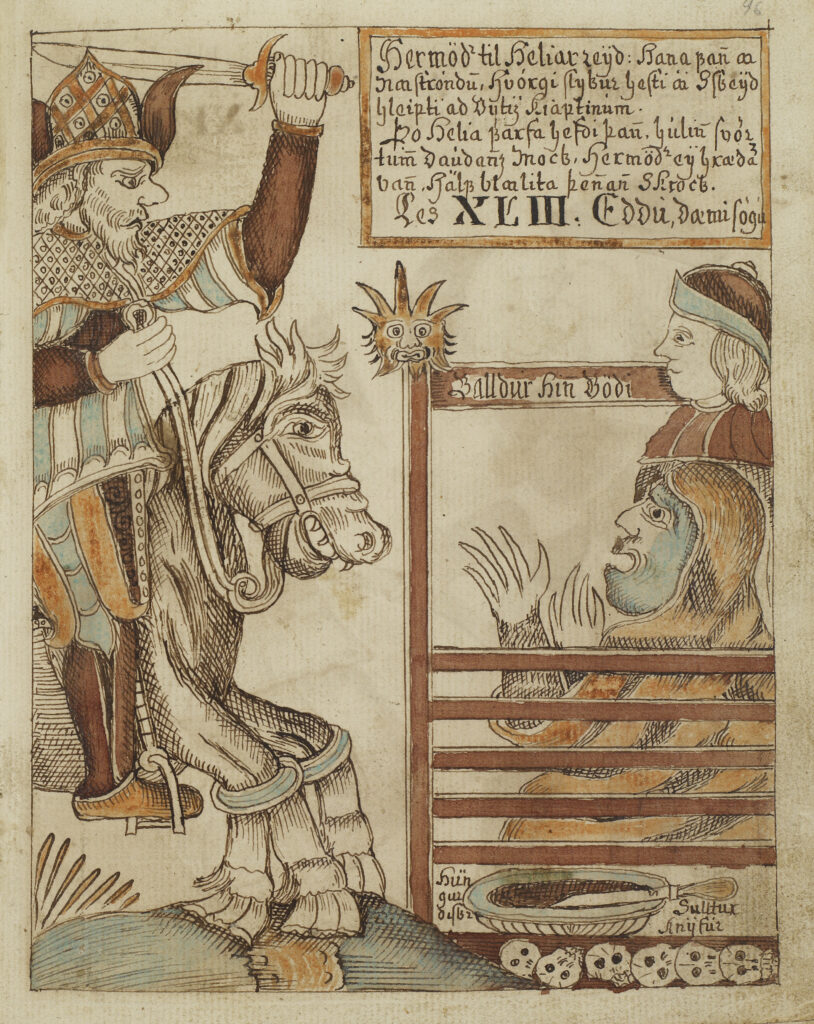
Sleipnir had the ability to move between the worlds of the Norse cosmos. Therefore, when the gods sent Hermoddr to Helheim to treat with Hel for the life of Baldr, Sleipnir was summoned to carry him there. The horse was easily able to jump over the high walls that surrounded the underworld.
Odin himself once rode Sleipnir to Jotunheim, where he met the giant Hrungnir. He was impressed by Sleipnir, but claimed that his own horse, Gullfaxi, was even better. The two raced back to Asgard, with Odin and Sleipnir easily winning.
According to the Volsunga saga, Odin gave the hero Sigurd an excellent horse, Grani, who was a descendant of Sleipnir.
According to the Ragnarok prophecy, Odin will ride his steed, presumably Sleipnir, into the final battle of Ragnarok. However, Sleipnir, and horses in general, are more closely associated with transport than battle. Ships were sometimes called “sea-Sleipnir,” suggesting that his main value lay in his ability to carry his rider to far-flung places.
Where Does Sleipnir Come From?
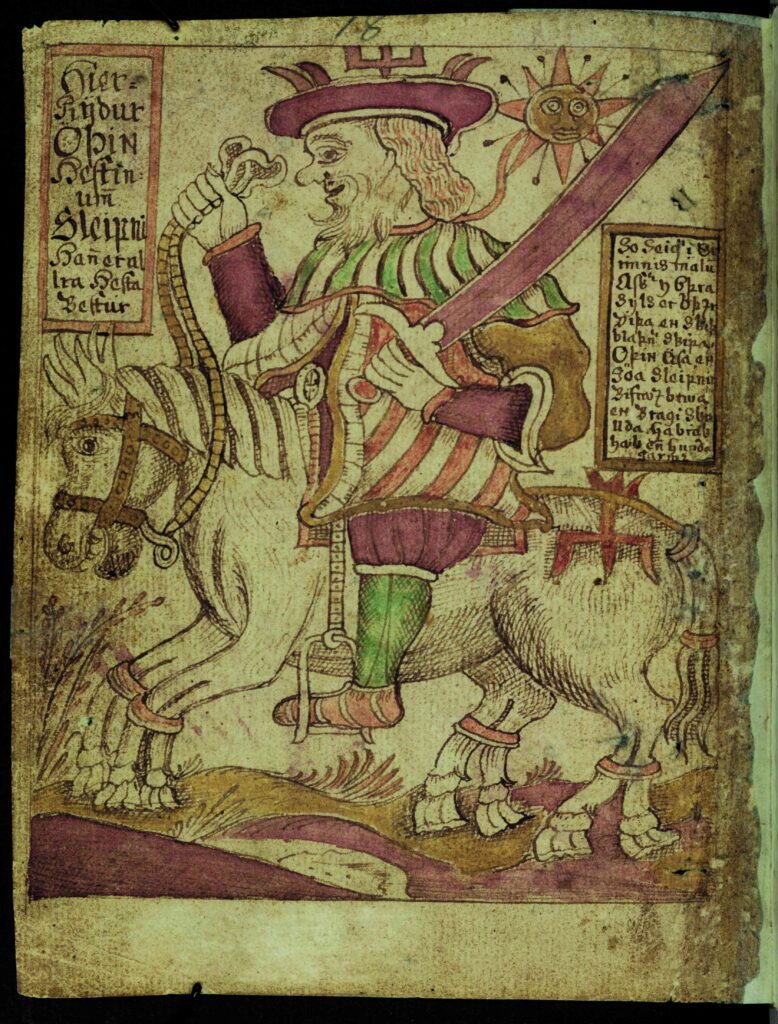
Sleipnir stands out in Norse mythology for his unusual origin story. He is one of the many children of Loki, but the trickster is his mother, not his father.
According to the story recorded in the Gylfaginning, in the early days when the nine worlds of the Norse cosmos were just being created, Asgard, the realm of the Aesir gods, did not yet have the mighty fortifications that surrounded it.
The gods were approached by an unnamed builder, who offered to create magnificent fortifications for the home of the Aesir gods. In return, he wanted the hand of the goddess Freyja in marriage, as well as the sun and the moon.
The gods were ready to reject the offer due to the ridiculously high price, but Loki convinced them to reconsider. He suggested that they trick the builder by making the task impossible. This would allow them to get their walls without paying anything.
The gods told the builder that they would pay the price on the condition that the builder completed the work within three seasons and with the help of no man. The Builder agreed on the condition that he could have the help of his horse, Svadilfari. A deal was struck.
With the help of Svadilfari, the builder made amazing progress. As the deadline drew near, it seemed that he would indeed complete the work. Unwilling to pay the agreed price and blaming Loki for putting them in this situation, the Aesir gods demanded that Loki rectify the problem.
Loki turned himself into a magnificent mare and used his charms to distract Svadilfari. Without the help of his horse, the builder was unable to complete the work on time.
Not only did the Aesir gods cheat the builder so that they would not have to pay his price, but when they discovered that the builder was a Jotun (giant), they summoned Thor to kill him with his hammer.
Loki, meanwhile, found himself impregnated by Svadilfari, and in due course became the mother of the eight-legged horse Sleipnir. He gifted the horse to Odin as his steed.
What Does Sleipnir Look Like?
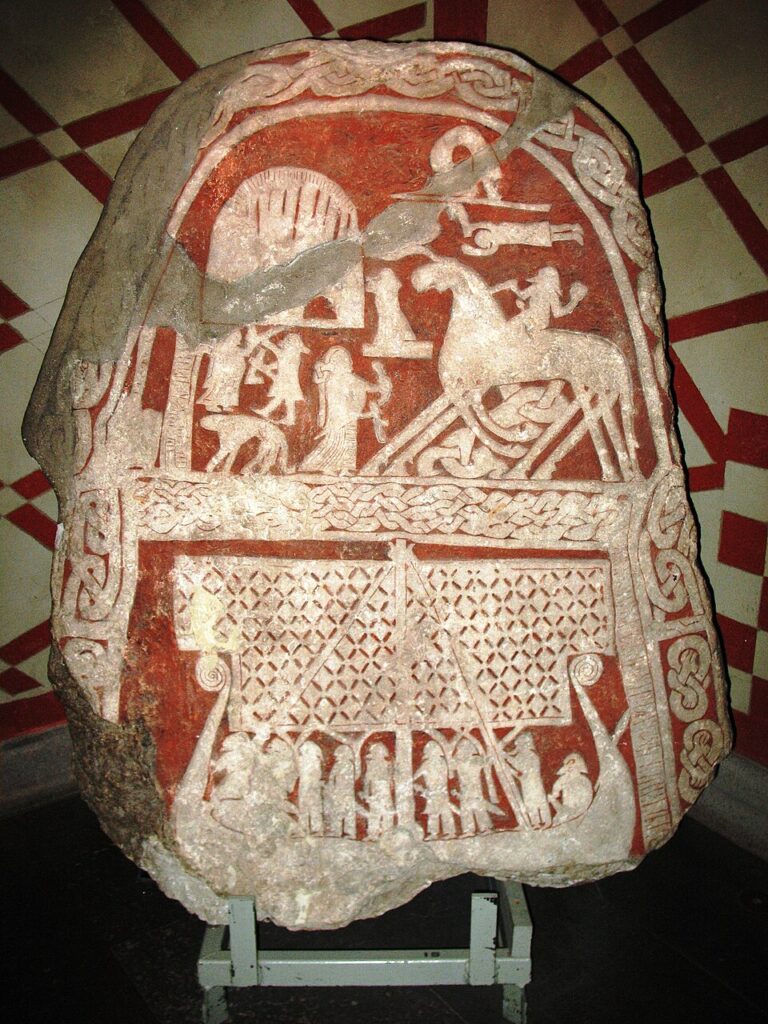
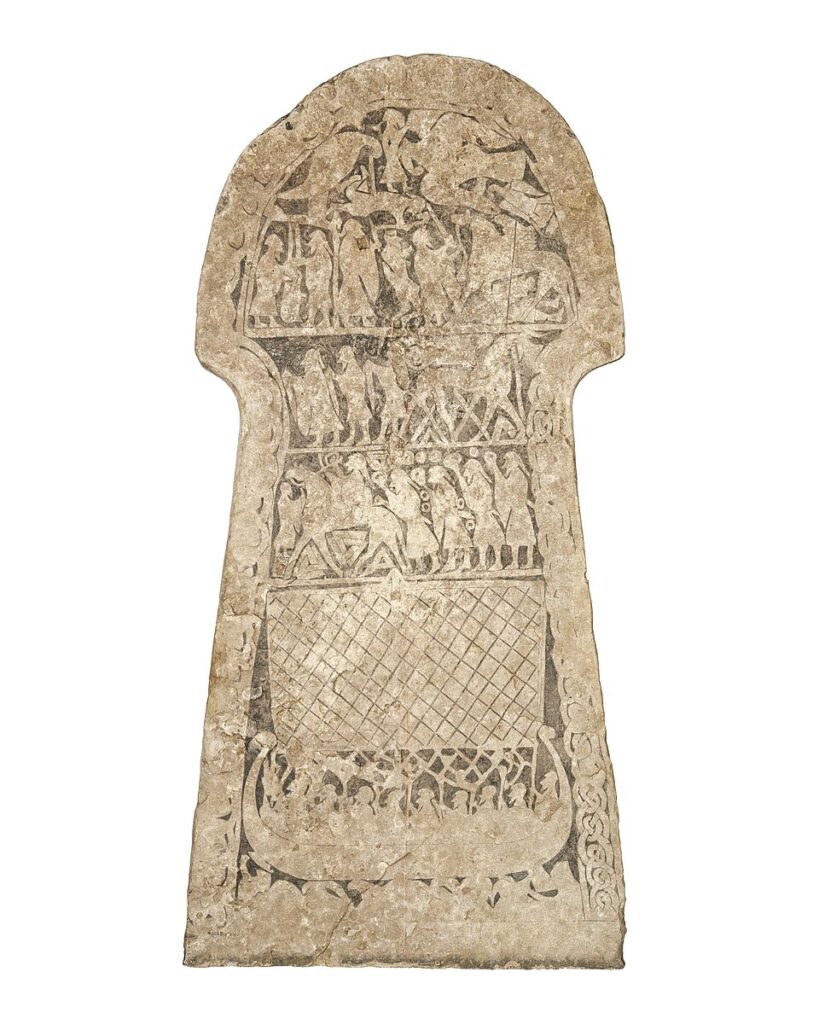
A number of runestones depict a horse with eight legs, which must be Sleipnir. Dating from the 8th century, the Tjangvide Runestone and the Ardre VIII stone, both from Sweden, show a rider on an eight-legged horse.
It is also interesting that on these runestone depictions, Sleipnir often appears alongside ships. In the sagas, even mere mortal horses are often described as being able to travel over water. For example, in the Landnamanok, Fluga, the first horse mentioned in the book, swims to Iceland after jumping overboard. She was assumed dead, but was found and became the fastest horse in Iceland. However, the horse did later die tragically from drowning in a bog.
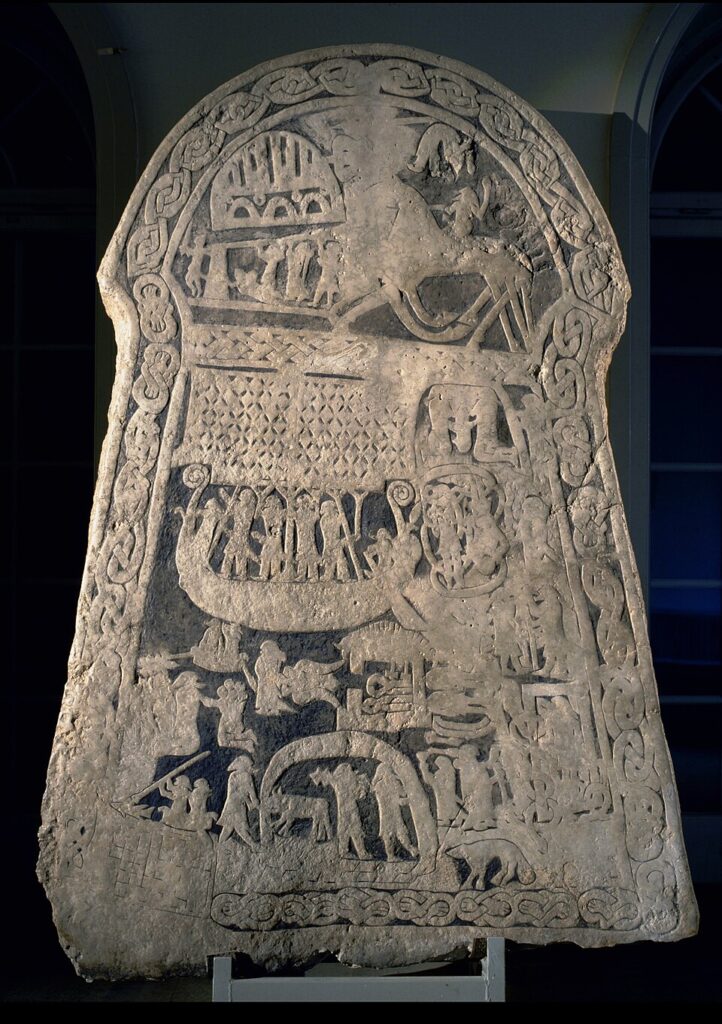
But then the Tängelgårda Runestone, also from Gotland, shows several men on horseback, one with eight legs and the other two with four legs. But they almost certainly all meant to be Odin. This could suggest that the eight-legs was not canonical, or that they were hard to depict.
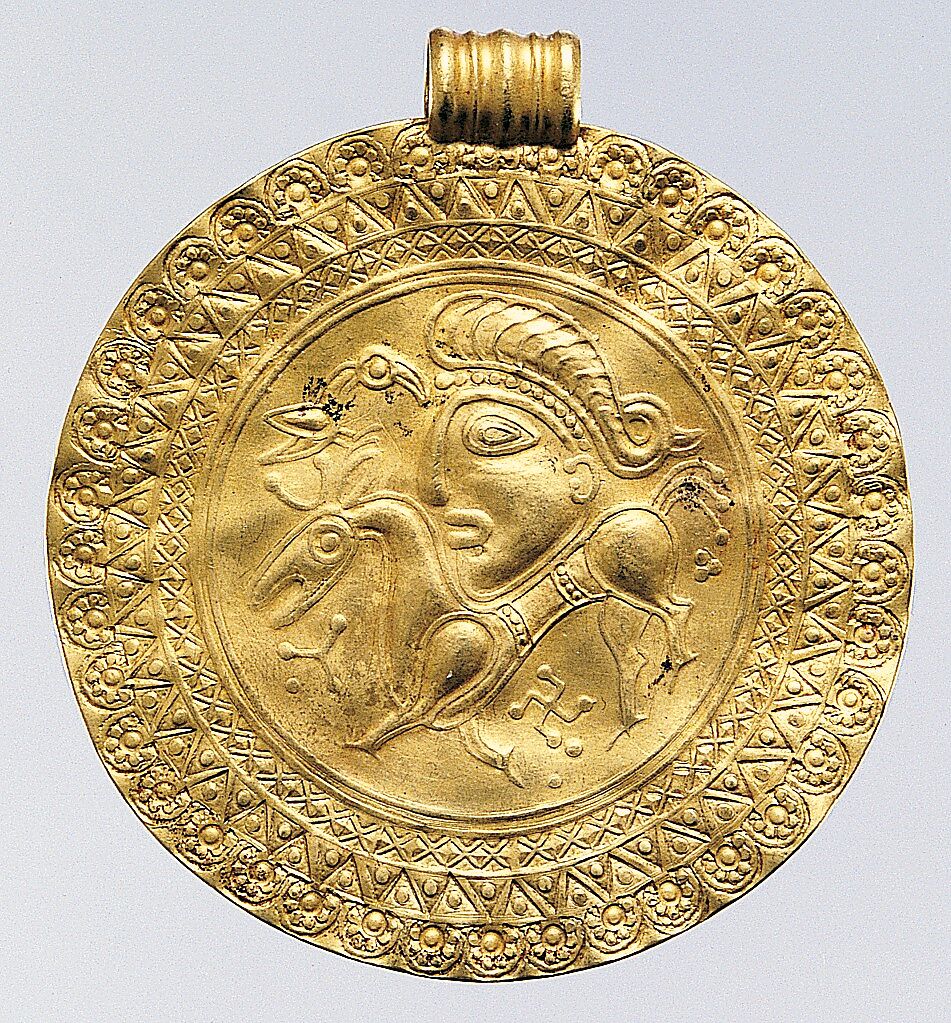
Odin also appears on horseback on several gold bracteates from just before the Viking era, always with just four legs. This suggests that the idea of an eight-legged steed might be one that developed over time.
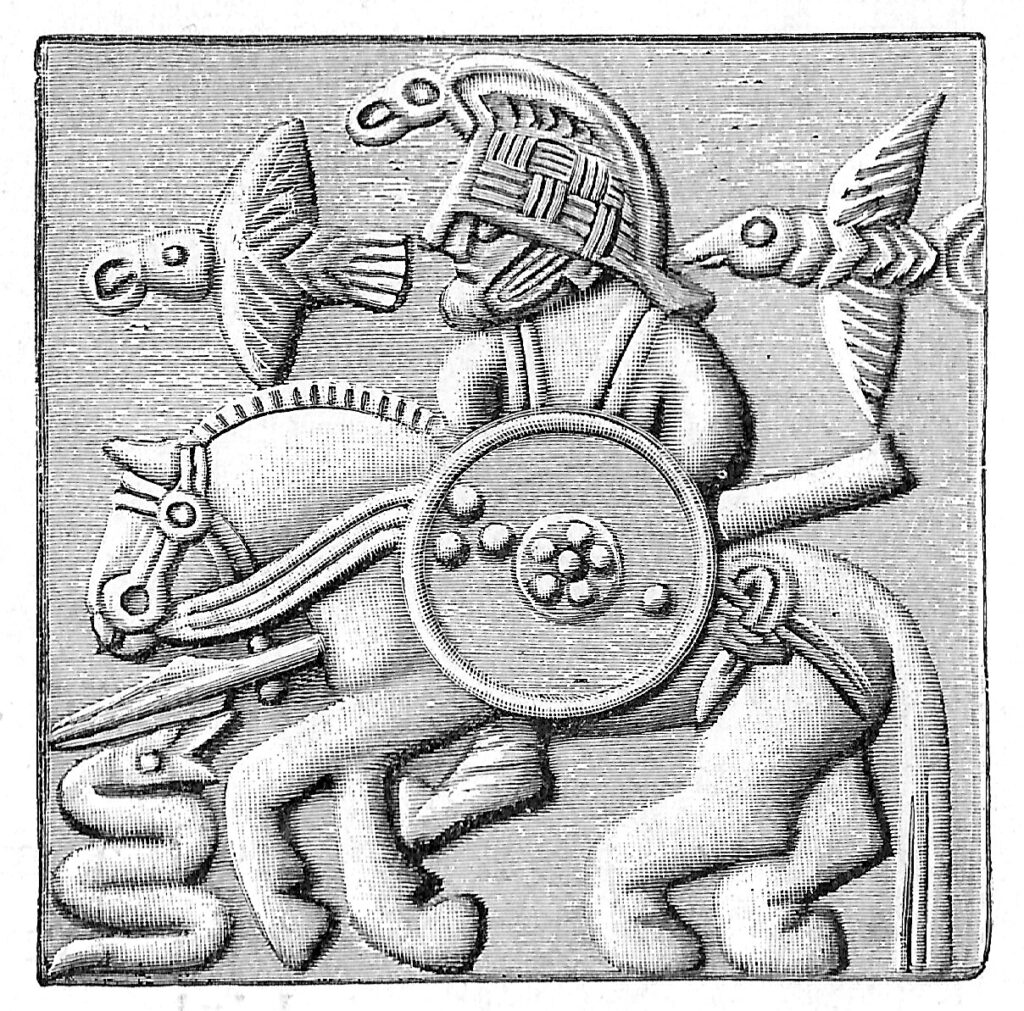
A helmet plate from the same period shows Odin on horseback, and the horse has four legs. But the fact that the man holds a spear and is accompanied by ravens indicates that this must be Odin.
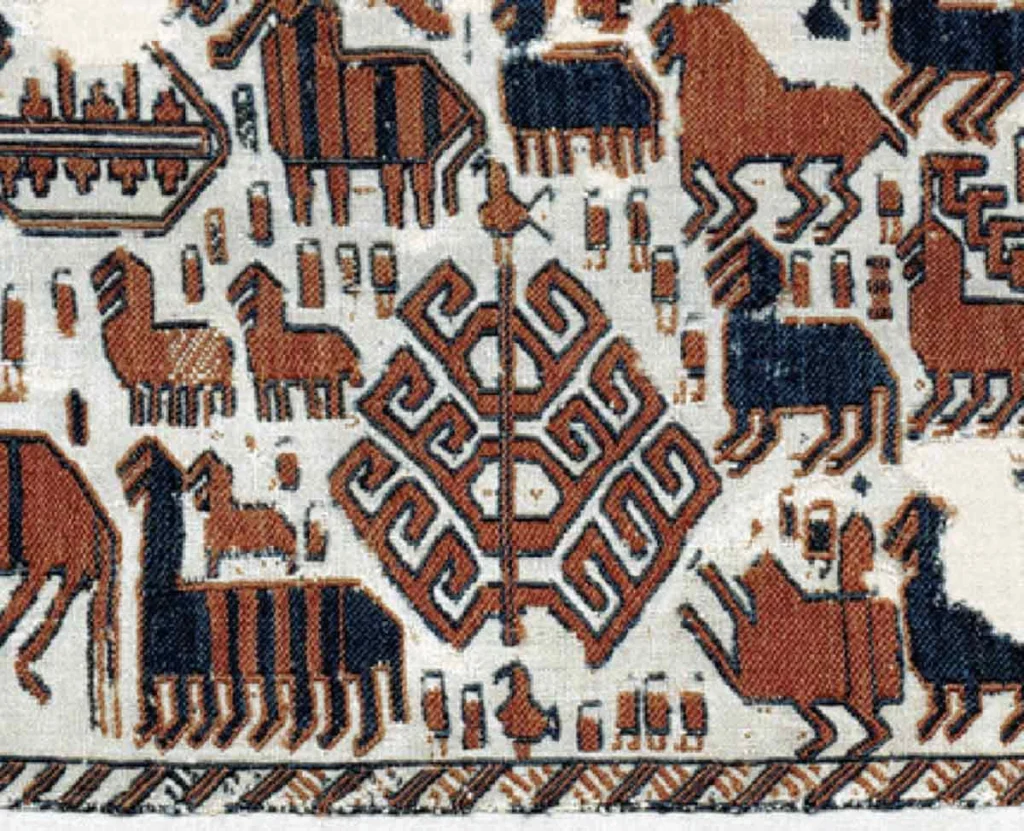
Sleipnir also appears on the 12th-century Overhogdal tapestry found in Sweden. The multi-legged animal that appears alongside a tree must be Sleipnir, standing near Yggdrasil, the backbone of the cosmos that Odin’s steed traveled with ease.
Sleipnir is also thought to have left his imprint on the world of men, with Icelandic folklore attributing the creation of the Asbyrgi, a horseshoe-shaped glacial canyon in the north of Iceland, to Sleipnir.
What Role Did Horses Play in Norse Society?
Horses were often used in sacrifices because they were so respected, which gave them a level of sacredness. The Norse also believed that horses could carry messages from the mortal realm to the gods.
When horses were sacrificed, their blood was then sometimes used to tell the future, and then the horse meat feasted upon (Heimskringla 16). Eating horse meat was one practice outlawed when Iceland converted to Christianity because of its association with paganism.
Horses were often buried with the dead, accompanying them into the next life and helping them find their way in Valhalla. The Valkyries were said to carry the bravest fallen dead from the battlefield to Valhalla on horseback (Voluspa 30.13). There is also the suggestion that the warriors, the Einherjar, need their horses there, as after spending the day fighting, the Gylfaginning (41.54) says that “they ride home to Valhalla and sit down to drink.”
According to the story of Baldr’s funeral in the Gylfaginning (49.45-46), his body was laid in the ship Hringhorn along with his fully harnessed horse, and they were burned together and pushed out to sea. There is archaeological evidence for ship burials containing horses from Gokstad and Oseberg, suggesting that this mythical scene was based on real practice. In Iceland alone, 48 graves have been found with horses.
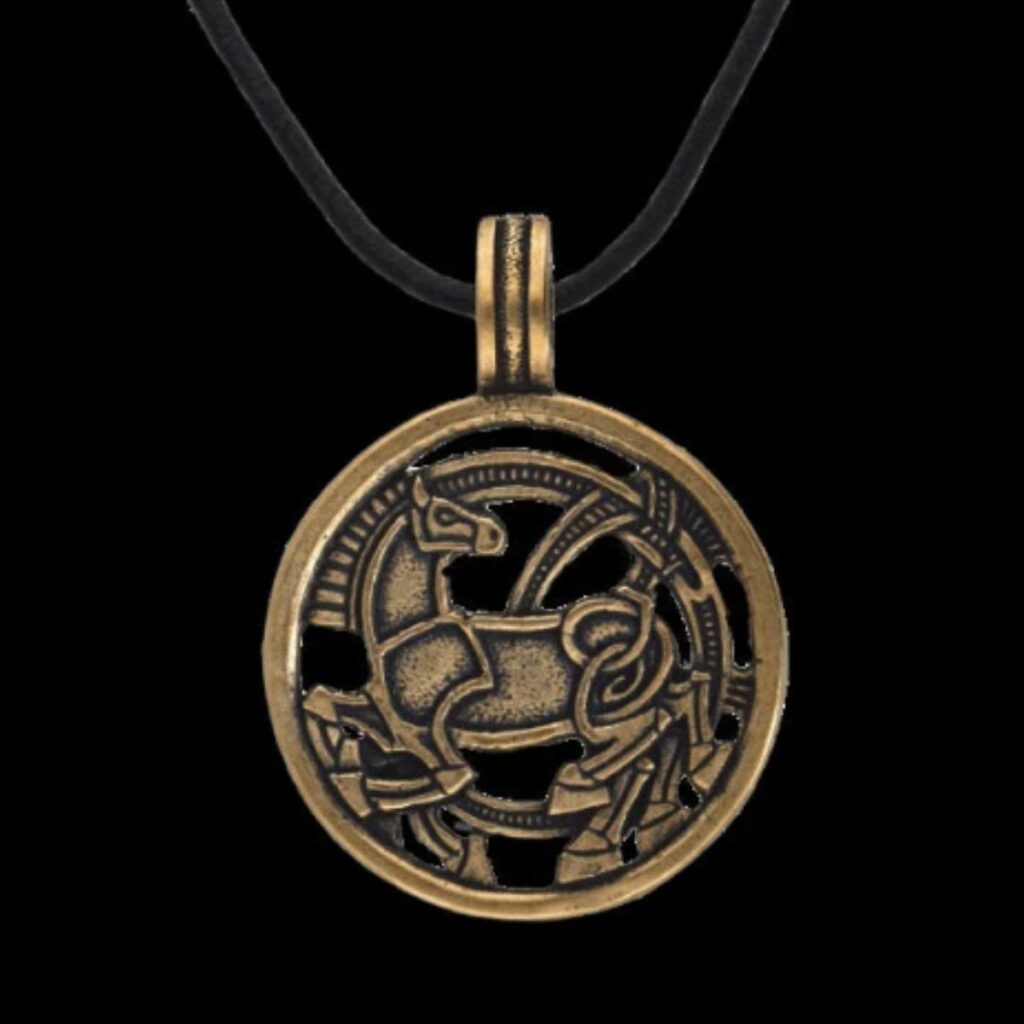
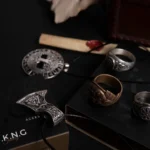
Find pieces inspired by Sleipnir in the VKNG store. Check out some of our top picks below.
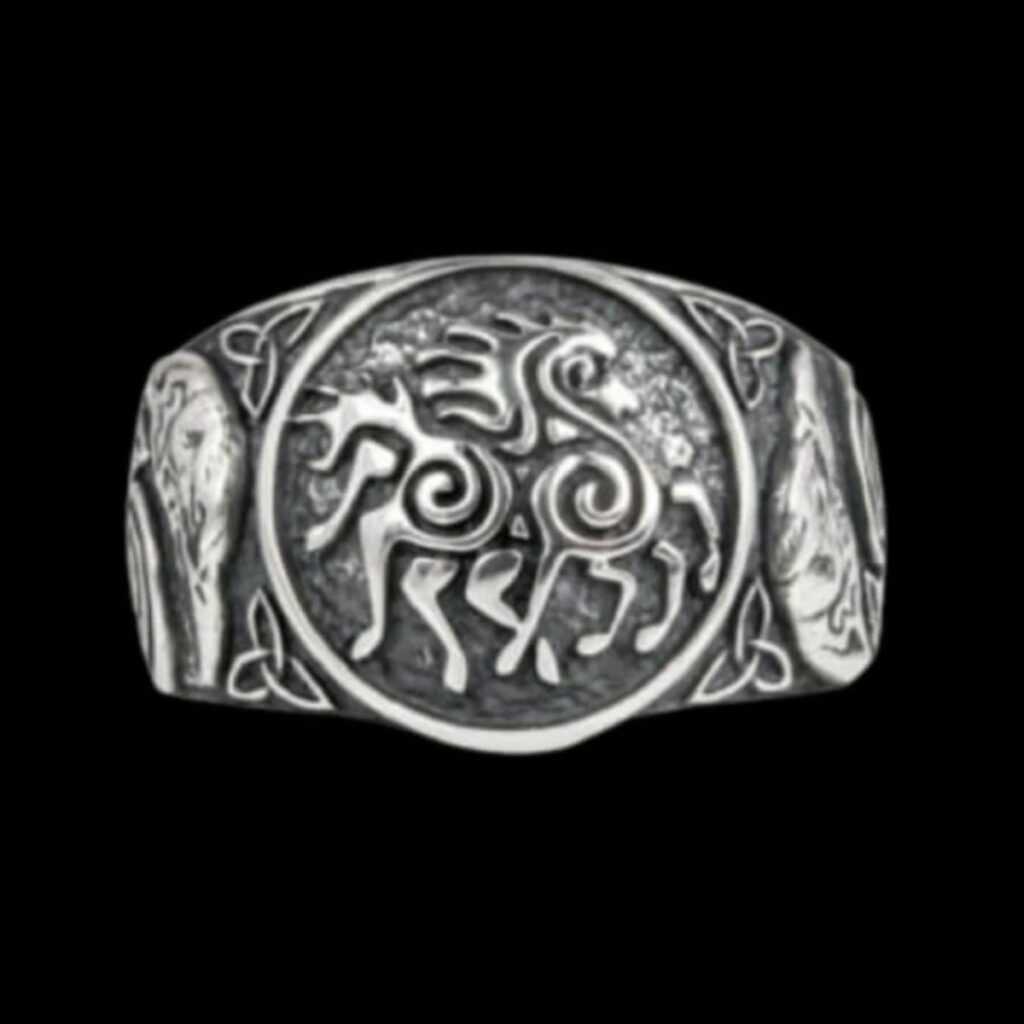
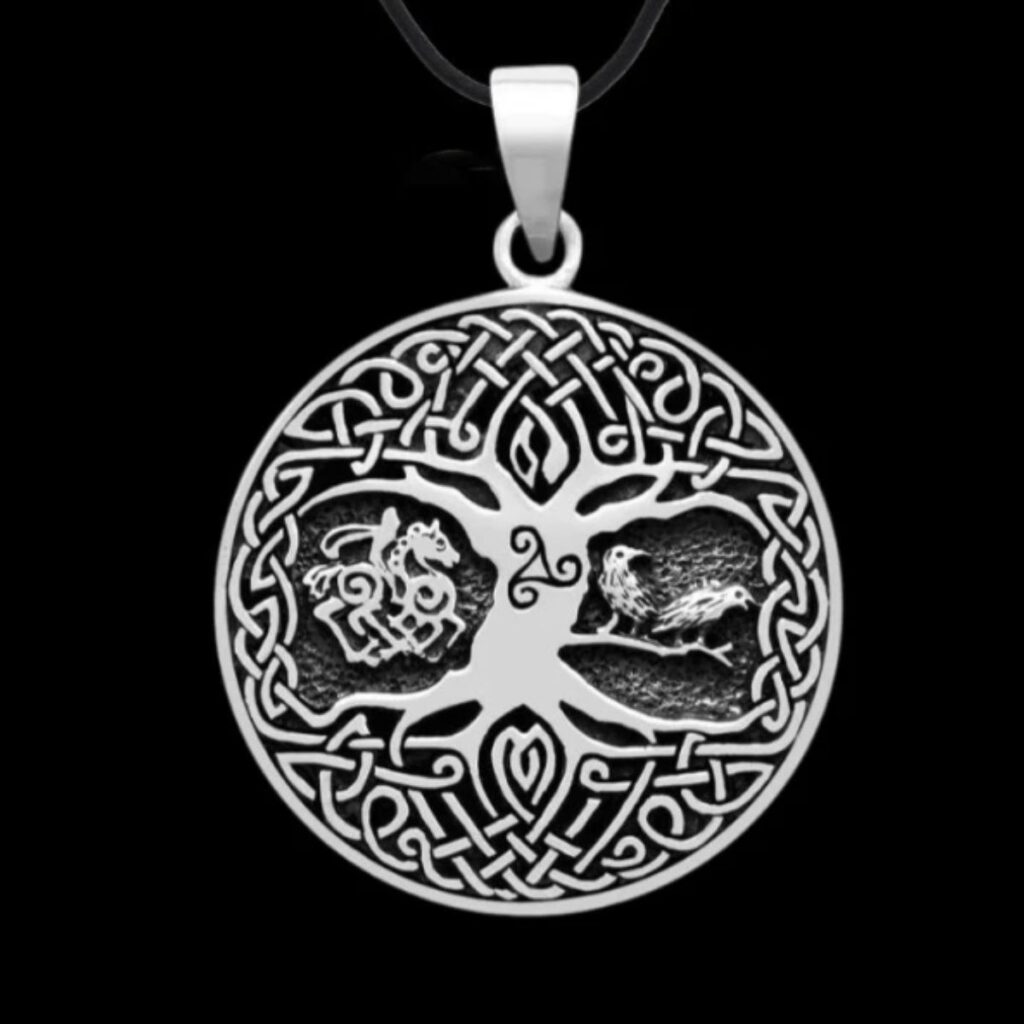
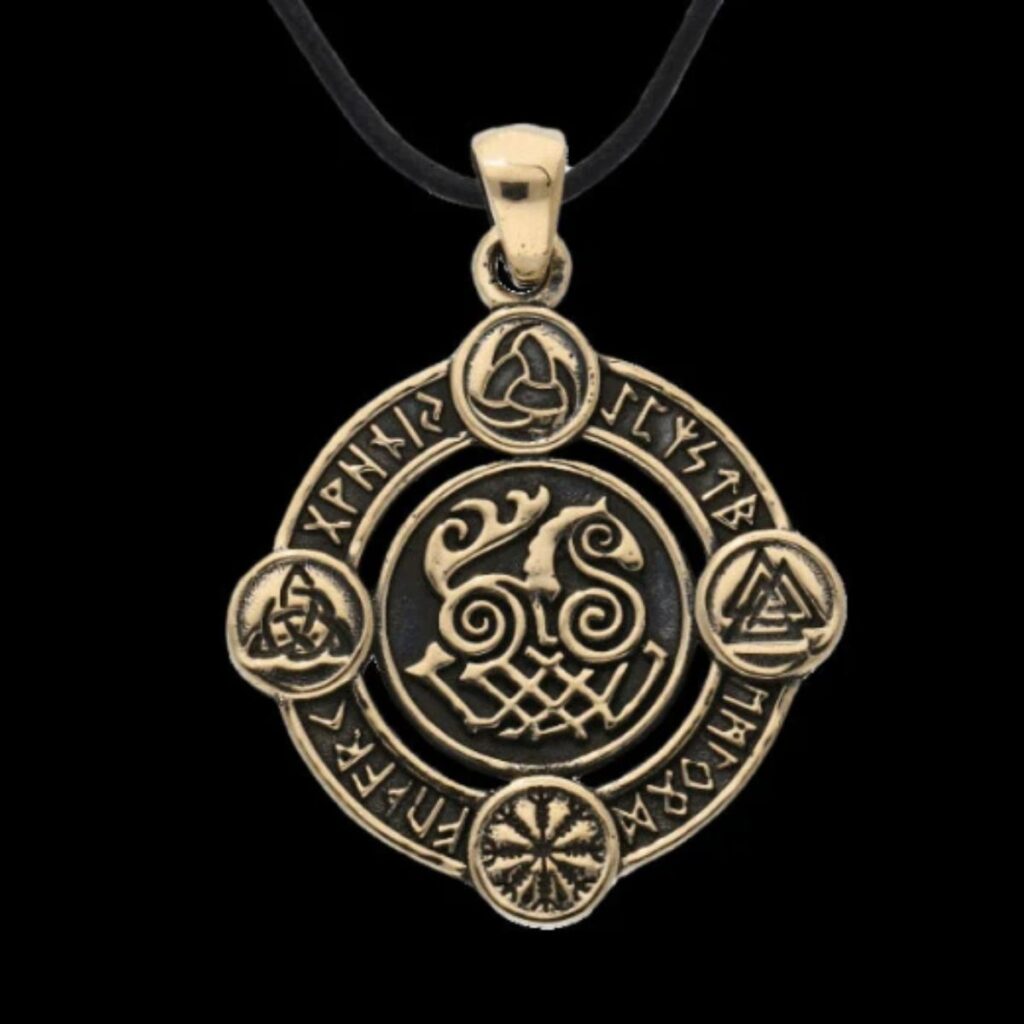
Other Norse Horses

Many other horses make an appearance in Norse mythology. Below is a quick summary of the most important Norse horses.
| Name | Owner | Primary Source(s) | Characteristics |
| Sleipnir | Odin | Prose Edda, Poetic Edda | The eight-legged son of Loki; the “best of all horses.” |
| Svaðilfari | The Giant Builder | Prose Edda (Gylfaginning) | The incredibly strong stallion that sired Sleipnir with Loki. |
| Skinfaxi | Dagr (Day) | Poetic Edda, Prose Edda | His mane glows so brightly it illuminates the sky and earth. |
| Hrímfaxi | Nótt (Night) | Poetic Edda, Prose Edda | The foam from his bit creates the “dew” in the valleys each morning. |
| Arvakr | Sol (The Sun) | Poetic Edda, Prose Edda | “Early Waker”; one of two horses pulling the Sun’s chariot. |
| Alsviðr | Sol (The Sun) | Poetic Edda, Prose Edda | “Very Swift”; the second horse pulling the Sun’s chariot. |
| Gulltoppr | Heimdallr | Prose Edda, Poetic Edda | A horse with a “golden mane,” ridden by the watchman of the gods. |
| Gullfaxi | Hrungnir (later Magni) | Prose Edda (Skáldskaparmál) | “Golden Mane”; Thor’s son Magni inherited him after Thor killed the giant Hrungnir. |
| Grani | Sigurd | Volsunga Saga, Poetic Edda | A descendant of Sleipnir; the only horse brave enough to cross the fire for Brynhild. |
| Blóðughófi | Freyr | Poetic Edda (Skírnismál) | “Bloody Hoof”; described as a horse that can run through fire. |
| Hófvarpnir | Gná | Prose Edda (Gylfaginning) | Ridden by Frigg’s messenger; he can run through air and over water. |
| Glaðr, Gyllir, Glær, Skeiðbrimir, Silfrtoppr, Sinir, Gils, Falhófnir, Gulltoppr, and Léttfeti | The Gods | Gylfaginning 15, Grímnismál 30.76 | The horses the Æsir ride to their council across the Bifrost Bridge, with Odin and Sleipnir and Thor the only god able to walk. |
| Freyfaxi | Hrafnkell | Hrafnkels Saga | A stallion dedicated to the god Freyr; the protagonist swore to kill anyone who rode him. |

Can I just say what a relief to find somebody who truly knows what they’re discussing on the internet.
You certainly know how to bring an issue to light
and make it important. A lot more people have to check this out and understand this side of your story.
I can’t believe you’re not more popular given that
you definitely have the gift.
This is a great tip especially to those new to the blogosphere.
Simple but very precise info… Thank you for sharing this one.
A must read post!
Hi would you mind stating which blog platform you’re working with?
I’m looking to start my own blog in the near future but I’m having
a hard time deciding between BlogEngine/Wordpress/B2evolution and Drupal.
The reason I ask is because your design and style seems different then most blogs and I’m looking for something completely unique.
P.S My apologies for being off-topic but I had to ask!
No problem at all. We are on wordpress, but with some professional design help.
Hey there! I’ve been following your website for some time
now and finally got the bravery to go ahead and give you a shout
out from Atascocita Texas! Just wanted to mention keep up the great job!