All cultures have stories about how the world came to be. In the Viking world, the story was as violent and bloody as the culture itself. The Norse creation myth sees fire and ice combine in the void to create life, which was then forcibly shaped by the gods as they started their ongoing conflict with the giants that will only end at Ragnarok.
The Void of Ginnungagap and the Collision of Fire and Ice
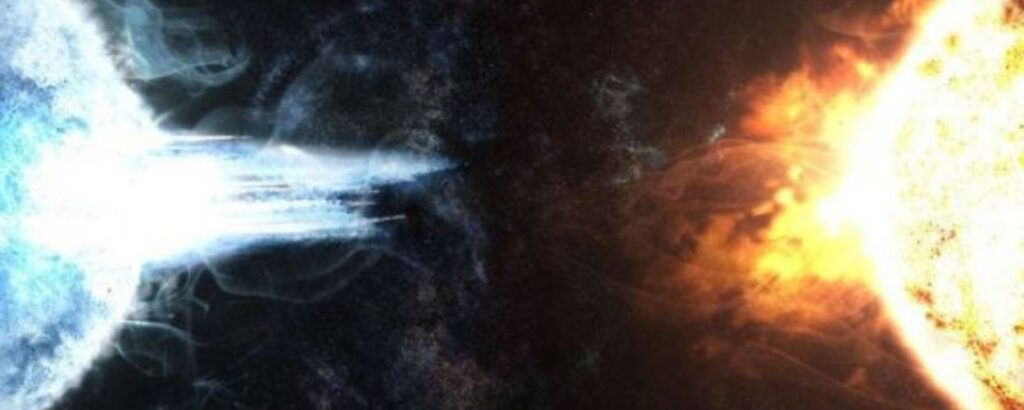
In the beginning, the universe is a vast primordial void called the Ginnungagap. The Völuspá says, “That was the age when nothing was; there was no sand, nor sea, nor cool waves, no earth nor sky, no grass there, only Ginnungagap” (stanza 3).
But while the void was large, it was not without limits. At the south end of the void, which is the top, is Muspelheim, a world of fire and steam. At the north end of the void, the bottom, is Niflheim, a realm of ice and mist.
Over time, heat from Muspelheim and cold mist from Niflheim leached into the void. These mixed in the void and eventually created a kind of primordial goop. It was from this goop that initial life emerged.
Life Emerges From the Thawing Frost
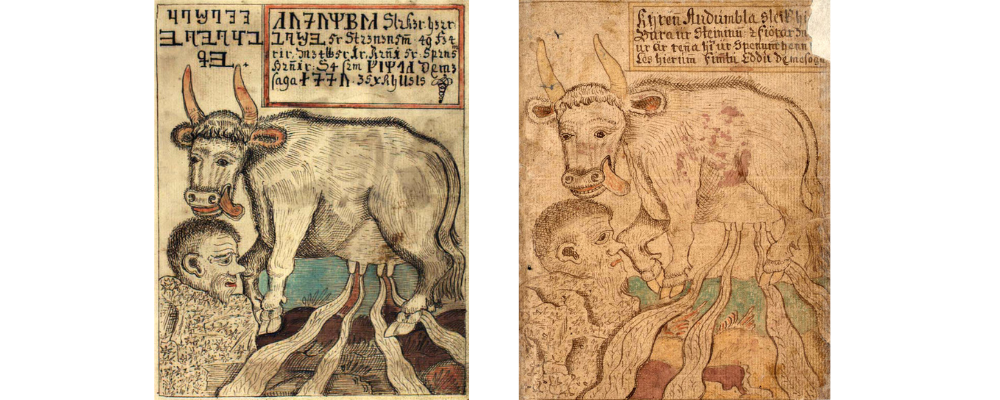
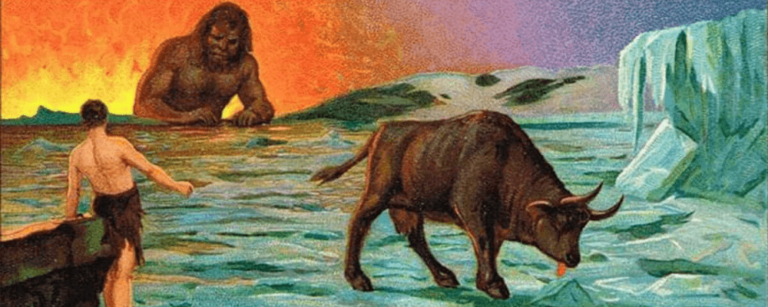
Perhaps the first identity to emerge from the goop was the primordial cow Audhumla. She fed herself on salt lick that was also created by the goop. At around the same time, the primordial giant Ymir also emerged.
Ymir means “screamer” in Old Norse. He is also known variously as Aurgelmir, which means “sand or gravel screamer,” Brimir, which means “blood moisture,” and Blainn, the meaning of which is unknown. Ymir fed itself by drinking the milk produced by Audumla.
Not long after, Audumla licked the first god, Buri, out of the salt lick.
While we don’t hear much more about Audumla, Ymir and Buri become the source of much of life. Ymir produces asexually, with further giants jumping forth from his armpits. He also produces a variety of other monsters. A six-headed creature is described as springing from his legs. The dwarves are also later described as being created from the body of Ymir.
Buri seems to have produced the old-fashioned way and probably mated with a giantess to produce his son Bor. His son mated with the giantess Bestla to have three sons, Odin, Vili, and Ve.
The Slaying of Ymir and the Blood Flood
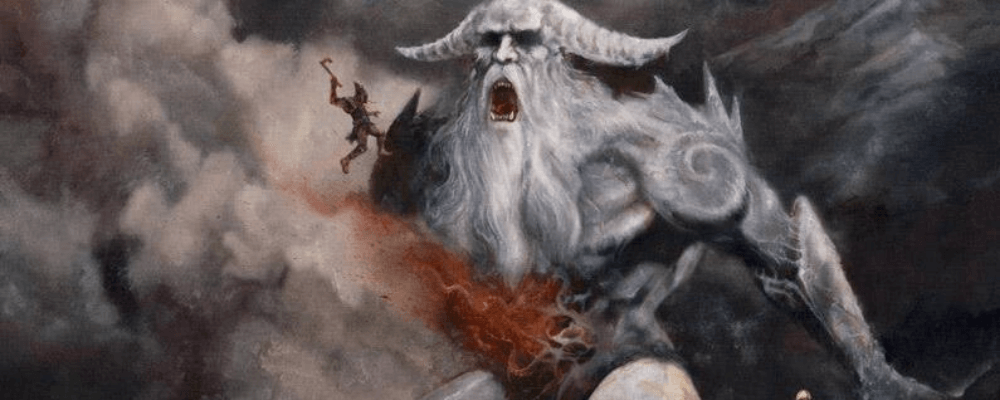
Because Ymir could reproduce so much faster than the gods, giants soon outnumbered the gods. This was a growing concern for Odin and his brothers, so they killed Ymir. This flooded much of existence with blood, which killed many of Ymir’s children and evened up the balance between gods and giants.
In Snorri Sturluson’s version of this story, he says that Ymir’s body expelled so much blood that it killed all the giants, with the exception of one, who saved himself by building an ark for himself and his family.
This part of the story is problematic and is probably the author trying to square the Norse creation myth with his own Christian stories.
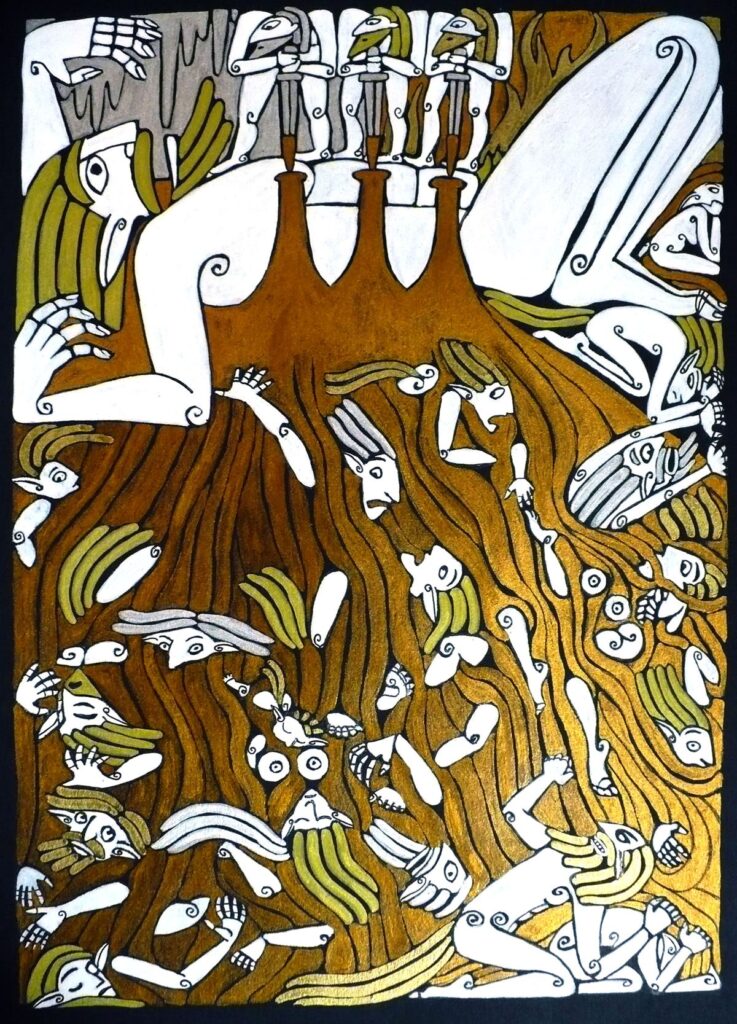
According to the Poetic Edda, Odin asks the wise giant Vafthrudnir if he can name the oldest of Ymir’s kin. He responds that it is Bergelmir, who was Thrudgelmir’s son and Aurgelmir’s grandson.
This would then seem to make Bergelmir the “Noah” figure, the giant that survived the bloody flood. But, while this story suggests that the first generation of Ymir’s offspring were wiped out in some way, it does not suggest that Bergelmir was the only survivor of some cataclysmic event.
The Gods Created Midgard and Created Mankind
The brothers then used the body of Ymir to create “the Earth”, which basically seems to be Midgard, the realm of men, and perhaps other worlds that existed around the world tree Yggdrasil.
It is said that his blood became the sea, his body and bones the earth and mountains, and his skull was hung over the new world as the sky. Odin and his brothers also took sparks and flashes from Muspelheim and placed them within Ymir’s skull to create the stars, and used Ymir’s brain to create the clouds.
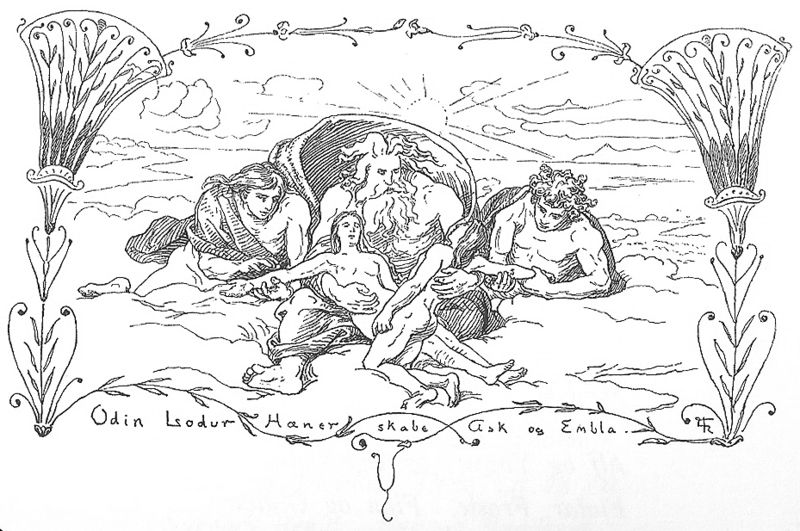
At this point, Odin and his brothers seem to have made a man and a woman, breathing life into some wood that they found on a beach. They placed their creations in the world that they built.
But the brothers saw that their creations were weak and vulnerable, and they were worried about them being hurt by the giants. So, they used Ymir’s eyelashes to create a protective boundary around this world of men. They then connected their own heavenly world, Asgard, to this world via the Rainbow Bifrost Bridge.
Structuring the Universe

While it is not specifically mentioned in the creation story, the gods probably also have structure to other parts of existence. For example, we are told that Odin sent the giantess Hel, a daughter of Loki and Angrboda, to be the overseer of the underworld Helheim. This suggests that he may have delineated the underworld and the rules that governed it, which later he himself could not break to save his son Balder.
Odin may also have sealed off the entrance to the realm of Muspelheim, where the fire giants dwell, as the fire giant Surtr is described as sitting at the gates of the realm waiting for them to open with the turmoil of Ragnarok.
It is possible the gods placed all the Nine Realms of the Norse cosmos in their proper places among the roots and branches of Yggdrasil.
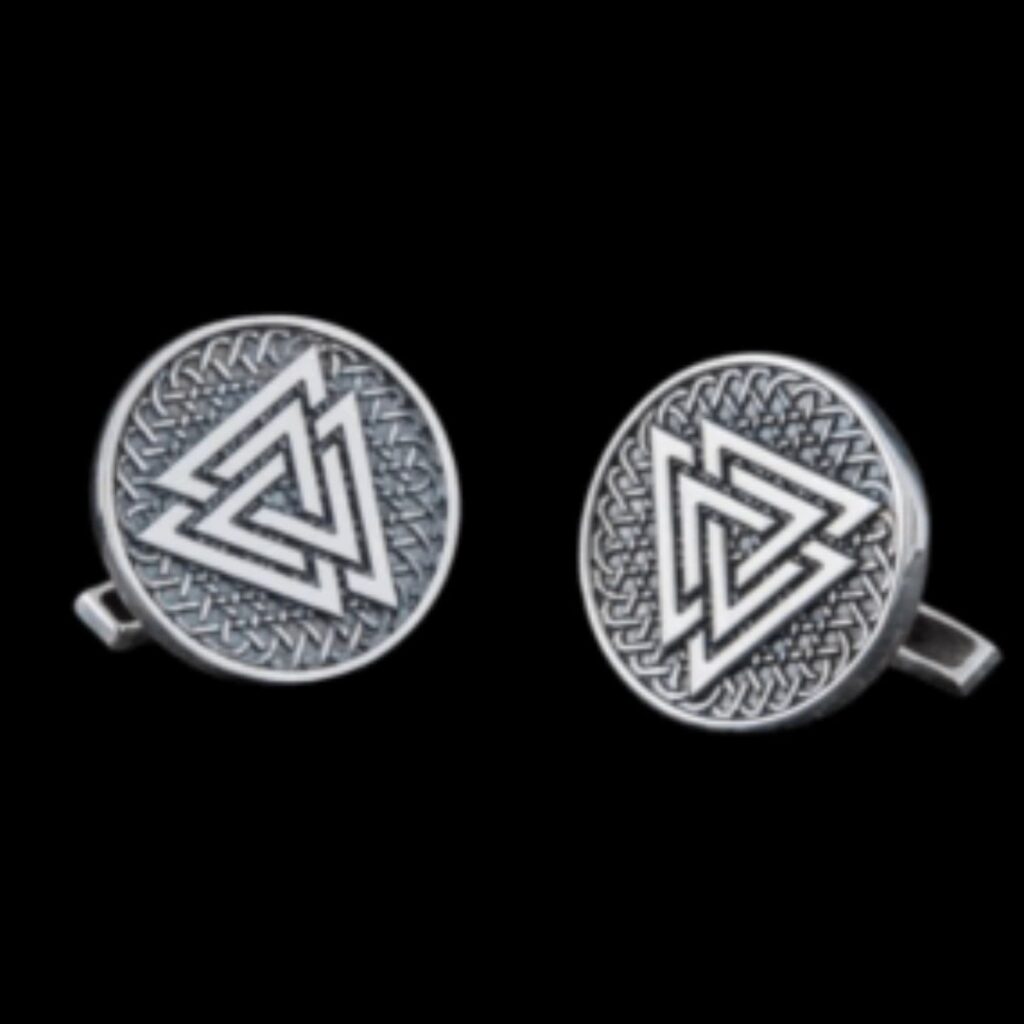
The Valknut was the symbol of the most desirable Norse afterlife, Valhalla, ruled by Odin. You can find Valknut-inspired pieces in the VKNG Collection.


The Origins of Yggdrasil
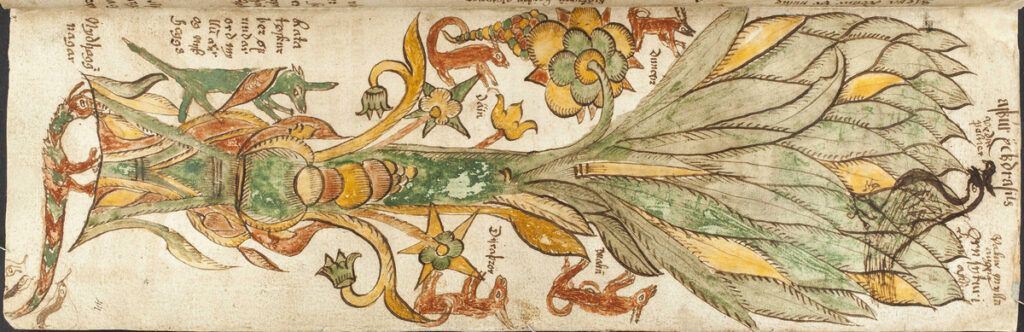
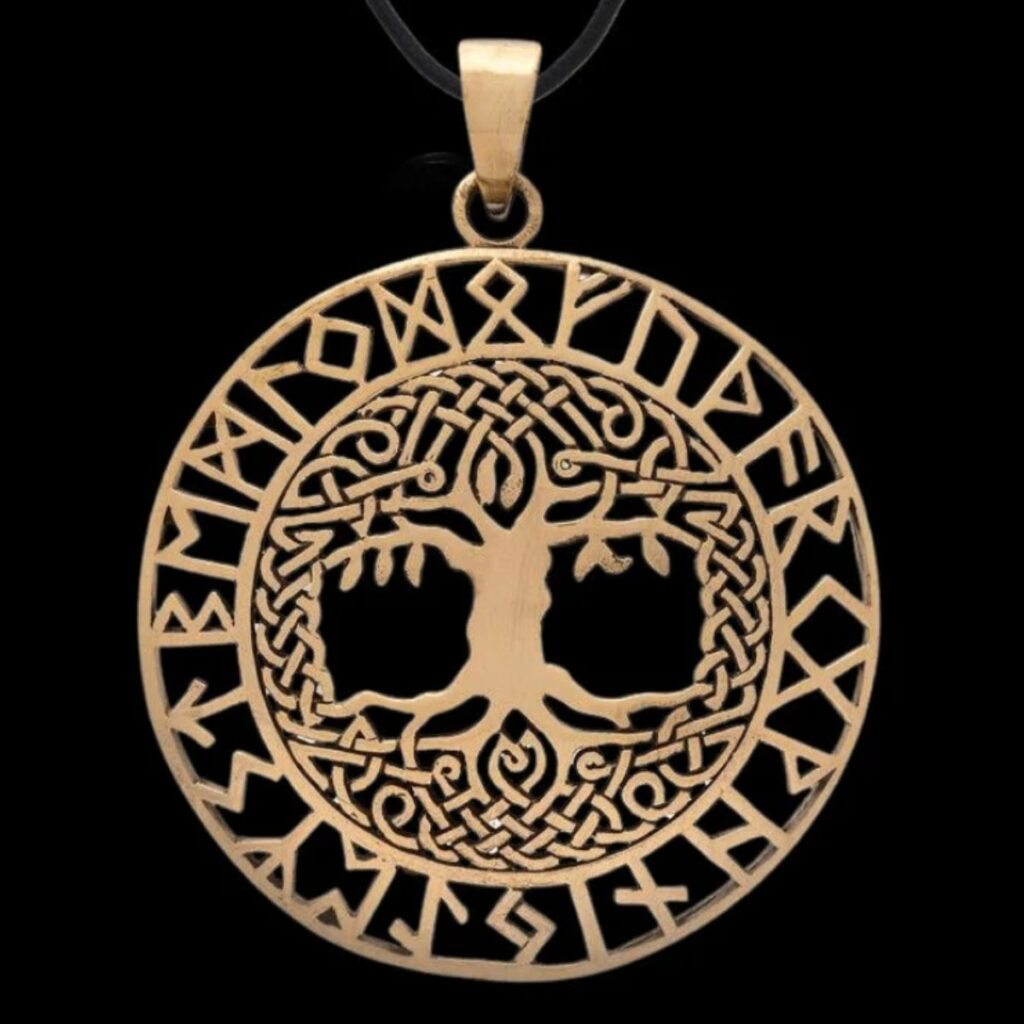
While the world tree Yggdrasil is extremely important in Norse cosmology, we are not told where it came from, and it is not clear if it existed before the Ginnungagap, if it grew naturally from the primordial goop of creation, or whether it was made by the gods.
Yggdrasil is fed by three wells located in three of the Norse realms. The first, Urdarbrunnr, the Well of Destiny, is located in Asgard and is also the dwelling place of the Norns, the Fates of Norse mythology. The second, Mimisbrunnr, the Well of Wisdom, was located in Jotunheim and is the home of Mimir, a wise friend of Odin who was killed, but Odin magically reanimated his head and installed it at the well to continue to give his counsel.
The third well, Hvergelmir, the burning hot well, is located in Niflheim. This well feeds eleven rivers that flow through the Norse realms. The dragon Nidhogg lives here and gnaws on the roots of Yggdrasil. The stag Eikthyrnir also lives here. He feeds on Yggdrasil’s leaves, causing water to spout from his horns and replenish the well.
The branches of Yggdrasil itself are also home to an unnamed eagle that lives at the top of the tree, with a hawk called Veðrfölnir perched between his eyes. A squirrel named Ratatoskr runs up and down the tree, passing messages between the eagle and the dragon, who hate each other. Ratatoskr is a troublemaker and sews the animosity between the two. Yggdrasil is also home to four stags, representing the four winds, who eat the tree buds.
The activity of these animals probably explains why Odin claims that Yggdrasil lives in more pain than anyone can comprehend.
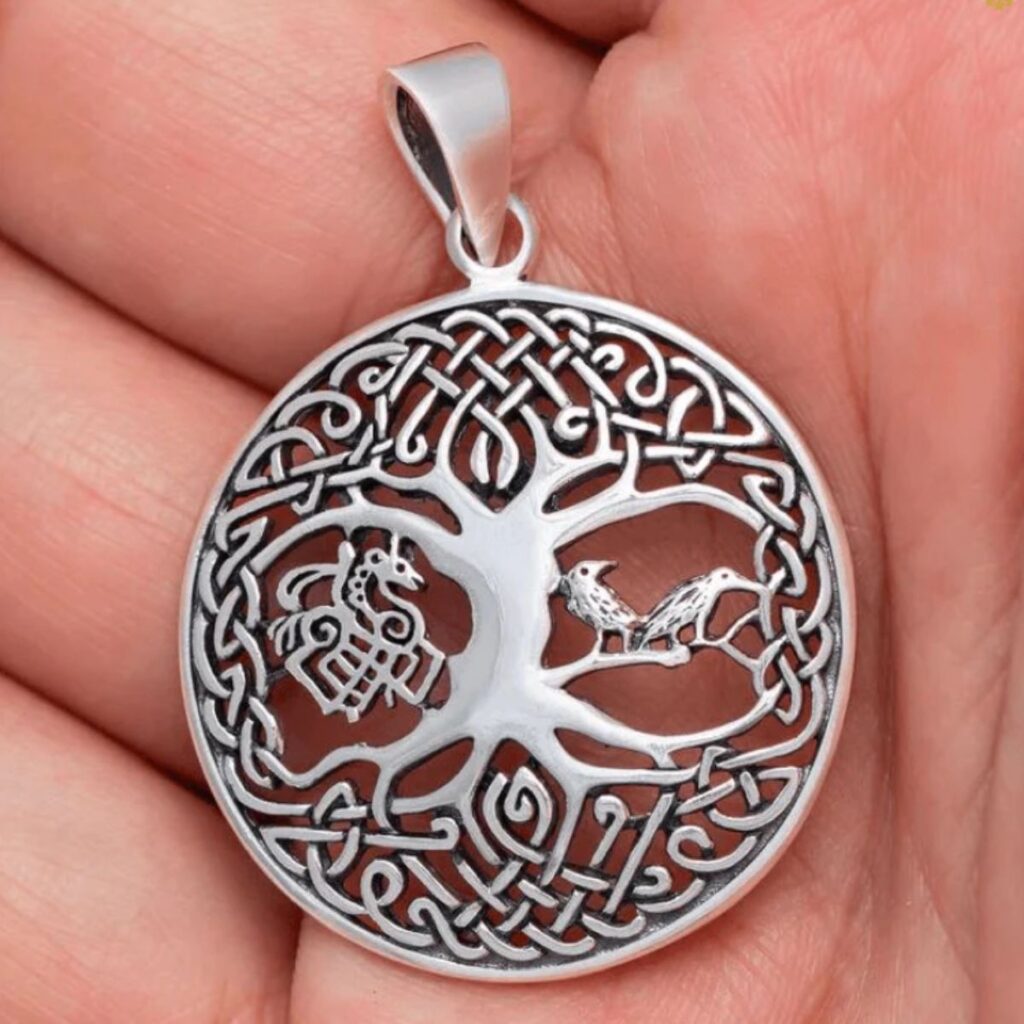
You can discover Yggdrasil-inspired products in the VKNG Collection.

The End of Creation
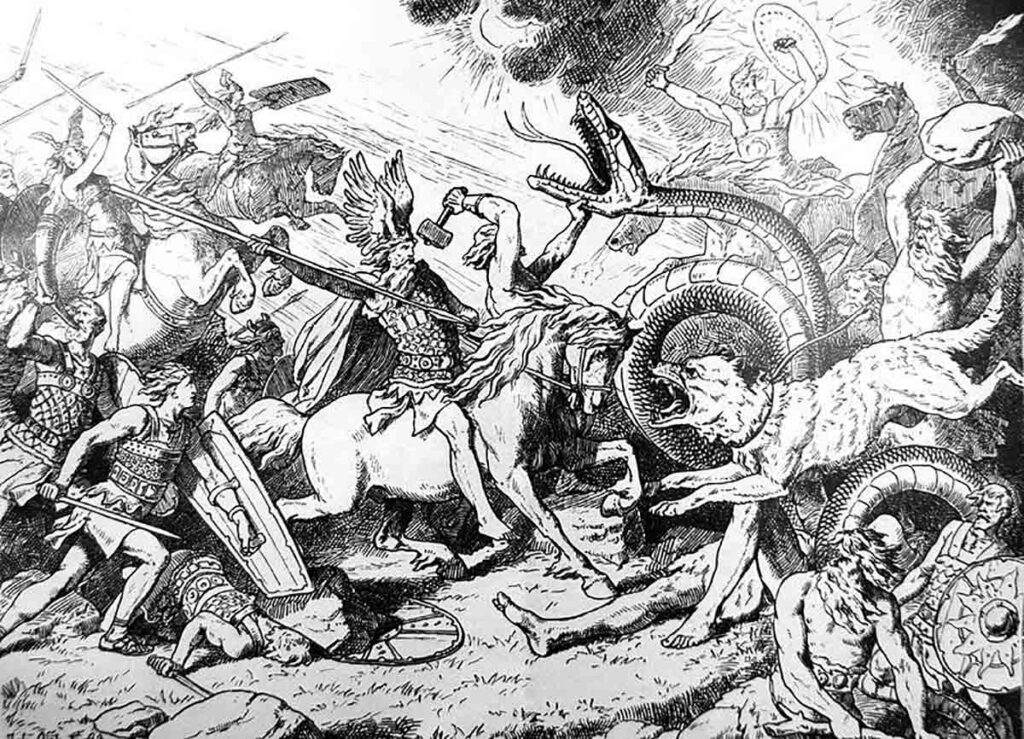
The universe created by the Norse gods is destined to end at Ragnarok, which means “twilight of the gods.” These events are predestined and cannot be escaped, and are widely known due to a prophecy delivered by a seeress.
You can read the story of the destruction at Ragnarok here. But importantly, the universe created by the gods will sink back into the nothingness of the Ginnungagap, bringing the story full circle.
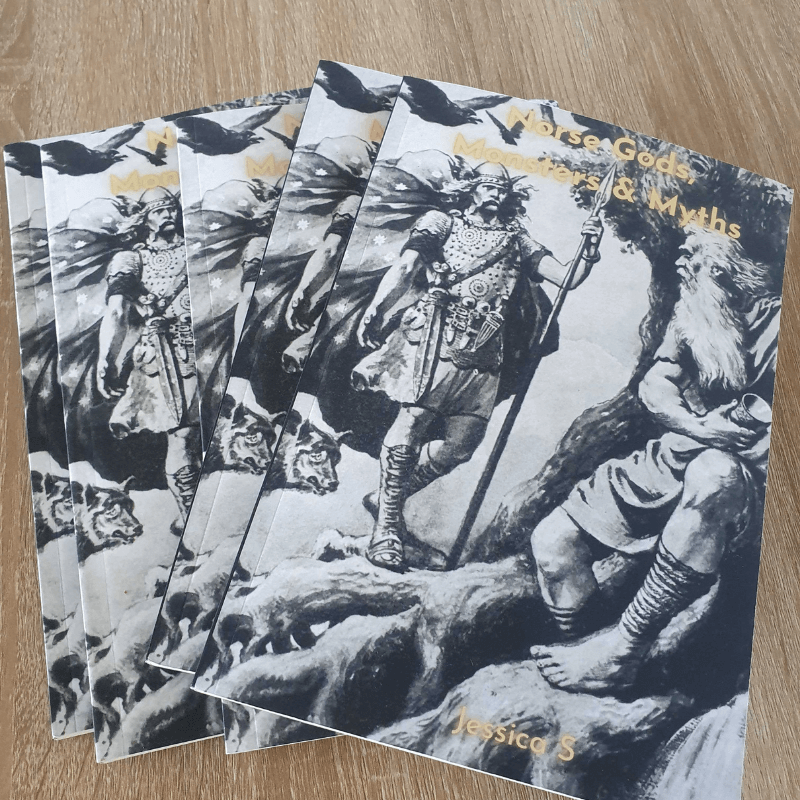
Are you interested in learning more about the Norse gods and their myths, the symbols that shaped the Norse world, and life in the Viking Age? Consider grabbing one of our books.
Norse Gods, Monsters, and Myths
Dive into a short overview of Norse mythology from the Norse creation myth to Ragnarok (the end of days). Plus some profiles of the most important gods and giants.
Norse Symbols and Viking Runes
Discover the meaning behind many of the most common Norse symbols, such as Mjolnir and the Valknut. Discover the Norse runes and how they were used for magic in the Viking Age and later in Icelandic magic.
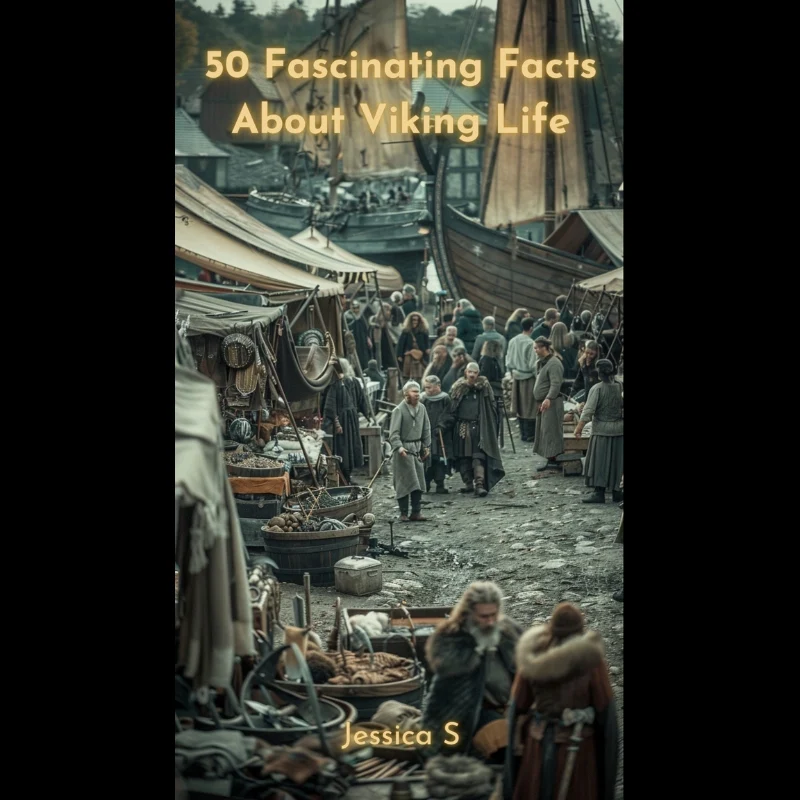
50 Fascinating Facts About Viking Life
50 short stories about life in the Viking world from currency and warfare to magic and blood sports.