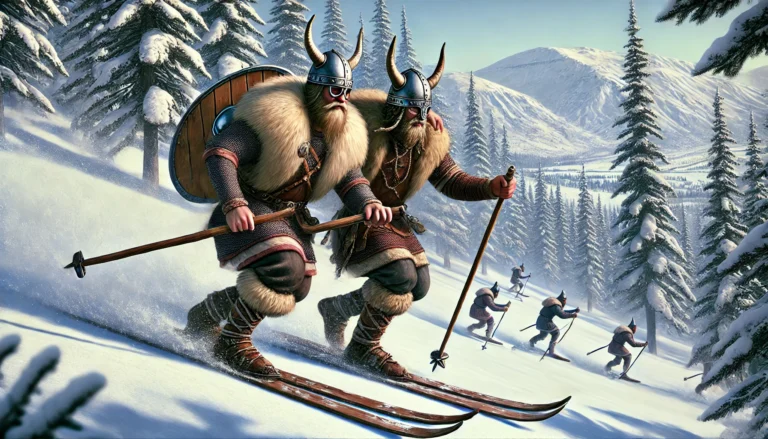
The Viking homelands were in the northern climes of Europe, where ice and snow, not to mention freezing temperatures and food scarcity, are a fact of life for several months of the year. Is it any wonder that the Vikings mastered the art of skiing and skating?
The Mythology of Ice

According to the Viking creation myth, in the beginning, there was a giant void called the Ginnungagap.
At the very top of the Ginnungagap, described as in the south, there was a realm of heat and fire called Muspelheim.
At the very bottom of the void, described as in the north, there was a world of ice and mist called Niflheim.
Creation began when heat from Muspelheim and cold gases from Niflheim mixed in the void, forming the primordial goop from which all life came. Life emerged, centered around a giant tree as a backbone called Yggdrasil.
Muspelheim was at the top of the tree, and Niflheim at the bottom of the tree, and the other realms, including Midgard, the world of men, Asgard, the realm of the Aesir gods, and Jotunheim, the realm of the giants, were somewhere in the middle.
The Vikings probably believed that the cold that changed their landscape each year came from Niflheim. They probably also believed that Jotunheim was closer to Niflheim than their own realm because it is described as a cold, desolate, and often icy landscape.
Skadi
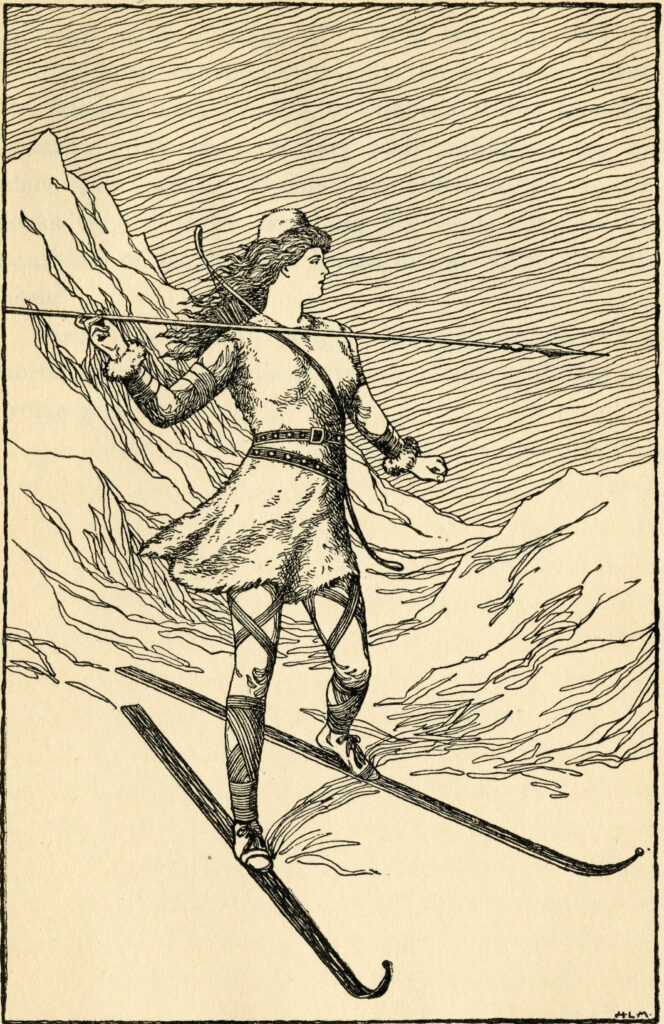
The Norsemen associated two gods with winter and snow. The first was Skadi, the daughter of the giant Thjazi. She traveled to Asgard to get revenge for the Aesir gods killing her father.
They agree to pay a price for his death, which included allowing her to marry one of the gods.
Much to her disappointment, she was matched with the god Njord, a deity of the sea and wind associated with trading.
The two tried to find a way to live together, spending time in their respective homes. But Skadi could not stand the sound and smell of Njord’s seaside fishing village, and he could not stand her icy realm of snow and glaciers. In the end, the two separated, but Skadi was still accepted among the Aesir gods. She was even involved in the operation that saw Loki imprisoned for his role in the death of Balder.
When describing Skadi in his 13th-century Prose Edda, Snorri Sturluson says that she: “lived in a forbidding land of glaciers and snow peaks. She travels much on skis, carries a bow, and shoots wild animals. She is called Ski God or Sky Lady.”
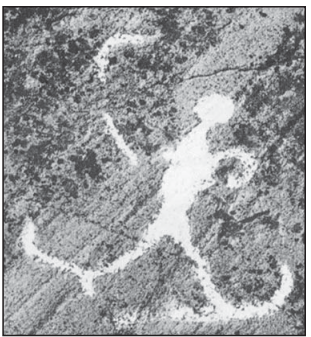
This description is important because the Vikings did most of their hunting in the winter, when the coats of animals were thicker, richer, and more valuable.
The description of her hunting on skis with bow and arrow probably reflects the Viking practice.
Ullr
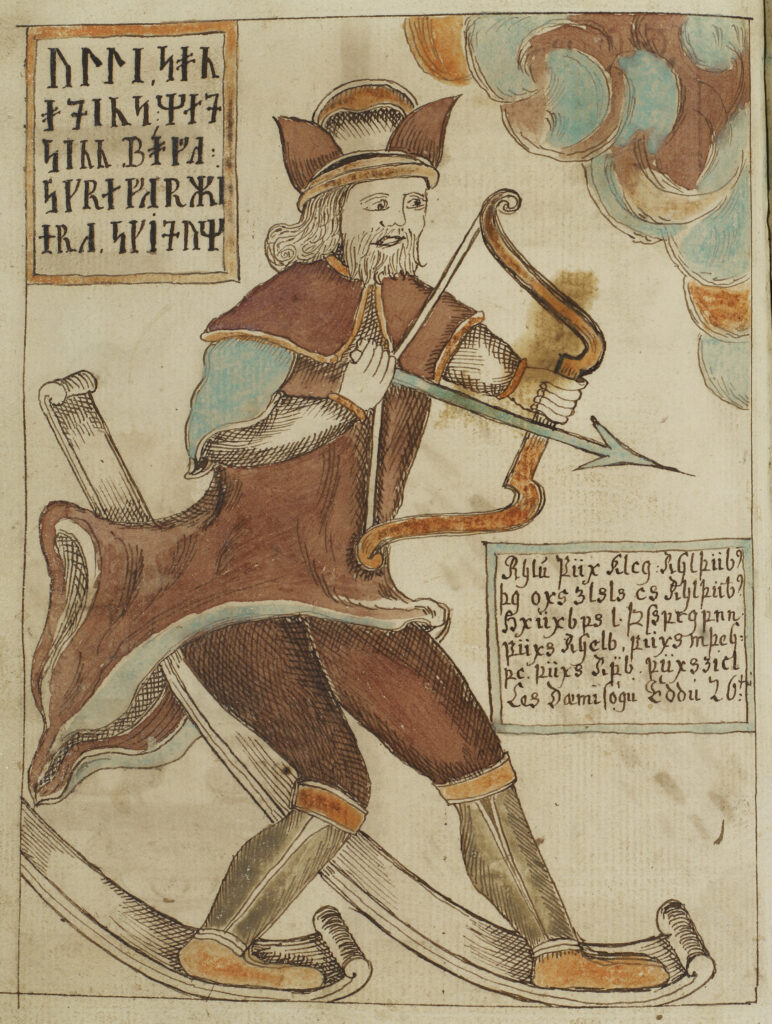
Ullr is the other god of winter that Snorri Sturluson described in the Prose Edda as: “so skillful a bowman and skier that no one can compete with him… he is also a good person to pray to when in single combat.”
Ullr was the son of Sif, the wife of Thor, and is described as Thor’s stepson.
Little else is known about him except that he was a god commonly associated with oaths.
This is perhaps because oaths between chiefs and warriors were often sworn at Yule, in the dead of winter.
Given his icy characteristics, it is possible that he is half-giant, like many of the Aesir gods, but the details of his parentage simply do not survive.
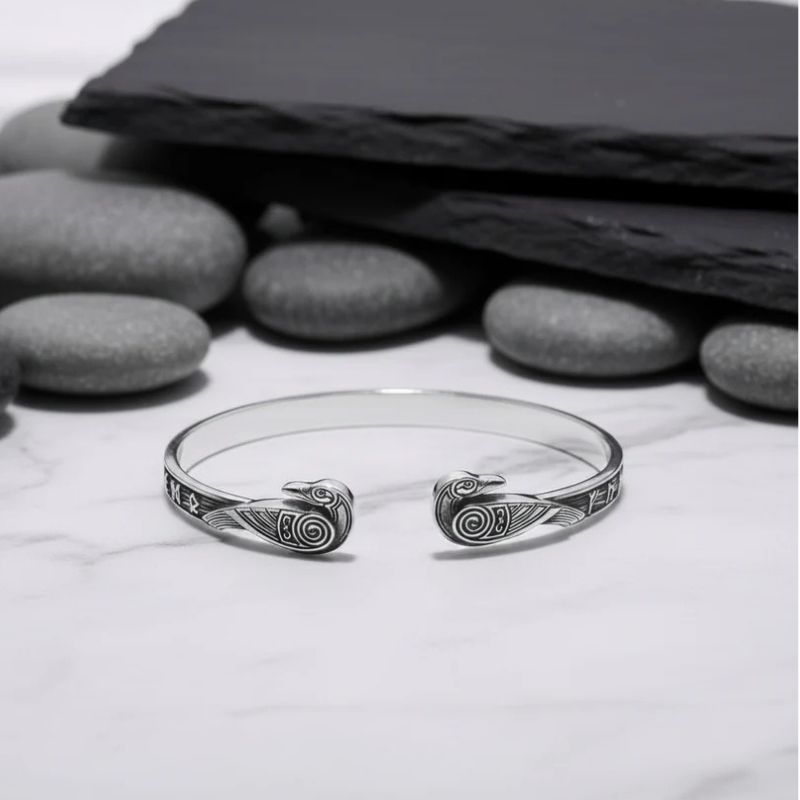
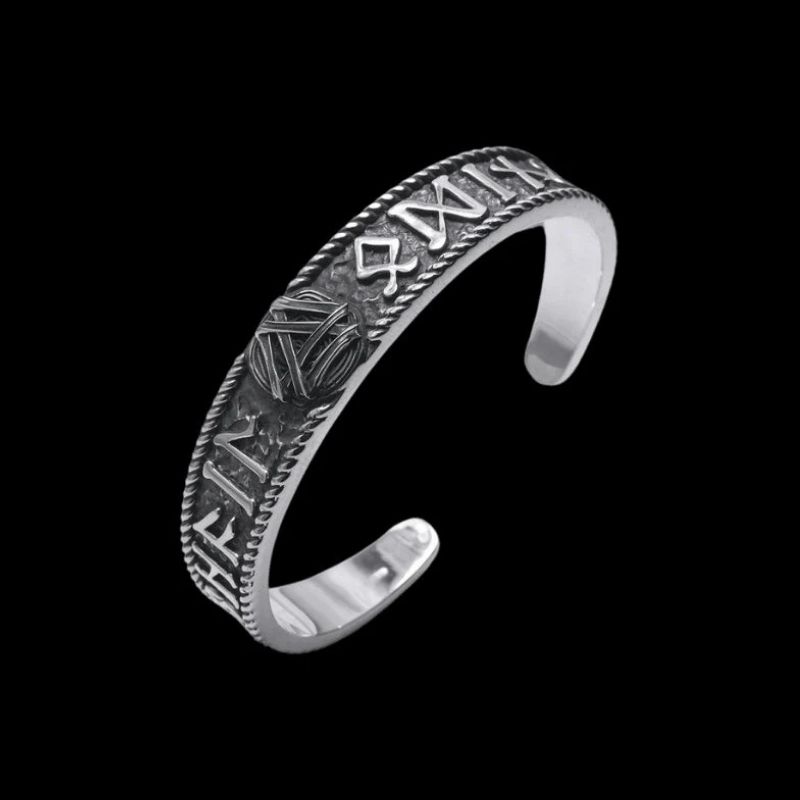
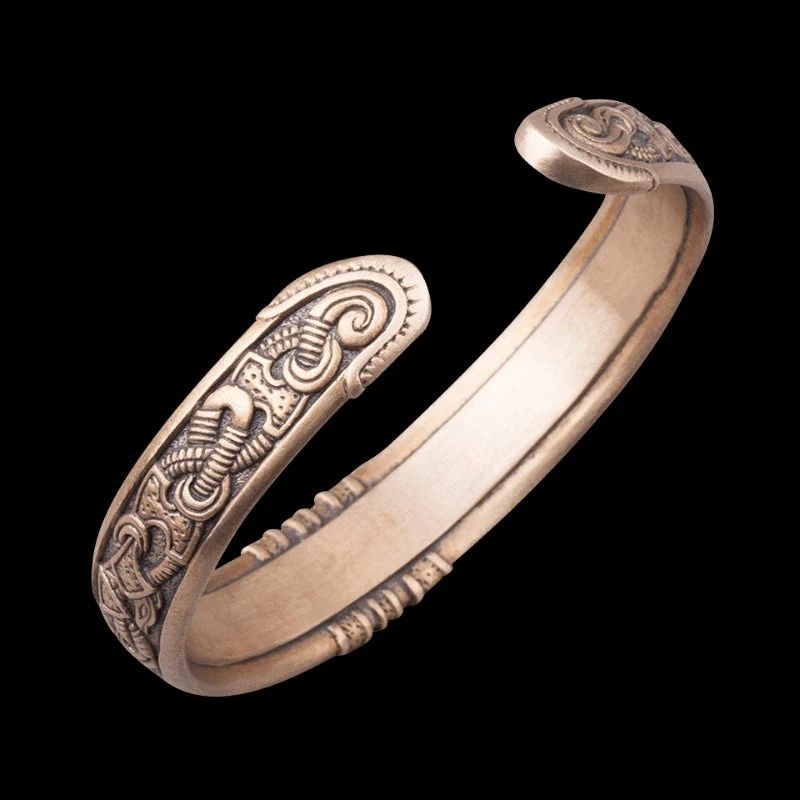
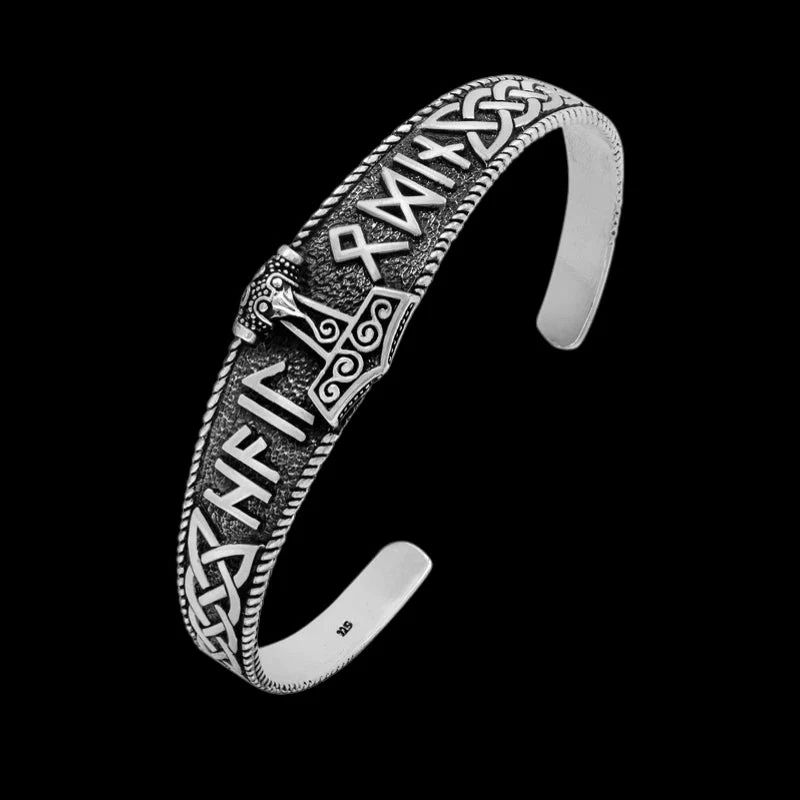
It seems likely that oaths were often sworn on arm rings, as demonstrated by 65 rings excavated from a shrine of Ullr at Lilla Illevi in Sweden. Modern Vikings often use arm rings as symbols of oaths and promises. Discover arm rings in the VKNG collection, many inspired by genuine archaeological finds.
The Earliest Skis
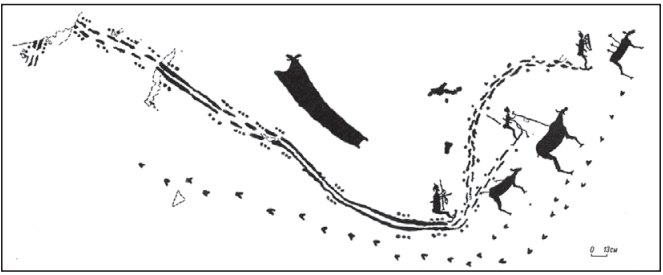
Skiing seems to be an ancient art that developed independently in different icy regions of the world.
The very earliest archaeological evidence for skis comes from Russia and can be dates as far back as 6300 BC.
When Europeans met the Inuit people of Canada, Alaska, and Greenland, they found that they also had independent knowledge of skiing.
Looking at Scandinavia, the word used by the Sami people, non-Viking peoples living in Finland, for “to ski,” “cuoigat”, can be dated on linguistic grounds to between 6,000 and 8,000 years ago, suggesting that they needed a term for the act very early in their history.
On the archaeological side, hundreds of skis and ski fragments have been found in peat bogs across Russia and Scandinavia.
The early Russian skis come from one such peat bog, and the earliest examples from Scandinavia, specifically Sweden, can be dated to 2700 BC.
It is interesting that they were found in peat bogs. While it is possible that they were simple lost here as the composition of the area changed with the freezing and thawing of the bogs, the Vikings and the people occupied the region before them were also in the habit of placing objects in peat bogs as offerings to the gods.
Ski Designs
While ski designs vary across time and space, we can make a few generalizations about the kind of skis preferred by the Vikings.
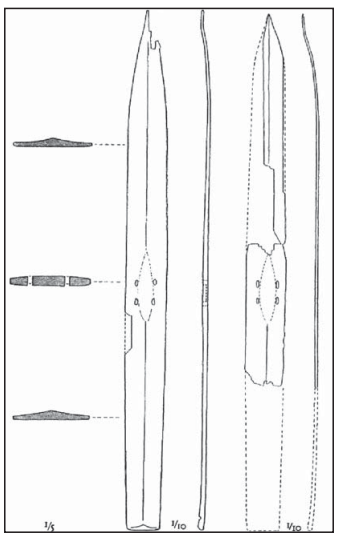
The skis found across Scandinavia have been divided into different types, and Type C was the most common in the Viking Age.
Skis were made by hand from wood and had flat surfaces that reduced friction against the snow, allowing for fast and silent movement.
This would have been essential for moving between the animal traps set by Viking hunters in the winter months. Unlike examples from other parts of the world, they were not covered in fur or hides.
They were usually about six feet long, tapered at the back, and curved at the front. They had a slightly convex underside, gradually coming to a point.
The footrest was raised and inset from the side edges and is slightly concave so that footwear such as moccasin would fit in.
There was a horizontal hole beneath the footrest for the toe strap.
The skis were also often decorated with braided patterns that were popular in Birka and in central and southern Sweden in the Viking Age.
The historian Saxo Grammaticus described the Vikings as using skis for reconnaissance missions in the 13th century.
From this and other written sources, it seems likely that the Vikings used just one ski pole to propel themselves, probably to leave the other arm free for other activities.
What About Skating?
The Vikings were accustomed to using their waterways as transport links. It was much easier to sail a small boat down a waterway than to try to move through dense forests or open wilderness.
This does not seem to have changed in the winter months, during which the Vikings would skate along the same waterways.
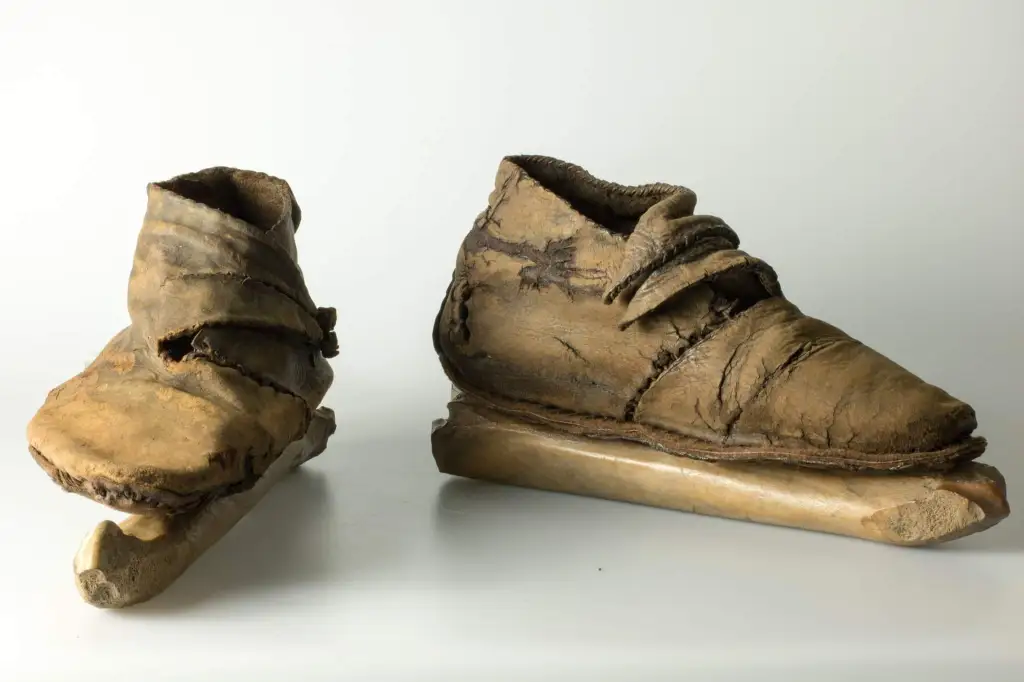
Skates have been found all over the Viking World, from Dublin to Hedeby to Birka to York, where more than 40 sets of skates have been recovered.
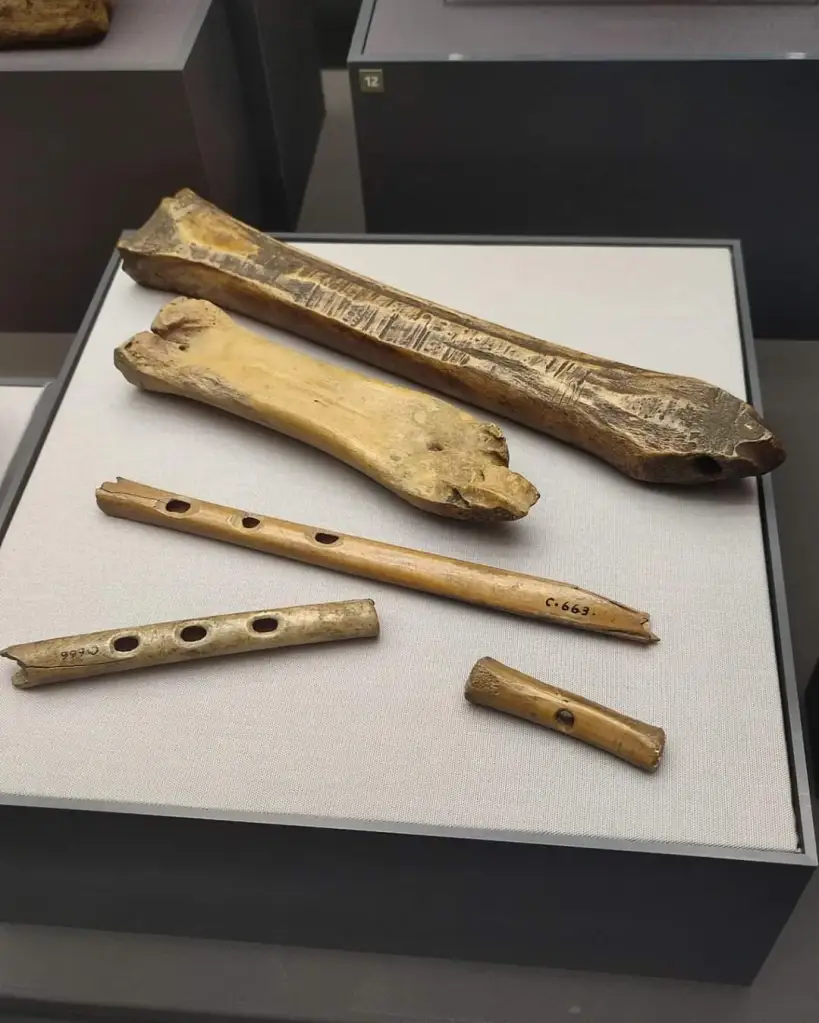
They made skates from bones, most often horse bones but also cattle bones. Holes were bored through the bones and securely strapped in a figure 8 shape to Viking shoes.
They most likely used a pole to help control their movement along the ice.
Icey Adaptation
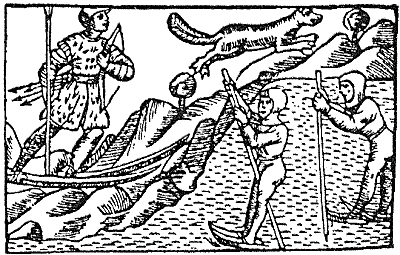
While we might think of skiing and winter sports as a modern invention, for the people living in colder climes where snow and ice were a fact of life, developing tools such as skis and skates was an essential adaptation.
The Vikings were known to be inventive, from the style of their ships to the construction of their hillforts.
It is no surprise that they invented skis that would look familiar to modern cross-country skiers.
Viking Silver
The Viking Age is also sometimes called the silver age, as by far the vast majority of Norse jewelry and bullion was in silver, not gold.
We make many of our pieces in Sterling Silver to reflect the reality of the Viking world. You can find a curated selection of some of our favorite Norse-inspired silver pieces in the Saga of the North collection.
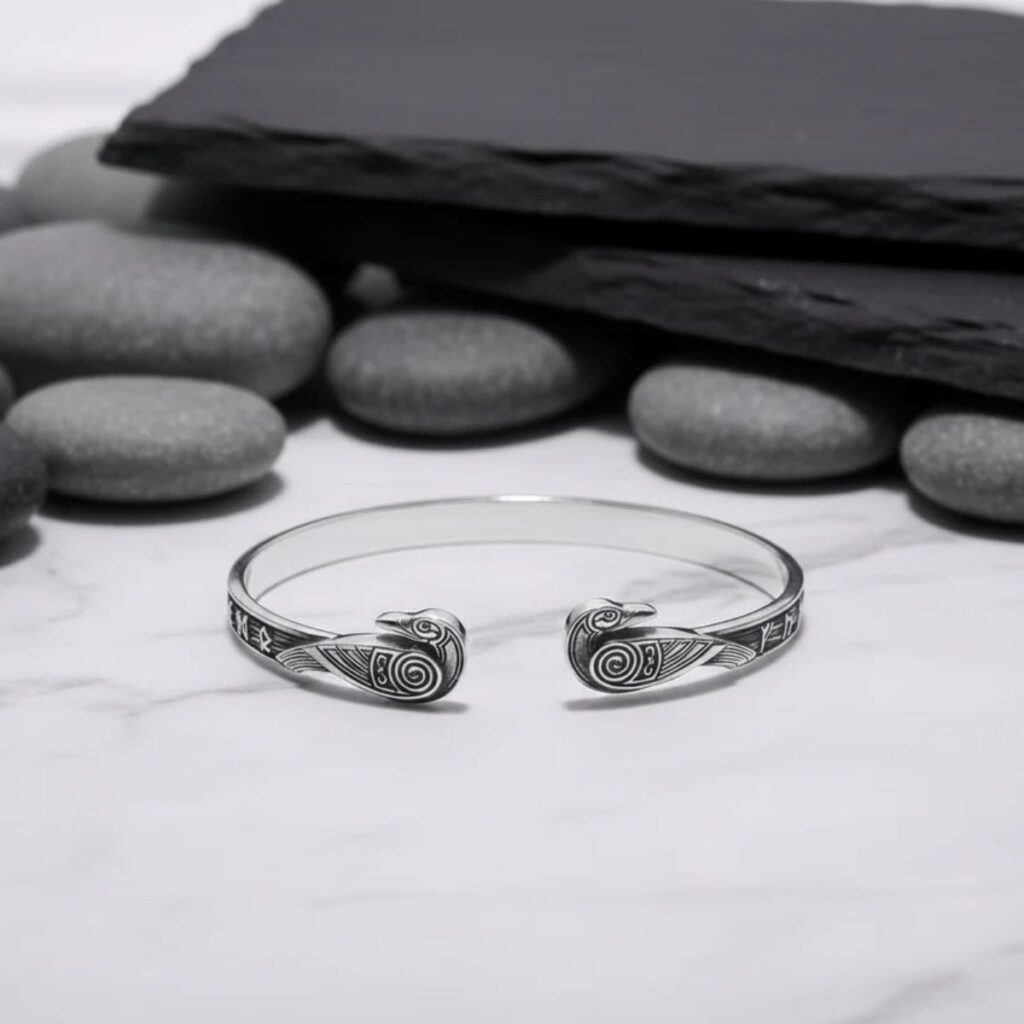
This Sterling Silver arm ring is inscribed with the Norse runes, magical symbols discovered by Odin and shared with mankind. The ring ends in two raven heads. Ravens were the birds of Odin. He had two raven familiars, Huginn (thought) and Muninn (memory), who acted as his eyes and ears.
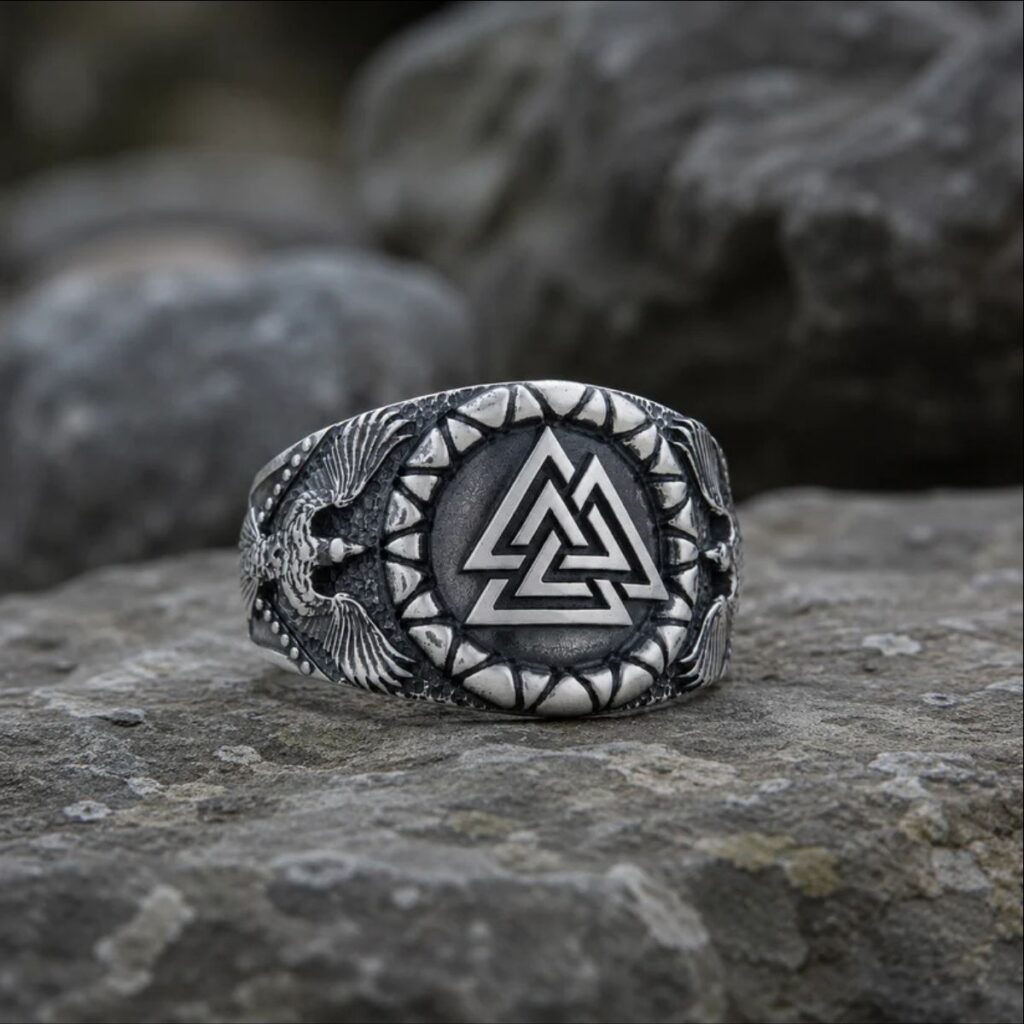
The Valknut was the symbol of Valhalla, Odin’s afterlife for brave fallen warriors. It represented both the hall and the bravery it took to earn a place there. The ring band features two ravens, representing Odin as both the god of wisdom and war. Seeing ravens circling that battlefield was a good sign, as it meant that Odin was present to choose the bravest fallen warriors.
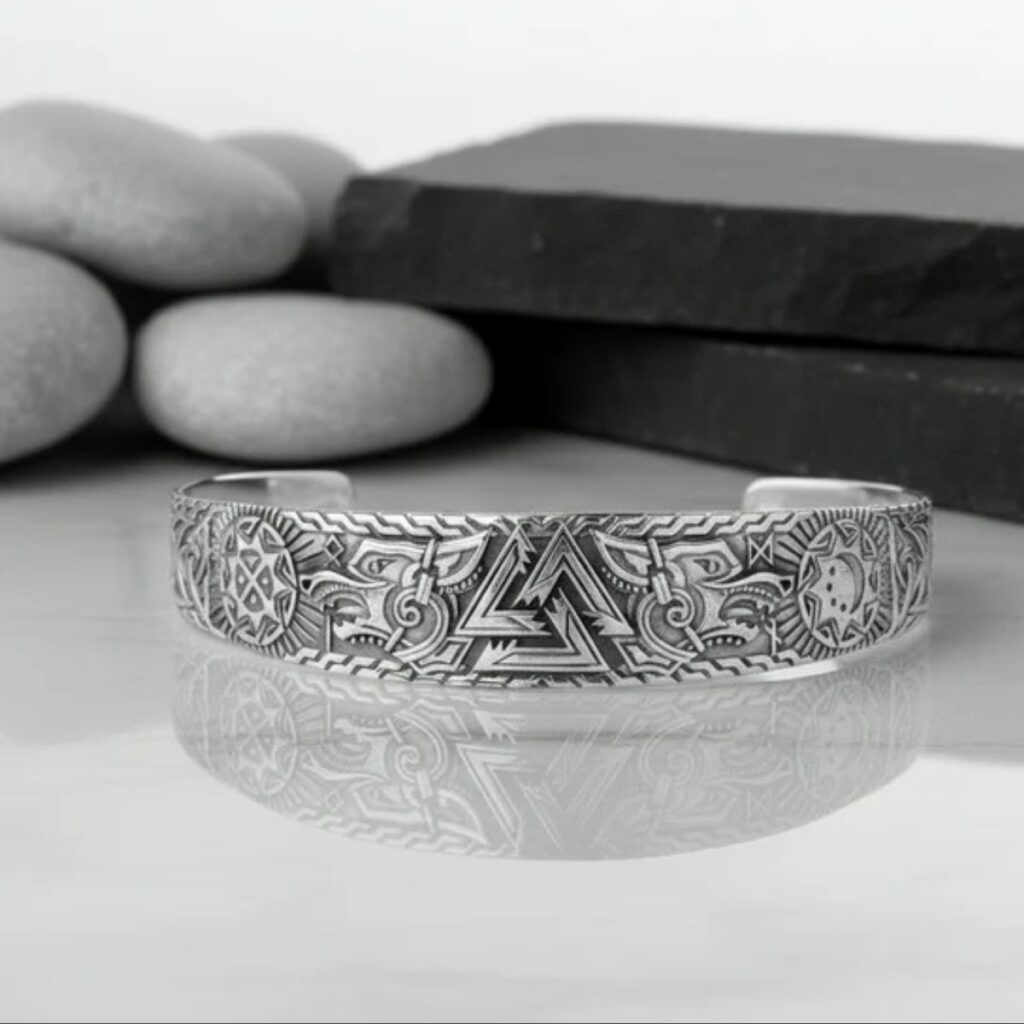
This silver armring also features the Valknut, this time between two wolf heads. Odin was also accompanied by two wolves, Geri (greed) and Freki (ravenous). These were both challenging aspects of his personality, but also sources of great strength. The arm ring also features symbols of the sun and moon.
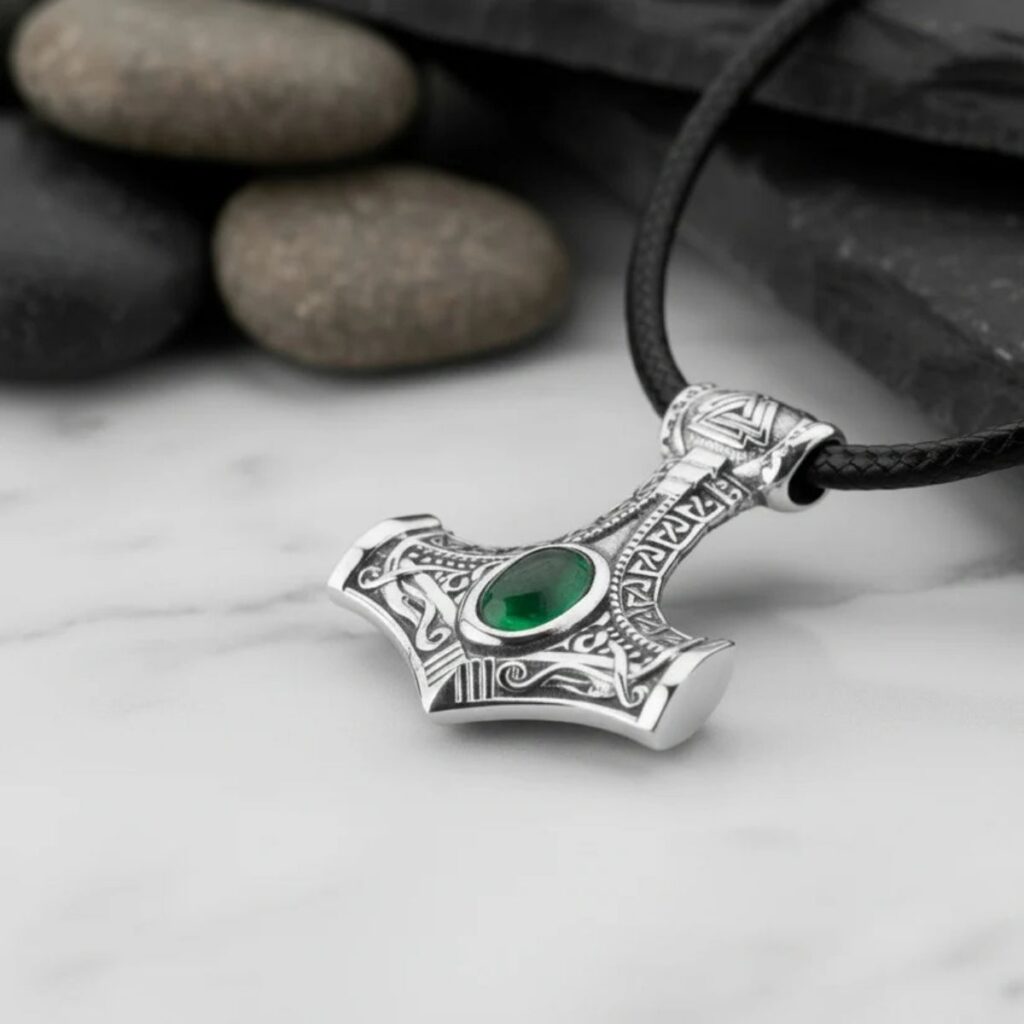
The Vikings wore Thor’s Hammer pendants as symbols of the protection of the gods. This Mjolnir pendant features several symbols from the Norse world, including serpent motifs. These represent the serpent Jormungandr, with whom Thor will fight to the death at Ragnarok. The serpent represents our fears that must be faced.